Chef Juliette
Suet Dumpling
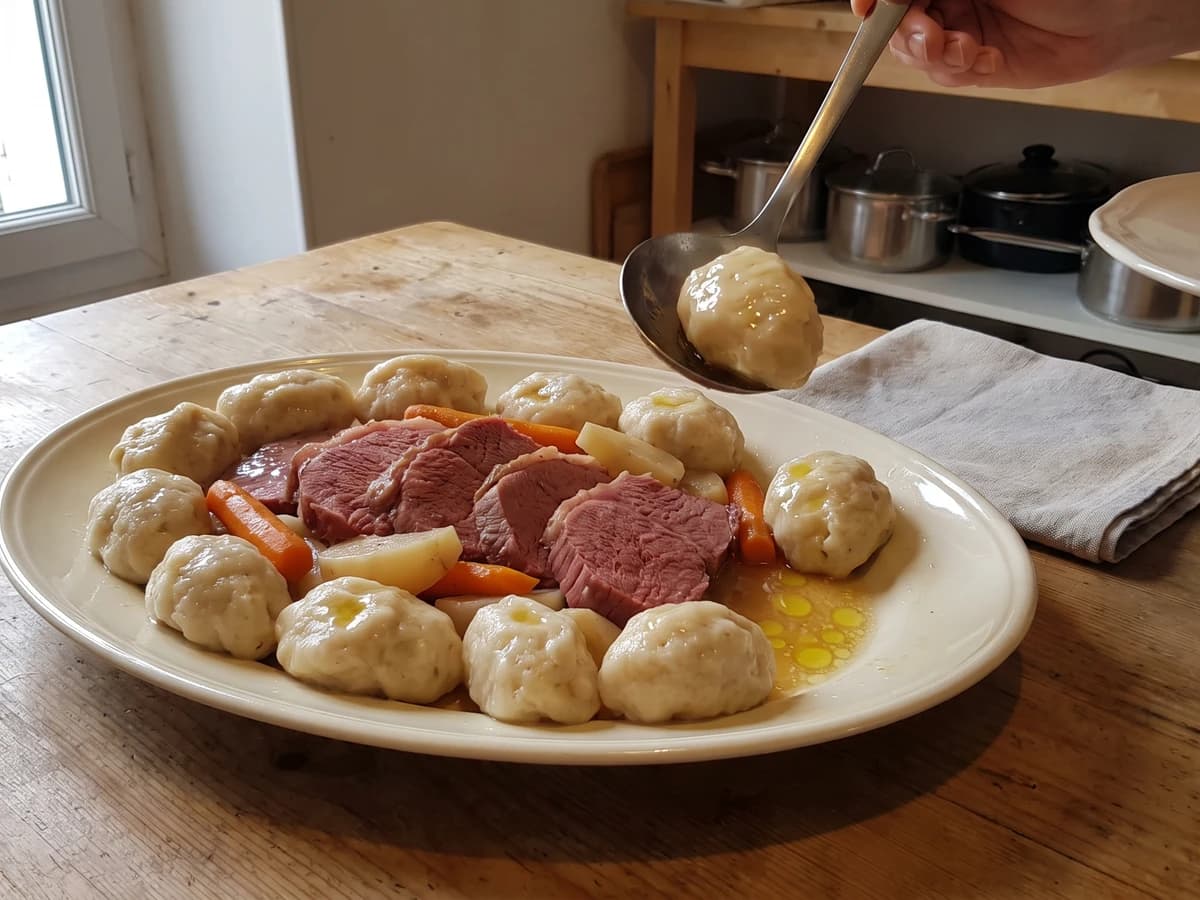
Boulettes au suif, poached beside salt beef, turn equal weights of flour and finely chopped suet into tender, rich dumplings. Keep the beef liquor at a bare tremble and the old garnish works beautifully at home.
A cooking platform built around craft, culture, and the stories behind what we eat.
Created by Chef Juliette
Based on No. 2045, Pointes d’Asperges à la Crème, from Le Guide Culinaire (1907) by Auguste Escoffier
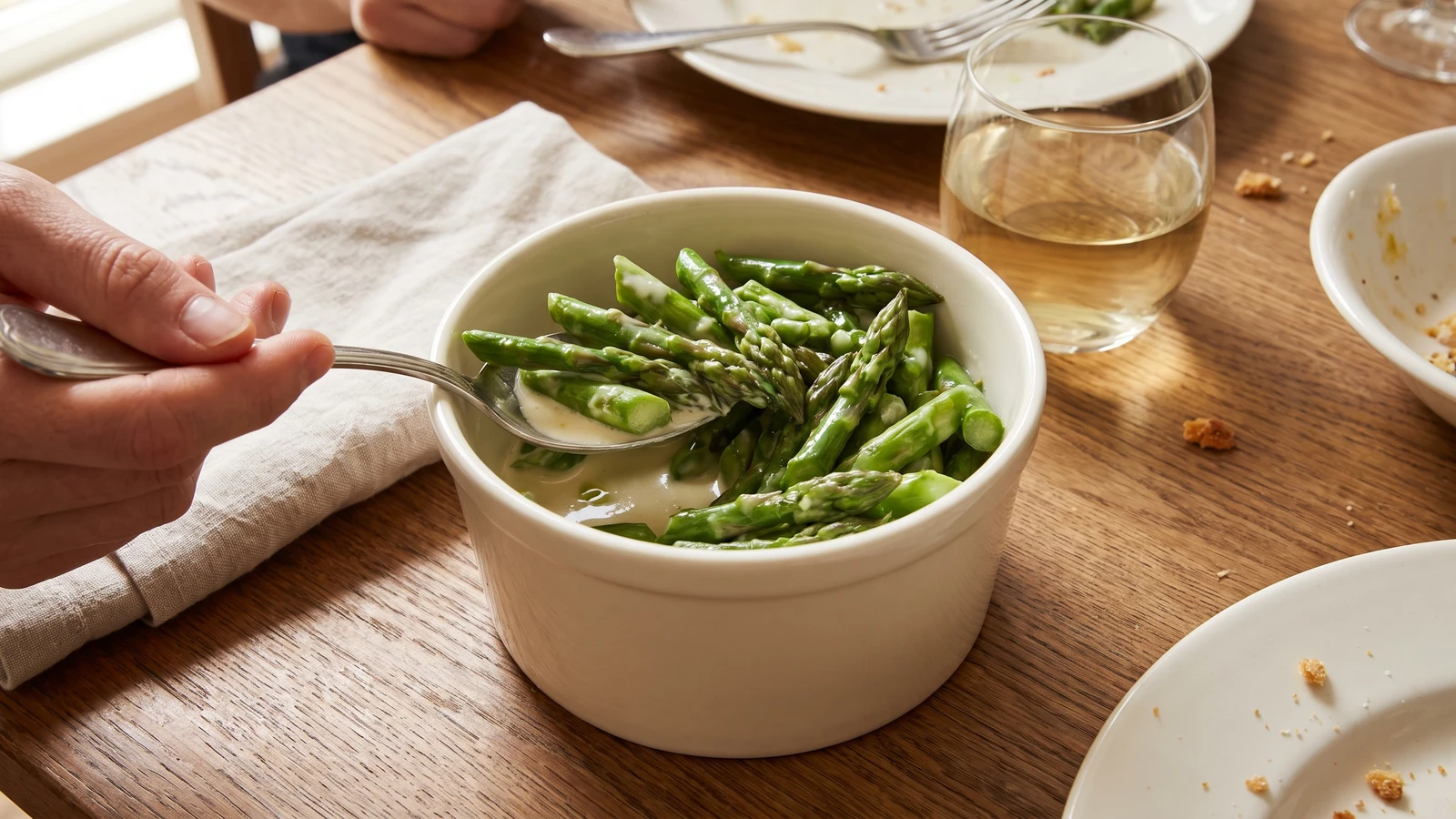
Pointes d’Asperges à la Crème makes one promise: vivid green asparagus held by cream that clings rather than puddles. Reduce first, dry the vegetable well, and an old garnish becomes a generous home side.
Pointes d’Asperges à la Crème (asparagus tips with cream) teaches water control. The asparagus must be vivid, hot, and truly dry before cream touches it; reduce the cream first, because raw cream poured over wet vegetables can only make a pale puddle. When it is right, every pea-sized stem piece wears a thin ivory glaze and the handsome green tips sit proudly on top.
The old entry assumes two stations working without discussion: an entremetier sends over asparagus prepared according to Sprew with Butter (Pointes d’Asperges) (No. 2044), and a saucier has reduced cream ready at the same moment. It asks for neither a stockpot nor a salamander, because neither would improve it. At home, one small saucepan and one wide sauté pan do both jobs. The cross-reference supplies the trimming, quick salted-water cooking, and thorough drying; this variation replaces its final butter binding with reduced cream. The little pastry shells are service scaffolding, not the dish. One cook, one stove, one evening.
Watch the cream, not the clock. It must reach nappant, the point where it coats the back of a spoon, before the asparagus enters. That reduction is the one step that decides whether the sauce clings or slackens on the plate.
Pointes d’Asperges à la Crème belongs to the classical Parisian service of légumes and entremets, where fine green asparagus appeared in timbales or small pastry cases rather than merely beside a roast. The preparation reflects the working division of the grand kitchen: the vegetable station cooked and drained the asparagus while sauce work supplied its cream binding. Despite the title, the dish did not waste the tender lower stalk; those pieces were cut pea-small, while the handsome heads were reserved to crown the dish.
Quantity
1 batch (about 4 cups / 950 ml / 600 g) Sprew with Butter (Pointes d’Asperges) (No. 2044)
scaled for four and prepared through moisture evaporation, with its final butter binding omitted
Quantity
1 cup (240 ml / 240 g)
divided
Quantity
Up to 1/4 teaspoon (1.25 ml / 1.5 g)
as needed
Quantity
8 shells, about 2 1/2 inches (6 cm) wide and 160 g total
warmed before filling
| Ingredient | Quantity |
|---|---|
| Sprew with Butter (Pointes d’Asperges)scaled for four and prepared through moisture evaporation, with its final butter binding omitted | 1 batch (about 4 cups / 950 ml / 600 g) Sprew with Butter (Pointes d’Asperges) (No. 2044) |
| heavy creamdivided | 1 cup (240 ml / 240 g) |
| fine sea saltas needed | Up to 1/4 teaspoon (1.25 ml / 1.5 g) |
| miniature baked tartlet shells (optional)warmed before filling | 8 shells, about 2 1/2 inches (6 cm) wide and 160 g total |
Prepare the Sprew with Butter (Pointes d’Asperges) (No. 2044) according to its own entry, scaled to four, through the point where the boiled asparagus has been thoroughly drained and tossed over heat until every trace of surface moisture evaporates. Keep the two-inch heads apart from the pea-sized tender stem pieces for the final arrangement. Stop before its butter binding: this variation directs cream in its place, and adding both would blur the distinction the book intends.
Pour the cream into a small saucepan, holding back 2 tablespoons in a cup. Bring the rest to a lively simmer over medium heat, then lower the heat and reduce it steadily, swirling often, until it reaches nappant: thick enough to coat the back of a spoon and hold a clean line when you draw a finger through it. This takes about 6 to 8 minutes. Taste before adding salt, since the asparagus was cooked in salted water. If the cream turns grainy or shows an oily edge, pull it from the heat and whisk in the reserved cold cream one spoonful at a time. Ça se rattrape.
Set the wide sauté pan over medium-low heat and add the hot, dry pea-sized asparagus pieces. Pour over enough reduced cream to coat them, then toss gently for 45 to 60 seconds, just until every piece gleams and the cream gathers around it rather than beneath it. If released moisture makes the sauce runny, lift out the asparagus with a slotted spoon, reduce the cream alone for another minute, and return the pieces. Do not boil them hard in the sauce, or their color and shape will suffer.
Spoon the creamed asparagus pieces into a warmed timbale or deep serving bowl, heaping them rather than pressing them flat. Arrange the two-inch tips on top in neat, compact bundles. The brigade gathered these carefully for formal service; at home, a pair of tongs gives the same order without string or ceremony. If using tartlet shells, divide the creamed pieces among the eight warm shells and crown each with several tips. Serve at once. À table!
1 serving (about 200g)
Culinary guides, cultural storytelling, and the editorial depth that makes cooking meaningful.
Discover Culinary ExplorerChef Juliette
Boulettes au suif, poached beside salt beef, turn equal weights of flour and finely chopped suet into tender, rich dumplings. Keep the beef liquor at a bare tremble and the old garnish works beautifully at home.

Chef Juliette
Bread, flour, frangipane, and rice become four cool, supple panades for binding forcemeats, each changing body and flavor while preserving tenderness. The finest Mousselines need none, and knowing that distinction is the lesson.

Chef Juliette
Panade au pain is bread, milk, salt, heat, and attention: stir until the paste releases cleanly, butter it against a skin, and you have the quiet binder behind tender French farces.

Chef Juliette
Panade de farine teaches the drying stroke behind pâte à choux: flour meets boiling buttered water, then stays over the fire until the paste gathers, smooths, and quits the pan cleanly.