Chef Juliette
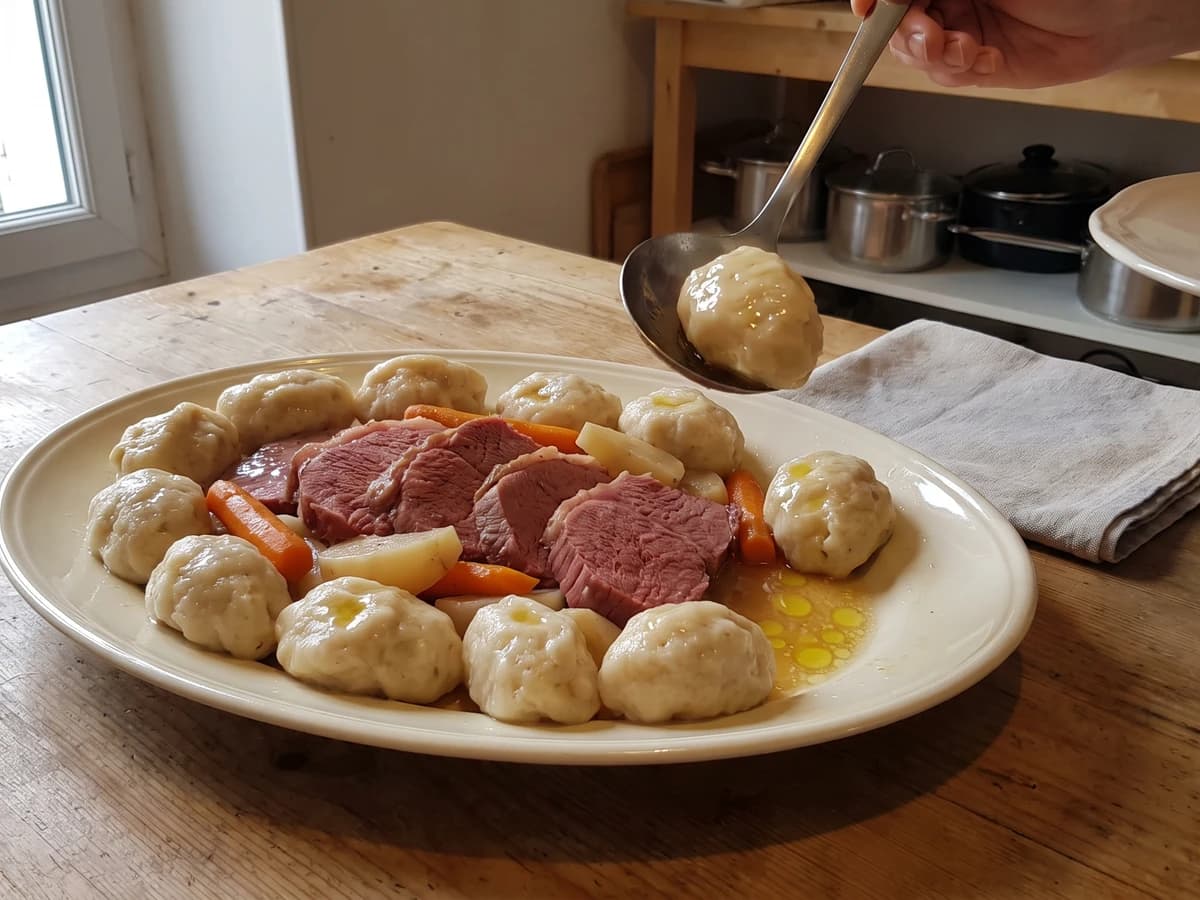
Suet Dumpling
Boulettes au suif, poached beside salt beef, turn equal weights of flour and finely chopped suet into tender, rich dumplings. Keep the beef liquor at a bare tremble and the old garnish works beautifully at home.
A cooking platform built around craft, culture, and the stories behind what we eat.

Created by Chef Juliette
Based on No. 2050, Aubergines Soufflées, from Le Guide Culinaire (1907) by Auguste Escoffier
Aubergines soufflées turn fried aubergine, reduced béchamel, Parmesan, and egg whites into four bronzed, trembling shells. The lesson is simple: concentrate the base, fold with care, and serve the instant they rise.
Aubergines soufflées (souffléed aubergines) teach the first law of every savoury soufflé: the base must be concentrated before the egg whites touch it. Aubergine pulp carries plenty of water, and a loose béchamel gives the captured air nowhere to stand. Fry the flesh until tender, reduce the sauce properly, then combine them measure for measure.
The original entry assumed a saucier could hand over reduced béchamel, a frying station stood ready, and enough hands were present to fill brigade quantities. At home, one skillet, one small saucepan, and a moderate oven do the work for four. There is no stock in this dish, so a stockpot never off the fire adds nothing, and a salamander would colour the crown before the centre could set. Those are brigade scaffolding. Equal quantities of pulp and reduced béchamel, Parmesan, stiff whites, and immediate service are the dish, so they stay.
The decisive moment is the fold. Let the base cool, beat the whites only to firm, glossy peaks, and stop folding while a few pale streaks remain. Air is an ingredient here, and every unnecessary stroke spends it.
Aubergines soufflées belong to the French classical vegetable repertoire rather than to one named regional table: aubergines came naturally from the Mediterranean larder, while béchamel and the soufflé method belonged to the grand kitchen's shared grammar. The clever service is the shell itself, turning a fried vegetable into an individual gratin suited equally to formal service and the bourgeois dining table. Despite the aubergine, this is not a Provençal speciality; reduced béchamel, Parmesan, and soufflé handling place it in the national canon.
Quantity
2 (about 1½ pounds / 680 g total)
Quantity
1½ teaspoons (7.5 ml / 9 g)
divided
Quantity
¼ cup (60 ml / 55 g)
Quantity
4 tablespoons (60 ml / 56 g)
divided: 1 tablespoon softened for the dish and 3 tablespoons for the sauce
Quantity
⅓ cup (80 ml / 40 g)
Quantity
1½ cups (360 ml / 371 g)
warmed, with 2 tablespoons reserved for adjustment
Quantity
½ cup (120 ml / 45 g)
finely grated
Quantity
4 (about ½ cup / 120 g)
at room temperature
Quantity
to taste
| Ingredient | Quantity |
|---|---|
| medium-large aubergines | 2 (about 1½ pounds / 680 g total) |
| fine sea saltdivided | 1½ teaspoons (7.5 ml / 9 g) |
| neutral frying oil | ¼ cup (60 ml / 55 g) |
| unsalted butterdivided: 1 tablespoon softened for the dish and 3 tablespoons for the sauce | 4 tablespoons (60 ml / 56 g) |
| all-purpose flour | ⅓ cup (80 ml / 40 g) |
| whole milkwarmed, with 2 tablespoons reserved for adjustment | 1½ cups (360 ml / 371 g) |
| Parmesanfinely grated | ½ cup (120 ml / 45 g) |
| large egg whitesat room temperature | 4 (about ½ cup / 120 g) |
| freshly ground white pepper | to taste |
Heat the oven to 375°F (190°C), or 350°F (175°C) with a fan, and place a rack in the centre. Butter a 2-quart gratin dish generously with 1 tablespoon of the butter. Choose a dish that holds the four aubergine halves snugly, because close support helps the softened shells keep their shape.
Cut the aubergines lengthwise through their stalks. Cisel the flesh, making close crosshatch cuts without piercing the skins and leaving an uncut border about ⅜ inch (1 cm) wide. Season the cut faces with 1 teaspoon of the salt. Heat half the oil in a wide skillet over medium heat, then fry two halves cut-side down for 6 to 8 minutes, until deeply golden. Turn and cook on the skin side for another 3 to 4 minutes, until the flesh yields beneath a spoon but the shells remain intact. Repeat with the remaining oil and halves. If the flesh colours before it softens, lower the heat and cover the skillet for 2 minutes. Ça se rattrape.
Let the aubergines cool only until you can handle them. Scoop out the flesh with a spoon, leaving a layer about ¼ inch (6 mm) thick against each skin so the shells don't collapse. Set the empty shells cut-side up in the buttered dish. Chop the pulp finely, then measure it. You should have about 1¼ cups (300 ml / roughly 300 g); the reduced béchamel must match that quantity before the Parmesan is added.
Melt the remaining 3 tablespoons of butter in a small heavy saucepan over medium-low heat. Add the flour and stir for 2 minutes without allowing it to colour, making a roux blanc, a white roux. Gradually whisk in the warmed milk, holding back the reserved 2 tablespoons. Bring the sauce to a quiet simmer and cook for 8 to 10 minutes, whisking often, until it is thick enough that a spatula drawn across the pan leaves a clear path for a moment. Measure the sauce and reduce it to the same quantity as the chopped pulp, usually about 1¼ cups (300 ml). If it has gone too far, loosen it with the reserved milk. If it lumps, take it off the heat and whisk firmly; stubborn lumps can be pressed through a fine sieve. Ça se rattrape.
Remove the béchamel from the heat and stir in the Parmesan, the remaining salt, and white pepper to taste. Fold an equal quantity of the chopped aubergine pulp into the sauce. Spread the mixture in a wide bowl and let it cool for 10 to 15 minutes, until barely warm. It will become quite thick as it stands. This is exactly right; a hot or loose base melts the egg-white foam before the oven can set it.
Beat the egg whites in a spotless, dry bowl until they form firm, glossy peaks that stand upright without looking dry. Stir one-third of the whites into the aubergine base to loosen it, then fold in the remainder in two additions with broad strokes from the bottom of the bowl. Stop while a few fine white streaks remain. If the first addition loses some volume, don't panic; the remaining whites can still lighten the base, provided you fold them briefly and gently. Divide the mixture among the shells, mounding it slightly above their rims without pressing it down.
Bake immediately for 18 to 22 minutes without opening the oven during the first 15 minutes. This is the light treatment described among Gratins (No. 268): the moderate oven sets the soufflé and colours its surface in one passage. The aubergines are ready when the fillings have risen, the tops are pale gold with bronzed edges, and the centres tremble slightly when the dish is moved. Carry them straight to the table, because a soufflé waits for nobody. À table!
1 serving (about 275g)
Culinary guides, cultural storytelling, and the editorial depth that makes cooking meaningful.
Discover Culinary ExplorerChef Juliette
Boulettes au suif, poached beside salt beef, turn equal weights of flour and finely chopped suet into tender, rich dumplings. Keep the beef liquor at a bare tremble and the old garnish works beautifully at home.

Chef Juliette
Bread, flour, frangipane, and rice become four cool, supple panades for binding forcemeats, each changing body and flavor while preserving tenderness. The finest Mousselines need none, and knowing that distinction is the lesson.

Chef Juliette
Panade au pain is bread, milk, salt, heat, and attention: stir until the paste releases cleanly, butter it against a skin, and you have the quiet binder behind tender French farces.

Chef Juliette
Panade de farine teaches the drying stroke behind pâte à choux: flour meets boiling buttered water, then stays over the fire until the paste gathers, smooths, and quits the pan cleanly.