Chef Juliette
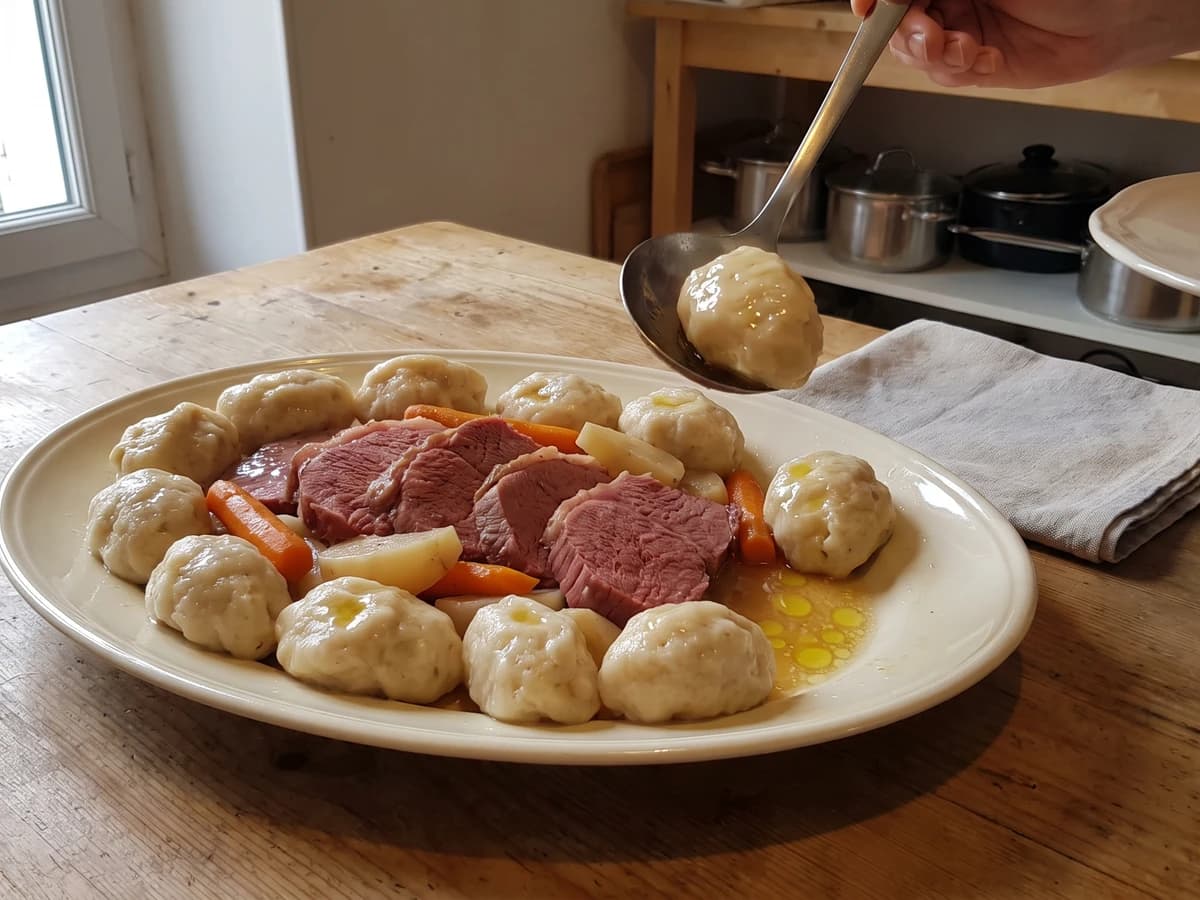
Suet Dumpling
Boulettes au suif, poached beside salt beef, turn equal weights of flour and finely chopped suet into tender, rich dumplings. Keep the beef liquor at a bare tremble and the old garnish works beautifully at home.
A cooking platform built around craft, culture, and the stories behind what we eat.

Created by Chef Juliette
Based on No. 2039, Asperges à la Flamande, from Le Guide Culinaire (1907) by Auguste Escoffier
Asperges à la Flamande turns four plain elements into a table ritual: tender white asparagus, hot egg, melted butter, and the diner's fork making the sauce while the plate is still warm.
Asperges à la Flamande (asparagus in the Flemish manner) teaches one true thing: temperature is part of seasoning. The asparagus, hard-cooked egg, and melted butter must meet while all three are warm, because the yolk crushes into the butter and clings to the spears only when nothing has been allowed to loiter.
The old entry assumes a dining room able to land every portion at once. It asks for no stock, salamander, or saucier, because the diner becomes the saucier, crushing the yolk from one hot egg half, seasoning it, and working in one ounce of butter. At home, a wide pan replaces the asparagus boiler, a warmed jug replaces coordinated service, and the proportions become four portions: two eggs and four ounces of butter. The brigade scaffolding was heat management; it can go. The hot egg, the ounce of butter per person, and the diner's fork must stay. One cook, one stove, one evening.
White asparagus gives the Flemish plate its pale, tender character, and peeling it thoroughly matters more than buying the fattest spears. The step that decides the dish is the last minute: drain well, melt without browning, and serve before the heat slips away.
Asperges à la Flamande belongs to Flanders, especially the Belgian table and the asparagus-growing country around Mechelen, where white spears are prized and served generously in season. The French classical repertoire carried the preparation into hotel and household cookery as a named regional service, but preserved its essential Flemish custom: each diner crushes the yolk of a hot half-egg and finishes it with melted butter. A kitchen-made egg-and-butter accompaniment is permitted, yet the original table ritual is not decoration; it is the method.
Quantity
16 to 20 spears (2 lb / 900 g)
peeled from beneath the tips and woody ends trimmed
Quantity
2
Quantity
½ cup (120 ml / 4 oz / 113 g)
Quantity
2½ teaspoons (12.5 ml / 15 g)
divided
Quantity
¼ teaspoon (1.25 ml / 0.5 g)
finely ground
| Ingredient | Quantity |
|---|---|
| thick white asparaguspeeled from beneath the tips and woody ends trimmed | 16 to 20 spears (2 lb / 900 g) |
| large eggs | 2 |
| unsalted butter | ½ cup (120 ml / 4 oz / 113 g) |
| fine sea saltdivided | 2½ teaspoons (12.5 ml / 15 g) |
| white pepperfinely ground | ¼ teaspoon (1.25 ml / 0.5 g) |
Lay each asparagus spear flat so it cannot snap, then peel from just beneath the tip to the cut end, turning the spear as you work. Trim away the dry, fibrous base. Be thorough: white asparagus has a tougher outer skin than green, and one missed strip remains stringy however carefully you cook it.
Lower the eggs into a small saucepan of gently boiling water and cook for 10 minutes, giving you fully set yolks without a grey ring. Transfer them to cool water for only 30 seconds, just until touchable, then crack, peel, and halve them lengthwise while still hot. Cover the four halves on a warm plate. If a white tears during peeling, arrange the pieces together and carry on; the yolk makes the sauce, not the geometry.
Bring enough water to cover the asparagus to a boil in a wide pan and add 2 teaspoons (10 ml / 12 g) of the salt. Lay in the spears, return the water to a gentle simmer, and cover partially. Cook for 12 to 18 minutes, depending on thickness, turning once and beginning to test early. A paring knife should enter the thick base as it would room-temperature butter, but the spear must still hold its shape. If the centre resists, give it another 2 minutes and test again; underdone asparagus is easily corrected, while overcooked asparagus has nowhere left to go.
While the asparagus finishes, melt the butter over the lowest heat until completely liquid but still pale. Warm four plates and a small jug with very hot water, then empty and dry them. If the butter cools and turns cloudy, rewarm it gently and swirl the pan. Ça se rattrape. Lift the asparagus onto a folded clean towel, blot away the cooking water without pressing, and arrange the spears immediately on the warm plates.
Set one hot egg half beside each portion and give every diner 2 tablespoons (30 ml / 1 oz / 28 g) of melted butter. Each diner crushes the warm yolk to a fine paste with a fork, seasons it from the reserved salt and white pepper, then works in the butter in two or three additions until the sauce is loose, golden, and slightly grainy. If the butter is poured too quickly and floods the yolk, push the paste to one side and draw the butter back into it little by little. Ça se rattrape. Spoon the mixture over the asparagus and eat the warm white alongside. This last-minute ritual is the dish. À table!
1 serving (about 245g)
Culinary guides, cultural storytelling, and the editorial depth that makes cooking meaningful.
Discover Culinary ExplorerChef Juliette
Boulettes au suif, poached beside salt beef, turn equal weights of flour and finely chopped suet into tender, rich dumplings. Keep the beef liquor at a bare tremble and the old garnish works beautifully at home.

Chef Juliette
Bread, flour, frangipane, and rice become four cool, supple panades for binding forcemeats, each changing body and flavor while preserving tenderness. The finest Mousselines need none, and knowing that distinction is the lesson.

Chef Juliette
Panade au pain is bread, milk, salt, heat, and attention: stir until the paste releases cleanly, butter it against a skin, and you have the quiet binder behind tender French farces.

Chef Juliette
Panade de farine teaches the drying stroke behind pâte à choux: flour meets boiling buttered water, then stays over the fire until the paste gathers, smooths, and quits the pan cleanly.