Chef Juliette
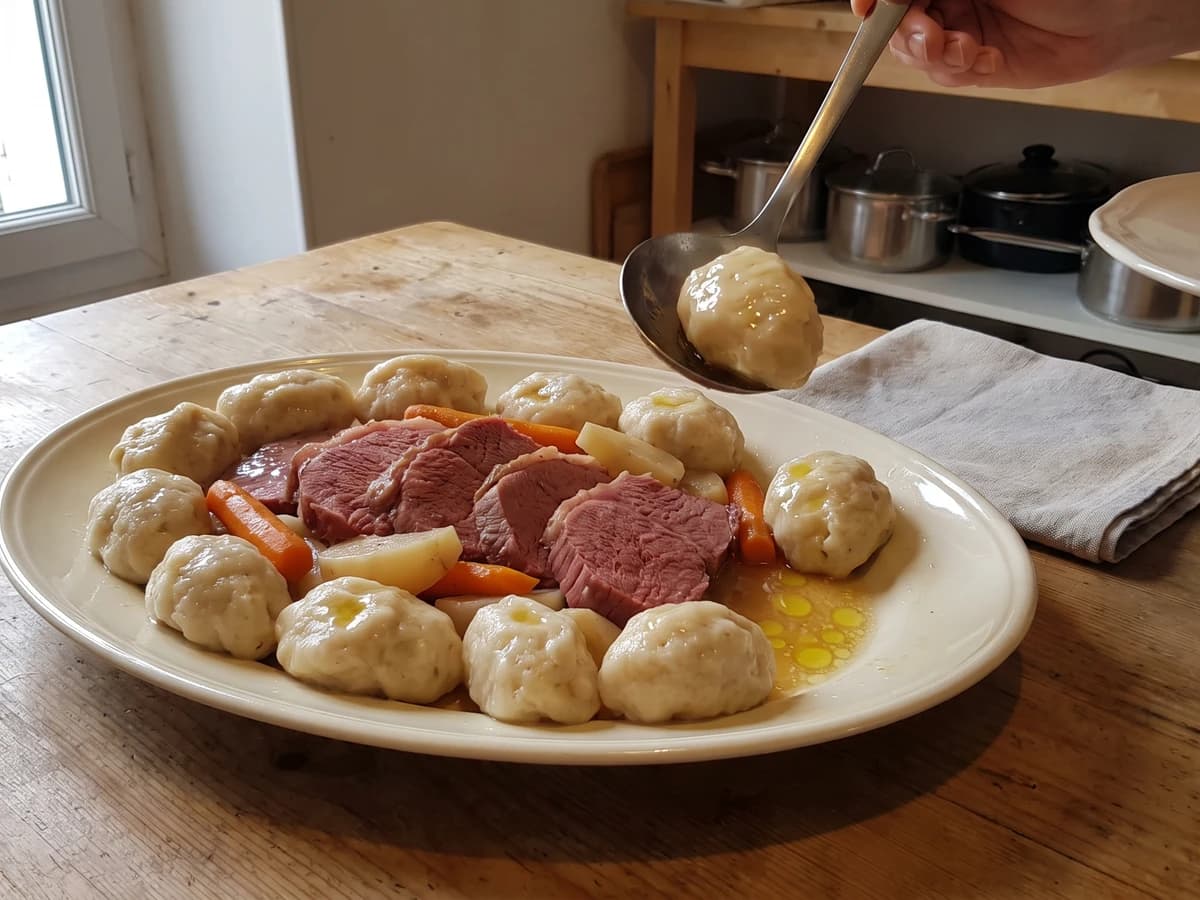
Suet Dumpling
Boulettes au suif, poached beside salt beef, turn equal weights of flour and finely chopped suet into tender, rich dumplings. Keep the beef liquor at a bare tremble and the old garnish works beautifully at home.
A cooking platform built around craft, culture, and the stories behind what we eat.
Created by Chef Juliette
Based on No. 2029, Cœurs d’Artichauts à la Clamart, from Le Guide Culinaire (1907) by Auguste Escoffier
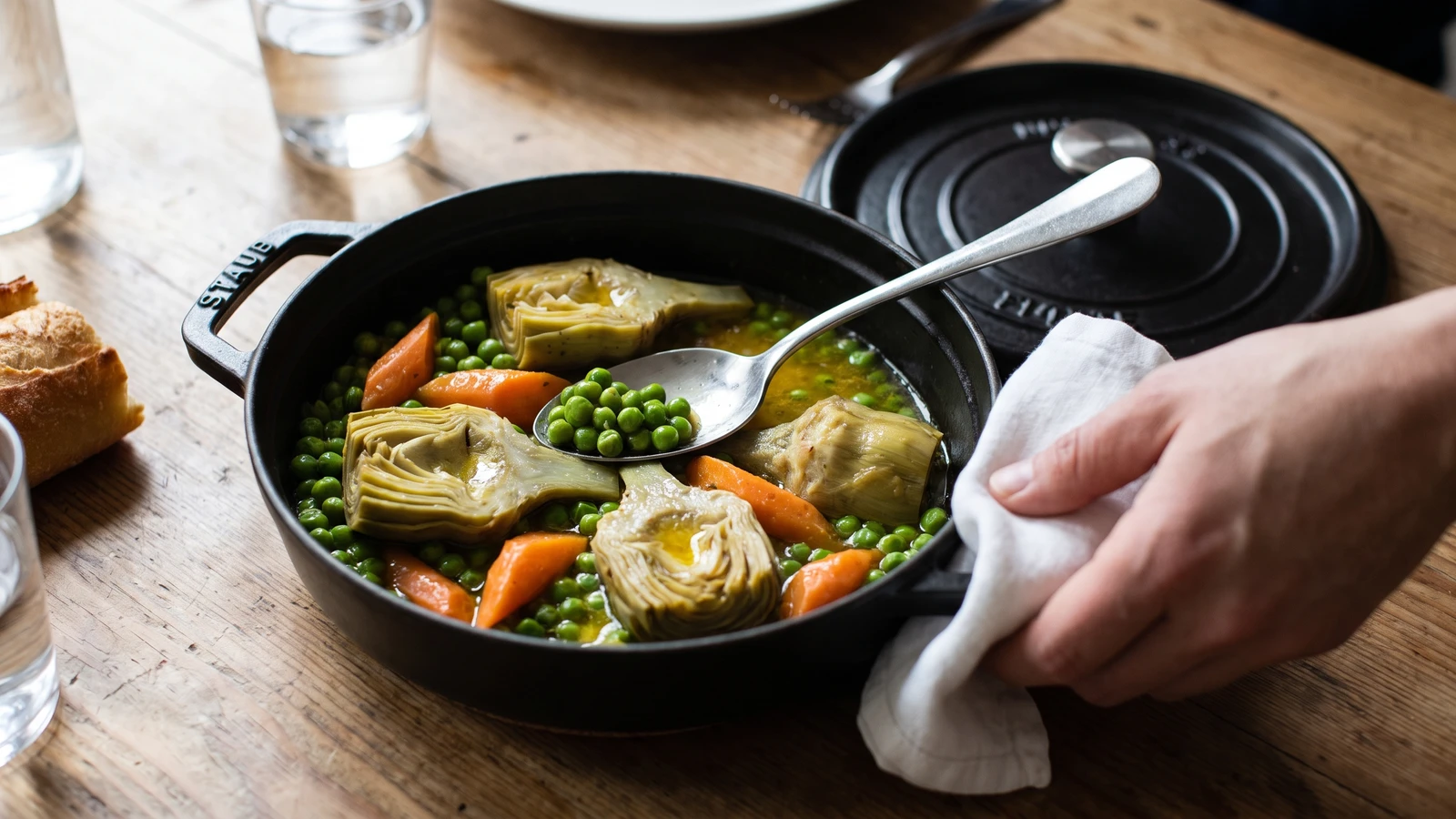
Artichoke hearts, spring peas, and carrot settle into one buttered cocotte, cooking gently until tender before Manied Butter (No. 151) gives their clear vegetable liquor the lightest gloss.
Cœurs d’Artichauts à la Clamart (artichoke hearts with peas) teaches cuisson à l’étuvée, gentle covered cooking in very little liquid. The one true thing to know before you touch the pan is this: the pot must only murmur. A boil knocks the tender hearts about, dulls the peas, and spends the small clear liquor that must become the sauce.
The original kitchen assumed a steamer large enough to hold the cocotte and beurre manié (kneaded butter), preserved as Manied Butter (No. 151), ready for a last-minute liaison. Your home equivalent is a heavy lidded cocotte on the lowest burner and one small measured portion of that finished butter. The large steamer and brigade batch are scaffolding. The covered cuisson and off-boil liaison are the dish, so those stay. One cook, one stove, one evening.
The original uses water, not stock, and that restraint is deliberate: the artichokes, peas, and carrot make their own liquor. At the finish, stop every bubble before you bind it. The liaison must leave a light buttered gloss, not a floury sauce; that is the step that decides the dish.
In classical French nomenclature, à la Clamart signals green peas and takes its name from Clamart, the market-gardening commune southwest of Paris that supplied the capital’s tables for generations. The name does not mean any green vegetable garnish: peas are the defining ingredient, often married with artichoke bottoms because their mild hollows hold the sweet peas neatly. This entry carries that pairing into a cocotte side dish, where artichokes, carrot, and peas cook together in their own buttered liquor.
Quantity
4
Quantity
1 tablespoon (15 ml / 14 g)
softened
Quantity
1
peeled and quartered lengthwise
Quantity
¾ cup (180 ml / 110 g)
measured as 3 tablespoons per artichoke
Quantity
½ cup (120 ml / 120 g), plus up to 2 tablespoons (30 ml / 30 g) if needed
Quantity
1 large
4 parsley stems, 2 thyme sprigs, and 1 bay leaf, tied
Quantity
½ teaspoon (2.5 ml / 3 g)
| Ingredient | Quantity |
|---|---|
| very tender small globe artichokes | 4 |
| unsalted buttersoftened | 1 tablespoon (15 ml / 14 g) |
| small carrotpeeled and quartered lengthwise | 1 |
| freshly shelled peasmeasured as 3 tablespoons per artichoke | ¾ cup (180 ml / 110 g) |
| water | ½ cup (120 ml / 120 g), plus up to 2 tablespoons (30 ml / 30 g) if needed |
| bouquet garni4 parsley stems, 2 thyme sprigs, and 1 bay leaf, tied | 1 large |
| fine salt | ½ teaspoon (2.5 ml / 3 g) |
| Manied Buttercool-soft | 2 teaspoons (10 ml / 10 g) Manied Butter (No. 151) |
Rub the softened butter generously over the bottom and lower sides of a 3-quart cocotte. Pour in the water and keep the lid beside you. The trimmed artichokes will go directly into this shallow liquid, which limits browning without introducing lemon or another flavour the preparation does not call for.
Work on one artichoke at a time. Pull away the tough dark outer leaves until the tender pale leaves appear, shorten the stem to about 1 inch, and pare away its fibrous skin and any dark green flesh around the base. Slice off the upper third. If you find a developed fuzzy choke, scoop it out carefully with a teaspoon; very young artichokes may have none. Put each compact heart straight into the cocotte, cut side down, and replace the lid while you trim the next.
Set the artichoke hearts upright and tuck the carrot quarters between them. Distribute the peas evenly, keeping the book’s ratio of 3 tablespoons around each artichoke, then add the bouquet garni and sprinkle over the salt. Cover tightly. Do not add stock. Water allows the clean taste of the vegetables and butter to remain the whole foundation.
Set the covered cocotte over medium-low heat only until the liquor begins to shiver at the edge, then reduce the burner to its lowest setting. Cook without stirring for 25 to 35 minutes, turning the cocotte a quarter turn occasionally if your burner heats unevenly. The hearts are ready when a paring knife enters their thick bases with little resistance, the carrot is tender, and the peas remain whole. If the pot threatens to dry before the artichokes are tender, add 1 tablespoon (15 ml / 15 g) hot water and cover again. If it boils hard, pull it off the burner at once and add the same spoonful of water to calm it. Ça se rattrape.
Remove and discard the bouquet garni, then take the cocotte completely off the heat and wait until every bubble stops. Tilt the pot slightly so the liquor gathers at one side. Work in 1 teaspoon (5 ml / 5 g) of the Manied Butter (No. 151), pressing it against the warm wall of the cocotte with a wooden spoon until it disperses, then add the second teaspoon only if the liquor still runs like water. It should barely coat the vegetables. Do not let it boil after this liaison, or an unpleasant raw-flour taste can appear. If little knots form, press them against the side and work a spoonful of liquor through them; if the sauce becomes too thick, loosen it with hot water a teaspoon at a time.
Settle the artichokes upright, spoon the peas, carrot, and glossy liquor around them, and taste the liquor for salt. Bring the cocotte directly to the table while the vegetables are tender and the liaison still gleams. Cooking well is not cooking fancy. À table!
1 serving (about 130g)
Culinary guides, cultural storytelling, and the editorial depth that makes cooking meaningful.
Discover Culinary ExplorerChef Juliette
Boulettes au suif, poached beside salt beef, turn equal weights of flour and finely chopped suet into tender, rich dumplings. Keep the beef liquor at a bare tremble and the old garnish works beautifully at home.

Chef Juliette
Bread, flour, frangipane, and rice become four cool, supple panades for binding forcemeats, each changing body and flavor while preserving tenderness. The finest Mousselines need none, and knowing that distinction is the lesson.

Chef Juliette
Panade au pain is bread, milk, salt, heat, and attention: stir until the paste releases cleanly, butter it against a skin, and you have the quiet binder behind tender French farces.

Chef Juliette
Panade de farine teaches the drying stroke behind pâte à choux: flour meets boiling buttered water, then stays over the fire until the paste gathers, smooths, and quits the pan cleanly.