Chef Juliette
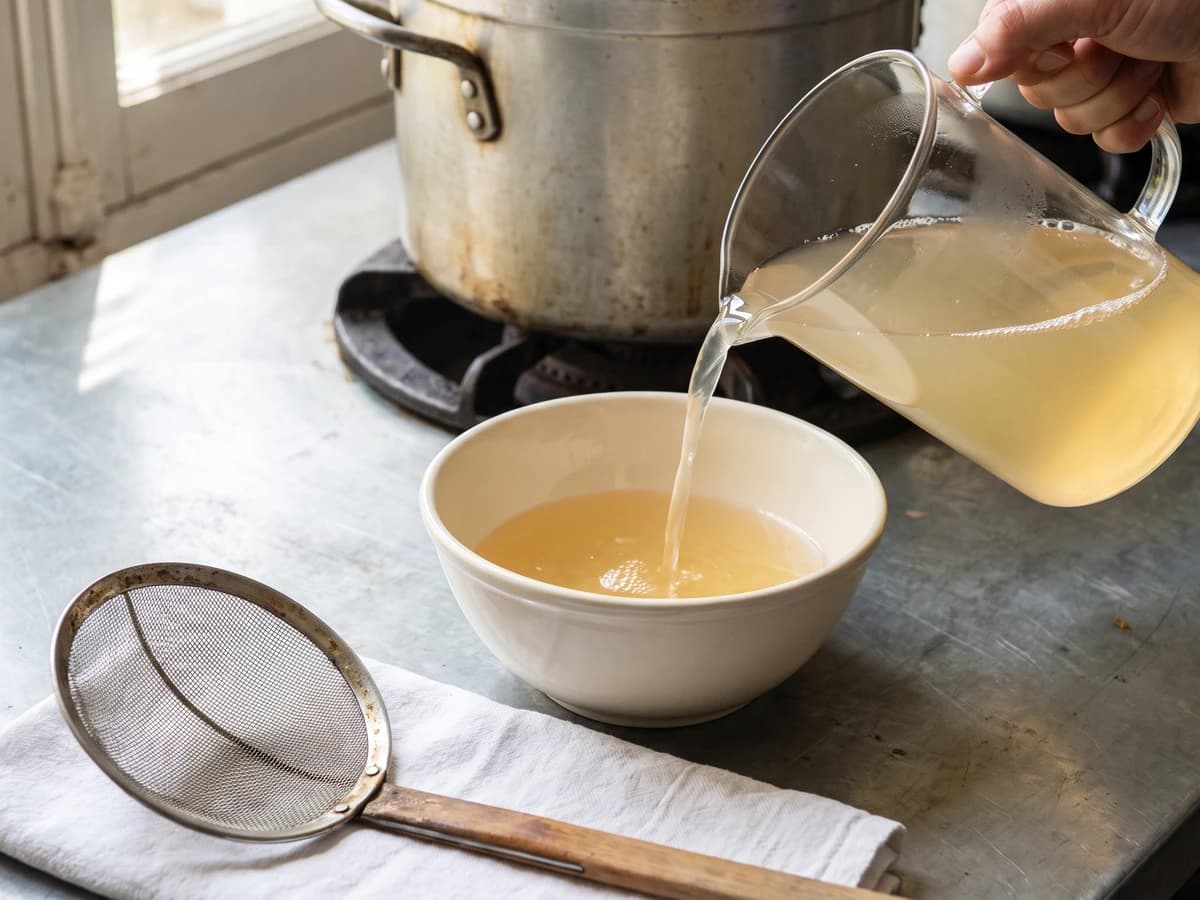
Ordinary or White Consommé
Beef shin, lean beef, and fowl begin in cold water and rise slowly toward a tremble. Skim before the boil, and you learn the quiet discipline that gives every clear French broth its backbone.
A cooking platform built around craft, culture, and the stories behind what we eat.
Created by Chef Juliette
Based on No. 151, Manied Butter, from Le Guide Culinaire (1907) by Auguste Escoffier
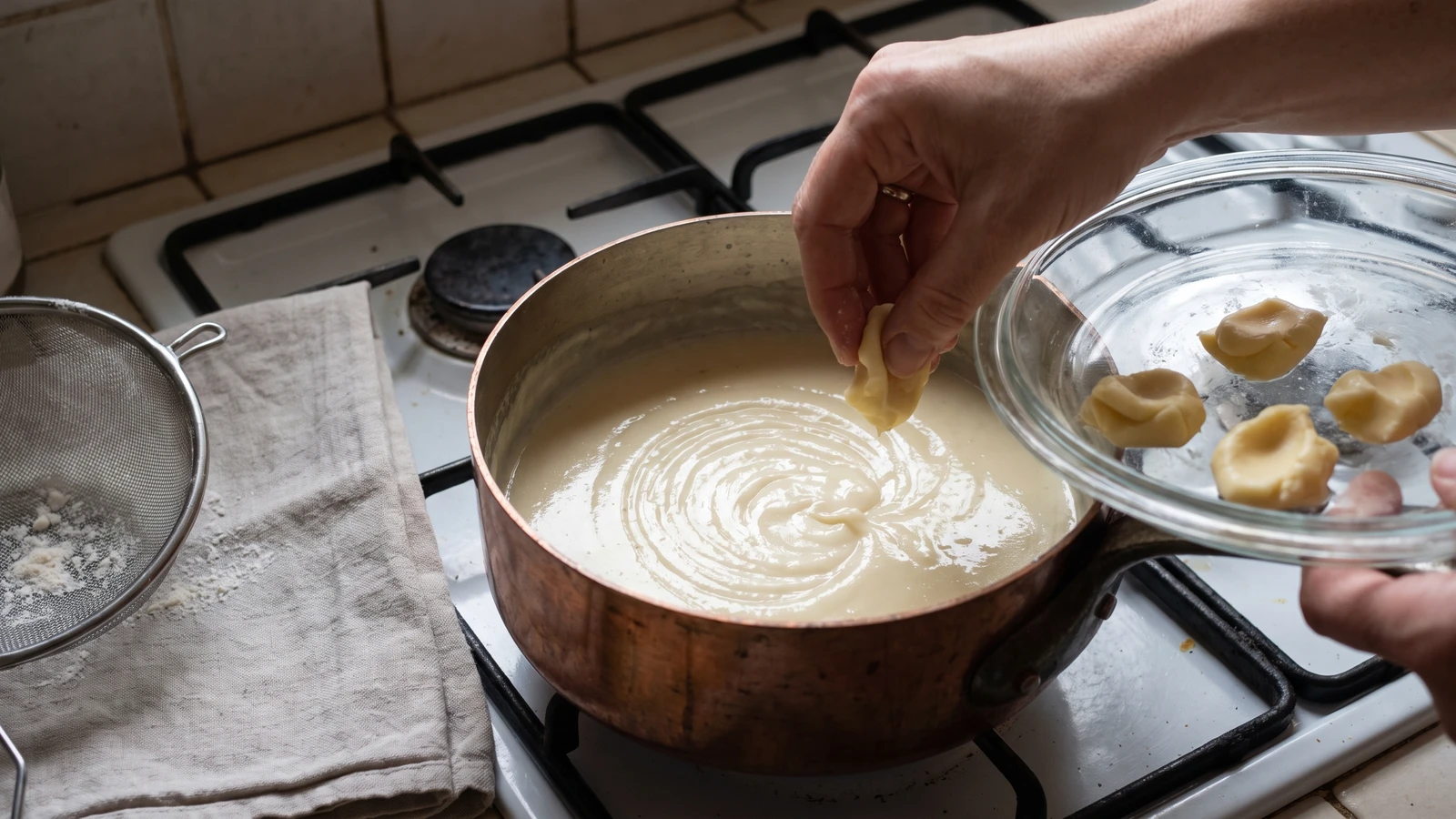
A last-minute liaison of real butter and sifted flour, kneaded smooth and whisked into hot sauce without boiling, ready to give a matelote or pan sauce its final, silken body.
Beurre manié teaches the last-minute liaison, the final thickening that corrects a finished sauce without beginning again with a roux. The one true thing to know is simple: knead the butter and flour into a perfectly seamless paste, then keep the sauce from boiling once the paste enters. This is precision, not complication.
The source assumed a saucier at the pass, a finished sauce already built on its fond or reduction, and several pans requiring attention at once. Your home kitchen has one sauce and one pair of hands. The book's seven-ounce batch was sized for that broader service, so this version halves it for up to two quarts of already-reduced sauce while preserving the exact four-to-three proportion of butter to flour. The brigade quantity is scaffolding and can go. The last-minute kneading and quiet finish are the dish, and they stay.
Add the beurre manié by degrees, because a liaison should correct the body without announcing itself. If the sauce becomes lumpy or too thick, ça se rattrape, and the method gives you the way back. Before you meet the pan, remember the step that decides everything: knead until not one speck of dry flour remains.
Beurre manié belongs to the classical French saucier's station, where it served as a last-minute liaison for matelotes and other sauces that reached service a little too loose. It passed naturally into cuisine bourgeoise because kneading butter and flour required no separate roux pan or special equipment, only judgment at the final moment. It is often confused with roux, but the distinction is the method: roux is cooked before liquid enters, while beurre manié stays uncooked until it is dispersed into an already-finished sauce and is never boiled afterward.
Quantity
¼ cup (60 ml / 2 oz / 57 g)
softened until pliable but not melted
Quantity
⅓ cup plus 1 teaspoon (85 ml / 1½ oz / 43 g)
sifted
| Ingredient | Quantity |
|---|---|
| unsalted buttersoftened until pliable but not melted | ¼ cup (60 ml / 2 oz / 57 g) |
| all-purpose floursifted | ⅓ cup plus 1 teaspoon (85 ml / 1½ oz / 43 g) |
Bring up to 2 quarts of fully flavored, already-reduced sauce to the point where its seasoning is correct but its body remains a little light. Set aside about 1 cup before thickening, then hold the pan just below a simmer. Beurre manié corrects consistency; it cannot supply a fond, reduction, or seasoning that the sauce never received.
Measure the butter and flour, preferably by weight, so the source's exact four-to-three proportion remains intact. Sift the flour into a medium bowl, breaking up every compacted speck. The butter should yield beneath a fingertip while still looking matte; if it shines or pools, it is too warm.
Add the softened butter to the sifted flour. Pinch the two together with your fingertips, then press and smear the mixture firmly against the bowl with a flexible spatula until it becomes a uniform, pale paste with no white streaks, dry pockets, or loose crumbs, about 2 to 3 minutes. If the mixture crumbles, let the butter soften for 5 minutes and continue; if it turns greasy, chill it for 5 minutes before kneading again.
Pinch the beurre manié into teaspoon-sized pieces. With the sauce hot but its surface quiet, whisk in one piece and wait until it disappears completely before adding another. The body develops quickly, so stop when the sauce reaches nappe, the coating stage where it covers the back of a spoon and a finger drawn through it leaves a clean path. Do not add the entire batch automatically. If lumps appear, lift the pan from the heat and whisk firmly; if they remain, pass the sauce through the fine-mesh sieve. Ça se rattrape.
Hold the thickened sauce below a simmer for 2 to 3 minutes, stirring gently so the flour hydrates without the surface breaking into bubbles. If the sauce tightens too far, whisk in the reserved unthickened sauce a spoonful at a time. If it begins to boil, pull the pan from the heat immediately and cool it with a little of that same reserved sauce; one stray bubble is recoverable, but sustained boiling brings forward the disagreeable flour taste the source warns against. Taste, adjust the consistency, and serve at once. À table!
1 serving (about 100g)
Culinary guides, cultural storytelling, and the editorial depth that makes cooking meaningful.
Discover Culinary ExplorerChef Juliette
Beef shin, lean beef, and fowl begin in cold water and rise slowly toward a tremble. Skim before the boil, and you learn the quiet discipline that gives every clear French broth its backbone.
Chef Juliette
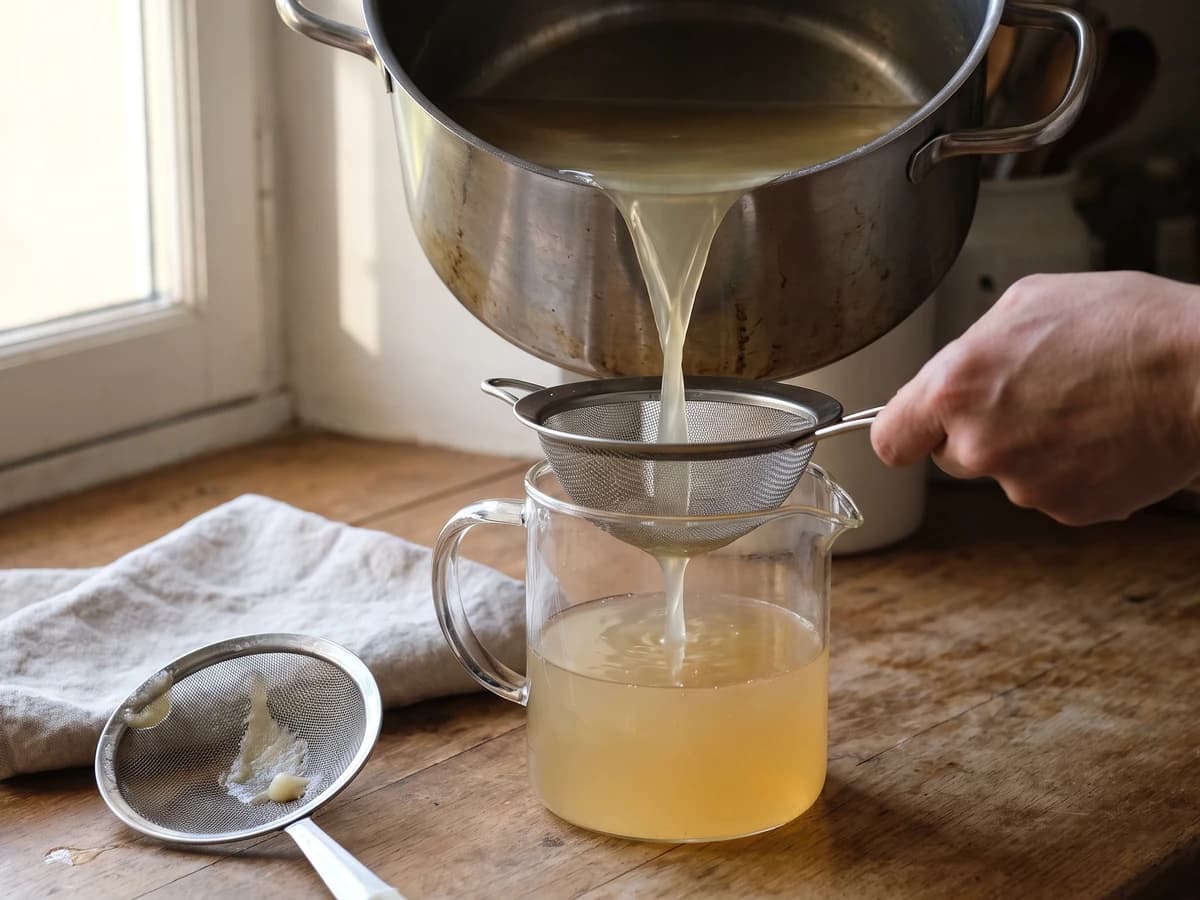
Break the veal bones small, then give them eight hours at a bare tremble. This pale, gelatinous fond becomes the quiet foundation beneath velouté, blanquette, and every sauce that must stay light.
Chef Juliette
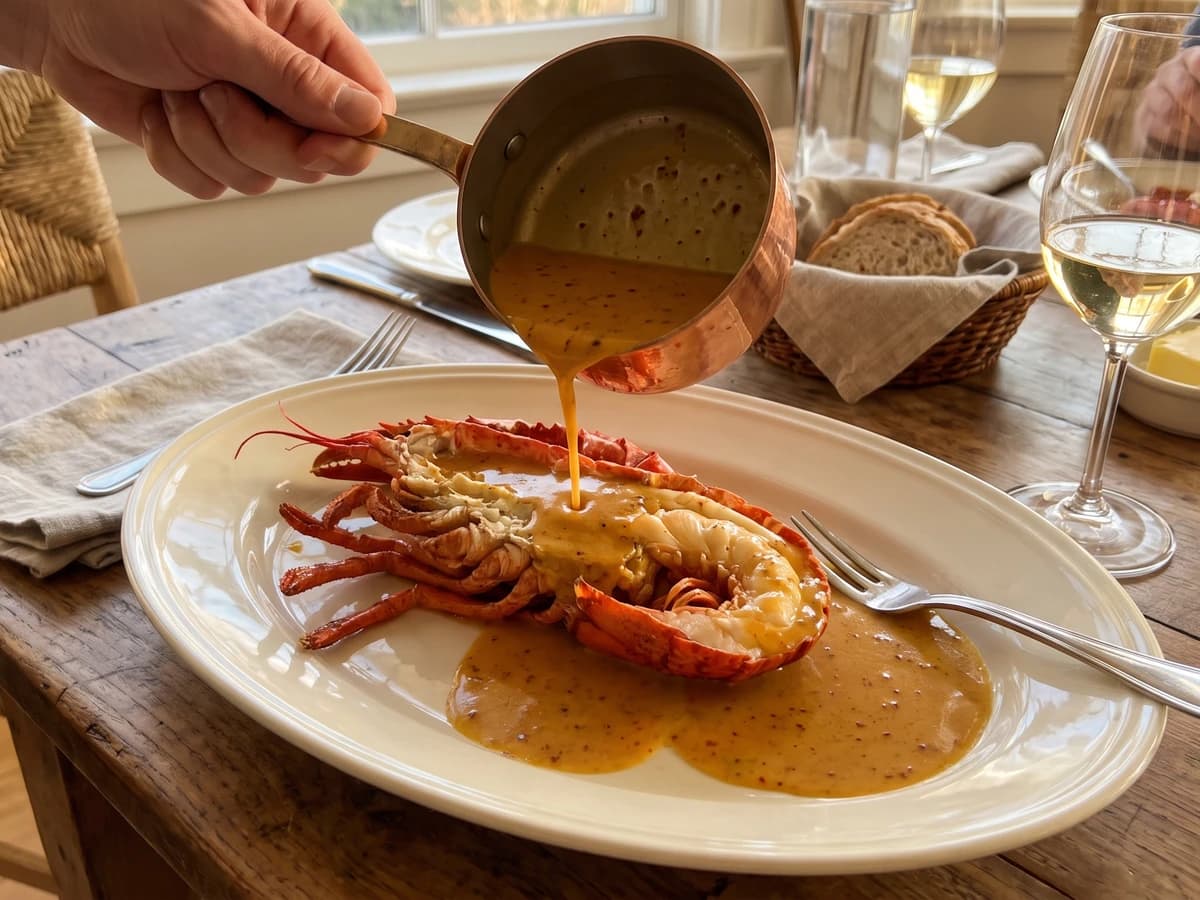
Sauce Orientale concentrates lobster-rich American Sauce with curry, then folds in cream away from the fire: a glossy, gently spiced derivative made for lobster, crayfish, and firm fish.
Chef Juliette
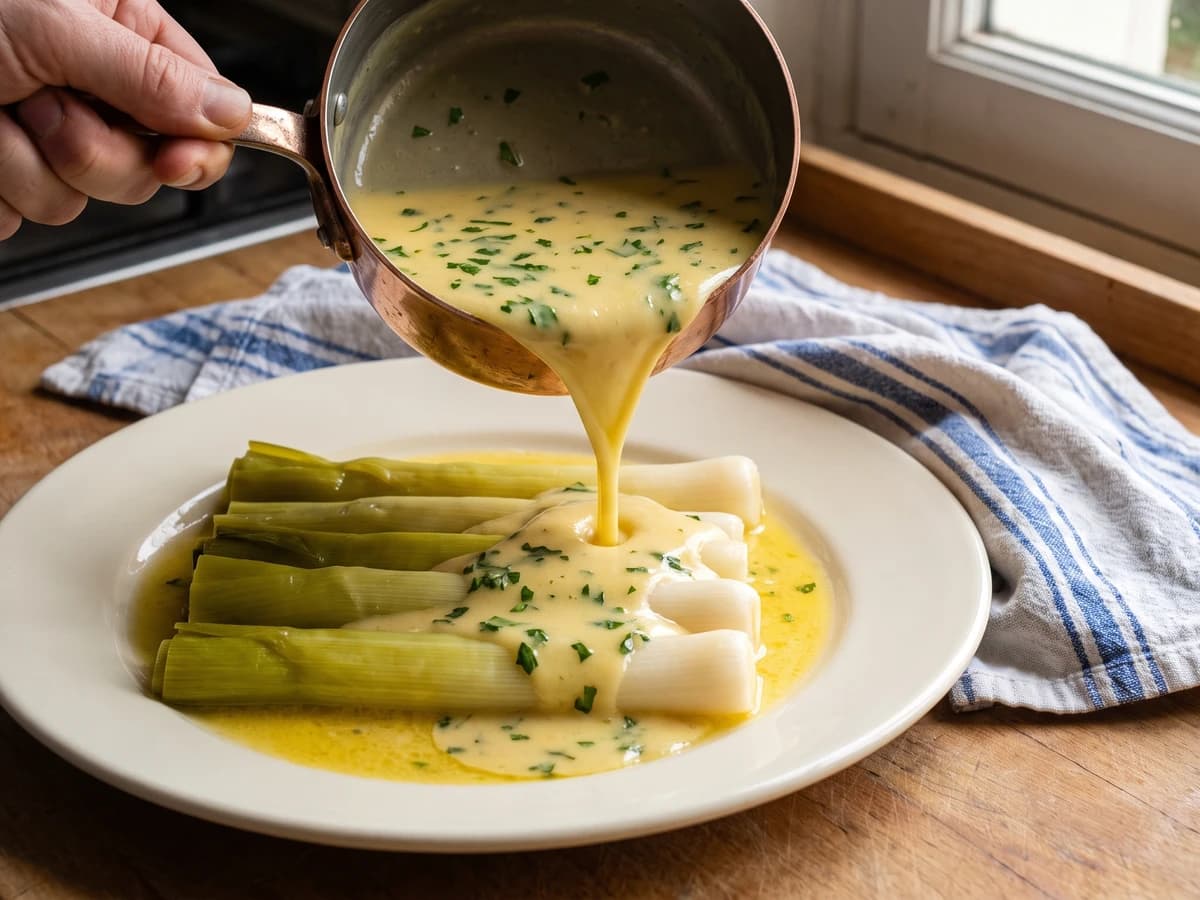
An old lesson in sauce families: Sauce Allemande takes mushroom liquor, then butter, lemon, and parsley, becoming a glossy Poulette for sheep's trotters, leeks, cauliflower, and anything needing gentle richness with a bright edge.