Chef Juliette
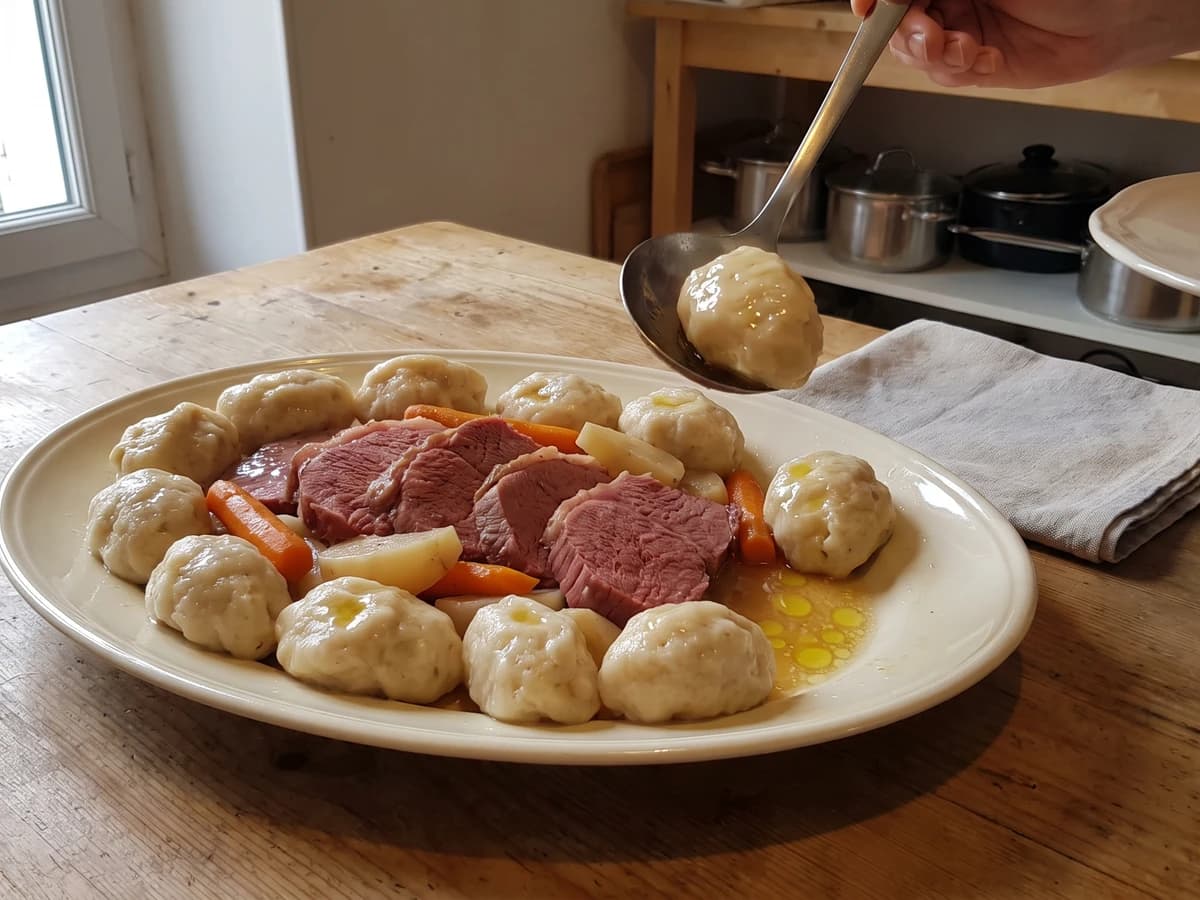
Suet Dumpling
Boulettes au suif, poached beside salt beef, turn equal weights of flour and finely chopped suet into tender, rich dumplings. Keep the beef liquor at a bare tremble and the old garnish works beautifully at home.
A cooking platform built around craft, culture, and the stories behind what we eat.
Created by Chef Juliette
Based on No. 2034, Fonds d’Artichauts à la Florentine, from Le Guide Culinaire (1907) by Auguste Escoffier
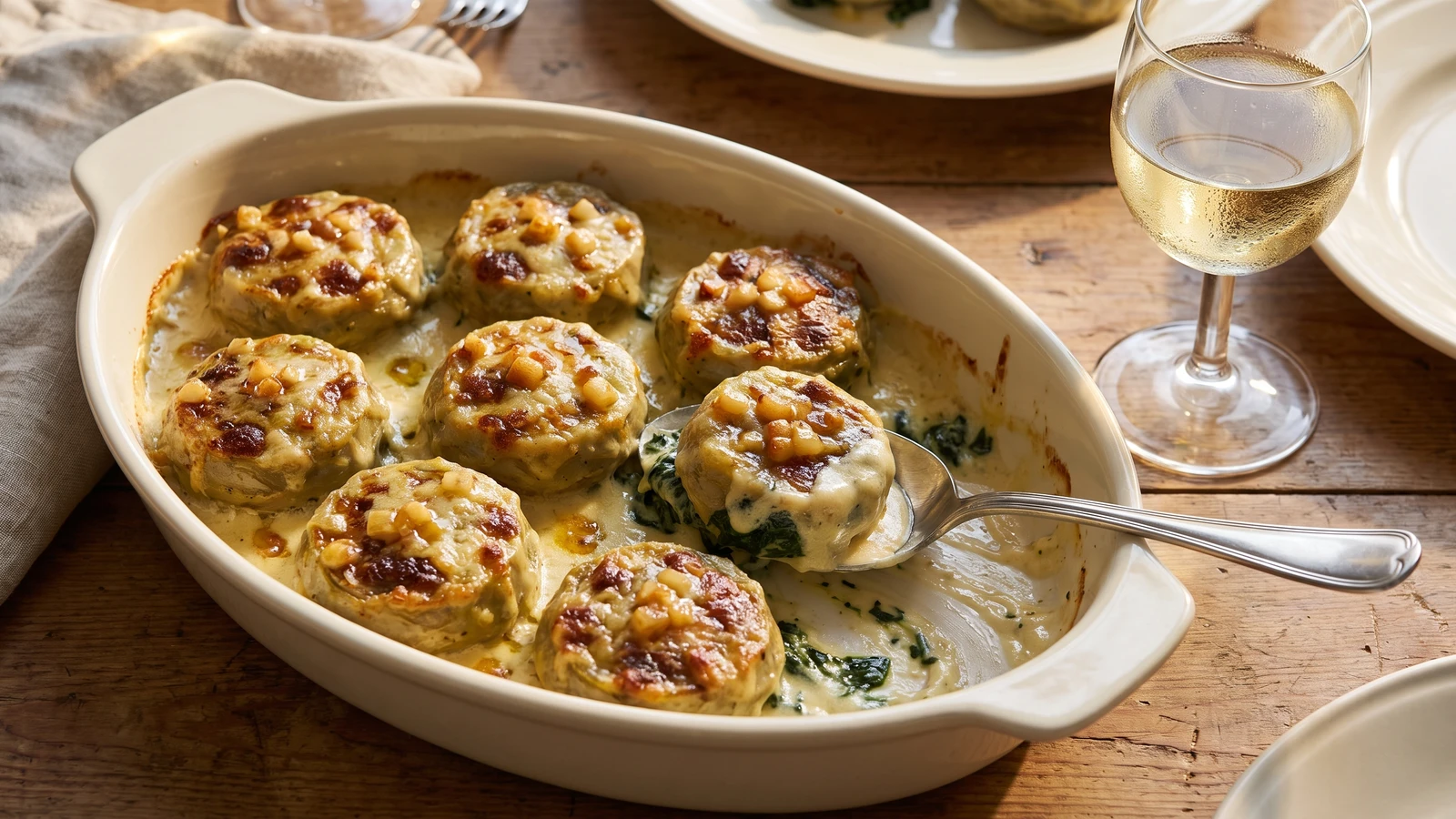
Tender artichoke bottoms cradle spinach cooked dry with onion, garlic, and anchovy, then disappear beneath ivory Mornay and tiny dice of Gruyère before a fierce final glaze.
Fonds d’Artichauts à la Florentine (artichoke bottoms with spinach and Mornay) teaches one severe, useful truth: spinach must surrender all its water before it meets a sauce. Leave it damp and the filling slumps, the artichokes swim, and the Mornay loses its silken coat. Cook it until the pan is dry and the spinach holds a mound, and every layer remains distinct beneath that bronzed glaze.
The original kitchen assumed twelve artichokes, a saucier with Velouté and Mornay ready, a stockpot never cold, and a fierce oven or salamander waiting for the final colour. Here, eight bottoms serve four generously. Prepared fresh or frozen bottoms replace the separate turning and poaching station, the two finished sauces can wait in the cold, and your broiler supplies the glaze. That preparation is brigade scaffolding. The onion cooked in butter, the spinach dried over the fire, the ten gentle minutes with Velouté, and the finishes of Mornay, Gruyère, and anchovy butter are the dish itself, so they stay.
Watch the spinach, not the clock. When it hisses instead of simmering and a spoon leaves the pan floor clean, you may add the Velouté. That is the step that decides everything. One cook, one stove, one evening.
Fonds d’Artichauts à la Florentine belongs to the Parisian grand-kitchen repertory, where à la Florentine became a precise garnish name for spinach, often bound with sauce and finished as a gratin. The familiar tale credits the name to Catherine de’ Medici and her Florentine household, but that tidy origin is disputed; within the French canon, Florentine records a working combination rather than proof of one inventor. The dish passed readily to cuisine bourgeoise because the filled bottoms can wait in their baking dish and receive their final glaze just before the table is called.
Quantity
8 large
cooked just tender and well drained
Quantity
1⅓ packed cups (320 ml / 200 g)
squeezed very dry and chopped
Quantity
2 tablespoons (30 ml / 28 g)
divided
Quantity
¾ cup (180 ml / 130 g)
finely chopped
Quantity
¼ teaspoon (1.25 ml / 1 g)
Quantity
2 teaspoons (10 ml / 12 g)
Quantity
½ teaspoon (2.5 ml / 3 g)
Quantity
¼ teaspoon (1.25 ml / 0.5 g)
Quantity
1 tablespoon plus 1 teaspoon (20 ml / 20 g)
Quantity
1¼ cups (300 ml / 300 g)
warmed until fluid
Quantity
⅔ cup (160 ml / 80 g)
cut brunoise-fashion into ⅛-inch (3 mm) dice
Quantity
1 tablespoon (15 ml / 14 g)
melted
| Ingredient | Quantity |
|---|---|
| prepared artichoke bottomscooked just tender and well drained | 8 large |
| parboiled spinachsqueezed very dry and chopped | 1⅓ packed cups (320 ml / 200 g) |
| unsalted butterdivided | 2 tablespoons (30 ml / 28 g) |
| yellow onionfinely chopped | ¾ cup (180 ml / 130 g) |
| fresh garlic paste | ¼ teaspoon (1.25 ml / 1 g) |
| anchovy purée | 2 teaspoons (10 ml / 12 g) |
| fine sea salt | ½ teaspoon (2.5 ml / 3 g) |
| freshly ground black pepper | ¼ teaspoon (1.25 ml / 0.5 g) |
| prepared Velouté sauce | 1 tablespoon plus 1 teaspoon (20 ml / 20 g) |
| prepared Mornay saucewarmed until fluid | 1¼ cups (300 ml / 300 g) |
| Gruyèrecut brunoise-fashion into ⅛-inch (3 mm) dice | ⅔ cup (160 ml / 80 g) |
| anchovy buttermelted | 1 tablespoon (15 ml / 14 g) |
Heat the oven to 450°F (230°C) with a rack about 6 inches (15 cm) below the broiler. Butter a shallow broiler-safe gratin dish with 1 teaspoon of the butter. Blot the cooked artichoke bottoms thoroughly, paying attention to the hollow centres, then arrange them hollow-side up. Water trapped there would dilute both filling and sauce.
Melt the remaining butter in a wide sauté pan over medium-low heat. Add the onion and cook for 7 to 9 minutes, stirring often, until tender and translucent with only the faintest gold. The onion should sweeten without becoming brown. If it catches, add a teaspoon of water, lower the heat, and scrape the pale fond back into the onion.
Add the chopped spinach and raise the heat to medium-high. Stir, turn, and press it across the broad surface of the pan until every trace of free moisture has evaporated, about 5 to 7 minutes. It is ready when it hisses rather than simmers, looks almost matte, and a spoon drawn through it leaves the pan floor dry. If liquid gathers, do not add the sauce. Keep spreading and stirring. If you have already bound it and the filling slumps, return it to the wide pan and cook gently until it holds a mound. Ça se rattrape.
Lower the heat. Add the salt, pepper, garlic paste, and anchovy purée, stirring for 30 seconds so the garlic loses its raw edge. Fold in the prepared Velouté sauce and cook very gently for 10 minutes, stirring often, until the mixture is compact, glossy, and cohesive. Do not let it scorch or boil hard. Taste before adding more salt, since both the anchovy and Velouté bring their own.
Divide the spinach mixture among the eight artichoke bottoms, pressing it into the hollows and shaping each portion into a generous low dome. Spoon the warm Mornay over every bottom so the sauce coats the filling and runs just slightly around the base. Scatter the Gruyère brunoise, the tiny dice named by the classical cut, evenly over the sauce. The cheese is diced rather than grated because those small cubes melt into distinct bronzed points.
Bake for 7 to 10 minutes, until the Mornay bubbles at the edges. Switch to the broiler and watch without leaving the oven: 30 to 90 seconds should give a deep butter-gold glaze with brown freckles. If the top colours before the centres are hot, move the dish to a lower rack and continue baking without the broiler. On withdrawing the dish, place only a few drops of melted anchovy butter over each bottom. Serve at once from the gratin dish. À table!
1 serving (about 270g)
Culinary guides, cultural storytelling, and the editorial depth that makes cooking meaningful.
Discover Culinary ExplorerChef Juliette
Boulettes au suif, poached beside salt beef, turn equal weights of flour and finely chopped suet into tender, rich dumplings. Keep the beef liquor at a bare tremble and the old garnish works beautifully at home.

Chef Juliette
Bread, flour, frangipane, and rice become four cool, supple panades for binding forcemeats, each changing body and flavor while preserving tenderness. The finest Mousselines need none, and knowing that distinction is the lesson.

Chef Juliette
Panade au pain is bread, milk, salt, heat, and attention: stir until the paste releases cleanly, butter it against a skin, and you have the quiet binder behind tender French farces.

Chef Juliette
Panade de farine teaches the drying stroke behind pâte à choux: flour meets boiling buttered water, then stays over the fire until the paste gathers, smooths, and quits the pan cleanly.