Chef Juliette
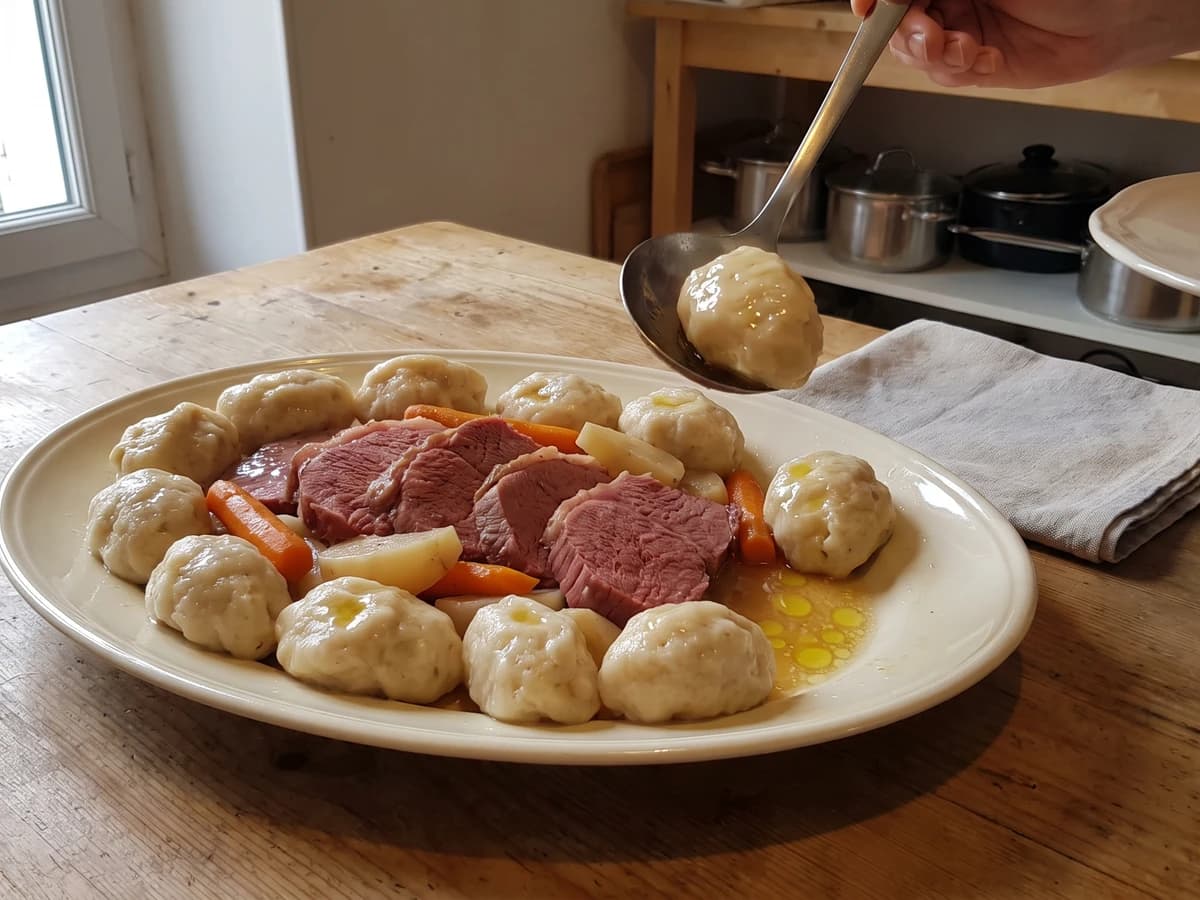
Suet Dumpling
Boulettes au suif, poached beside salt beef, turn equal weights of flour and finely chopped suet into tender, rich dumplings. Keep the beef liquor at a bare tremble and the old garnish works beautifully at home.
A cooking platform built around craft, culture, and the stories behind what we eat.

Created by Chef Juliette
Based on No. 2052, Cardoons (Cardons), from Le Guide Culinaire (1907) by Auguste Escoffier
Cardons au blanc turn a thorny stalk into a pale, tender Christmas side: peel relentlessly, defend every cut from air, then simmer gently beneath veal fat until a knife slips through.
Cardons au blanc (cardoons cooked in a pale flour-and-lemon court-bouillon) teach one true thing before you touch the pan: air is the enemy. A peeled stalk oxidizes with astonishing speed, so each clean piece must meet lemon and acidulated water at once. Keep it pale first, then make it tender.
The original kitchen mixed the Special Court-bouillon, or Blanc (No. 167) in a five-quart batch and protected the broad surface with a pound of chopped veal fat. For four servings, two quarts of Blanc and 180 grams of fat preserve that proportion; a snug saucepan and a cartouche (parchment lid) give the home cook the same shelter from air. The great volume was brigade scaffolding. The acidulated hold, the Blanc, and the protective fat are the dish, so they stay. One cook, one stove, one evening.
When they are ready, the cardons are ivory-pale, gently lemony, and tender enough for a knife to enter without force, but still whole enough to lift into the serving dish. There is no browning to hide careless preparation. Have the acidulated water waiting before you make the first cut.
Cardons hold a special place at Christmas tables in Lyon and Provence, where careful peeling and long cooking transform the thistle-like stalk from bitter and fibrous to tender and faintly artichoke-like. The regional finishes remain distinct: around Lyon, cardons are often paired with marrow or meat juices, while Provençal Christmas tables may dress them with anchovy or bake them in a gratin. The grand kitchen carried the household practice into its system of preparations, using a Blanc to keep the stalks pale and ready for whatever regional finish followed.
Quantity
1 large head, about 2 pounds (900 g)
Quantity
2
1 juiced and 1 halved for rubbing
Quantity
6 cups (1.4 L / 1.4 kg)
Quantity
2 quarts (1.9 L / 1.9 kg) Special Court-bouillon, or Blanc (No. 167)
prepared
Quantity
1½ loosely packed cups (360 ml / 180 g)
chilled and finely chopped
| Ingredient | Quantity |
|---|---|
| cardoon | 1 large head, about 2 pounds (900 g) |
| large lemons1 juiced and 1 halved for rubbing | 2 |
| cold water | 6 cups (1.4 L / 1.4 kg) |
| Special Court-bouillon, or Blancprepared | 2 quarts (1.9 L / 1.9 kg) Special Court-bouillon, or Blanc (No. 167) |
| fresh veal fatchilled and finely chopped | 1½ loosely packed cups (360 ml / 180 g) |
Pour the cold water into a large nonreactive bowl and squeeze in the juice of one lemon. Keep the halved second lemon beside your cutting board. Do this before trimming anything, because once a cardon is peeled the clock has already begun.
Discard the tough green outer leaf-stalks and detach the pale inner stalks one by one. Cut them into 3-inch (7.5 cm) lengths, then use a paring knife or sturdy peeler to pull away the fibrous strings from the ridges, edges, and hollow inner face. Rub every peeled surface with the cut lemon and drop each piece immediately into the acidulated water. Trim the heart, remove every coarse or woody part, cut it into similar lengths, and treat it the same way. If a piece greys before reaching the bowl, shave away the thinnest surface layer, rub it with lemon, and submerge it. Ça se rattrape. Acid prevents further darkening, but it will not bleach a blackened patch.
Pour the prepared Special Court-bouillon, or Blanc (No. 167) into a 4-quart (3.8 L) nonreactive saucepan. Bring it to a full boil while whisking steadily so its flour remains suspended. If flour has settled or formed small lumps during storage, whisk firmly and pass the liquid through a fine sieve before the cardons enter. Ça se rattrape.
Lift the cardons from their acidulated water without rinsing and lower them, one by one, into the boiling Special Court-bouillon, or Blanc (No. 167). Press them beneath the liquid, then scatter the finely chopped veal fat evenly across the entire surface. Lay a cartouche directly over the fat and liquid, pressing it to the edges of the pan, and cover with the lid. No stalk should sit exposed above the protective layer; air is what turns a cardon black.
As soon as the liquid returns to the boil, lower the heat until it barely trembles. Cook gently for about 1 hour 30 minutes, checking after 1 hour 15 minutes and replacing the cartouche at once. The cardons are ready when a paring knife enters the thickest rib with little resistance and no stringy pull. If the pot boils hard, lift it off the heat until calm and return it over a lower flame; rough boiling breaks the tender pieces, but the cooking can continue.
Lift away the cartouche and skim off the protective veal fat. Transfer the cardons carefully to a warmed serving dish with a slotted spoon, letting each piece drain briefly without leaving it to dry. Taste one while warm: it should be tender, lightly seasoned, and gently sharpened by lemon. Serve at once. À table!
1 serving (about 150g)
Culinary guides, cultural storytelling, and the editorial depth that makes cooking meaningful.
Discover Culinary ExplorerChef Juliette
Boulettes au suif, poached beside salt beef, turn equal weights of flour and finely chopped suet into tender, rich dumplings. Keep the beef liquor at a bare tremble and the old garnish works beautifully at home.

Chef Juliette
Bread, flour, frangipane, and rice become four cool, supple panades for binding forcemeats, each changing body and flavor while preserving tenderness. The finest Mousselines need none, and knowing that distinction is the lesson.

Chef Juliette
Panade au pain is bread, milk, salt, heat, and attention: stir until the paste releases cleanly, butter it against a skin, and you have the quiet binder behind tender French farces.

Chef Juliette
Panade de farine teaches the drying stroke behind pâte à choux: flour meets boiling buttered water, then stays over the fire until the paste gathers, smooths, and quits the pan cleanly.