Chef Juliette
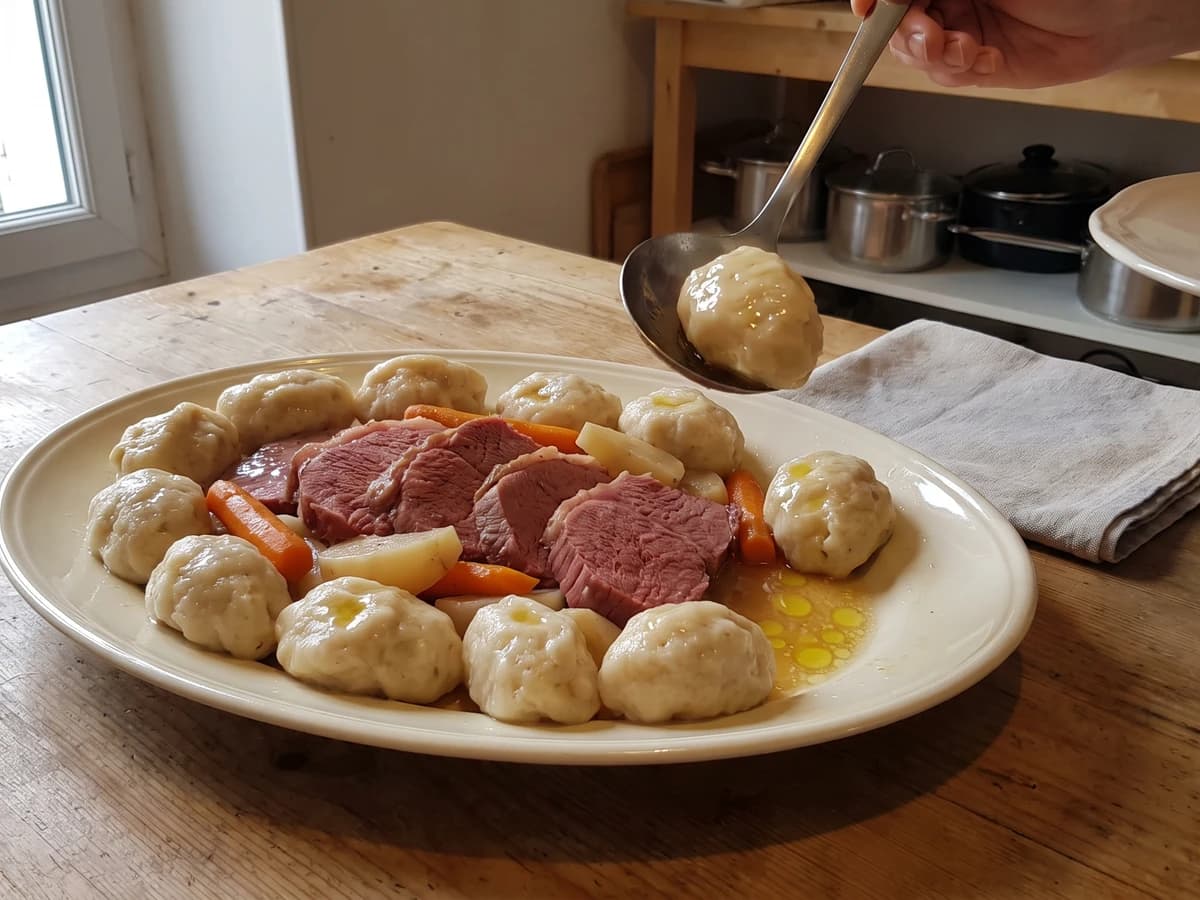
Suet Dumpling
Boulettes au suif, poached beside salt beef, turn equal weights of flour and finely chopped suet into tender, rich dumplings. Keep the beef liquor at a bare tremble and the old garnish works beautifully at home.
A cooking platform built around craft, culture, and the stories behind what we eat.
Created by Chef Juliette
Based on No. 2038, Asparagus (Asperges), from Le Guide Culinaire (1907) by Auguste Escoffier
Asperges (asparagus) teach the master vegetable method: sort by thickness, tie gently, and cook in abundant salted water until the stalk yields but the tip still holds.
Asperges (asparagus) teach one of the cleanest lessons in the vegetable canon. Sort the spears by thickness before they touch water. A thin Parisian spear and a stout Argenteuil stalk do not share a clock; cook them together and one surrenders before the other is tender.
The original entry assumed spring-market varieties identified on sight, a great kettle already boiling, hands to tie brigade quantities into bundles, and a silver asparagus drainer waiting at service. For four people, 2 pounds of asparagus, an 8-quart home pot, cotton twine, and a clean linen-lined platter do the same work. I have reduced the quantity and replaced the silver, not changed the intent. The special drainer was service scaffolding; careful cleaning, even bundles, abundant salted water, and prompt draining are the dish.
Cooked properly, the stalk yields cleanly under a knife while the tip remains whole, tender, and unmistakably itself. If a tested spear tastes bitter, move its bundle briefly to fresh water. Ça se rattrape. Before you begin, do the step that decides everything: grade the spears into equal thicknesses.
Asperges earned a distinct place on Parisian spring tables, with Argenteuil, west of the city, becoming synonymous with thick, pale stalks raised beneath mounded earth; Lauris in the Vaucluse supplied an early southern crop, while small green Parisian spears served as both vegetables and garnishes. Pale asparagus is not an undercooked green spear: excluding light during growth prevents chlorophyll from forming, and its thicker skin is peeled before cooking. From these market gardens, the different varieties passed into grand kitchens, where bundles controlled the cooking and perforated silver drainers kept excess water from reaching the table.
Quantity
2 pounds (900 g)
quickly washed, trimmed, peeled as needed, and sorted by thickness
Quantity
4 quarts (3.8 L / 3.8 kg)
for cooking
Quantity
2 tablespoons (30 ml / 36 g)
Quantity
2 quarts (1.9 L / 1.9 kg)
for correcting bitterness after cooking
| Ingredient | Quantity |
|---|---|
| very fresh asparagus, one varietyquickly washed, trimmed, peeled as needed, and sorted by thickness | 2 pounds (900 g) |
| waterfor cooking | 4 quarts (3.8 L / 3.8 kg) |
| fine sea salt | 2 tablespoons (30 ml / 36 g) |
| cool fresh water (optional)for correcting bitterness after cooking | 2 quarts (1.9 L / 1.9 kg) |
Rinse the asparagus quickly in cold water without soaking it, then inspect every tip and stalk. Cut away the dry bases so the spears are an even length. Peel white asparagus from just below the tip to the base, removing every fibrous strip; peel only the tough lower third of thick green stalks, and leave fine green asparagus alone. Sort the finished spears into groups of equal thickness, because equal thickness, not equal length, gives you even cooking.
Divide the asparagus into four small bundles, keeping each thickness together. Tie every bundle loosely with cotton kitchen twine in two places, once near the cut ends and once below the tips. The twine should hold the spears without biting into them. These bundles aren't decoration; they let you remove each grade the instant it is ready, with the tips intact.
Bring the 4 quarts of water to a full boil in a wide 8-quart pot, then add the salt. The generous quantity matters because it returns to the boil quickly after the asparagus goes in and carries away any harsh edge. Line a long platter with a clean, lint-free napkin. If your variety is known to run bitter, set the bowl of cool fresh water beside the stove before you cook.
Lower the bundles gently into the boiling salted water and let the water return promptly to a lively boil, strong enough to cook cleanly but not so violent that it beats the tips apart. Begin testing tiny Parisian spears after 2 minutes, slender green spears after 4 minutes, thick green spears after 6 minutes, and peeled white asparagus after 10 minutes. Lift each bundle when a paring knife enters the thickest part with slight resistance and the tip bends without collapsing, usually 2 to 3 minutes for the smallest spears, 4 to 9 minutes for green asparagus, and 10 to 16 minutes for thick white asparagus. If the water cannot recover within a minute, the pot is crowded; lift half the bundles and cook them in a second round.
Cut one spear from a cooked bundle and taste it. If it has a distinct bitter finish, transfer that bundle immediately to the cool fresh water for 1 minute, changing the water once if the bitterness is strong. Ça se rattrape. Lift it as soon as the harsh edge recedes and drain it thoroughly; a long soak washes away the asparagus along with the bitterness. If the tested spear tastes clean, do not rinse the bundle.
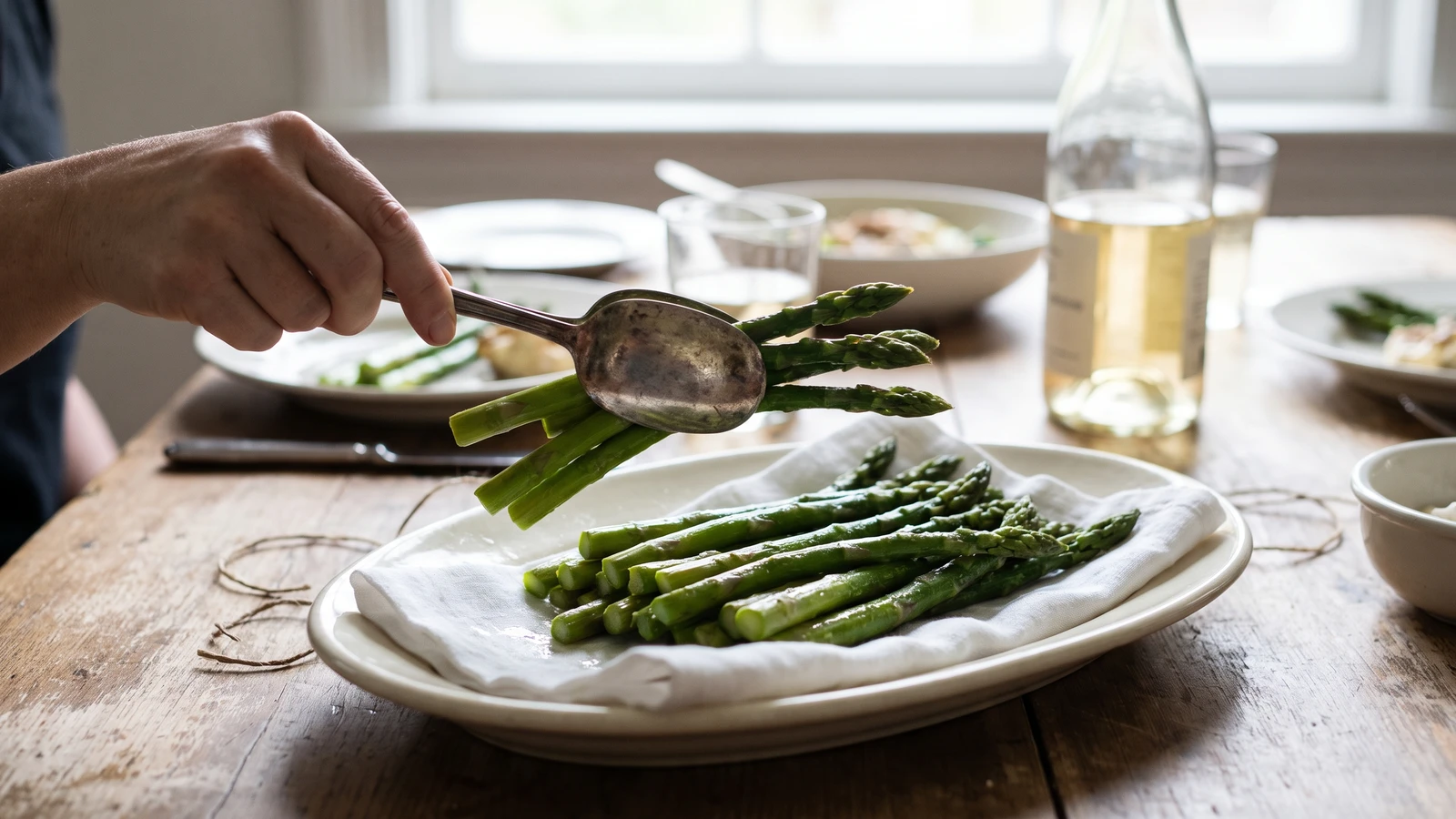
Lift each bundle vertically and let it drain for 15 seconds, then lay it on the linen-lined platter. Snip and remove the twine without disturbing the tips, and arrange the spears with their heads aligned. The cloth is working equipment, not theater; it catches the water that would otherwise collect beneath the vegetable. Serve promptly, warm or at room temperature. Cooking well is not cooking fancy. À table!
1 serving (about 210g)
Culinary guides, cultural storytelling, and the editorial depth that makes cooking meaningful.
Discover Culinary ExplorerChef Juliette
Boulettes au suif, poached beside salt beef, turn equal weights of flour and finely chopped suet into tender, rich dumplings. Keep the beef liquor at a bare tremble and the old garnish works beautifully at home.

Chef Juliette
Bread, flour, frangipane, and rice become four cool, supple panades for binding forcemeats, each changing body and flavor while preserving tenderness. The finest Mousselines need none, and knowing that distinction is the lesson.

Chef Juliette
Panade au pain is bread, milk, salt, heat, and attention: stir until the paste releases cleanly, butter it against a skin, and you have the quiet binder behind tender French farces.

Chef Juliette
Panade de farine teaches the drying stroke behind pâte à choux: flour meets boiling buttered water, then stays over the fire until the paste gathers, smooths, and quits the pan cleanly.