Chef Juliette
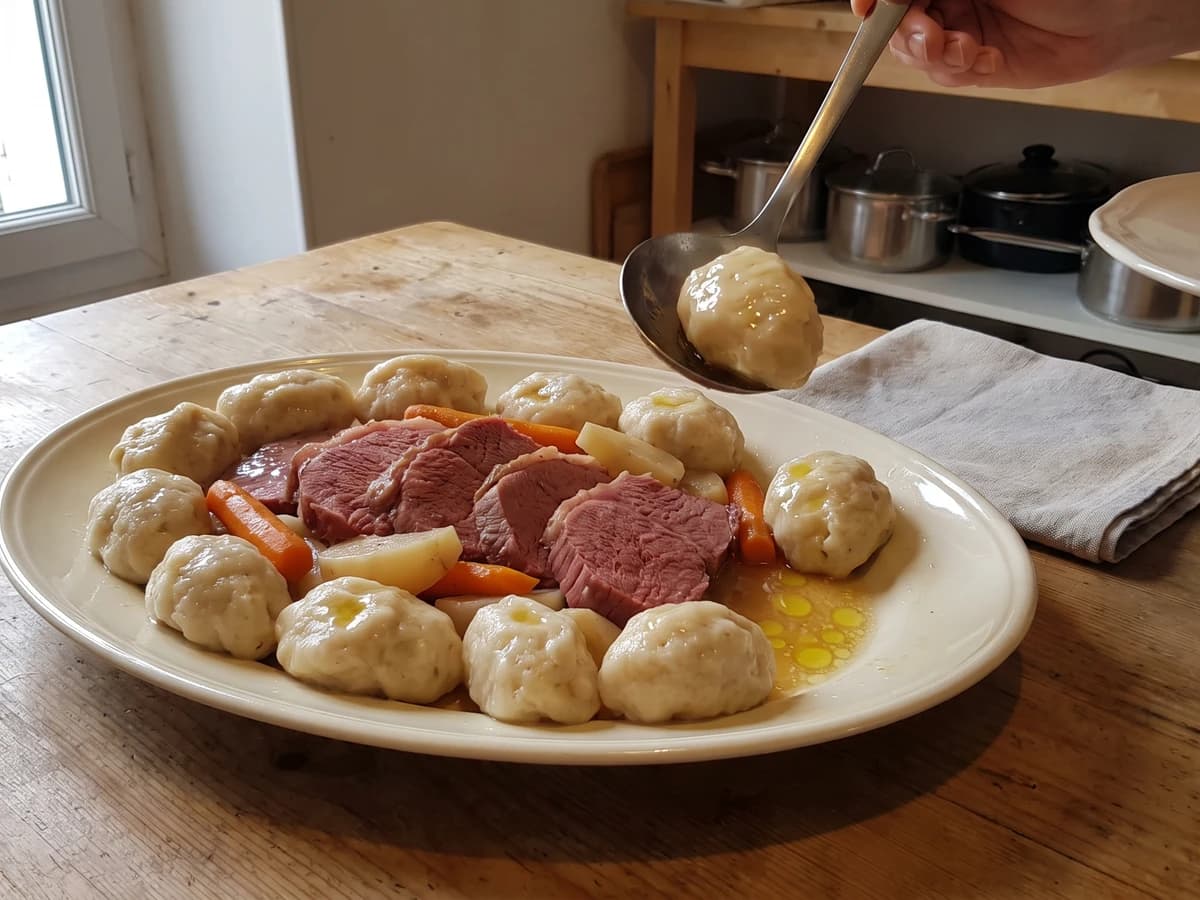
Suet Dumpling
Boulettes au suif, poached beside salt beef, turn equal weights of flour and finely chopped suet into tender, rich dumplings. Keep the beef liquor at a bare tremble and the old garnish works beautifully at home.
A cooking platform built around craft, culture, and the stories behind what we eat.

Created by Chef Juliette
Based on No. 2036, Fonds d’Artichauts Sautés, from Le Guide Culinaire (1907) by Auguste Escoffier
Raw young artichoke bottoms meet a hot buttered pan, bronze at the edges, and finish under fines herbes. The lesson is simple and exact: tenderness begins with youth, and browning begins with heat.
Fonds d’Artichauts Sautés (sautéed artichoke bottoms) teach one exact lesson: a quick sauté can only finish what the ingredient has already promised. Start with young, tightly closed artichokes whose bottoms are tender enough to cook from raw. Mature ones will brown before they soften, and no flourish of herbs will make them tender.
The brigade entry assumes a commis to strip and trim a basket of heads, with a hot pan waiting the instant service calls. It needs no saucier, stockpot, or salamander because none belongs here. Only the scale has changed: six young artichokes and one wide skillet replace the basket and the line of pans. The brigade’s trimming queue is scaffolding and goes; raw slicing, butter sautéing, and the herb finish are the dish, so they stay in their original order. One cook, one stove, one evening.
Have the skillet ready before you slice the bottoms, season them only at the last moment, and keep the pan broad enough to hold them without crowding. The uninterrupted sizzle is the step that matters most.
Fonds d’artichauts sautés belong to the Parisian bourgeois and classical grand-kitchen service of légumes, where the tender base was treated as a vegetable in its own right and sent to table in a shallow vegetable dish. The preparation moved between home dining rooms and brigade kitchens because its refinement came from exact trimming and last-minute cooking, not from a separate sauce. It is distinct from Provence’s artichauts à la barigoule, whose olive oil, aromatics, and moist cooking express another regional method; these fonds remain a butter sauté finished with fines herbes.
Quantity
6 (about 2 lb / 900 g whole, yielding about 10 oz / 280 g trimmed bottoms)
Quantity
3 tablespoons (45 ml / 42 g)
Quantity
1/2 teaspoon (2.5 ml / 3 g)
Quantity
1/4 teaspoon (1.25 ml / 0.6 g)
Quantity
2 tablespoons (30 ml / 6 g)
finely chopped
| Ingredient | Quantity |
|---|---|
| small young globe artichokes | 6 (about 2 lb / 900 g whole, yielding about 10 oz / 280 g trimmed bottoms) |
| unsalted butter | 3 tablespoons (45 ml / 42 g) |
| fine salt | 1/2 teaspoon (2.5 ml / 3 g) |
| freshly ground black pepper | 1/4 teaspoon (1.25 ml / 0.6 g) |
| fines herbes, preferably parsley, chervil, chives, and tarragonfinely chopped | 2 tablespoons (30 ml / 6 g) |
Chop the fines herbes and set a shallow serving dish beside the stove. Place a 12-inch heavy skillet over medium-high heat so it is ready when the artichokes are sliced. The cooking is brief, and stopping to hunt for a dish or chop herbs lets the bottoms discolor and shed moisture.
Snap away the outer leaves from each artichoke until the pale inner cone remains. Cut away that cone just above the fleshy base, trim every dark green patch from the sides, and cut the stem flush. Scoop out the fibrous choke with a teaspoon or melon baller, scraping gently until the hollow is clean. You should have a neat, solid fond about 1/2 inch thick.
Slice each raw fond about 1/8 inch thick. Keep the slices even so they become tender together, then season immediately with the salt and pepper. Do not let the seasoned slices wait: salt draws water to the surface, and wet artichokes soften before they brown.
Add the butter to the hot skillet. When it foams briskly, add the artichoke slices in one uncrowded layer and toss to coat. Sauté for 7 to 10 minutes, turning every minute or two rather than stirring constantly, until the edges are butter-gold and a knife tip enters the centers with only a faint resistance. If the pan falls silent and liquid collects, lift out half the artichokes, boil the moisture away, and return them in two batches. Ça se rattrape. If the butter darkens before the centers are tender, lower the heat, add 1 tablespoon of water, and toss until it evaporates before restoring the heat for a final minute of browning.
Tip the artichokes and every drop of butter into the shallow serving dish. Shower them with the fines herbes, toss once, and serve immediately while the edges remain bronzed and the centers tender. À table!
1 serving (about 75g)
Culinary guides, cultural storytelling, and the editorial depth that makes cooking meaningful.
Discover Culinary ExplorerChef Juliette
Boulettes au suif, poached beside salt beef, turn equal weights of flour and finely chopped suet into tender, rich dumplings. Keep the beef liquor at a bare tremble and the old garnish works beautifully at home.

Chef Juliette
Bread, flour, frangipane, and rice become four cool, supple panades for binding forcemeats, each changing body and flavor while preserving tenderness. The finest Mousselines need none, and knowing that distinction is the lesson.

Chef Juliette
Panade au pain is bread, milk, salt, heat, and attention: stir until the paste releases cleanly, butter it against a skin, and you have the quiet binder behind tender French farces.

Chef Juliette
Panade de farine teaches the drying stroke behind pâte à choux: flour meets boiling buttered water, then stays over the fire until the paste gathers, smooths, and quits the pan cleanly.