Chef Juliette
Laitues Farcies
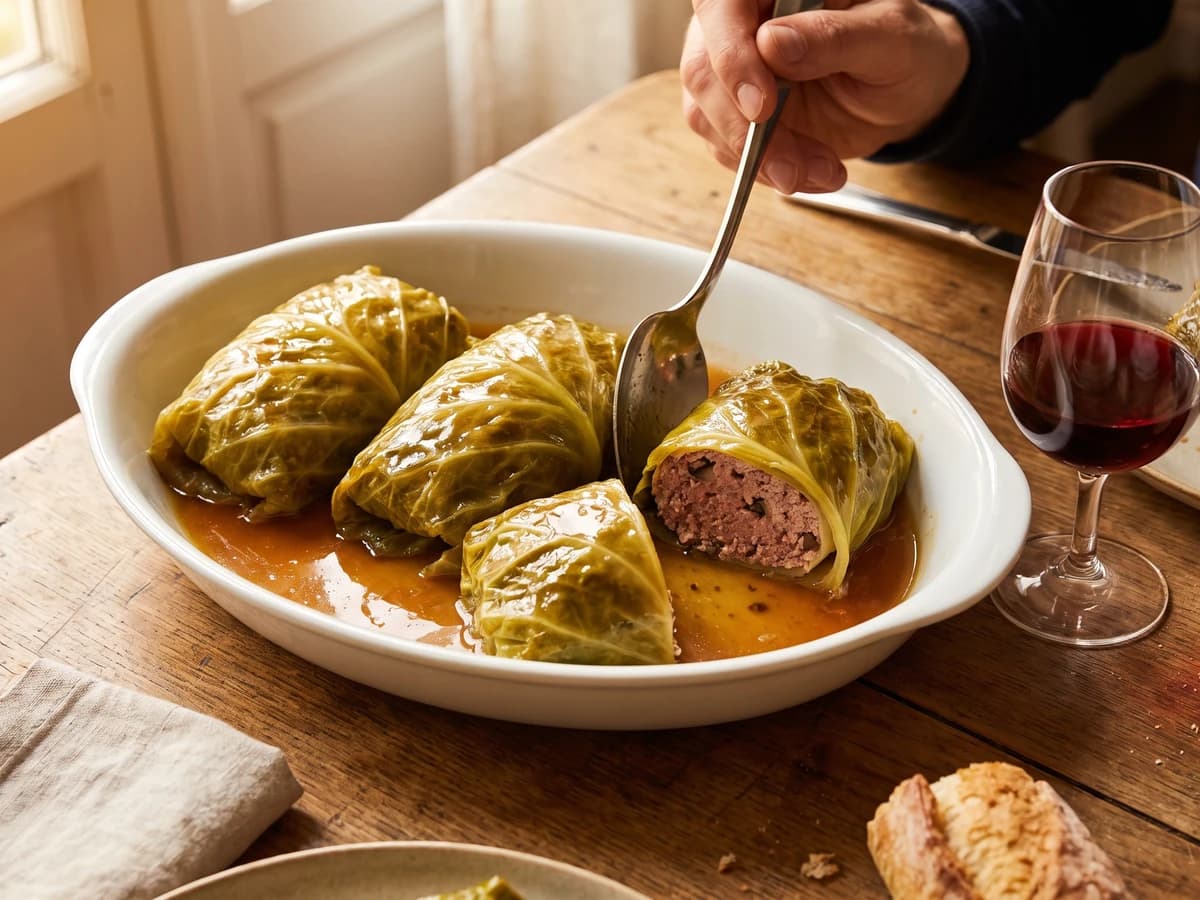
Whole lettuces opened at the heart, packed with forcemeat and dry duxelle, tied back into shape, then braised until tender and lacquered with their own juices.
Updated August 1, 2026
Beans, lettuces, lentils, chestnuts, maize, and turnips, and the handful of methods that carry all of them. The dry bean comes first, and the rule is that good ones never soak: cold salted water, carrot, onion, and a faggot, then a gentle simmer that keeps the skins whole, before butter, diced bacon and tomato, or sauce Bretonne binds them. Then the purée, sieved burning hot, worked with butter, dried hard over a fierce fire before milk or cream brings it back; Soissons does it with white beans, the flageolet does it best of all, and turnip and chestnut want only just enough potato or celery to hold them together. Then the braise for the leaves, lettuce parboiled, pressed bone dry, tied, and cooked on a litter of bacon and root vegetables until the liquor reduces to a coating gravy, stuffed with forcemeat and duxelles when it is to be a dish in its own right. The glaze borrowed from the carrots finishes the chestnuts, laid in a single layer in strong veal stock and barely stirred so they never break. And the haricots verts refuse all of it: cooked briefly, never cooled, dried over the fire, and finished with fresh butter while they still hold firm to the teeth.
A cooking platform built around craft, culture, and the stories behind what we eat.
Chef Juliette
Whole lettuces opened at the heart, packed with forcemeat and dry duxelle, tied back into shape, then braised until tender and lacquered with their own juices.
Chef Juliette
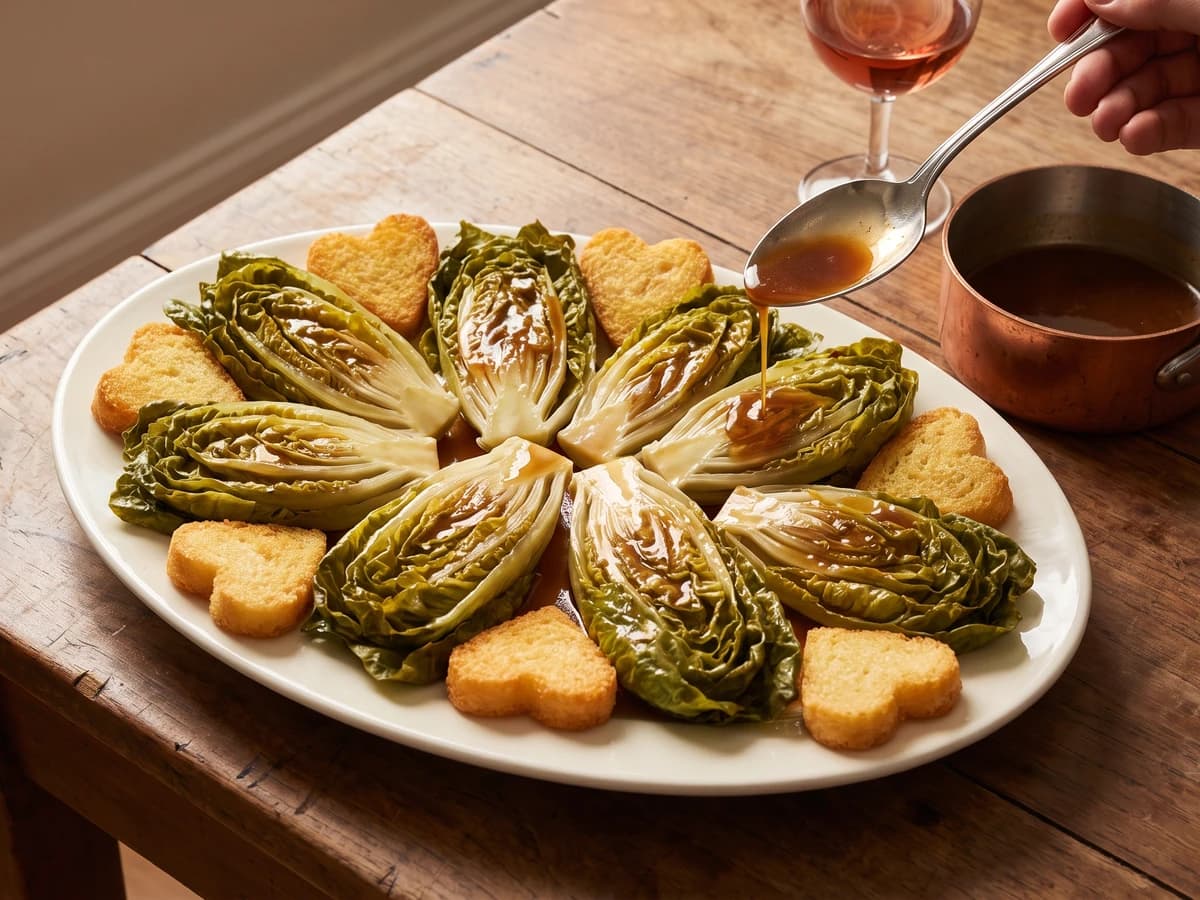
Whole lettuce learns the discipline of the braise: blanch, press, tie, and cook gently over bacon and roots, then crown it with butter-fried croûtons and a glossy veil of reduced liquor and veal gravy.
Chef Juliette
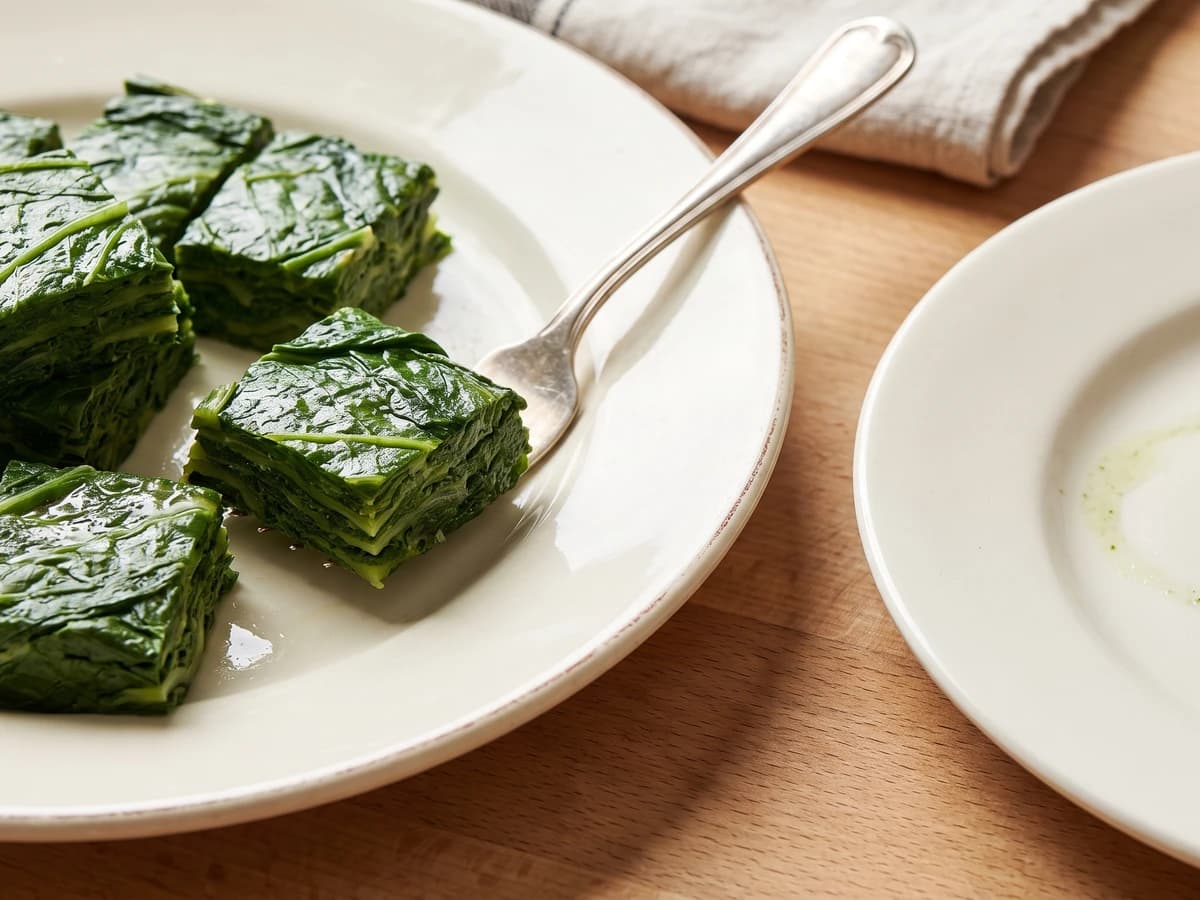
Fanes de navets à l’anglaise turn young greens into neat, tender squares through one severe little lesson: cook plainly, then press thoroughly, because trapped water, not lack of ornament, is what ruins them.

Chef Juliette
Laitues à la Crème turns humble lettuce into a silken, savory side: parboiled, pressed, bound with pale roux, slowly braised in consommé, then enriched with cream and butter only after the heat is gone.
Chef Juliette
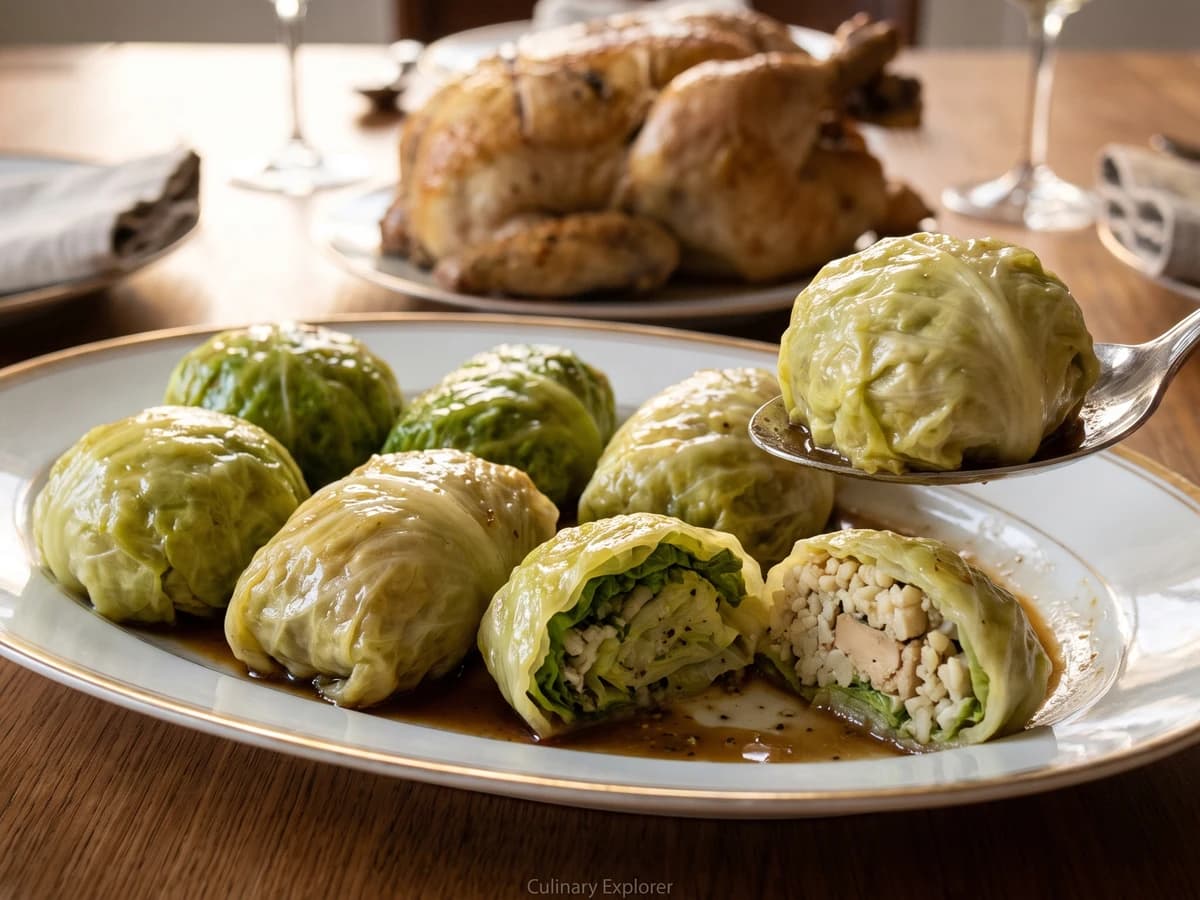
Small lettuce packets, tender but intact, carry either their own seasoned hearts or pilaff enriched with foie gras, then braise under butter and stock into a polished garnish for roast poultry or veal.
Chef Juliette
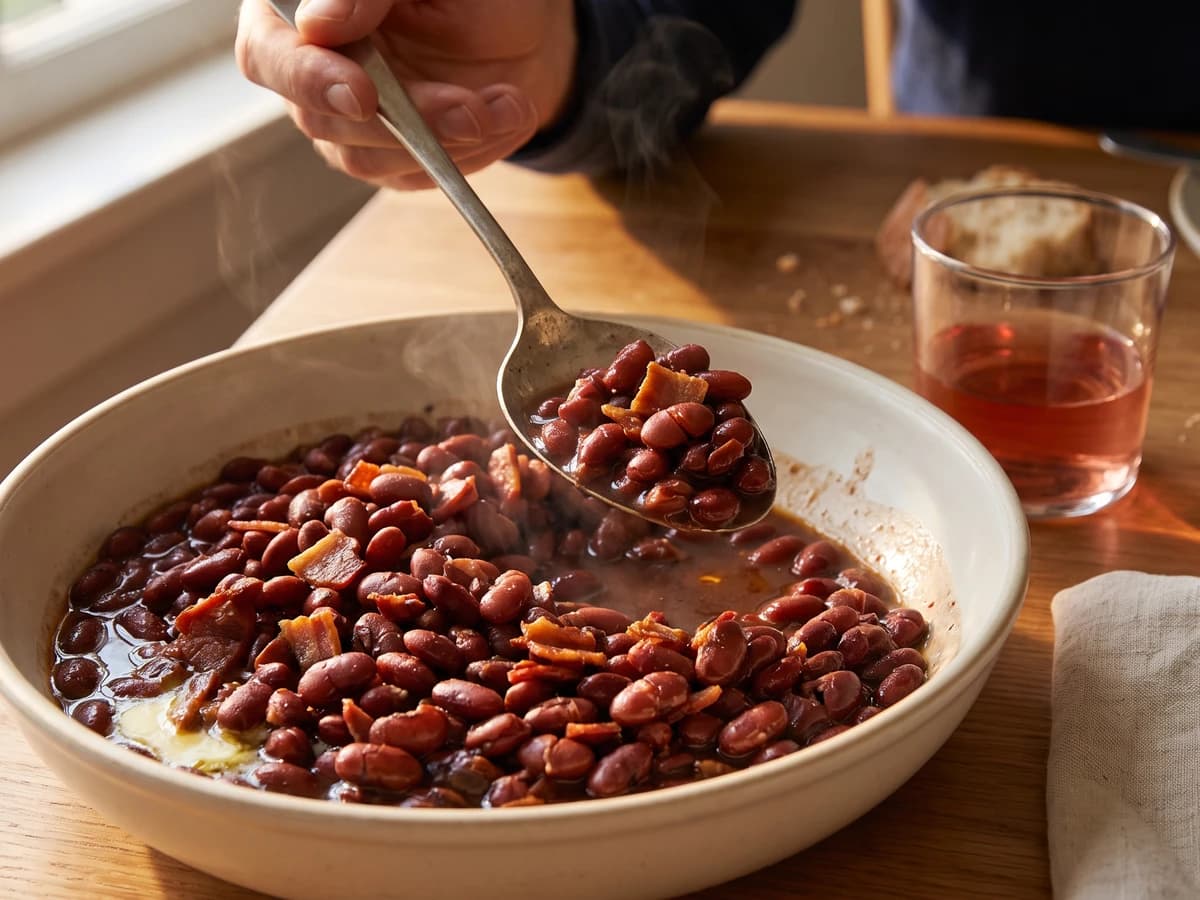
Red wine, lean bacon, and a clove-stuck onion turn modest red beans into a proper French side, while Manied Butter (No. 151) teaches the quiet art of binding without boiling.
Chef Juliette
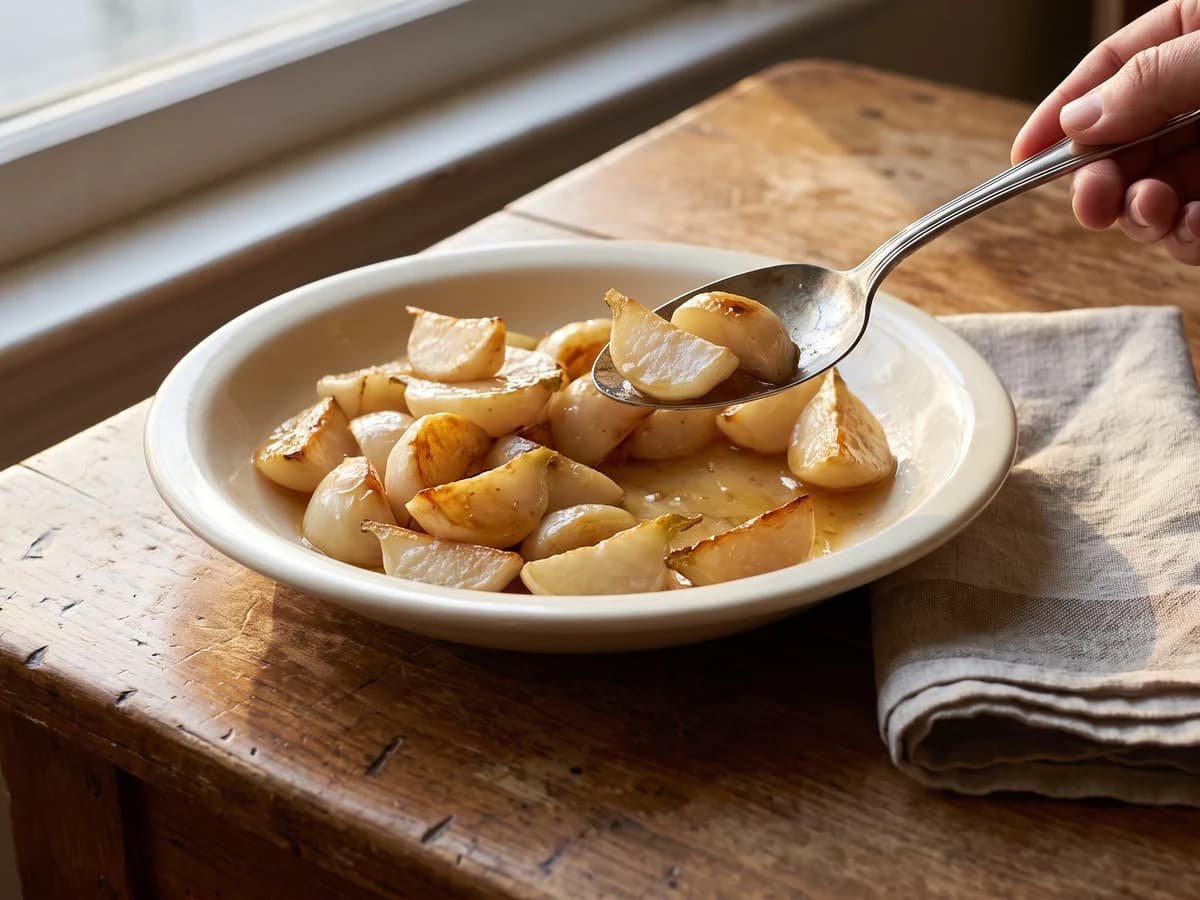
Small turnips cooked like carrots, tender beneath a butter-bright glaze or cloaked in cream, prove that one pan and careful reduction can turn a plain root into a proper French side.

Chef Juliette
Chestnuts simmered with celery and a little sugar, pressed smooth, dried with butter, then loosened with warm milk: a savory purée whose silk depends on controlling moisture.
Chef Juliette
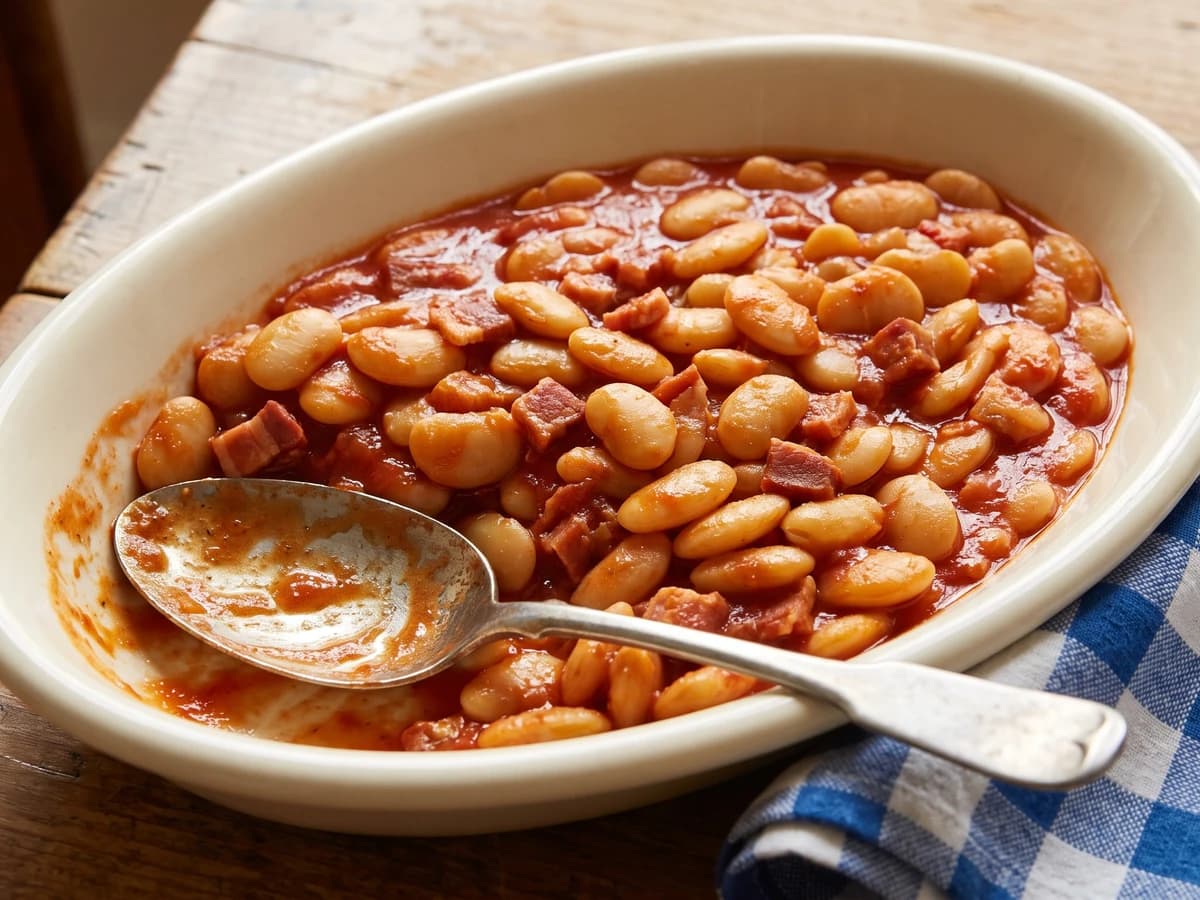
Lima beans, lean bacon, and tomato sauce show the quiet discipline of binding: cook the beans gently, drain them thoroughly, and coat each one until glossy, never soupy.

Chef Juliette
Soufflé de Laitues makes lettuce carry a grand soufflé: tender green leaves, a feather-light fold, and anchovy lattices that season every slice beneath a high, bronzed crown.

Chef Juliette
Haricots flageolets prove that bean cookery is governed by one thing: the barest simmer. Keep the skins whole, the centers creamy, and finish their pale green liquor with butter.

Chef Juliette
Marrons braisés ask for restraint: peeled chestnuts, clear consommé, and celery held at the barest simmer until tender yet whole, ready for the holiday platter or kept firm for stuffing.
Chef Juliette
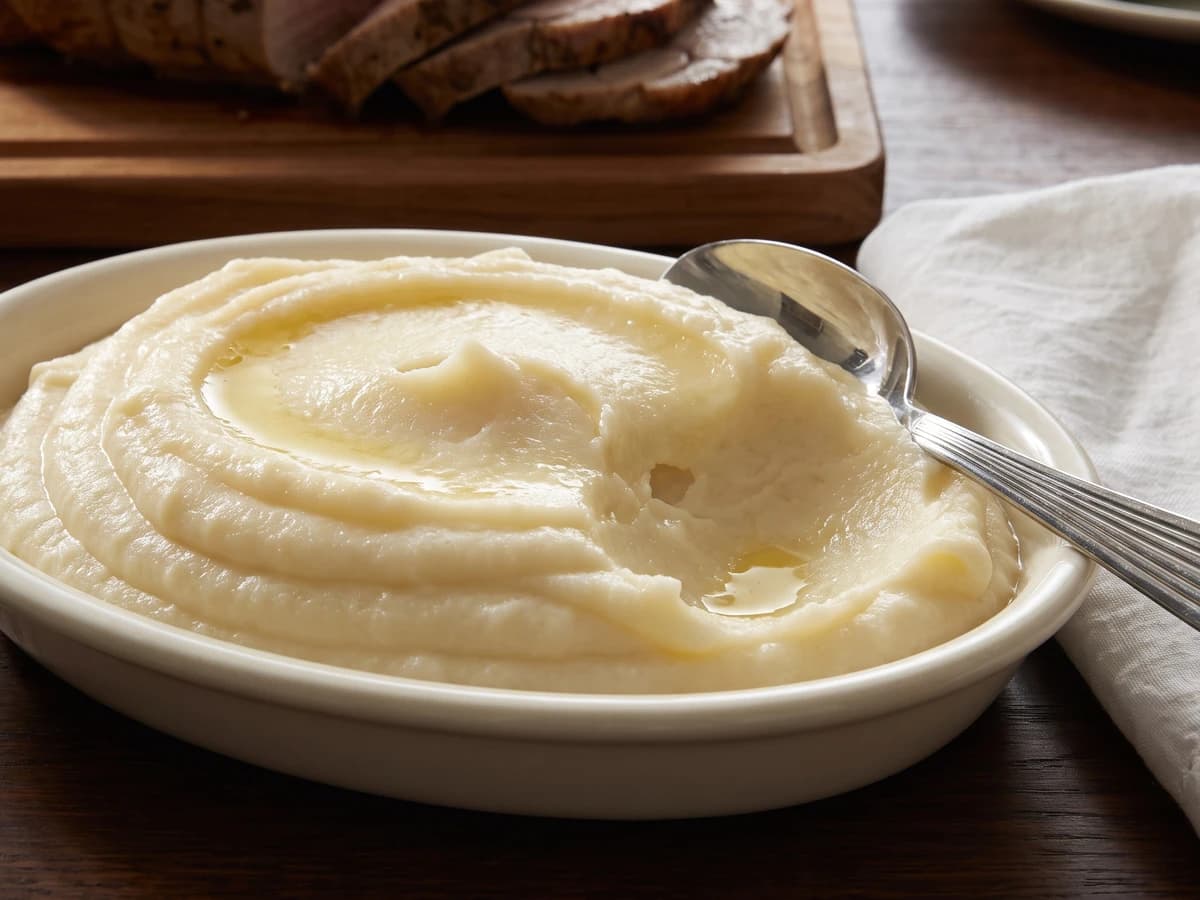
Turnips, butter, salt, sugar, and patience become a pale, silken purée, with just enough excellent mashed potato to hold it. The potato must disappear. That restraint is the whole dish.
Chef Juliette
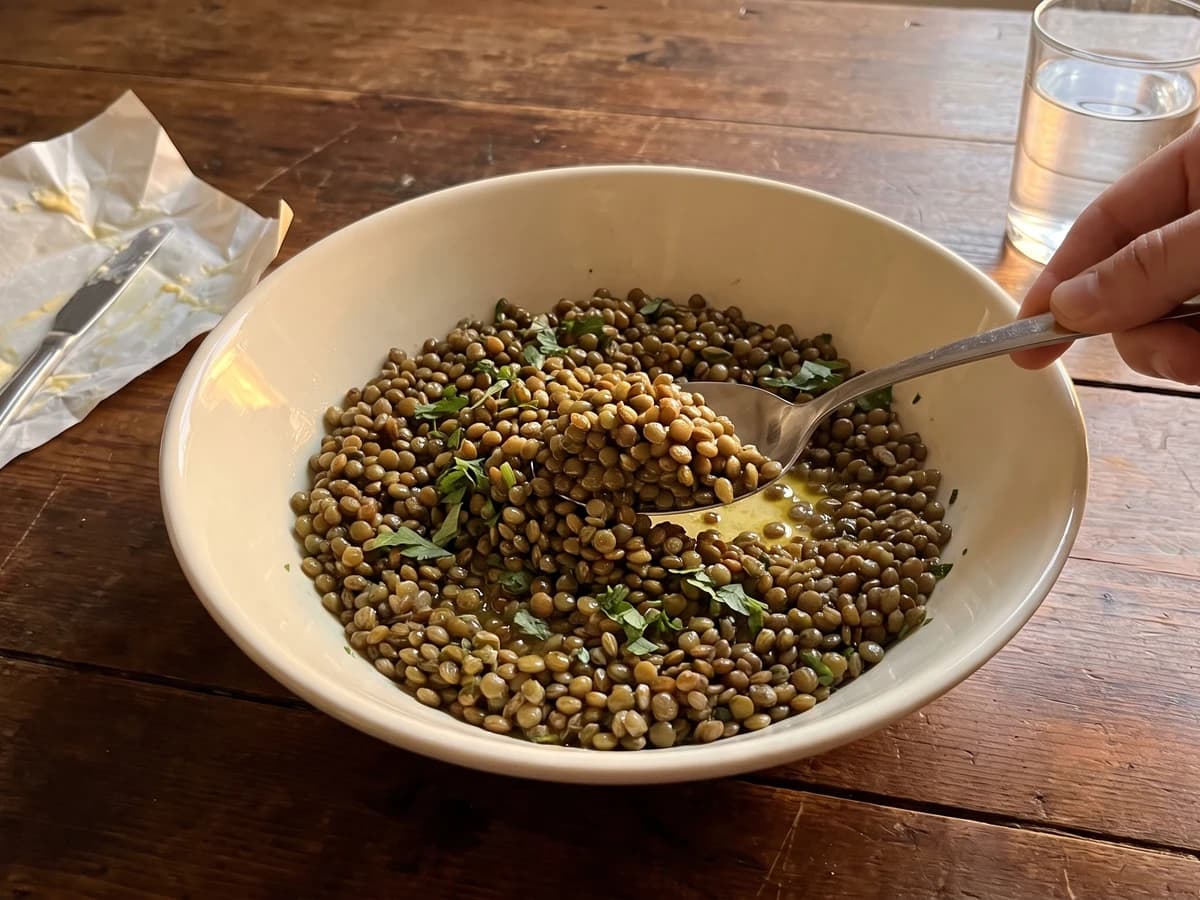
Lentils tossed dry over the heat before butter touches them: one plain, exacting move that keeps each tender lentil distinct, glossy, and rich instead of stranded in a watery bowl.

Chef Juliette
Whole lentils pass hot through a sieve, take their butter, dry over brisk heat, and soften again with milk: a humble purée whose silk depends on discipline, not complication.

Chef Juliette
Fresh maize at the milk stage, cooked inside its leaves until tender, then bared at the table and served with sweet butter. The whole lesson is timing: capture the juice before starch takes it.
Chef Juliette
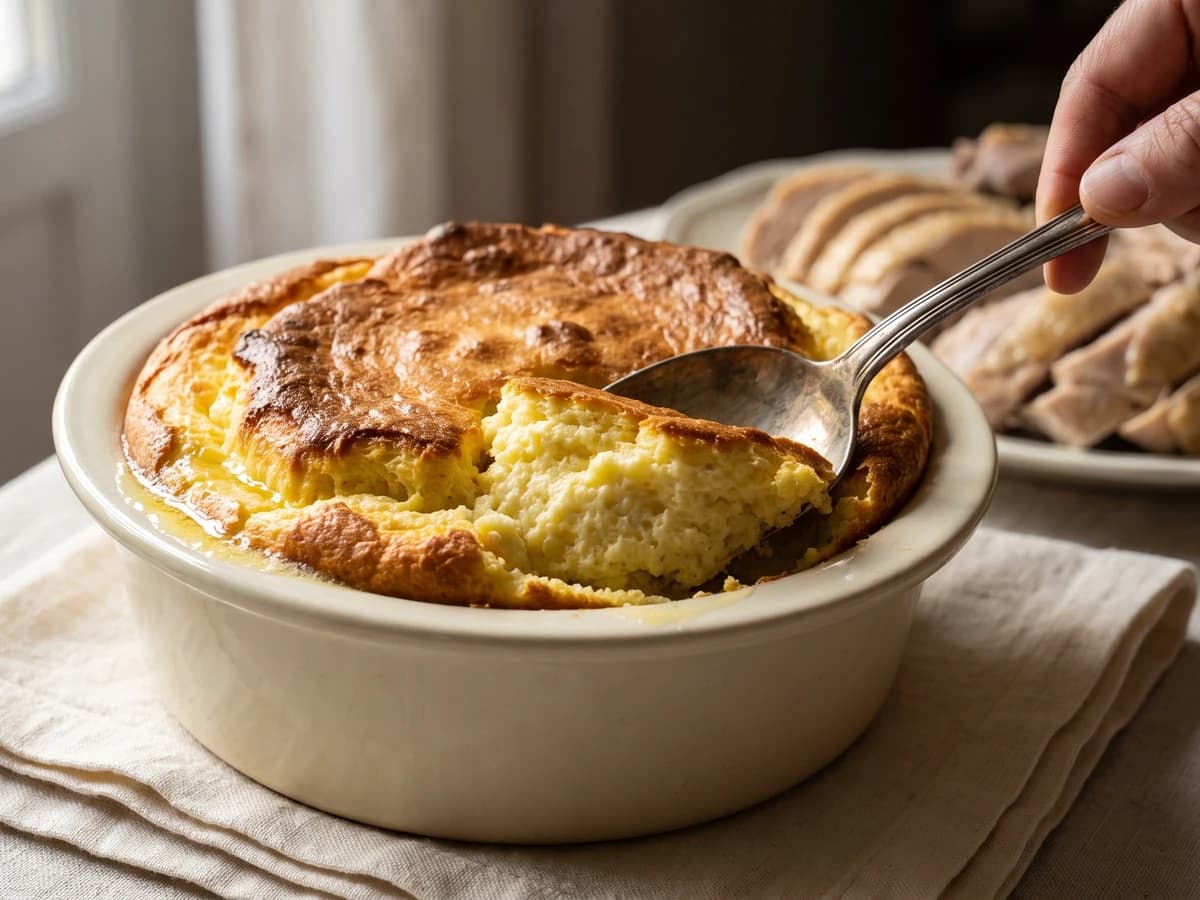
A savory corn soufflé with a fine, creamy crumb and bronzed crown, built on dried maize purée and four whites: the classical poultry garnish that proves moisture control makes the rise.

Chef Juliette
Laitues à la Moelle turns humble lettuce into a proper dinner-party dish: tender braised hearts in a shining gravy, crowned with marrow poached gently enough to remain rich, whole, and trembling.

Chef Juliette
Eight neat turnips, hollowed and filled with equal weights of their own purée and potato, finish under a steady spoonful of butter until the shells are tender and the domes glow pale gold.
Chef Juliette
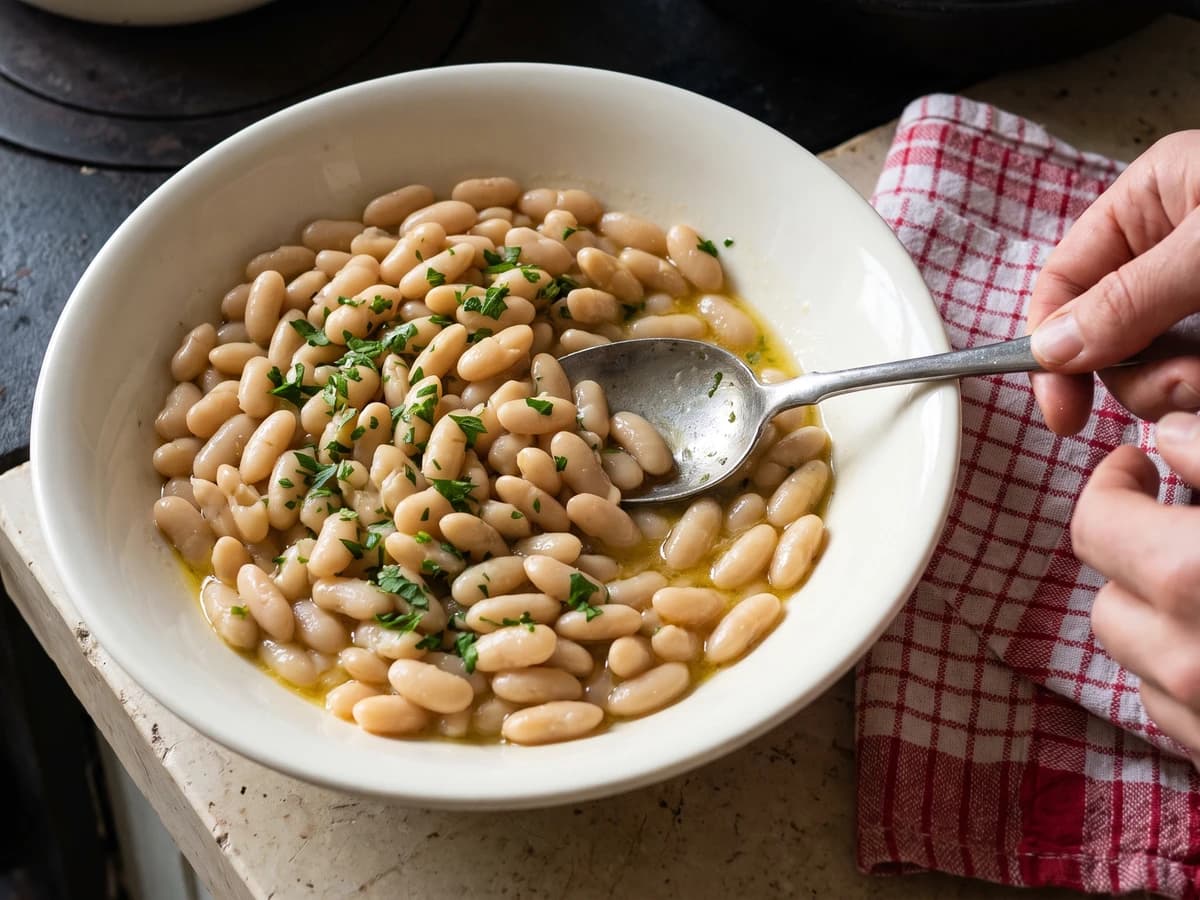
Haricots blancs au beurre proves that restraint has technique behind it: well-drained white beans, precisely seasoned, bound with their proper measure of butter, and brightened with parsley for the weeknight table.

Chef Juliette
Two beans, one discipline: haricots verts kept green and crisp, flageolets kept tender and whole, then equal measures tossed in butter until distinct but inseparable on the spoon.

Chef Juliette
Purée de Haricots Verts turns green beans and flageolets into one silken, butter-glossed whole, teaching why a fine sieve and an exact two-to-one ratio matter more than any elaborate garnish.

Chef Juliette
The peeling is the whole lesson: score each marron, heat it sharply over a little water, then strip away shell and skin while a folded towel protects your fingers.
Chef Juliette
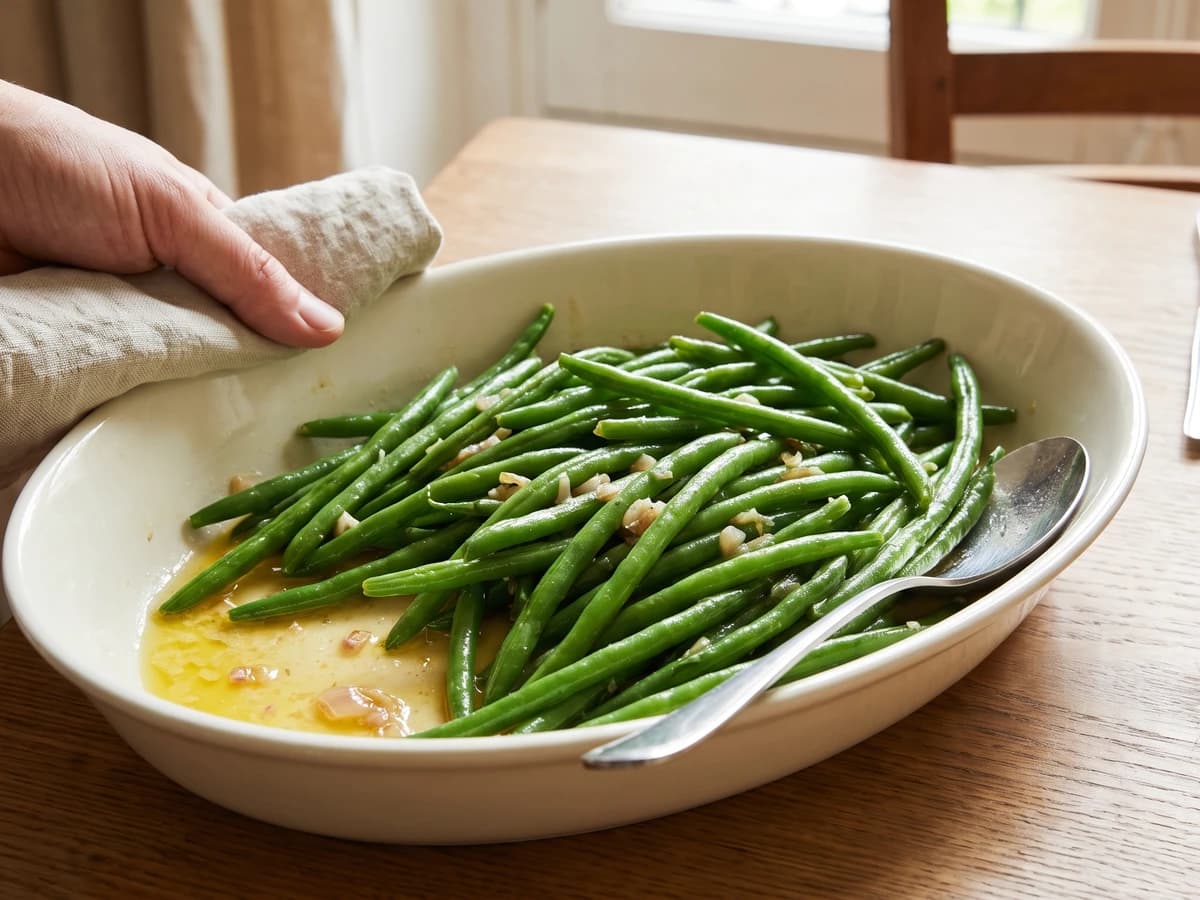
Haricots verts teach the discipline of timing: cook them only until tender with a firm bite, never cool them, then dry and bind them in fresh butter for immediate service.
Chef Juliette
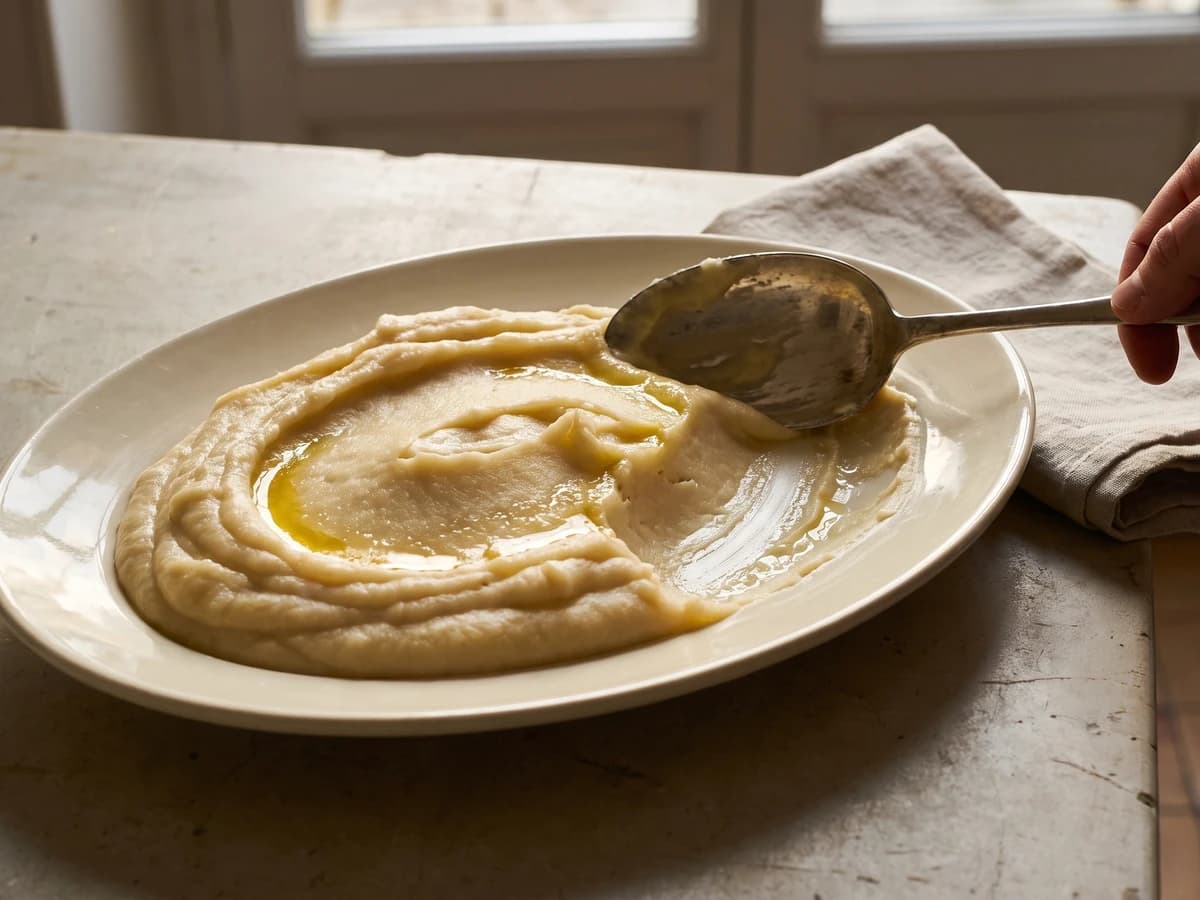
White beans pass from humble pot to satin purée through three exact moves: sieve them hot, beat in butter by weight, then dry them hard before milk ever touches the pan.
Chef Juliette
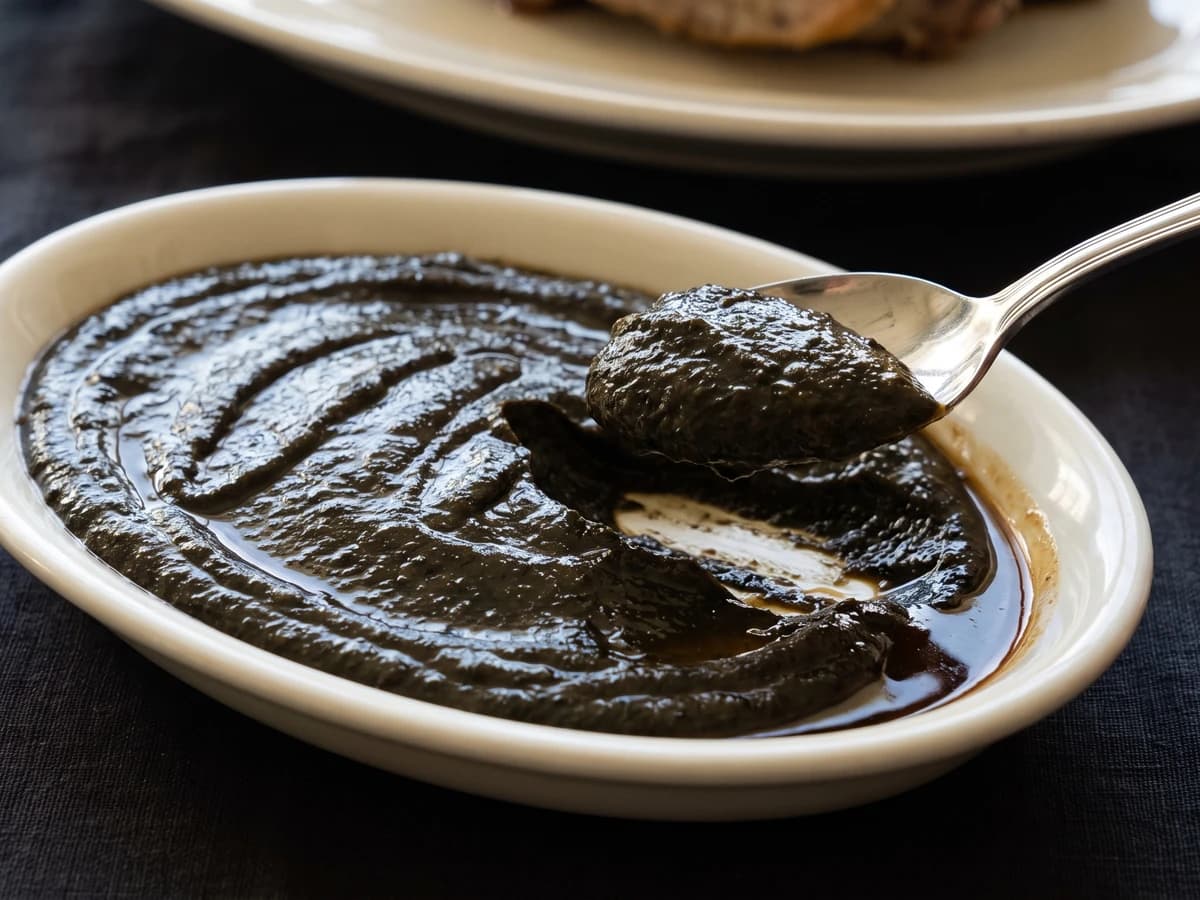
Véronique proves that restraint can be a complete technique: cooked Atlantic laver, warmed without boiling and bound with just enough Sauce Espagnole to stand as a glossy, firm purée beside a roast.
Chef Juliette
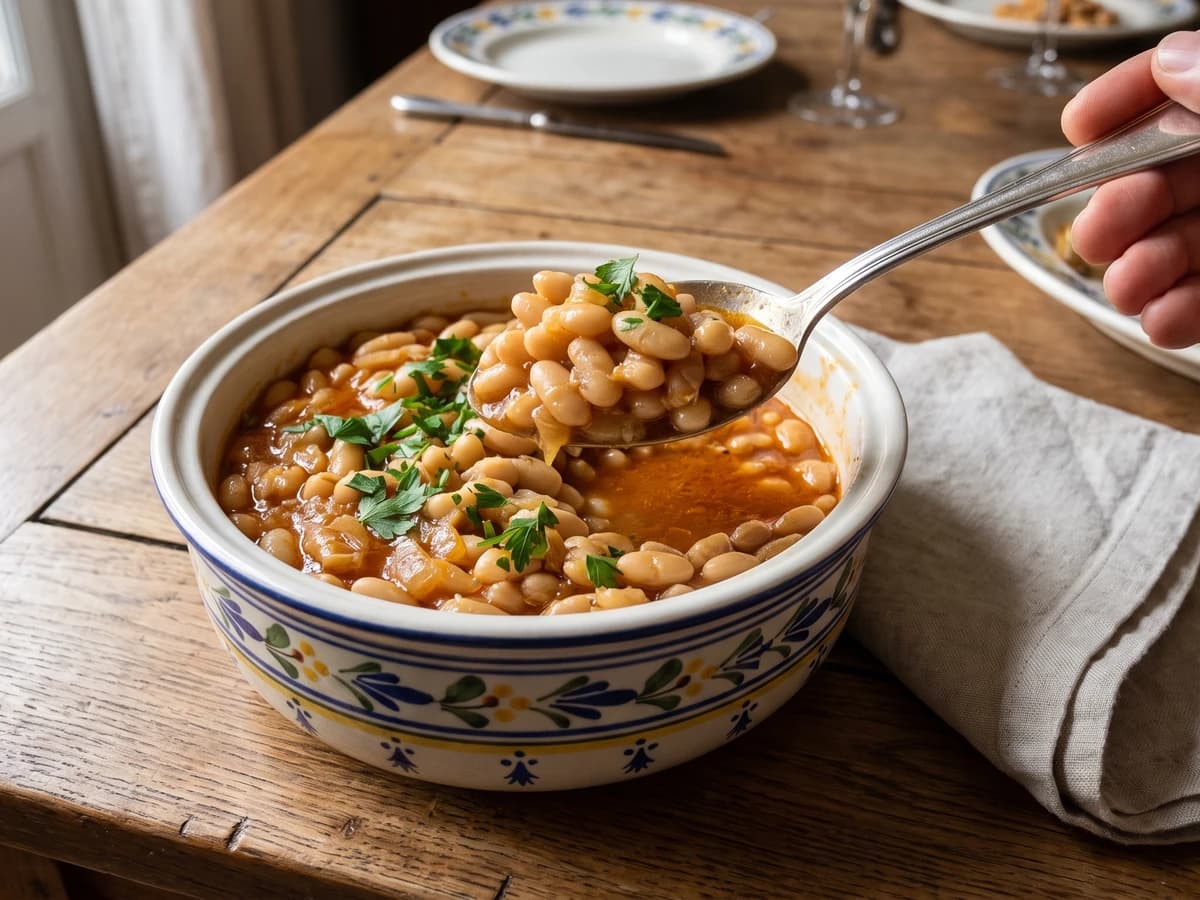
Haricots Blancs à la Bretonne turn tender white beans into a composed side dish, bound in glossy onion, white wine, and tomato sauce, then brightened with chopped parsley at the table.
Chef Juliette
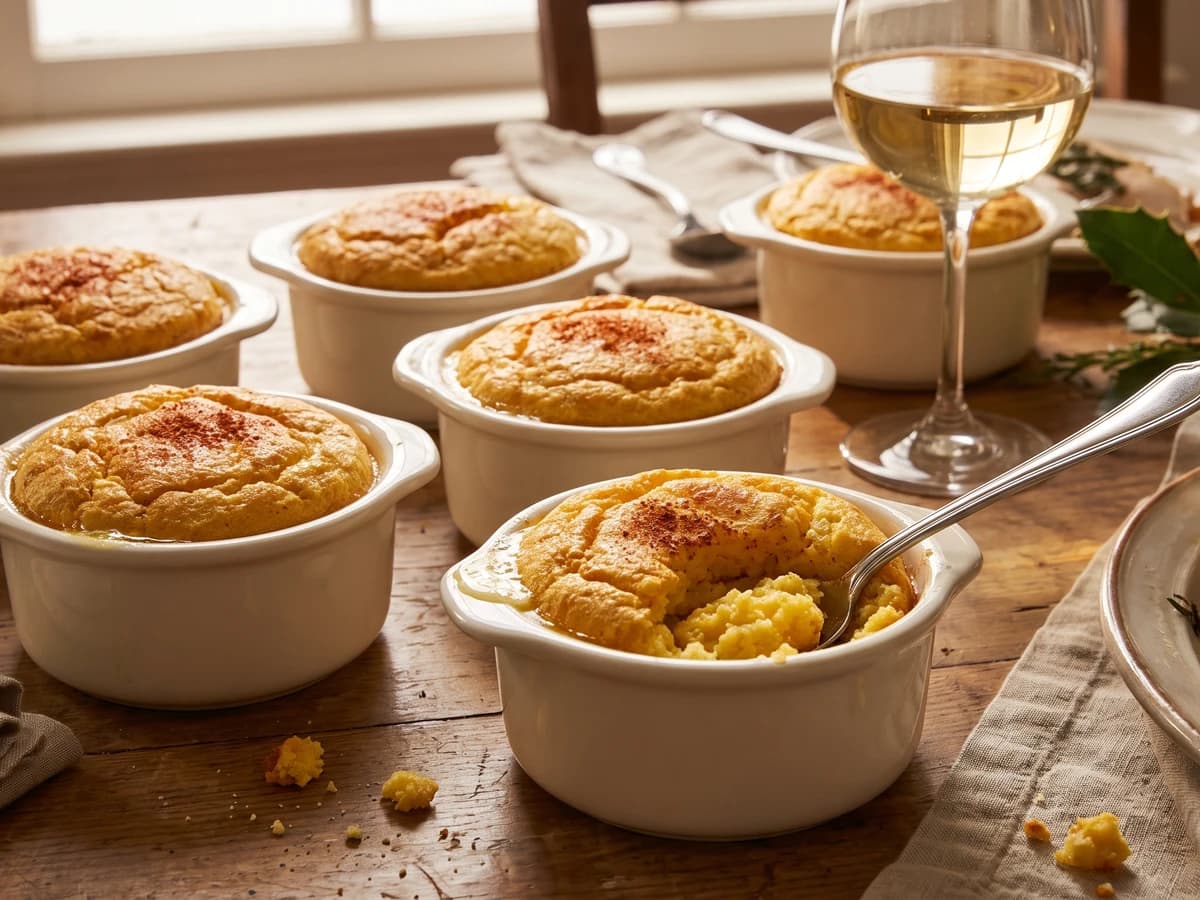
Soufflé de Maïs au Paprika turns a buttered corn purée into six light, bronzed cassolettes, with sweet onion and paprika carried through every spoonful beside a generous poached bird.
Chef Juliette
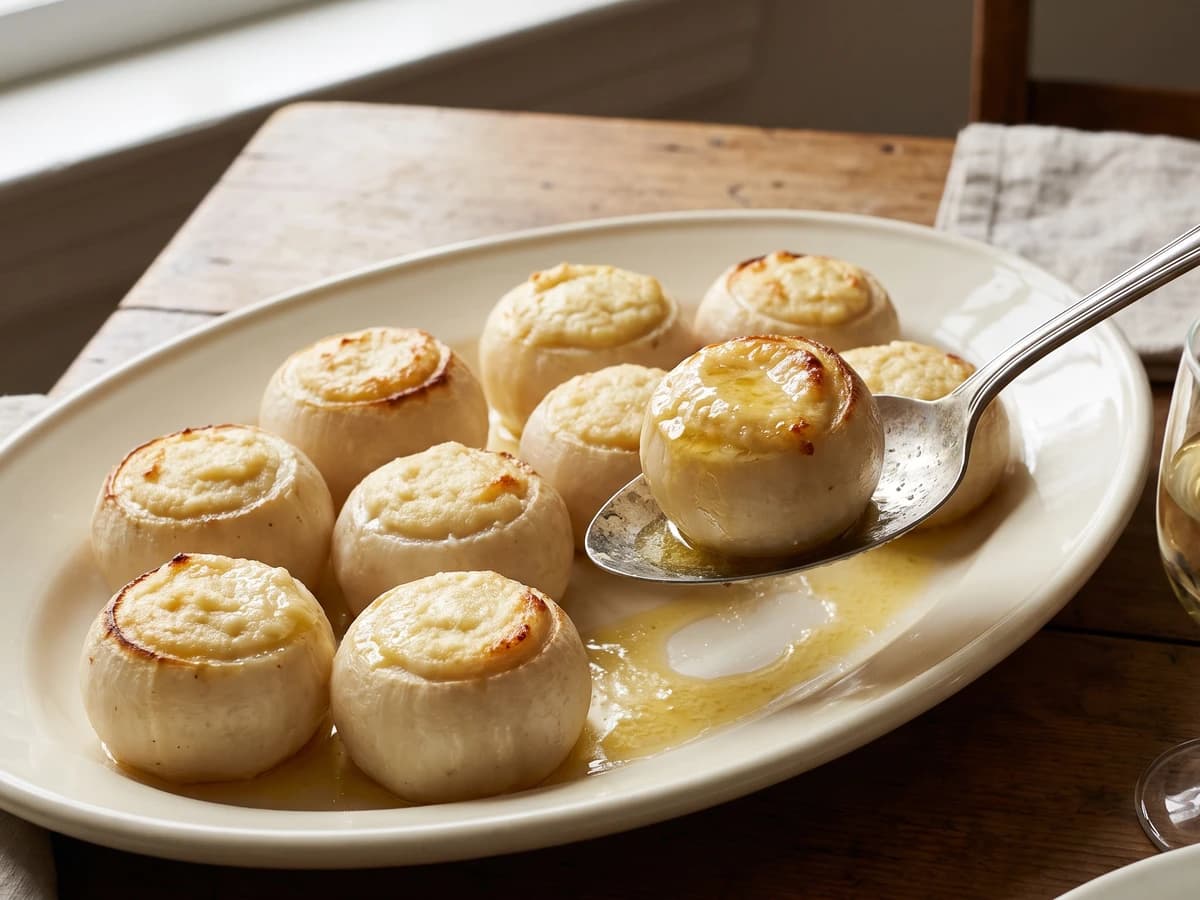
Evenly hollowed turnips cradle semolina simmered in consommé and bound with Parmesan, then braise in butter until the shells yield and the filling stays creamy, a composed side made for generous serving.
Chef Juliette
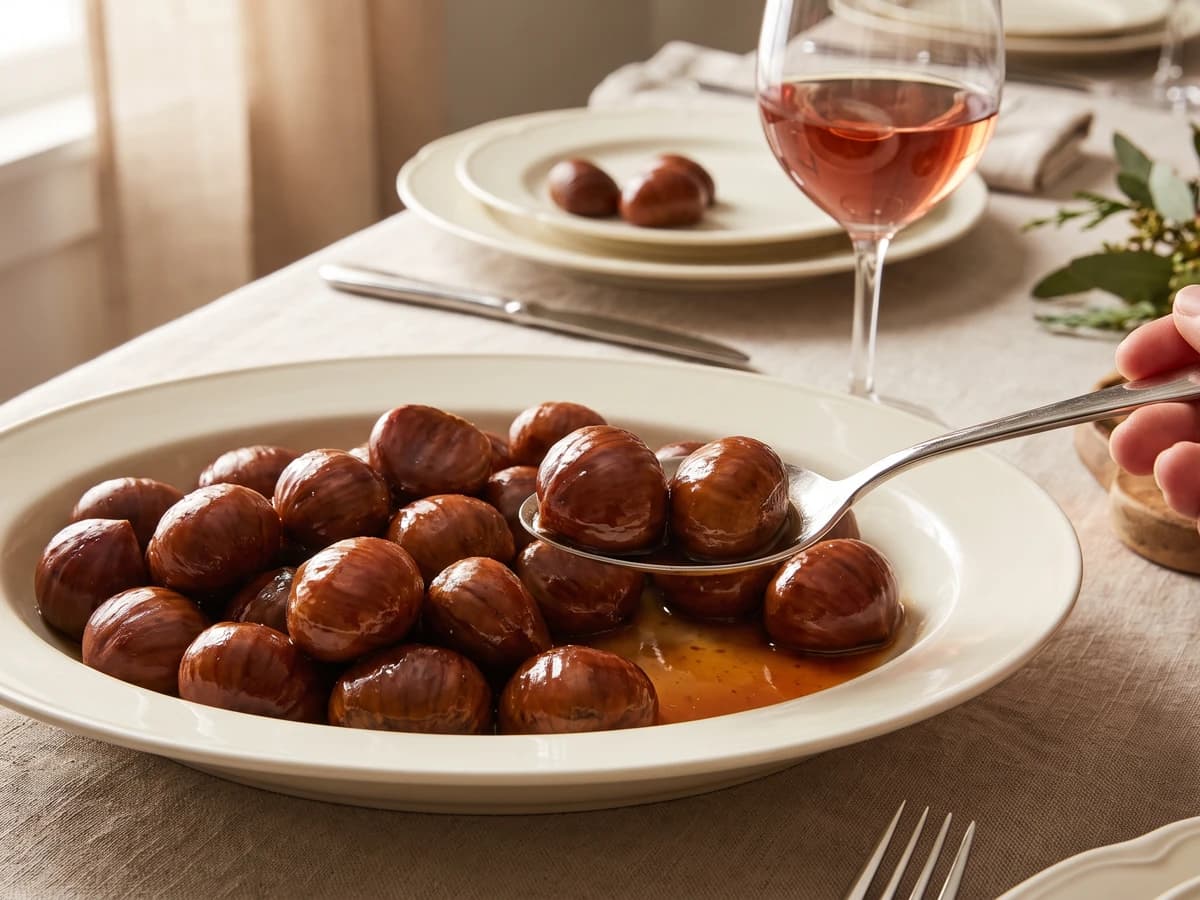
Whole chestnuts settle into one layer, drink in strong veal stock, then roll through their own reduction until brilliantly coated. Disturb them little, never heap them, and the garnish keeps its tender shape.
Culinary guides, cultural storytelling, and the editorial depth that makes cooking meaningful.
Discover Culinary Explorer