Chef Juliette
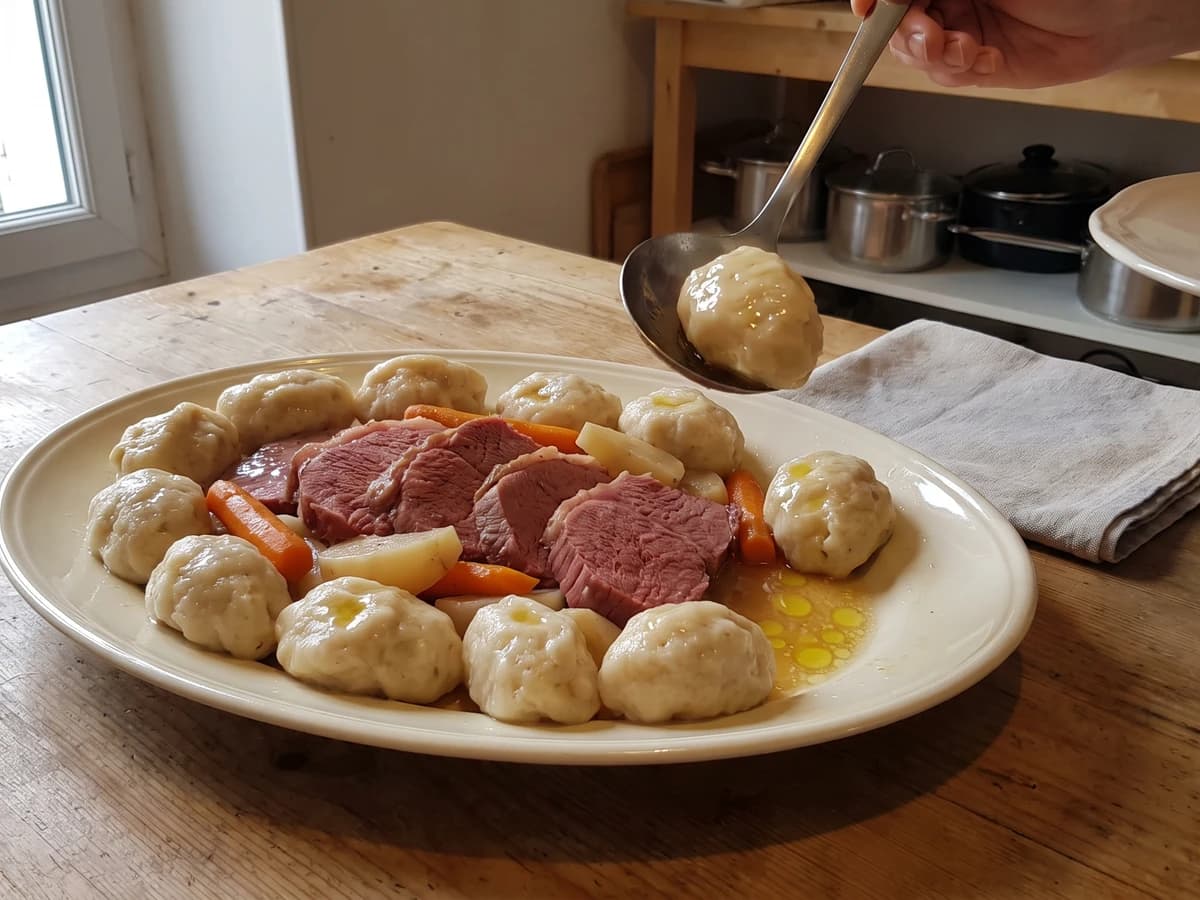
Suet Dumpling
Boulettes au suif, poached beside salt beef, turn equal weights of flour and finely chopped suet into tender, rich dumplings. Keep the beef liquor at a bare tremble and the old garnish works beautifully at home.
A cooking platform built around craft, culture, and the stories behind what we eat.

Created by Chef Juliette
Based on No. 2157, French Beans (Haricots Verts), from Le Guide Culinaire (1907) by Auguste Escoffier
Haricots verts teach the discipline of timing: cook them only until tender with a firm bite, never cool them, then dry and bind them in fresh butter for immediate service.
Haricots verts (French beans) teach one true thing: doneness is a moving target, and the cook must meet it before softness arrives. The beans should bend, keep a little resistance under the teeth, and taste fully green, never raw. Once they are ready, every minute matters.
The original entry assumes the quiet luxury of a brigade vegetable station: a pot at the boil, a cook free to drain and sauté immediately, and a dining room ready to receive the dish. It asks for no saucier, standing stock, or salamander. The source gives its formula per pound, so the honest home scale is already in its hand: one pound of beans for four side portions, with the full three ounces of fresh butter. A colander and wide skillet replace the instant handoff between brigade pots. The station's constant attendance is scaffolding; brief cooking, no cooling, drying over the fire, and the fresh-butter liaison are the dish.
The step that decides everything is the dry sauté before the butter. Drive off free water without cooling the beans, then toss in the butter until it clings in a shining coat. If water remains, the butter slides away; keep the pan moving and the moisture will go. Ça se rattrape.
Haricots verts belong to cuisine bourgeoise and the French classical dining table, where vegetable dishes were judged by freshness, exact cuisson, and immediate service rather than elaborate seasoning. The beans traveled from market gardens into grand-kitchen vegetable service, where cooks prized narrow young pods and sent them directly from boiling water to butter. Despite the name, a haricot vert is not a separate species from an ordinary green bean; it is a slender pod harvested young, before its seeds swell and its walls toughen.
Quantity
1 pound (454 g)
very fresh, stem ends trimmed
Quantity
3 quarts (2.8 L / 2.8 kg)
for boiling
Quantity
3/4 teaspoon (3.75 ml / 4 g)
Quantity
1/4 teaspoon (1.25 ml / 0.6 g)
Quantity
6 tablespoons (90 ml / 85 g)
cold and cut into small pieces
Quantity
1 tablespoon, loosely packed (15 ml / 3 g)
chopped at the last moment
| Ingredient | Quantity |
|---|---|
| slender haricots vertsvery fresh, stem ends trimmed | 1 pound (454 g) |
| waterfor boiling | 3 quarts (2.8 L / 2.8 kg) |
| fine sea salt | 3/4 teaspoon (3.75 ml / 4 g) |
| freshly ground black pepper | 1/4 teaspoon (1.25 ml / 0.6 g) |
| very fresh unsalted buttercold and cut into small pieces | 6 tablespoons (90 ml / 85 g) |
| very tender flat-leaf parsley leaves (optional)chopped at the last moment | 1 tablespoon, loosely packed (15 ml / 3 g) |
Choose beans of roughly equal thickness so they finish together. Trim only the stem ends, leaving the fine pointed tips intact, then wash the beans and drain them. Bring the water to a vigorous boil in a large pot. Set a colander in the sink and place a wide, dry skillet beside the stove; once the beans are cooked, there is no pause for arranging equipment.
Drop the beans into the boiling water and cook uncovered, beginning to test at 3 minutes. Most slender beans need 4 to 5 minutes. Bite one: it should yield cleanly while retaining a little resistance, with no chalky hardness at its centre. Pull the beans while they are a fraction firmer than you want at the table, because the skillet will finish them. If they are slightly underdone, ça se rattrape during the sauté; beans cooked soft cannot be made firm again.
Keep a spoonful of the hot cooking water nearby only as insurance, then drain the beans thoroughly. Do not rinse, chill, or leave them sitting in the colander. Transfer them immediately to the dry skillet over medium-high heat. Sauté, tossing over lively heat, for 45 to 90 seconds, until the free water has evaporated and no puddle follows the beans across the pan. If the skillet hisses wetly, keep tossing before adding butter. This drying is the dish, not a disposable extra step.
Season the hot beans with the salt and pepper, then lower the heat to medium. Add the cold butter a few pieces at a time, tossing continuously as each addition melts and clings. This is the liaison, the binding of butter with the last fine film of moisture on the beans, and it should leave them glossy rather than greasy. Keep the butter pale and fresh-tasting. If it pools like oil, lift the pan off the heat, add 1 teaspoon of the reserved hot water, and toss firmly until the coating comes together. If the butter begins to colour, add the next cold pieces off the heat to lower the pan's temperature.
If using parsley, chop the tender leaves now and toss them through in the final few seconds. Tough parsley or herbs cut in advance are better omitted. Transfer the beans and every spoonful of their butter to a warm shallow serving dish. Take them directly to the table while their colour is vivid, their bite remains firm, and the butter still gleams. À table!
1 serving (about 135g)
Culinary guides, cultural storytelling, and the editorial depth that makes cooking meaningful.
Discover Culinary ExplorerChef Juliette
Boulettes au suif, poached beside salt beef, turn equal weights of flour and finely chopped suet into tender, rich dumplings. Keep the beef liquor at a bare tremble and the old garnish works beautifully at home.

Chef Juliette
Bread, flour, frangipane, and rice become four cool, supple panades for binding forcemeats, each changing body and flavor while preserving tenderness. The finest Mousselines need none, and knowing that distinction is the lesson.

Chef Juliette
Panade au pain is bread, milk, salt, heat, and attention: stir until the paste releases cleanly, butter it against a skin, and you have the quiet binder behind tender French farces.

Chef Juliette
Panade de farine teaches the drying stroke behind pâte à choux: flour meets boiling buttered water, then stays over the fire until the paste gathers, smooths, and quits the pan cleanly.