Chef Juliette
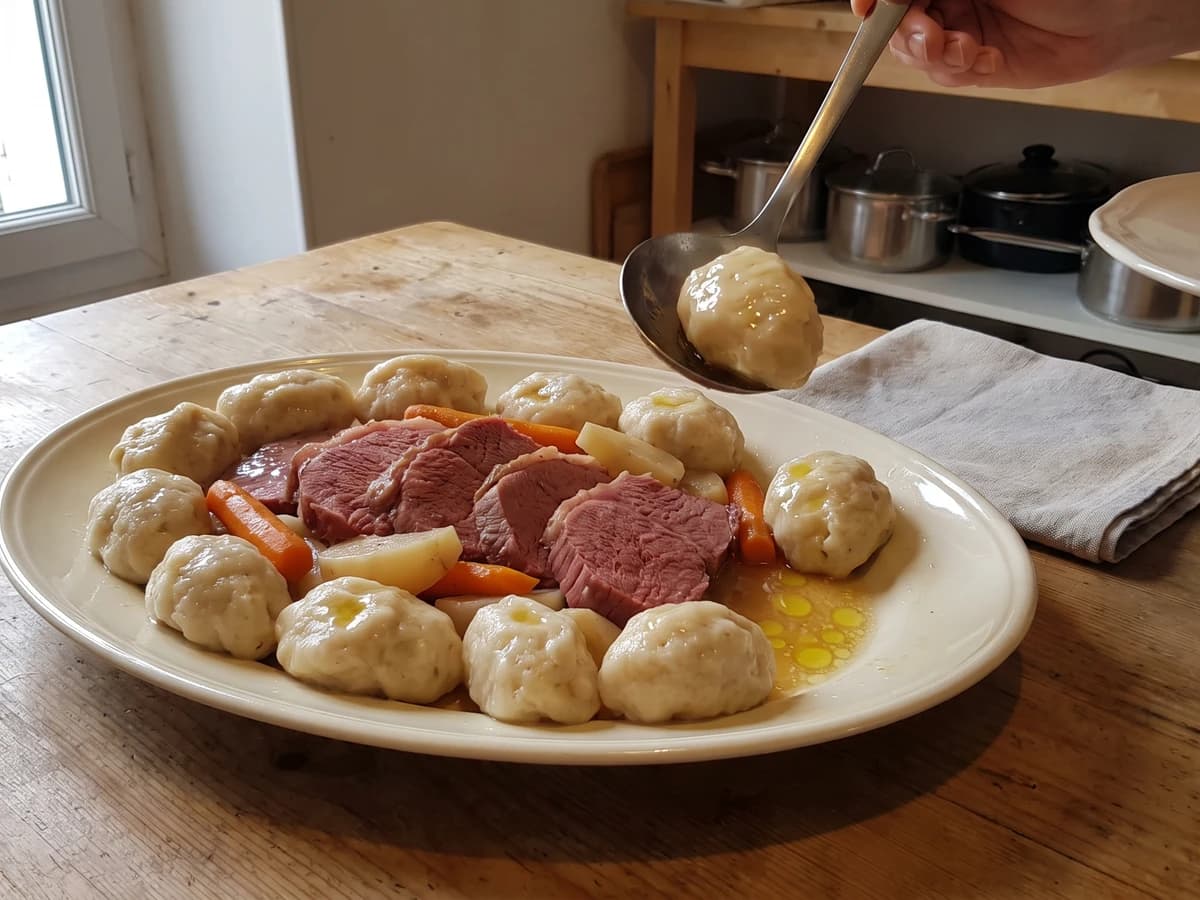
Suet Dumpling
Boulettes au suif, poached beside salt beef, turn equal weights of flour and finely chopped suet into tender, rich dumplings. Keep the beef liquor at a bare tremble and the old garnish works beautifully at home.
A cooking platform built around craft, culture, and the stories behind what we eat.

Created by Chef Juliette
Based on No. 2180, Turnip-tops, from Le Guide Culinaire (1907) by Auguste Escoffier
Fanes de navets à l’anglaise turn young greens into neat, tender squares through one severe little lesson: cook plainly, then press thoroughly, because trapped water, not lack of ornament, is what ruins them.
Fanes de navets à l’anglaise (turnip tops plainly boiled and pressed) teach a severe and useful lesson: with tender greens, water management is seasoning. Cook them until the thin stems yield, then drive out every loose drop, and the leaves become compact, clean-tasting squares rather than a wet heap. The pressing decides the dish.
The original entry assumes a brigade cook who already knows Chou à l’Anglaise (No. 2101), a service quantity of greens, and two plates ready at the pass. Your home equivalent is simpler: one pound of young tops, a roomy pot, a colander, and the same two-plate press for four people. The large batch and holding pan are brigade scaffolding and can go. Plain water, thorough pressing, and the final squares must stay, because they are the preparation itself.
No fond, roux, reduction, or emulsion belongs here; the source means plainly in water and nothing richer. This is not poverty of technique but its test. Watch the thickest tender stem, not the clock, then press while the greens are still hot enough to release their water. If they weep after cutting, press once more. Ça se rattrape.
Fanes de navets à l’anglaise belongs not to a French region but to the English luncheon table, which the French classical canon recorded among its named foreign styles. Young turnip leaves entered that repertoire through Chou à l’Anglaise (No. 2101), whose plain-water cooking and plate pressing provided the model for other greens. The common misconception is richness: in this entry Anglaise means no sauce, crumb coating, or butter finish, only water, pressure, and neat cutting.
Quantity
12 lightly packed cups (2.8 L / 450 g), for Chou à l’Anglaise (No. 2101)
tough stalks discarded and leaves thoroughly washed
Quantity
12 cups (2.8 L / 2.8 kg)
| Ingredient | Quantity |
|---|---|
| young turnip topstough stalks discarded and leaves thoroughly washed | 12 lightly packed cups (2.8 L / 450 g), for Chou à l’Anglaise (No. 2101) |
| cold water | 12 cups (2.8 L / 2.8 kg) |
Separate the leaves and their slim, tender stems from any thick or stringy stalks. Wash them through two or three changes of cold water, lifting the greens out each time so grit remains at the bottom of the basin. Keep the small stems; they give the finished squares structure and should become tender in the same time as the leaves.
Bring the water to a full boil in a roomy pot. Apply Chou à l’Anglaise (No. 2101) to the turnip tops: lower in the greens, press them beneath the water with a spoon, and let the pot return quickly to the boil. Cook uncovered for 4 to 6 minutes, turning once, until a slim stem crushes readily between your fingers and the leaves are tender without dissolving. Anglaise means plainly in water here, so add neither fat nor sauce.
Tip the greens into a colander and let the first rush of water drain for 1 minute. Mound them on a heatproof dinner plate, cover with a second plate placed face down, and use folded towels or oven mitts to press the plates firmly together over the sink. Tilt away the expressed water, press again, and continue until no little pool gathers around the greens. If they still weep later, don't despair. Ça se rattrape: return them between the plates and press once more.
Transfer the compressed greens to a board and gather them into an even slab about 3/4 inch (2 cm) thick. Square the edges with the side of a broad knife, then cut the slab into roughly 2-inch (5 cm) squares or lozenges. Lift each piece with the flat of the knife so it keeps its shape. Neatness comes from pressure, not fussing.
Arrange the squares on a warmed serving plate and bring them straight to the table. Their appeal is the clean, faintly peppery taste of young turnip leaves and the compact tenderness created by pressing, with no garnish to disguise either. Cooking well is not cooking fancy. À table!
1 serving (about 70g)
Culinary guides, cultural storytelling, and the editorial depth that makes cooking meaningful.
Discover Culinary ExplorerChef Juliette
Boulettes au suif, poached beside salt beef, turn equal weights of flour and finely chopped suet into tender, rich dumplings. Keep the beef liquor at a bare tremble and the old garnish works beautifully at home.

Chef Juliette
Bread, flour, frangipane, and rice become four cool, supple panades for binding forcemeats, each changing body and flavor while preserving tenderness. The finest Mousselines need none, and knowing that distinction is the lesson.

Chef Juliette
Panade au pain is bread, milk, salt, heat, and attention: stir until the paste releases cleanly, butter it against a skin, and you have the quiet binder behind tender French farces.

Chef Juliette
Panade de farine teaches the drying stroke behind pâte à choux: flour meets boiling buttered water, then stays over the fire until the paste gathers, smooths, and quits the pan cleanly.