Chef Juliette
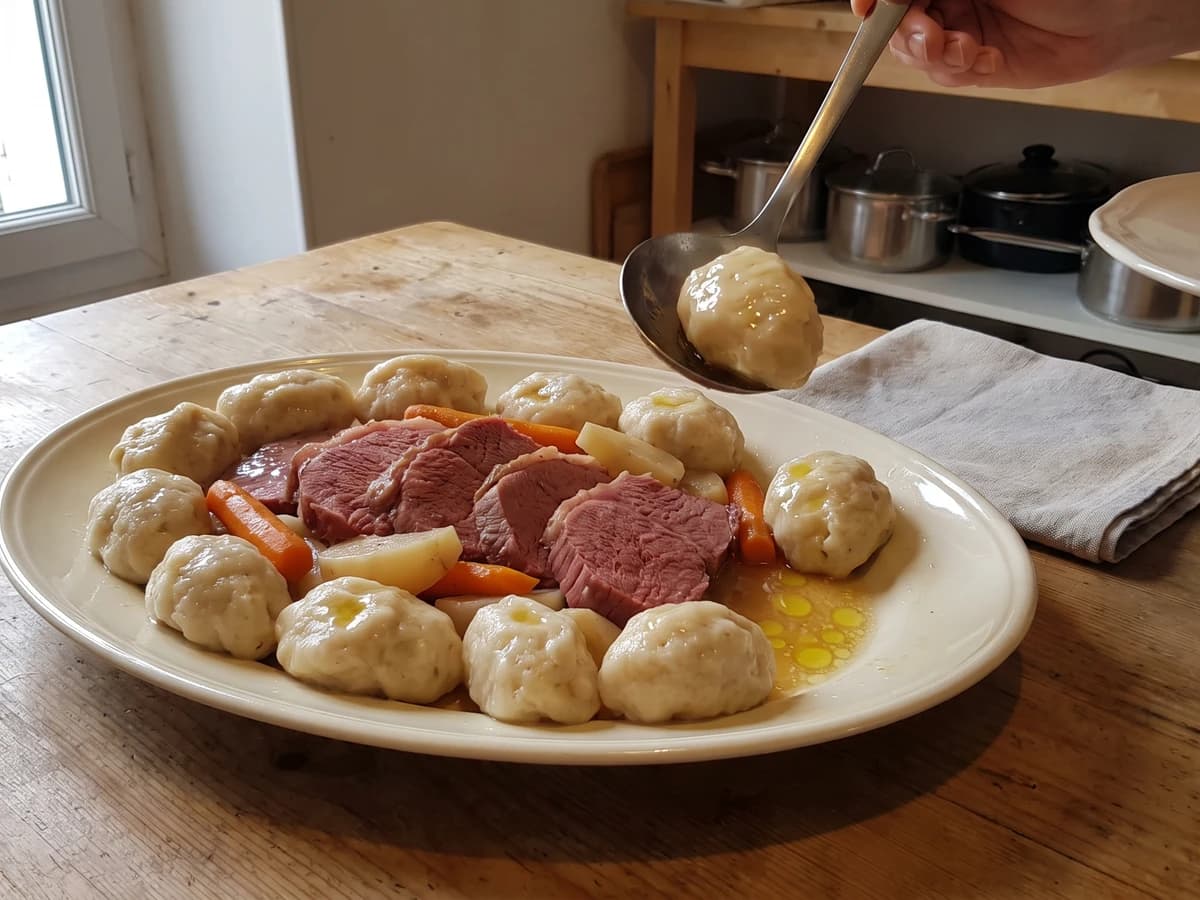
Suet Dumpling
Boulettes au suif, poached beside salt beef, turn equal weights of flour and finely chopped suet into tender, rich dumplings. Keep the beef liquor at a bare tremble and the old garnish works beautifully at home.
A cooking platform built around craft, culture, and the stories behind what we eat.
Created by Chef Juliette
Based on No. 2101, Chou à l’Anglaise, from Le Guide Culinaire (1907) by Auguste Escoffier
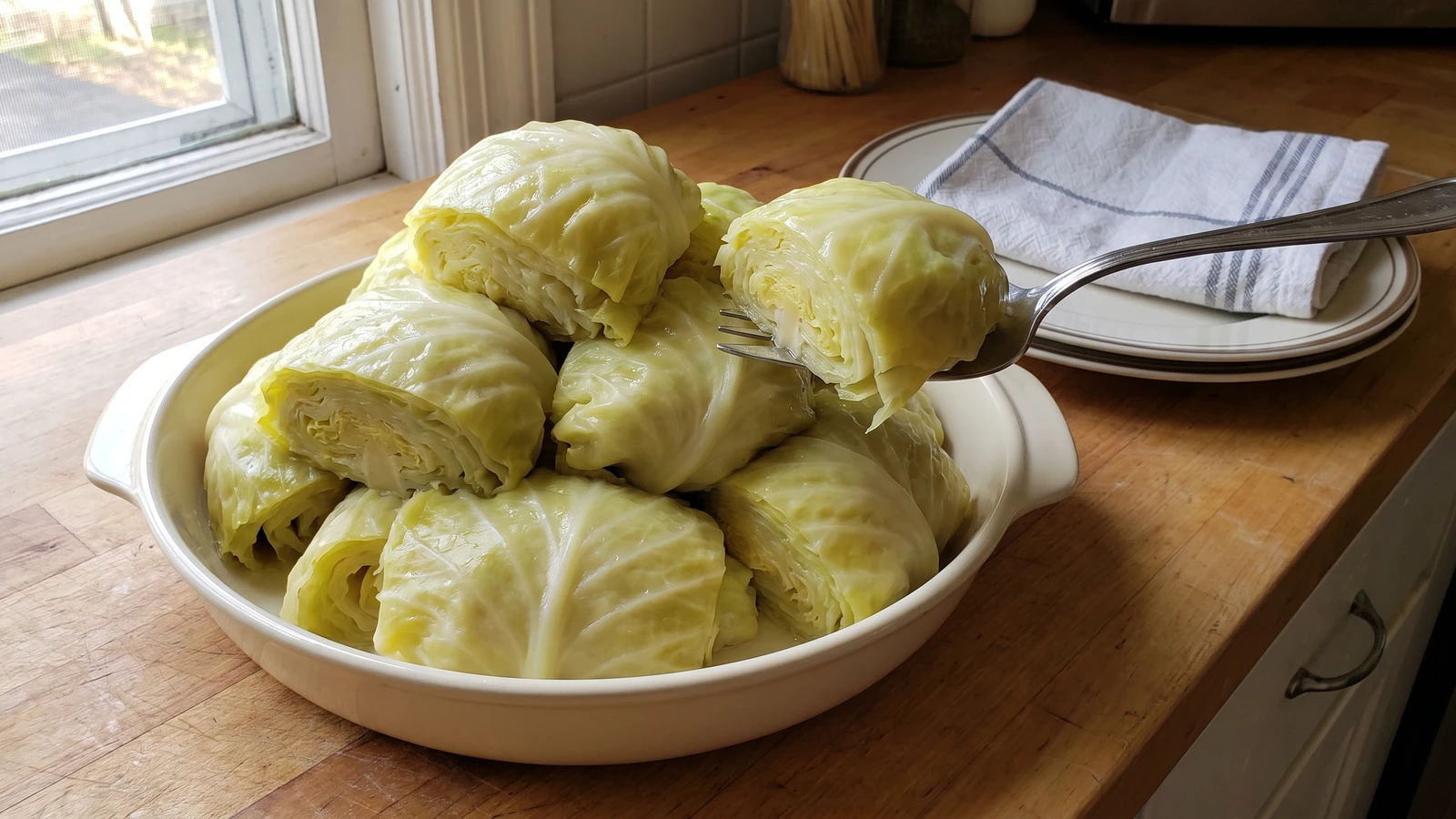
Plain cabbage, cooked tender, pressed absolutely dry, and cut into lozenges: a strict little classical lesson in water control that protects every sauce sharing the plate.
Chou à l’Anglaise (plain boiled or steamed cabbage) teaches one severe and useful lesson: cooking water is not sauce. The cabbage must become tender, then be pressed until it can no longer dilute the roast juices or gravy beside it. That pressing is not tidying. It is the dish.
The original entry assumes a professional cook who can choose a brigade quantity and judge tenderness without a clock. There is no saucier, standing stock, or salamander to replace here. For the home table, I have fixed the quantity at one medium cabbage, given clear boiling and steaming times, and kept the original two-plate press exactly as written. The unwritten batch judgment was scaffolding; the cook, press, and cut sequence must stay. One cook, one stove, one evening.
You want supple leaves and tender ribs, never cabbage collapsing into threads. The one step that matters most comes after the pot: press out every drop you reasonably can. If the first pressing leaves the cabbage wet, pour away the liquid and press again. Ça se rattrape.
Chou à l’Anglaise belongs to the French classical service table rather than to one French region. In that vocabulary, à l’anglaise marked vegetables plainly boiled, sometimes with butter offered separately, an English attribution filtered through French kitchen grammar rather than one fixed British household recipe. This cabbage preparation passed easily from professional garnish lists to bourgeois tables because its pressed lozenges could receive a meat sauce without thinning it.
Quantity
1 head (about 2 lb / 900 g)
damaged outer leaves removed
Quantity
2½ quarts (2.4 liters / 2.4 kg) for boiling, or 2 cups (475 ml / 475 g) for steaming
| Ingredient | Quantity |
|---|---|
| medium green cabbagedamaged outer leaves removed | 1 head (about 2 lb / 900 g) |
| water | 2½ quarts (2.4 liters / 2.4 kg) for boiling, or 2 cups (475 ml / 475 g) for steaming |
Remove any tough or damaged outer leaves, then quarter the cabbage lengthwise through the stalk. Cut the dense core from each quarter while leaving the layers in large, manageable sections. Rinse away any grit. Keep the pieces broad at this stage; the lozenges are cut only after cooking and pressing, exactly as the preparation requires.
For boiling, bring the larger quantity of water to a full boil in a 6-quart pot. Add the cabbage, cover just until the water returns to the boil, then uncover and cook at a lively simmer for 8 to 12 minutes. For steaming, bring the smaller quantity of water to the boil beneath a steamer basket, arrange the quarters above it, cover, and cook for 12 to 15 minutes. In either case, stop when a paring knife enters the thickest rib with only slight resistance. The leaves should bend readily but still hold together.
Lift the cabbage into a colander, set the pieces cut-side down, and leave them for 2 minutes so the first rush of water escapes. Do not rinse or plunge them into cold water. That only fills the leaves again, undoing the work the next step must accomplish.
Set one heatproof dinner plate in the sink or on a rimmed tray. Arrange the hot cabbage on it in a compact layer, working in two batches if necessary, and place the second plate firmly on top. Protect your hands with folded towels, press steadily for 30 seconds, then tilt the plates and pour off the expressed water. Rearrange the cabbage and repeat two or three times, until firm pressure produces only a few beads. Use pressure, not violence; the leaves must be dry but still recognizable. If a test cut releases a puddle, return the batch between the plates and press again. Ça se rattrape.
Transfer the pressed cabbage to a cutting board and gather the layers into an even slab. Cut strips about 1½ inches (4 cm) wide, then cut across them on a diagonal to make lozenges. Squares of the same size are equally correct. Arrange the pieces in a warm serving dish and bring them straight to the table, with no cooking water trailing behind them. À table!
1 serving (about 180g)
Culinary guides, cultural storytelling, and the editorial depth that makes cooking meaningful.
Discover Culinary ExplorerChef Juliette
Boulettes au suif, poached beside salt beef, turn equal weights of flour and finely chopped suet into tender, rich dumplings. Keep the beef liquor at a bare tremble and the old garnish works beautifully at home.

Chef Juliette
Bread, flour, frangipane, and rice become four cool, supple panades for binding forcemeats, each changing body and flavor while preserving tenderness. The finest Mousselines need none, and knowing that distinction is the lesson.

Chef Juliette
Panade au pain is bread, milk, salt, heat, and attention: stir until the paste releases cleanly, butter it against a skin, and you have the quiet binder behind tender French farces.

Chef Juliette
Panade de farine teaches the drying stroke behind pâte à choux: flour meets boiling buttered water, then stays over the fire until the paste gathers, smooths, and quits the pan cleanly.