Chef Juliette
Suet Dumpling
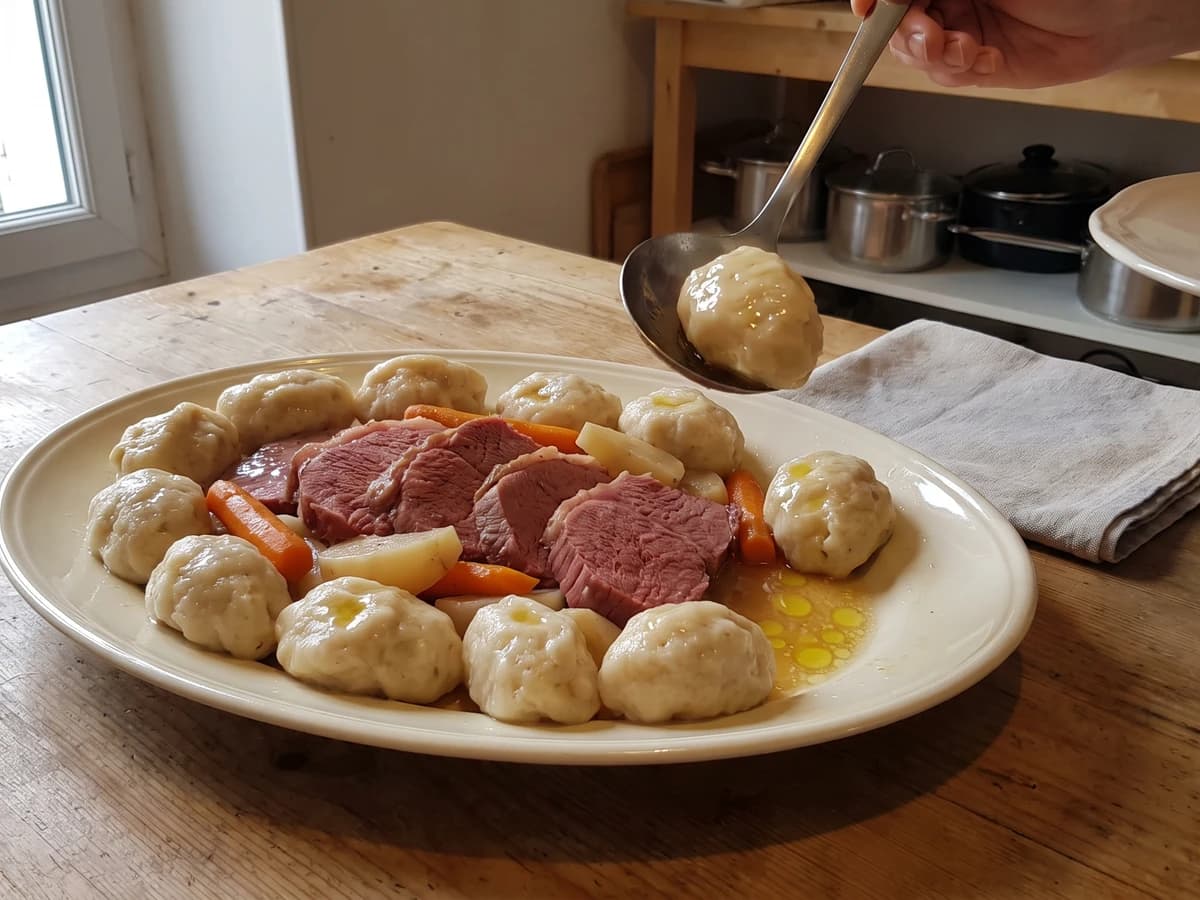
Boulettes au suif, poached beside salt beef, turn equal weights of flour and finely chopped suet into tender, rich dumplings. Keep the beef liquor at a bare tremble and the old garnish works beautifully at home.
A cooking platform built around craft, culture, and the stories behind what we eat.
Created by Chef Juliette
Based on No. 2155, Flageolets (Haricots Flageolets), from Le Guide Culinaire (1907) by Auguste Escoffier
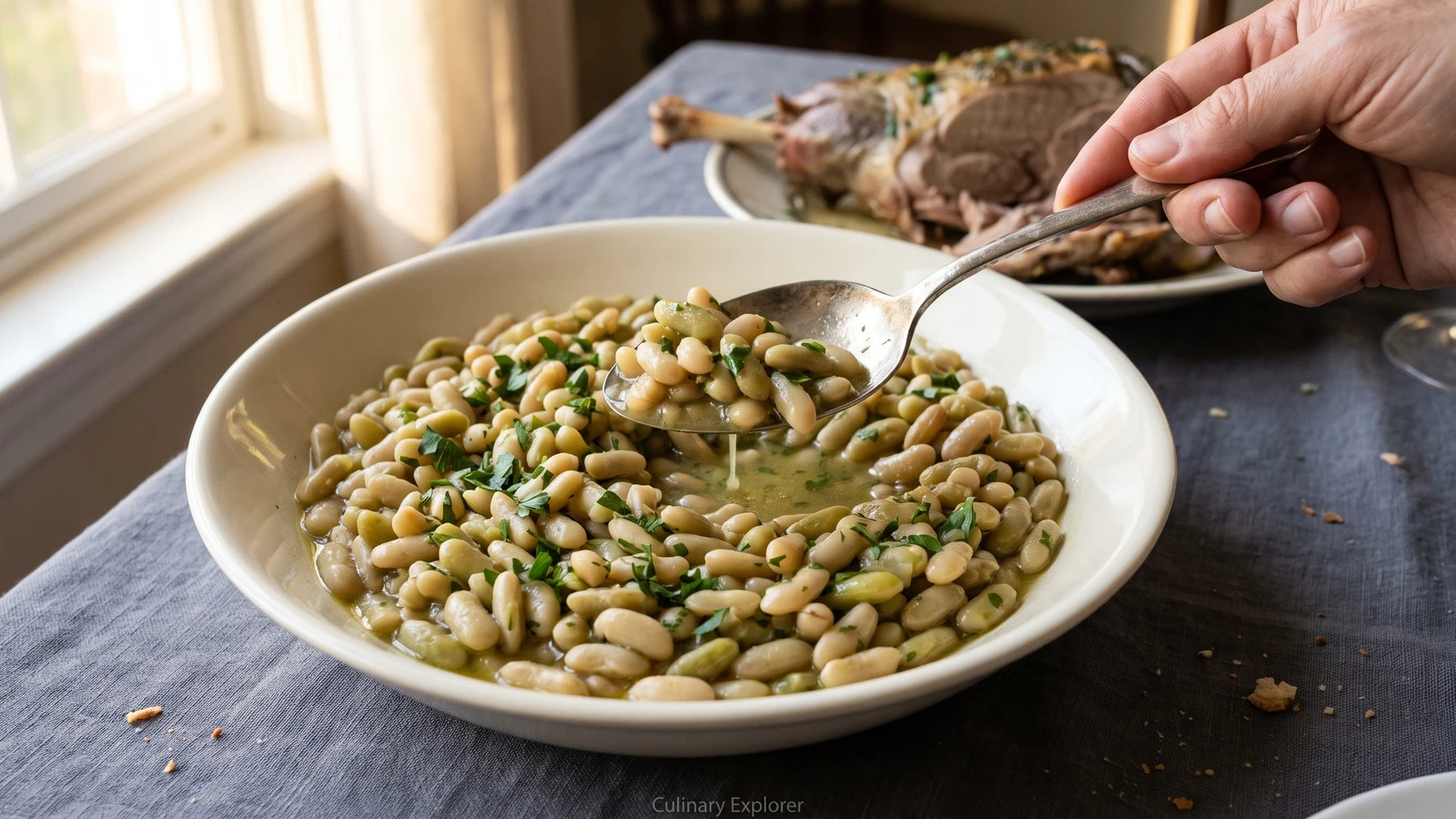
Haricots flageolets prove that bean cookery is governed by one thing: the barest simmer. Keep the skins whole, the centers creamy, and finish their pale green liquor with butter.
Haricots flageolets (pale green flageolet beans) teach the first law of bean cookery: the water must tremble, never gallop. A hard boil tears their fine skins before the centers soften; gentle heat leaves each bean whole, creamy, and faintly sweet. This is a quiet dish, but quiet dishes expose the cook.
The original entry assumed fresh beans when the season allowed, preserved or dried beans behind them, and a cook who already knew the haricot method. It gave neither a brigade quantity nor a separate sauce to reproduce. For the home table I use 225 grams of dried flageolets, quick-soaked and cooked in one saucepan. Large holding pots are scaffolding and can go; the aromatic simmer, patient testing, and butter finish are the dish and must stay. One cook, one stove, one evening.
When they're ready, the beans will be pale green-ivory, tender without collapsing, and glazed with their own reduced liquor and real butter. Don't judge them by the clock. Taste the center, because keeping that simmer bare and cooking away every trace of chalkiness is the step that matters most.
Haricots flageolets belong to the market gardens of Île-de-France, especially the country around Arpajon and Brétigny-sur-Orge south of Paris, where growers pulled the plants before full maturity and dried the pale beans away from harsh light. The flageolet is not a separate species so much as a common bean selected and harvested young, which explains both its green cast and finer texture. From those gardens it moved to bourgeois and bistro tables as the customary companion to gigot d'agneau, while classical kitchens sieved it into Purée Musard (sieved flageolet purée) for mutton and for thickening purée of haricots verts.
Quantity
1¼ cups (300 ml / 225 g)
picked over and rinsed
Quantity
11 cups (2.6 L / 2.6 kg), divided, plus more as needed
Quantity
1
peeled and halved
Quantity
1
halved lengthwise
Quantity
1
Quantity
1½ teaspoons (7.5 ml / 9 g)
divided
Quantity
3 tablespoons (45 ml / 42 g)
cut into small cubes
Quantity
¼ teaspoon (1 ml / 0.5 g)
Quantity
2 tablespoons (30 ml / 8 g)
finely chopped
| Ingredient | Quantity |
|---|---|
| dried flageolet beanspicked over and rinsed | 1¼ cups (300 ml / 225 g) |
| water | 11 cups (2.6 L / 2.6 kg), divided, plus more as needed |
| small yellow onionpeeled and halved | 1 |
| small carrothalved lengthwise | 1 |
| bouquet garni (2 parsley stems, 1 thyme sprig, and 1 bay leaf) | 1 |
| fine sea saltdivided | 1½ teaspoons (7.5 ml / 9 g) |
| cold unsalted buttercut into small cubes | 3 tablespoons (45 ml / 42 g) |
| ground white pepper | ¼ teaspoon (1 ml / 0.5 g) |
| flat-leaf parsleyfinely chopped | 2 tablespoons (30 ml / 8 g) |
Bring 6 cups of the water to a boil in the saucepan. Put the rinsed flageolets in a heatproof bowl, pour the water over them, cover, and leave them for 1 hour. Drain and rinse. This quick soak replaces the overnight wait, not the cooking itself; it changes the schedule so the dish fits one evening without stripping away the patient simmer that defines it.
Return the drained beans to the saucepan with the remaining 5 cups water, the onion, carrot, bouquet garni, and 1 teaspoon of the salt. The water should stand about 2 inches above the beans; add a little more if your pot is broad. Bring it slowly toward a simmer over medium heat, skim off the pale foam, then lower the heat at the first small bubbles.
Set the lid slightly ajar and cook for 50 to 75 minutes, keeping only an occasional bubble at the surface. Add freshly boiled water whenever needed to keep the beans covered by about 1 inch, and rock the pot instead of stirring. If the water boils hard and a few skins split, take the pan off the heat for 2 minutes and resume at the lowest setting. Ça se rattrape: don't stir again, and later press the damaged beans into the finishing liquor where they'll thicken it rather than announce the accident.
Begin tasting after 50 minutes. A finished flageolet yields easily under the tooth and is creamy all the way through, with no dry or chalky speck at its center. If the beans remain firm after 75 minutes, they're older, not ruined; add hot water and continue in 10-minute intervals. Remove the onion, carrot, and bouquet garni, then lift the tender beans into a warm bowl with a slotted spoon. Reserve at least 1 cup of their cooking liquor.
Pour ½ cup of the reserved liquor into the emptied saucepan and reduce it briskly to about ¼ cup, until it feels lightly silky rather than watery. Take the pan off the heat and monter au beurre (finish with cold butter), whisking in the butter a few cubes at a time until the liquor turns glossy. Fold in the beans, white pepper, and up to the remaining ½ teaspoon salt, rolling the pan gently to coat them. If the finish looks oily, lift out the beans and whisk 1 tablespoon cool cooking liquor into the pan until the emulsion comes back, then return them. Ça se rattrape.
Fold in the chopped parsley and taste once more. The beans should be seasoned enough to stand beside roast lamb, but still taste unmistakably of themselves. Spoon them into a warm serving bowl with the buttered liquor gathered around them, not drained away. À table!
1 serving (about 150g)
Culinary guides, cultural storytelling, and the editorial depth that makes cooking meaningful.
Discover Culinary ExplorerChef Juliette
Boulettes au suif, poached beside salt beef, turn equal weights of flour and finely chopped suet into tender, rich dumplings. Keep the beef liquor at a bare tremble and the old garnish works beautifully at home.

Chef Juliette
Bread, flour, frangipane, and rice become four cool, supple panades for binding forcemeats, each changing body and flavor while preserving tenderness. The finest Mousselines need none, and knowing that distinction is the lesson.

Chef Juliette
Panade au pain is bread, milk, salt, heat, and attention: stir until the paste releases cleanly, butter it against a skin, and you have the quiet binder behind tender French farces.

Chef Juliette
Panade de farine teaches the drying stroke behind pâte à choux: flour meets boiling buttered water, then stays over the fire until the paste gathers, smooths, and quits the pan cleanly.