Chef Juliette
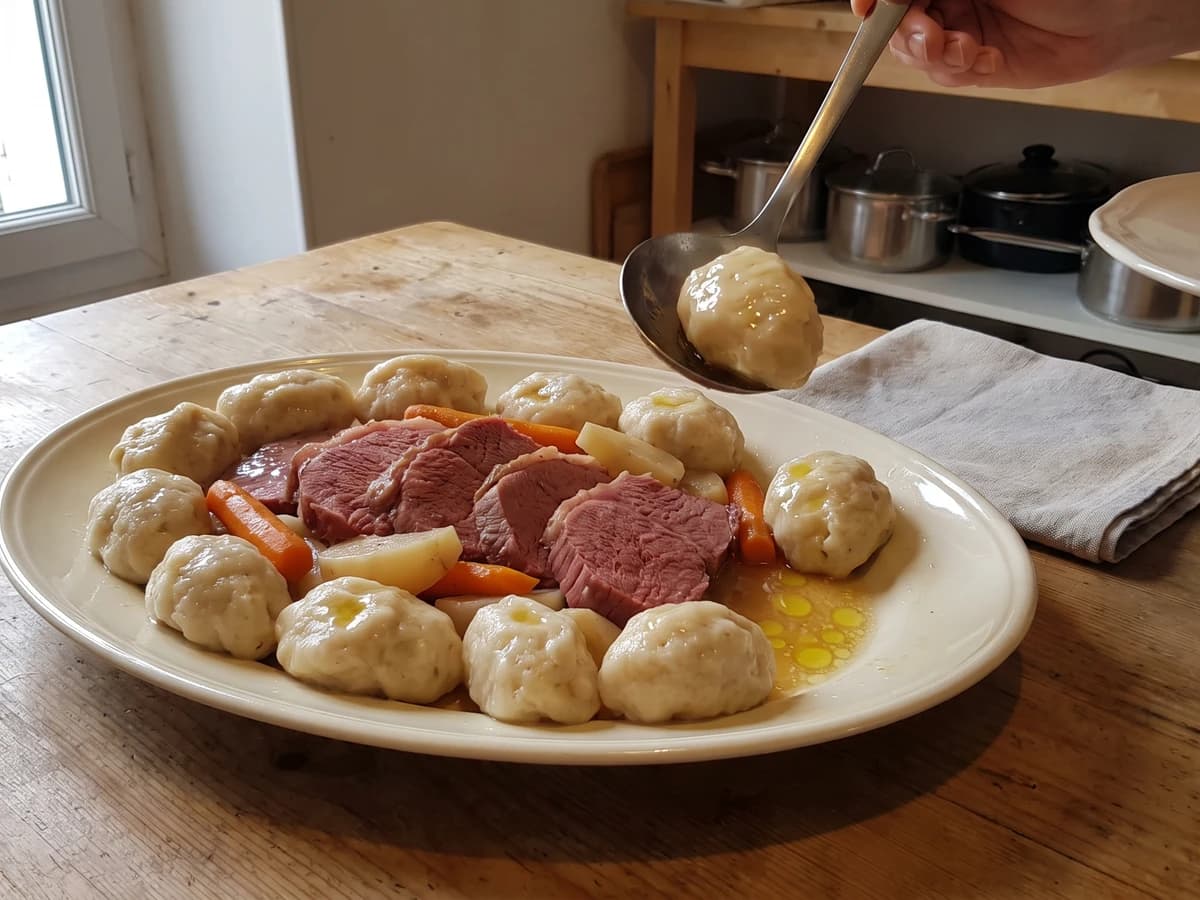
Suet Dumpling
Boulettes au suif, poached beside salt beef, turn equal weights of flour and finely chopped suet into tender, rich dumplings. Keep the beef liquor at a bare tremble and the old garnish works beautifully at home.
A cooking platform built around craft, culture, and the stories behind what we eat.
Created by Chef Juliette
Based on No. 2169, Maize (Maïs), from Le Guide Culinaire (1907) by Auguste Escoffier
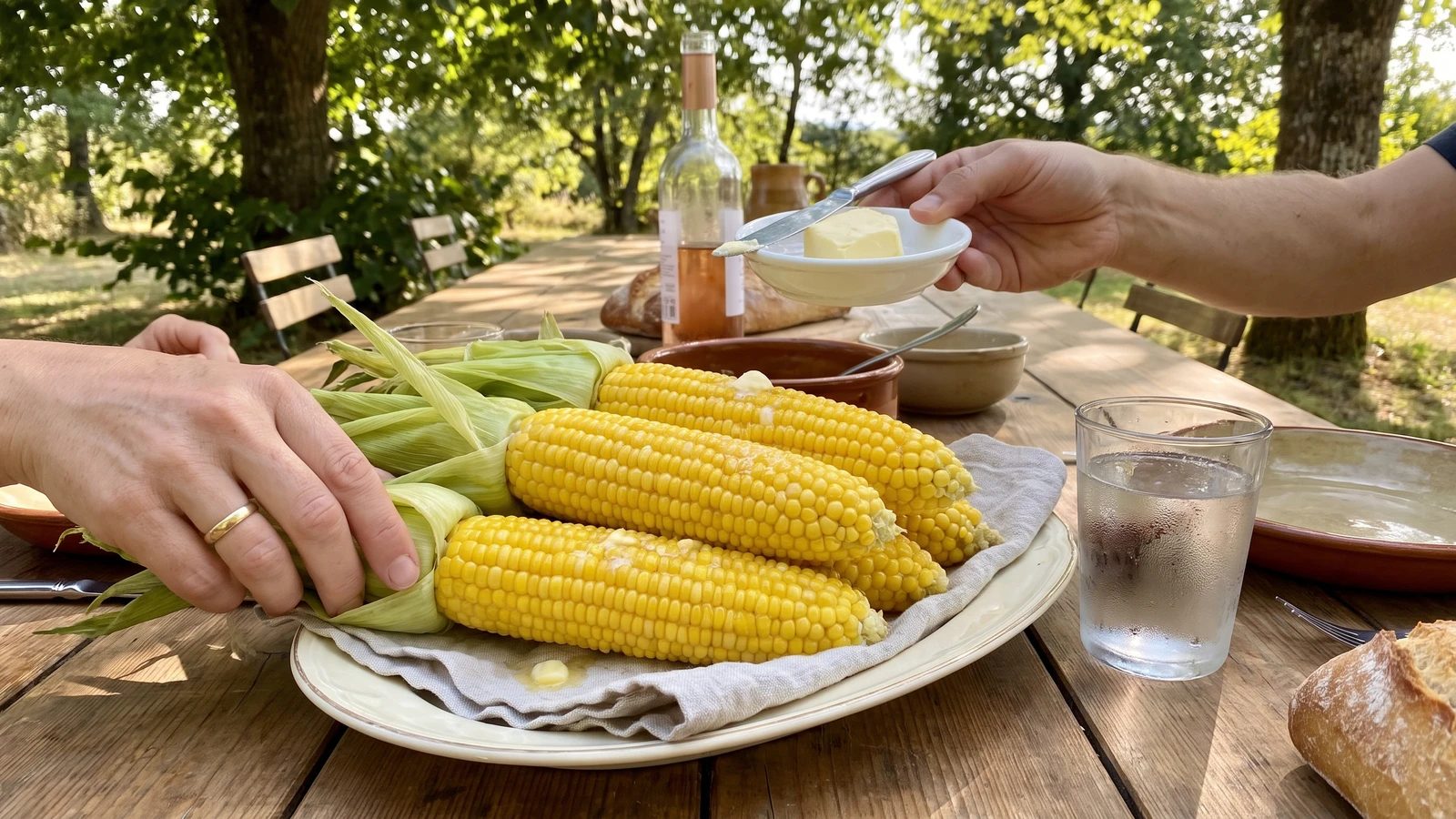
Fresh maize at the milk stage, cooked inside its leaves until tender, then bared at the table and served with sweet butter. The whole lesson is timing: capture the juice before starch takes it.
Maïs (fresh maize with butter) teaches the value of catching an ingredient at its exact moment. The kernels must still be at the milk stage, plump enough to burst beneath a thumbnail and release an opaque white drop. Cook them gently inside their leaves, and they emerge tender, sweet, and protected rather than waterlogged.
The classical entry assumed husk-on maize arriving freshly gathered and a dining-room hand to arrange every ear on a folded napkin. For four people, one broad pot and a clean linen-lined platter do the same work; I choose its salted-water method over a steamer because most home kitchens already own the pot. The formal arrangement is brigade scaffolding and can shrink. Keeping the leaves is the dish: they guard the kernels during cooking, then fold back into handles.
Fresh butter goes to the table separately, cool enough to hold its shape but soft enough to spread. Nothing needs a sauce, a stock, or a busy garnish. The one step that decides the Maïs is stopping the cooking while each kernel remains juicy; test early, because tenderness can wait for you, but overcooked corn will not.
In France, maize took deepest root in the southwest, particularly Béarn and the Landes, where cooks used it in porridges, breads, and millas. Whole ears served with fresh butter belong more broadly to the French classical dining table, which treated maize gathered at the milk stage as a delicate fresh vegetable rather than merely grain for milling. The leaves were retained deliberately, first to protect the kernels and then to provide the diner with a neat handle.
Quantity
4 ears (about 2½ pounds / 1.1 kg)
Quantity
3 quarts (2.8 L / 2.8 kg), or enough to cover the ears
Quantity
1½ tablespoons (22 ml / 27 g)
Quantity
½ cup (120 ml / 113 g)
at cool room temperature
| Ingredient | Quantity |
|---|---|
| very fresh ears of maize with husks attached | 4 ears (about 2½ pounds / 1.1 kg) |
| water | 3 quarts (2.8 L / 2.8 kg), or enough to cover the ears |
| fine sea salt | 1½ tablespoons (22 ml / 27 g) |
| fresh unsalted butterat cool room temperature | ½ cup (120 ml / 113 g) |
Pull back just enough leaf at the tip of one ear to press a kernel with your thumbnail. It should release an opaque, milky drop and smell sweet and green. If the kernel is hard or gives no juice, it has passed the moment for this whole-ear service; choose another ear rather than asking butter to disguise starch.
Remove only the bruised or dirty outermost leaves, leaving the sound inner layers attached at the base. Trim away loose silk from the tips and rinse the ears well under cold water, working carefully so the leaves remain whole. Do not strip the ears bare. Those leaves protect the milky grains during cooking and become the handles at service.
Bring the water and salt to a full boil in a broad 6-quart pot. Lower the heat to a lively simmer before adding the maize; a violent boil batters the leaves and cooks the outside faster than the centre. The water should move steadily without throwing the ears against the pot.
Lower the ears into the salted water with tongs, cover the pot slightly ajar, and simmer for 8 to 12 minutes, turning them once. Begin testing at 8 minutes: lift one ear, uncover a kernel, and pierce it with the tip of a knife. It should yield easily and release a milky bead. If the water boiled too hard and the kernels have begun to tighten, stop cooking at once. Ça se rattrape: cut those kernels from the cob and warm them briefly with a spoonful of the butter and cooking water, turning the whole-ear service into the classical butter-bound accompaniment.
Lift the ears into a colander and drain them point-down for 1 minute. As soon as they are cool enough to handle, draw the leaves back without detaching them, remove every strand of silk, and gather the leaves beneath each cob to resemble a stalk. Pat away excess water. Do not rinse the kernels, or you wash away their sweet surface juices.
Lay the bared ears on a clean linen napkin set over an oval platter, leaving the gathered leaves exposed as handles. Put the fresh butter into a small dish and send it to the table beside the maize. Each diner butters the kernels while they are warm and glossy. Cooking well is not cooking fancy. À table!
1 serving (about 120g)
Culinary guides, cultural storytelling, and the editorial depth that makes cooking meaningful.
Discover Culinary ExplorerChef Juliette
Boulettes au suif, poached beside salt beef, turn equal weights of flour and finely chopped suet into tender, rich dumplings. Keep the beef liquor at a bare tremble and the old garnish works beautifully at home.

Chef Juliette
Bread, flour, frangipane, and rice become four cool, supple panades for binding forcemeats, each changing body and flavor while preserving tenderness. The finest Mousselines need none, and knowing that distinction is the lesson.

Chef Juliette
Panade au pain is bread, milk, salt, heat, and attention: stir until the paste releases cleanly, butter it against a skin, and you have the quiet binder behind tender French farces.

Chef Juliette
Panade de farine teaches the drying stroke behind pâte à choux: flour meets boiling buttered water, then stays over the fire until the paste gathers, smooths, and quits the pan cleanly.