Chef Juliette
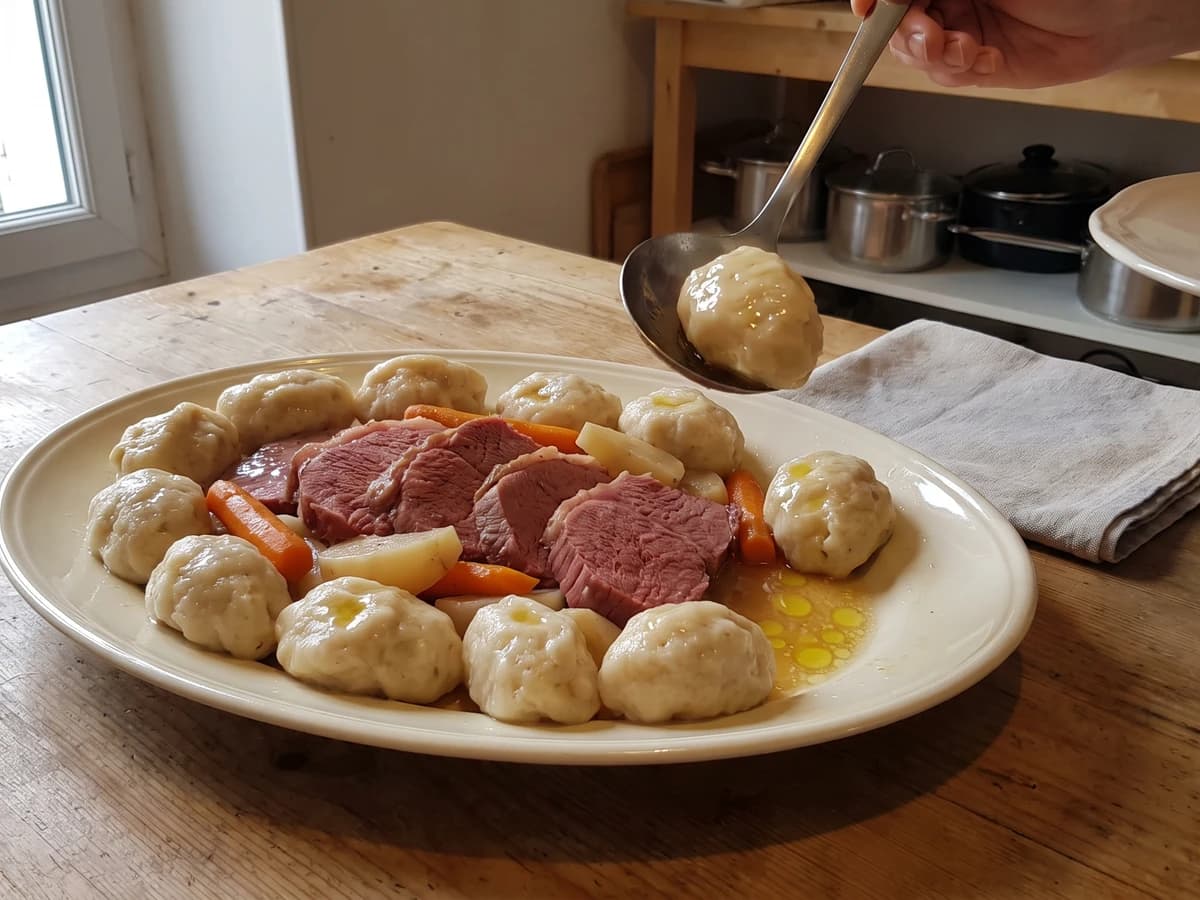
Suet Dumpling
Boulettes au suif, poached beside salt beef, turn equal weights of flour and finely chopped suet into tender, rich dumplings. Keep the beef liquor at a bare tremble and the old garnish works beautifully at home.
A cooking platform built around craft, culture, and the stories behind what we eat.
Created by Chef Juliette
Based on No. 2175, Purée de Marrons, from Le Guide Culinaire (1907) by Auguste Escoffier
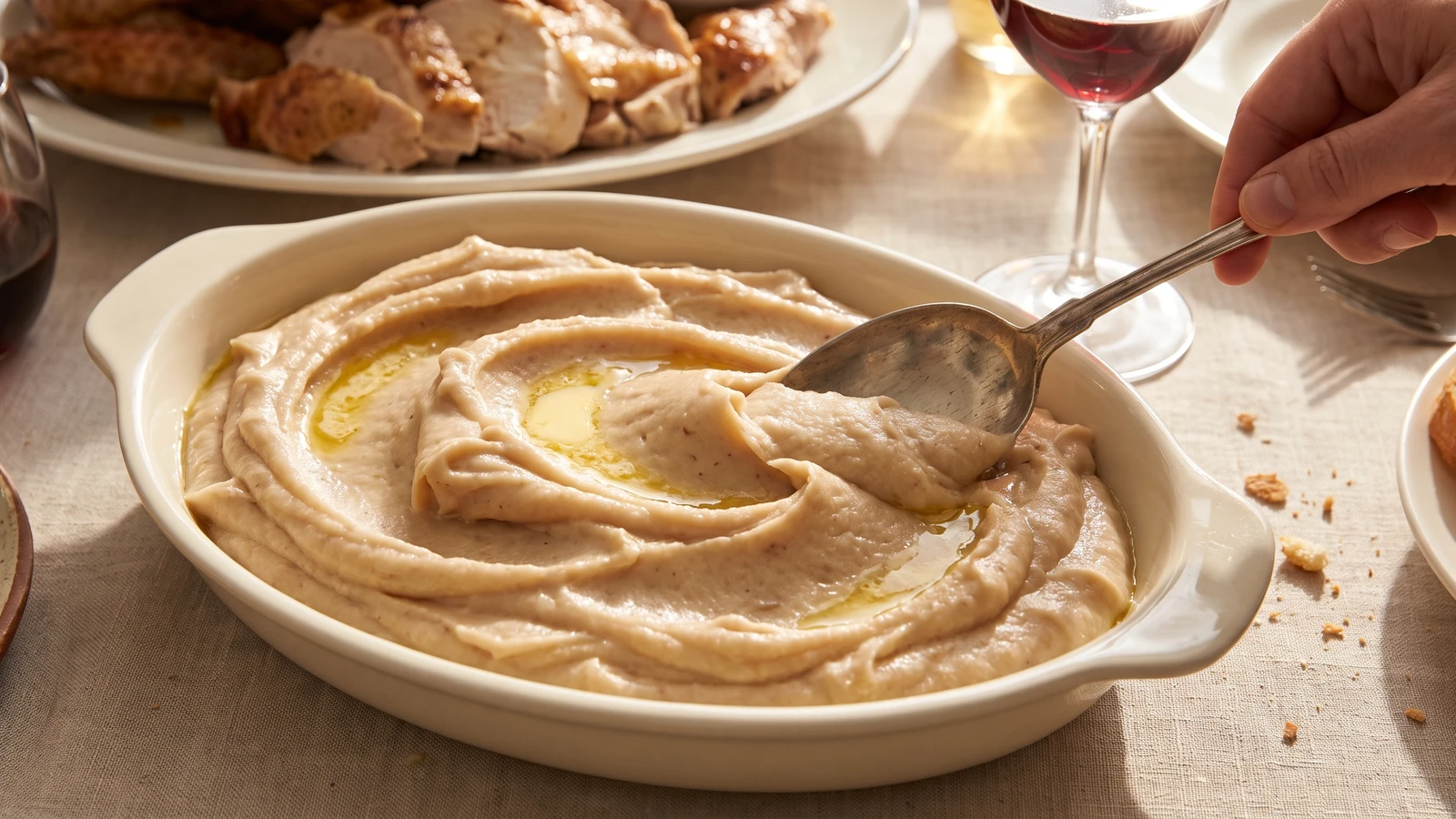
Chestnuts simmered with celery and a little sugar, pressed smooth, dried with butter, then loosened with warm milk: a savory purée whose silk depends on controlling moisture.
Purée de marrons (savory chestnut purée) teaches one true thing before you touch the pan: smoothness comes from controlling moisture, not from adding more liquid. The chestnuts must first become completely tender in white consommé, with celery holding their sweetness in check, then be pressed fine and dried with butter before warm milk brings them back to suppleness.
The original formula assumed a saucier, a consommé pot never off the fire, and a tammy broad enough to process a service quantity. Your home equivalent is one batch of Stewed Chestnuts (No. 2173), good white consommé from that preparation, and a food mill followed by a sturdy fine sieve. I have scaled the chestnuts to one pound, enough for four generous servings. The brigade quantity and the great tammy were scaffolding, so they can go. The celery, measured sugar, thorough sieving, and order of butter before milk are the dish itself, so they stay.
The finished purée should be pale fawn, softly mounded, and rich without tasting sweet. Don't rush the dessécher, the pan-drying stage. That is the step that decides whether the milk folds into a silken purée or merely thins a wet one.
Purée de marrons belongs to the savory garnish repertoire of the French classical table, drawing on chestnuts grown throughout Ardèche and the Cévennes and serving them beside roast poultry, pork, and game. Grand kitchens refined the household practice by cooking the nuts in white consommé, passing them through a tammy, and balancing their sweetness with celery. It should not be confused with Ardèche's sweet crème de marrons: the little sugar here rounds the chestnut, while stock, celery, butter, and salt keep the preparation firmly at the dinner table.
Quantity
1 batch Stewed Chestnuts (No. 2173), prepared from 3¼ cups (770 ml / 454 g) peeled chestnuts
cooked until crushing-soft; cooking liquid reserved
Quantity
1 tablespoon plus ½ teaspoon (17.5 ml / 14 g)
added to the chestnut cooking liquid
Quantity
4 tablespoons (60 ml / 57 g)
divided
Quantity
½ to ¾ cup (120 to 180 ml / 124 to 185 g)
warmed
Quantity
to taste
| Ingredient | Quantity |
|---|---|
| Stewed Chestnutscooked until crushing-soft; cooking liquid reserved | 1 batch Stewed Chestnuts (No. 2173), prepared from 3¼ cups (770 ml / 454 g) peeled chestnuts |
| granulated sugaradded to the chestnut cooking liquid | 1 tablespoon plus ½ teaspoon (17.5 ml / 14 g) |
| unsalted butterdivided | 4 tablespoons (60 ml / 57 g) |
| whole milkwarmed | ½ to ¾ cup (120 to 180 ml / 124 to 185 g) |
| fine salt | to taste |
Prepare the Stewed Chestnuts (No. 2173) according to its own entry, adding the sugar to the cooking liquid at the start. For stuffing, that preparation may remain somewhat firm; for this purée, continue until a chestnut collapses under a fork and shows no pale, chalky core. Reserve ½ cup of the cooking liquid before draining.
Pass the drained chestnuts through the fine disk of a food mill while they are still hot, then press the resulting meal through a sturdy fine-mesh sieve with a flexible scraper. This replaces the brigade's tammy without changing its purpose: removing every resistant fragment and giving the purée an even, close texture. Don't use a blender, which beats the chestnuts into a heavy paste instead of pressing them cleanly.
Put the sieved chestnuts in a heavy saucepan with 3 tablespoons of the butter. Work them over medium-low heat with a wooden spoon for 5 to 8 minutes. This is dessécher, drying the purée: the butter disappears into the chestnuts, excess moisture leaves, and the spoon begins to draw a clean path across the pan floor. If the purée catches, lift the pan from the heat immediately and beat in a spoonful of reserved cooking liquid before transferring it to a clean pan. Don't scrape burnt bits into it.
Lower the heat and beat in ½ cup of the warm milk a little at a time, letting each addition disappear before the next. Stop when the purée is smooth, supple, and able to hold a soft ridge from the spoon without standing stiffly. If it remains dense, add the remaining milk by the spoonful. If it becomes loose, ça se rattrape: work it over gentle heat until the spoon again leaves a brief trail.
Taste before adding salt, since the white consommé in the chestnut preparation may already carry enough. Beat in the remaining tablespoon of cold butter until the surface takes on a quiet sheen, then spoon the purée into a warmed serving dish. Give the top broad, generous folds with the back of the spoon and serve beside roast poultry, pork, or game. À table!
1 serving (about 170g)
Culinary guides, cultural storytelling, and the editorial depth that makes cooking meaningful.
Discover Culinary ExplorerChef Juliette
Boulettes au suif, poached beside salt beef, turn equal weights of flour and finely chopped suet into tender, rich dumplings. Keep the beef liquor at a bare tremble and the old garnish works beautifully at home.

Chef Juliette
Bread, flour, frangipane, and rice become four cool, supple panades for binding forcemeats, each changing body and flavor while preserving tenderness. The finest Mousselines need none, and knowing that distinction is the lesson.

Chef Juliette
Panade au pain is bread, milk, salt, heat, and attention: stir until the paste releases cleanly, butter it against a skin, and you have the quiet binder behind tender French farces.

Chef Juliette
Panade de farine teaches the drying stroke behind pâte à choux: flour meets boiling buttered water, then stays over the fire until the paste gathers, smooths, and quits the pan cleanly.