Chef Juliette
Suet Dumpling
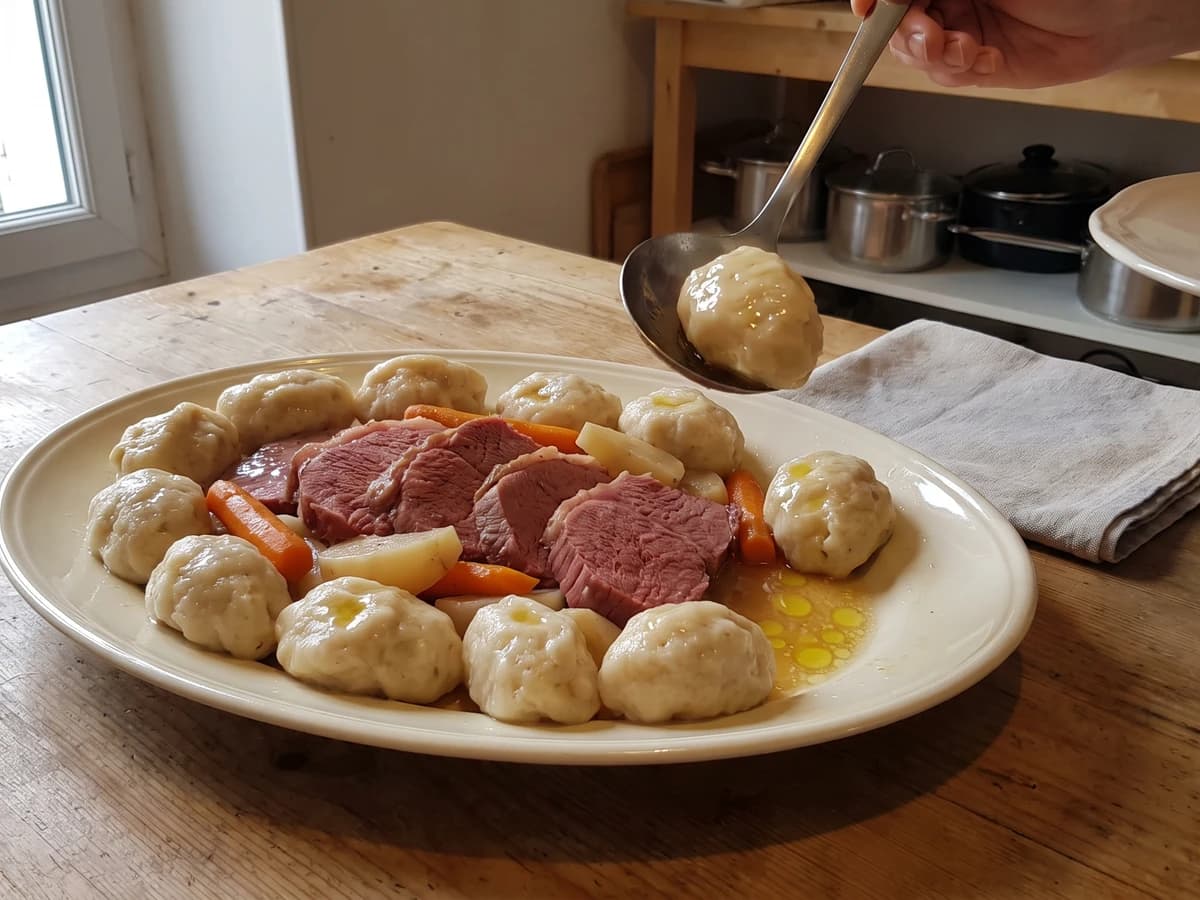
Boulettes au suif, poached beside salt beef, turn equal weights of flour and finely chopped suet into tender, rich dumplings. Keep the beef liquor at a bare tremble and the old garnish works beautifully at home.
A cooking platform built around craft, culture, and the stories behind what we eat.
Created by Chef Juliette
Based on No. 2173, Stewed Chestnuts, from Le Guide Culinaire (1907) by Auguste Escoffier
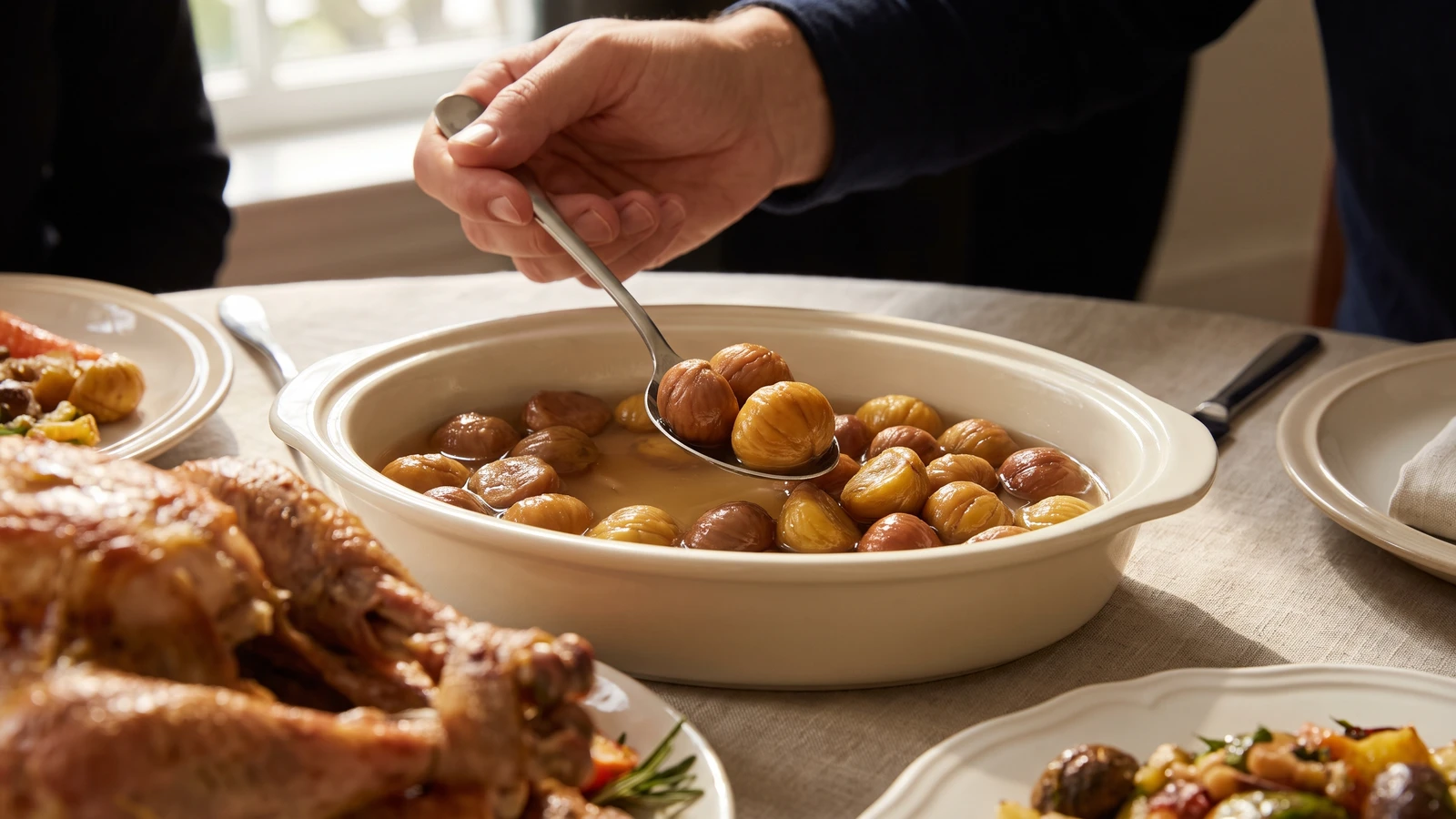
Marrons braisés ask for restraint: peeled chestnuts, clear consommé, and celery held at the barest simmer until tender yet whole, ready for the holiday platter or kept firm for stuffing.
Marrons braisés (stewed chestnuts) teach one true thing: a chestnut must be cooked more gently than its firmness suggests. Hold the consommé at a bare tremble and the nuts drink in its flavor while staying whole; boil them and they knock one another into meal. The finished dish is quiet and splendid, chestnut-sweet, celery-scented, and glossed with clear broth beside a roast bird.
The book's kitchen assumed a vegetable cook delivering chestnuts already peeled and a consommé pot never off the fire. At home, blanch and peel in small batches, reach for a good finished consommé, and use a snug saucepan so a modest amount of liquid truly covers the nuts. This version makes four side portions while preserving the book's exact ratio of half a celery stalk to one pound of peeled chestnuts. The separate prep hand and holding pan were brigade scaffolding and can go; the consommé, the proportion, and the gentle cooking are the dish. One cook, one stove, one evening.
Once the simmer begins, don't stir. Move the pan only by its handles, and if a chestnut splits, lower the heat and lift out any nuts already tender. Ça se rattrape. That bare, undisturbed simmer is the step that decides the dish.
Marrons braisés sit within the classical French garniture repertoire, while their essential ingredient belongs especially to the chestnut country of the Ardèche and the Cévennes, where sweet chestnuts fed households far beyond feast days. Classical kitchens carried that staple onto bourgeois and holiday tables by cooking peeled nuts in consommé and pairing them with goose, turkey, and game. In French cookery, marron means an edible sweet chestnut, never the inedible horse chestnut sometimes given the same name.
Quantity
1 pound (454 g) after peeling; buy about 1½ pounds (680 g) in shell
scored, blanched, and peeled
Quantity
2 to 2½ cups (480 to 600 ml / 480 to 600 g)
enough to just cover the chestnuts
Quantity
½ medium stalk (about 20 g)
left whole
Quantity
2 quarts (1.9 L / 1.9 kg)
for blanching
| Ingredient | Quantity |
|---|---|
| raw sweet chestnutsscored, blanched, and peeled | 1 pound (454 g) after peeling; buy about 1½ pounds (680 g) in shell |
| clear chicken or beef consomméenough to just cover the chestnuts | 2 to 2½ cups (480 to 600 ml / 480 to 600 g) |
| celeryleft whole | ½ medium stalk (about 20 g) |
| waterfor blanching | 2 quarts (1.9 L / 1.9 kg) |
Bring the blanching water to a full boil. Set each chestnut flat-side down and cut a shallow X through the rounded shell without driving the knife deeply into the flesh. Blanch six to eight chestnuts at a time for 3 minutes, then peel away both the hard shell and the brown inner skin while they are still hot, protecting your hand with a folded towel. If the inner skin clings, return that chestnut to the water for 30 seconds. Ça se rattrape; don't gouge away good flesh. Transfer each peeled chestnut immediately to a snug 2-quart saucepan holding the celery and 1½ cups of the consommé. Use 1 pound of peeled chestnuts for the stated ratio.
Arrange the chestnuts in an even layer around the celery, then add only enough remaining consommé to cover the uppermost nuts by about ⅛ inch (3 mm). Lay a cartouche (a round of parchment paper) directly on the liquid surface. The snug pan and cartouche make the book's instruction, just enough consommé to cover, practical at home without drowning the chestnuts or losing the broth to evaporation. Bring the liquid slowly toward a simmer over medium-low heat.
As soon as the first small bubbles appear, lower the heat and hold the consommé at the barest tremble. Cook beneath the cartouche for 20 to 25 minutes, beginning to test at 18 minutes. Don't stir; gently rotate the saucepan by its handles once or twice. For serving as a side dish, the point of a paring knife should enter a chestnut with slight resistance while the nut remains intact. For goose or turkey stuffing, stop 5 to 7 minutes earlier, while the centers are still distinctly firm. If the liquid boils or a nut splits, lower the heat, stop moving the pan, and remove any chestnuts already tender with a slotted spoon. Finish the firmer ones alone, then return the tender nuts off the heat.
Remove and discard the celery. For a side dish, lift the chestnuts carefully into a warmed shallow serving dish and spoon over just enough consommé to glaze and moisten them. Leave excess liquid behind rather than boiling it down around the fragile nuts; this preparation is stewed, not lacquered. For stuffing, drain the firm chestnuts immediately and spread them in one layer to cool so carryover cooking doesn't soften them. Serve beside roast goose, turkey, or game. À table!
1 serving (about 180g)
Culinary guides, cultural storytelling, and the editorial depth that makes cooking meaningful.
Discover Culinary ExplorerChef Juliette
Boulettes au suif, poached beside salt beef, turn equal weights of flour and finely chopped suet into tender, rich dumplings. Keep the beef liquor at a bare tremble and the old garnish works beautifully at home.

Chef Juliette
Bread, flour, frangipane, and rice become four cool, supple panades for binding forcemeats, each changing body and flavor while preserving tenderness. The finest Mousselines need none, and knowing that distinction is the lesson.

Chef Juliette
Panade au pain is bread, milk, salt, heat, and attention: stir until the paste releases cleanly, butter it against a skin, and you have the quiet binder behind tender French farces.

Chef Juliette
Panade de farine teaches the drying stroke behind pâte à choux: flour meets boiling buttered water, then stays over the fire until the paste gathers, smooths, and quits the pan cleanly.