Culinary Explorer

A cooking platform built around craft, culture, and the stories behind what we eat.
Discover Culinary Explorer
Véronique (Laver)

Véronique (Laver)

Created by Chef Juliette

Based on No. 2168, Véronique (Laver), from Le Guide Culinaire (1907) by Auguste Escoffier

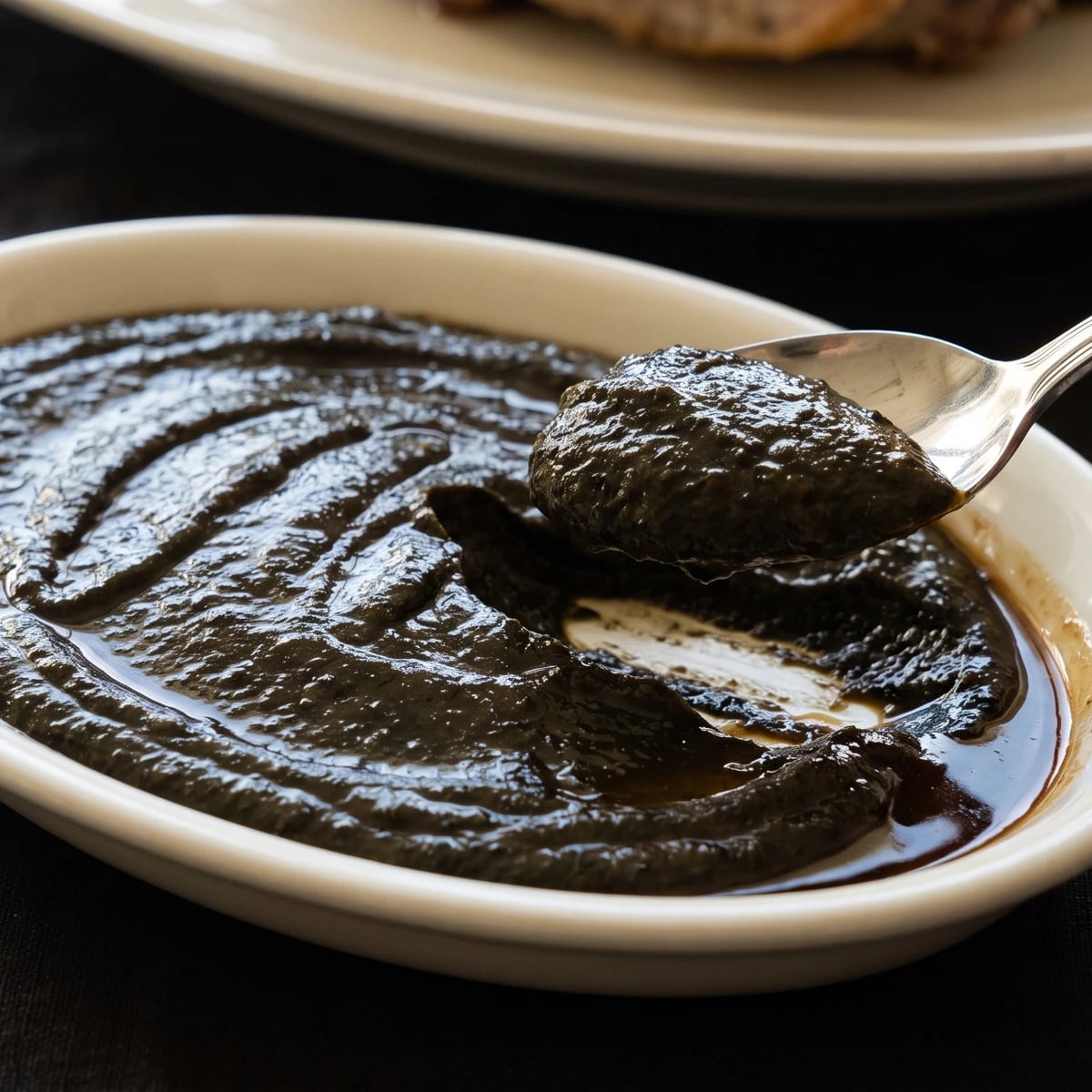
Véronique proves that restraint can be a complete technique: cooked Atlantic laver, warmed without boiling and bound with just enough Sauce Espagnole to stand as a glossy, firm purée beside a roast.

Side Dishes
French
Dinner Party
Comfort Food
5 min
Active Time
10 min cook15 min total
Yield4 servings

Véronique (cooked laver bound with Sauce Espagnole) teaches a small, exact lesson: when a finished sauce binds a vegetable, the sauce is a measure, not a bath. The laver must remain itself, dark, saline, and softly textured, while the Espagnole gives it body and a quiet gloss.

The original entry assumed two conveniences: English markets selling the laver already cooked, and good Sauce Espagnole standing ready. Behind that sauce stood a saucier and a stockpot never off the fire. At home, you need plain cooked laver, one measured portion of finished Sauce Espagnole prepared separately, and a small heavy pan. The dedicated station was brigade scaffolding and can go. The roux-darkened, stock-built sauce is the foundation and must stay. One cook, one stove, one evening.

Warm the two together gently and add the sauce in stages. The step that matters most is the final spoonful: stop as soon as the Véronique holds a soft mound and a furrow drawn through it closes slowly.

Laver belongs especially to the Welsh coast, where the tender Atlantic seaweed is washed and cooked for hours into the dark purée called laverbread; English markets sold it in that already-cooked form. This French classical entry adopts that market preparation rather than pretending it is a native regional vegetable, then brings it into service with Sauce Espagnole. Although Véronique elsewhere in the canon is familiar as a grape garnish, this entry explicitly names laver, so the seaweed and Espagnole, not grapes, govern the preparation.

The technique, the tradition, and the story behind every dish.

Discover Culinary Explorer

Ingredients

plain cooked Atlantic laver (laverbread)

Quantity

1¼ cups (300 ml / 300 g)

drained only if loose packing liquid is present

good Sauce Espagnole

Quantity

½ cup (120 ml / 125 g), plus up to 2 tablespoons (30 ml / 32 g) if needed

divided

Equipment Needed

  • 1½-quart heavy-bottomed saucepan
  • Wooden spoon or heatproof flexible spatula
  • Measuring cup and tablespoon

Instructions

  1. 1

    Prepare the laver

    Spoon the cooked laver into a small heavy saucepan. If loose packing liquid surrounds it, let that liquid drain away, but don't squeeze the laver dry; its soft body belongs in the purée. Break up any compact lumps with a wooden spoon. If the Sauce Espagnole is chilled and gelled, cut through it several times with a spoon so it will melt evenly.

    Use plain cooked laver or laverbread made from Atlantic laver. Dried nori, kelp, dulse, and laverbread already mixed with oatmeal aren't equivalents for this preparation.
  2. 2

    Begin the binding

    Add ¼ cup (60 ml / about 63 g) of the Sauce Espagnole to the laver and set the pan over medium-low heat. Fold steadily from the bottom as the sauce loosens and surrounds the seaweed. When the first lazy bubble appears at the edge, lower the heat; both components are already cooked, so the work here is binding and warming, not boiling.

  3. 3

    Judge the consistency

    Add the remaining Sauce Espagnole one tablespoon at a time, letting each addition warm through before judging the next. Stop when the Véronique is glossy, holds a low mound on the spoon, and leaves a furrow that closes slowly when you draw the spoon across the pan. If it becomes loose, don't pour it away. Ça se rattrape: hold it uncovered over the gentlest heat and fold constantly until the excess moisture cooks away. If it is too stiff, loosen it with another spoonful of Sauce Espagnole.

  4. 4

    Warm and serve

    Fold the Véronique over gentle heat for another minute, just until evenly hot and gleaming. Taste before reaching for seasoning, since cooked laver and finished Espagnole may already carry all the salt required. Spoon it into a warmed side dish without molding or decorating it, and serve beside roast beef, lamb, or another plainly roasted meat. À table!

Chef Tips

  • Read the package carefully. Plain cooked Atlantic laver should be soft and dark, with laver or laverbread as the principal ingredient; products mixed for frying with oatmeal belong to another preparation.
  • The Sauce Espagnole carries nearly all the seasoning and structure, so it must be fully finished and thick enough to coat a spoon when warm. Thin jus makes the laver watery, while packet gravy gives an entirely different result.
  • Add the sauce by the spoonful, not all at once. Moisture varies between tins and batches of cooked laver, and consistency, rather than a rigid volume, decides when the dish is finished.
  • Serve a modest spoonful beside roast beef or lamb, where the laver's Atlantic salinity cuts through the meat and the Espagnole joins the plate's deeper flavors. It needs no herb, cream, or lemon garnish.

Advance Preparation

  • Prepare the Sauce Espagnole separately up to three days ahead and keep it covered in the refrigerator. Measure it while cold, then let it melt directly into the laver over gentle heat.
  • The cooked laver can be opened and drained a day ahead, then kept covered and cold. Hold it separately from the sauce until cooking so you retain control of the final consistency.
  • The finished Véronique can wait covered off the heat for fifteen minutes. Rewarm it gently before serving, adding a spoonful of Sauce Espagnole only if it has tightened.

Frequently Asked Questions

Nutrition Information

1 serving (about 110g)

Calories
65 calories
Total Fat
2 g
Saturated Fat
1 g
Trans Fat
0 g
Unsaturated Fat
1 g
Cholesterol
5 mg
Sodium
310 mg
Total Carbohydrates
8 g
Dietary Fiber
4 g
Sugars
1 g
Protein
4 g

Note: Chef personas and recipes are created with AI assistance. Cook with care: follow safe food-handling practices, check doneness with a thermometer when needed, and adapt for allergies and your kitchen.

Where cooking meets culture.

Culinary guides, cultural storytelling, and the editorial depth that makes cooking meaningful.

Discover Culinary Explorer

More from Vegetables and Farinaceous Products - Beans, Lettuces and Lentils

Browse the full collection