Chef Juliette
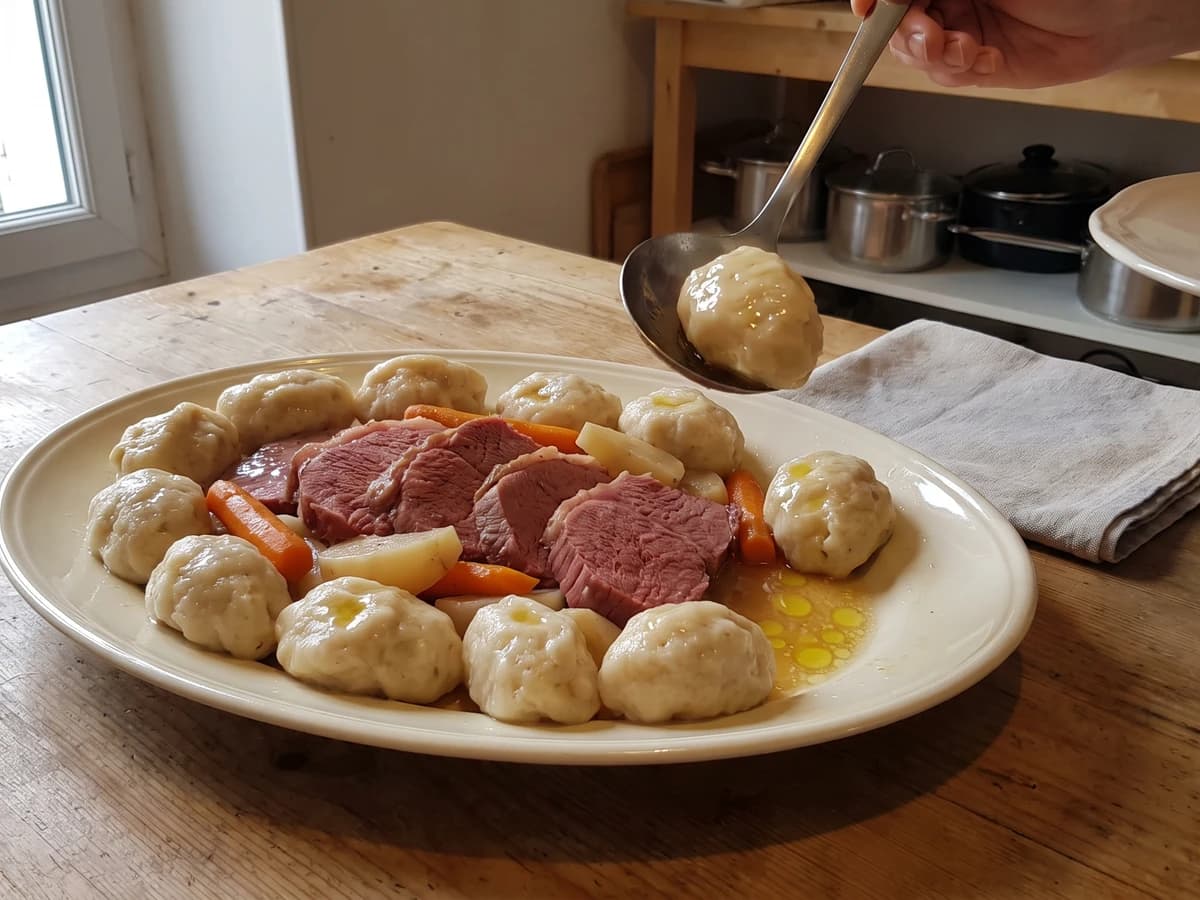
Suet Dumpling
Boulettes au suif, poached beside salt beef, turn equal weights of flour and finely chopped suet into tender, rich dumplings. Keep the beef liquor at a bare tremble and the old garnish works beautifully at home.
A cooking platform built around craft, culture, and the stories behind what we eat.

Created by Chef Juliette
Based on No. 2164, Laitues à la Crème, from Le Guide Culinaire (1907) by Auguste Escoffier
Laitues à la Crème turns humble lettuce into a silken, savory side: parboiled, pressed, bound with pale roux, slowly braised in consommé, then enriched with cream and butter only after the heat is gone.
Laitues à la Crème (cream-braised lettuce) teaches one true thing: water must leave before flavor can enter. Parboiling softens the leaves, but pressing makes room for the consommé, roux, cream, and butter that follow. Carry excess water into the pan and the sauce turns thin and washed out. The pressing is the dish, not housekeeping.
The original sends the cook through the method of Chicorée à la Crème (No. 2089) and assumes a saucier, consommé held beside a stockpot never off the fire, and a silver timbale waiting for service. That brigade scaffolding can go. Ready-to-use consommé, an ovenproof pan, a clean finishing saucepan, and a warmed deep bowl do the work at home. The quantity is halved from two pounds of lettuce to one, but the book's proportions, ten-minute parboil, pale roux, covered ninety-minute braise, and off-heat finish remain intact. One cook, one stove, one evening.
The finished lettuce is pale green and softly savory, with cream rounding the consommé and butter giving the sauce its final gloss. It should spoon generously without leaking liquid around the bowl. Before you touch the roux, press the cooled lettuce until another hard squeeze produces scarcely a drop.
Laitues à la Crème belongs to the Parisian classical table, where cooked lettuces appeared among the entremets de légumes, vegetable dishes handled with the same discipline as meat or fish. Its formula borrows the treatment given to chicory: blanch the leaves, press away their water, bind them with roux, and replace what was removed with consommé and cream. Raw salad's familiarity has obscured a long French practice of braising lettuce for both bourgeois and grand tables.
Quantity
1 procedural reference (No. 2089)
apply its method to lettuce; do not add prepared chicory
Quantity
2 large, about 1 pound (454 g) after trimming
Quantity
3 quarts (2.8 L / 2.8 kg)
for parboiling
Quantity
2¼ tablespoons (33 ml / 32 g)
for the pale roux
Quantity
¼ cup plus 1 teaspoon (65 ml / 32 g)
Quantity
2 generous cups (500 ml / 500 g)
preferably unsalted or low-sodium
Quantity
½ teaspoon (2.5 ml / 3 g), plus more as needed
Quantity
1 small pinch, about 1/16 teaspoon (0.3 ml / 0.25 g)
Quantity
½ cup plus 2 tablespoons (150 ml / 150 g)
at room temperature
Quantity
2 tablespoons (30 ml / 28 g)
diced and cool
| Ingredient | Quantity |
|---|---|
| Chicorée à la Crèmeapply its method to lettuce; do not add prepared chicory | 1 procedural reference (No. 2089) |
| firm butterhead lettuces | 2 large, about 1 pound (454 g) after trimming |
| waterfor parboiling | 3 quarts (2.8 L / 2.8 kg) |
| unsalted butterfor the pale roux | 2¼ tablespoons (33 ml / 32 g) |
| all-purpose flour | ¼ cup plus 1 teaspoon (65 ml / 32 g) |
| ready-to-use consommépreferably unsalted or low-sodium | 2 generous cups (500 ml / 500 g) |
| fine salt | ½ teaspoon (2.5 ml / 3 g), plus more as needed |
| powdered sugar | 1 small pinch, about 1/16 teaspoon (0.3 ml / 0.25 g) |
| heavy creamat room temperature | ½ cup plus 2 tablespoons (150 ml / 150 g) |
| unsalted butterdiced and cool | 2 tablespoons (30 ml / 28 g) |
Heat the oven to 300°F (150°C). Discard damaged outer leaves, trim the bases without wasting the tender ribs, and wash the lettuce thoroughly. Bring the water to a full boil in a large pot, submerge the leaves, and parboil for ten minutes from the moment the water returns to the boil. Ten minutes looks severe for lettuce, but this is braising preparation, not salad making.
Drain the lettuce and cool it promptly under cold running water. Gather it by handfuls and squeeze firmly, then wrap it in a clean kitchen towel and twist until scarcely any liquid emerges. Chop it finely. If the chopped lettuce releases another puddle, return it to the towel and press again. Ça se rattrape. Never compensate with extra flour, which would leave the finished sauce pasty.
Following Chicorée à la Crème (No. 2089), melt the roux butter over low heat in a 3-quart ovenproof sauté pan or casserole. Stir in the flour and cook for three to four minutes, stirring steadily, until the roux is smooth, foamy, and ivory without taking color. Add the chopped lettuce and turn it through the roux until every piece is lightly coated. Pale means pale here; browned roux would overpower the lettuce and muddy the cream.
Add the consommé in three additions, stirring each one smooth before adding the next. Season with the salt and powdered sugar, then bring the mixture just to a simmer. The sugar shouldn't make the lettuce sweet; its small work is to round any remaining bitterness. If pockets of roux form, stop adding liquid and press them against the pan with the spoon until smooth before continuing.
Cover the pan tightly and braise in the oven for ninety minutes, stirring once halfway through and scraping the bottom clean. The lettuce is ready when it is completely tender and the liquid clings softly rather than running free. If it is watery at the end, set the uncovered pan over medium-low heat and stir until the sauce coats the leaves; if it has tightened too far, loosen it with a spoonful of consommé. Correct the consistency before the dairy enters.
Scrape the hot lettuce into a clean saucepan and take it completely off the heat. Stir in the cream gradually, then add the cool butter a few pieces at a time, stirring until each addition disappears and the sauce gains a soft gloss. Cream and butter go in now, never before the braise. If butter beads on the surface, set the pan over a bowl of cool water and stir in a teaspoon of the measured cream until the sauce comes together.
Taste for salt and spoon the lettuce into a warmed, deep serving bowl, the honest home equivalent of the silver timbale. Serve at once, without garnish, beside roast chicken, veal, lamb, or a plainly cooked fish. The sauce should gleam and settle slowly behind the serving spoon. À table!
1 serving (about 245g)
Culinary guides, cultural storytelling, and the editorial depth that makes cooking meaningful.
Discover Culinary ExplorerChef Juliette
Boulettes au suif, poached beside salt beef, turn equal weights of flour and finely chopped suet into tender, rich dumplings. Keep the beef liquor at a bare tremble and the old garnish works beautifully at home.

Chef Juliette
Bread, flour, frangipane, and rice become four cool, supple panades for binding forcemeats, each changing body and flavor while preserving tenderness. The finest Mousselines need none, and knowing that distinction is the lesson.

Chef Juliette
Panade au pain is bread, milk, salt, heat, and attention: stir until the paste releases cleanly, butter it against a skin, and you have the quiet binder behind tender French farces.

Chef Juliette
Panade de farine teaches the drying stroke behind pâte à choux: flour meets boiling buttered water, then stays over the fire until the paste gathers, smooths, and quits the pan cleanly.