Chef Juliette
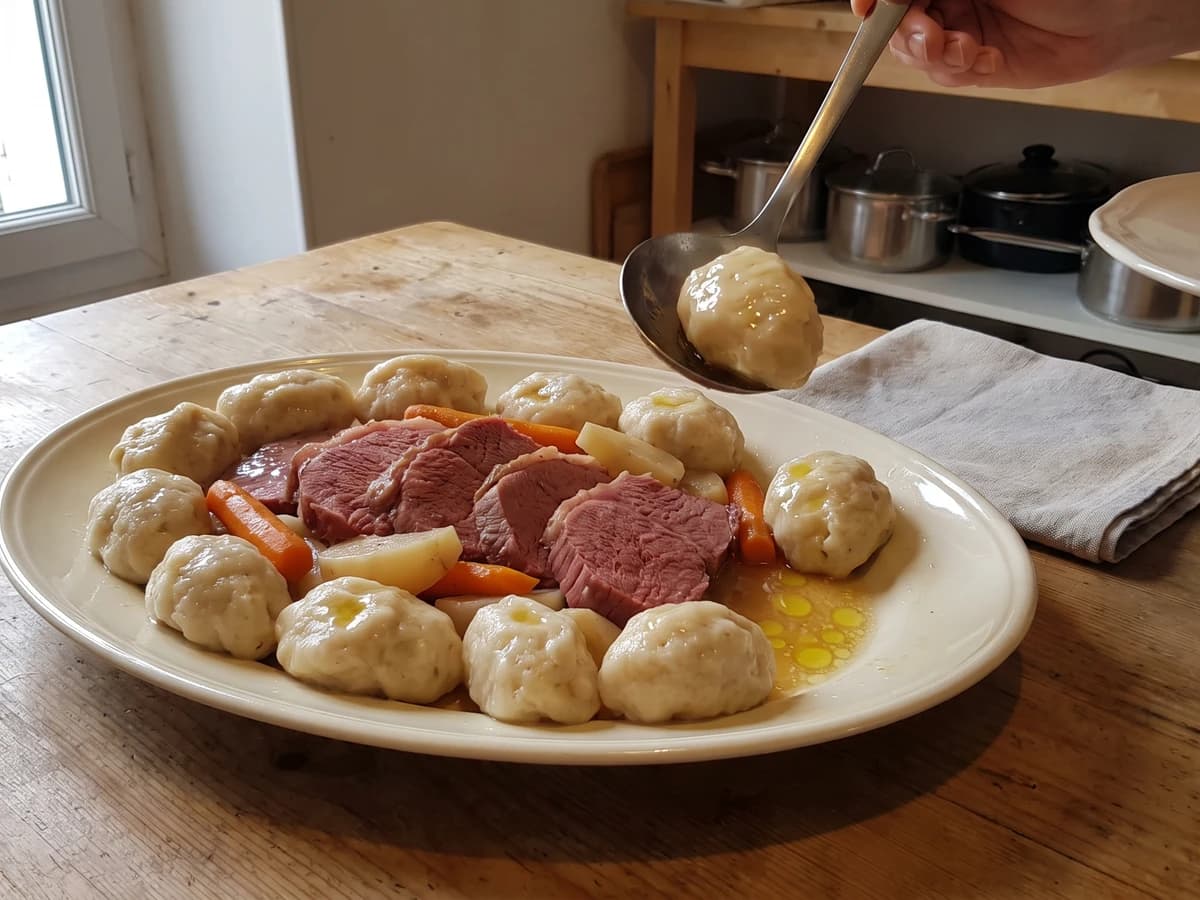
Suet Dumpling
Boulettes au suif, poached beside salt beef, turn equal weights of flour and finely chopped suet into tender, rich dumplings. Keep the beef liquor at a bare tremble and the old garnish works beautifully at home.
A cooking platform built around craft, culture, and the stories behind what we eat.

Created by Chef Juliette
Based on No. 2089, Chicorée à la Crème, from Le Guide Culinaire (1907) by Auguste Escoffier
Chicorée à la crème turns a sturdy bitter green into a silken side through blanching, hard pressing, pale roux, and a patient consommé braise, with cream and butter bringing the final gloss.
Chicorée à la crème (cream-braised chicory) teaches the management of bitterness and water. The pinch of sugar doesn't make the green sweet; it rounds the bitter edge, while blanching removes harshness and a roux blanc (pale roux) gives the consommé something to hold. One thing decides the dish before a pan sees butter: after blanching, press the chicory until it is truly dry. Water left in the leaves makes the finished cream thin and mute.
The original kitchen assumed a saucier at the stove, a pot of consommé never off the fire, and enough chicory for a full service. This version preserves its proportions while scaling two pounds of greens down to 400 grams for four side portions. Prepared consommé replaces the standing stockpot, a small covered casserole manages the long braise, and a warmed deep bowl replaces the formal timbale. The station labor is brigade scaffolding and can go. The ten-minute parboil, hard pressing, roux blanc, covered ninety-minute braise, and separate-pan finish with real cream and butter are the dish, so they stay. One cook, one stove, one evening.
At the table, the chicorée should be tender enough to yield under a spoon but not puréed, held in an ivory-green sauce with a quiet butter gloss. Its bitterness remains, disciplined rather than erased. Remember the decisive moment: squeeze until a firm handful releases no more water, then chop.
Chicorée à la crème belongs to the cuisine bourgeoise of Paris and the market tables of northern France, where assertive leafy greens were blanched, pressed, and patiently braised into composed vegetable dishes. In French kitchen language, chicorée can mean broad-leaf bitter greens such as escarole, not only the tight Belgian endive many English-speaking cooks picture; this chopped, long-braised preparation calls for the leafy kind. Grand kitchens presented it formally in a timbale, but its foundation remains thoroughly domestic: bitterness tempered by water, consommé, cream, butter, and a pinch of sugar.
Quantity
1 large or 2 small heads (14 oz / 400 g trimmed weight)
tough outer leaves and core removed
Quantity
2 tablespoons (30 ml / 28 g)
Quantity
Scant 1/4 cup (55 ml / 28 g)
Quantity
2 cups plus 2 tablespoons (500 ml / about 500 g)
warmed
Quantity
1/2 teaspoon (2.5 ml / 3 g), plus more only after tasting
Quantity
1 generous pinch (about 1/16 teaspoon / 0.3 g)
Quantity
2/3 cup (150 ml / 150 g)
Quantity
1 tablespoon plus 2 teaspoons (25 ml / 25 g)
cut into small cubes
| Ingredient | Quantity |
|---|---|
| escarole or broad-leaf chicorytough outer leaves and core removed | 1 large or 2 small heads (14 oz / 400 g trimmed weight) |
| unsalted butter for the roux blanc | 2 tablespoons (30 ml / 28 g) |
| all-purpose flour for the roux blanc | Scant 1/4 cup (55 ml / 28 g) |
| clear consomméwarmed | 2 cups plus 2 tablespoons (500 ml / about 500 g) |
| fine sea salt | 1/2 teaspoon (2.5 ml / 3 g), plus more only after tasting |
| superfine sugar | 1 generous pinch (about 1/16 teaspoon / 0.3 g) |
| heavy cream | 2/3 cup (150 ml / 150 g) |
| cold unsalted butter for finishingcut into small cubes | 1 tablespoon plus 2 teaspoons (25 ml / 25 g) |
Heat the oven to 325°F (165°C). Bring a large pot of water to a full boil while you separate and wash the chicory leaves, paying attention to the grit that hides near their bases. Lower the leaves into plenty of boiling water and parboil for ten minutes from the moment the water returns to the boil. Drain immediately, then cool the leaves completely in cold water so they stop cooking.
Drain the cooled chicory in a colander and press firmly with your hands. Transfer it to the centre of a clean kitchen towel, gather the cloth around it, and twist until no more water falls. Chop the compressed leaves medium-fine, keeping a little texture. If the chicory leaves a wet pool on the board, wrap and press it again. This is the principle inside the method: the roux must bind consommé and chicory, not a hidden cup of blanching water.
Melt the 28 grams of butter in a 2½ to 3-quart oven-safe casserole over medium-low heat. Add the flour and stir continuously for three to four minutes, until the roux is smooth, ivory, and no longer smells raw. Keep it pale. If golden flecks appear, pull the casserole from the heat and continue stirring until the pan cools slightly.
Add the chopped chicory to the roux blanc and work the two together with a wooden spoon for two minutes, turning until every strand wears a thin coating. Add the warm consommé in four additions, stirring each one through before adding the next. The mixture may look uneven after the first addition. Keep stirring and press any floury knots against the side of the casserole; they will smooth as the remaining consommé goes in. Season with the measured salt and the pinch of sugar, then bring everything to the barest simmer.
Cover the casserole tightly and braise in the oven for ninety minutes. Stir once halfway through, scraping the bottom gently and replacing the lid at once. The finished chicory should be completely tender, with the consommé and roux gathered into a soft sauce around it. If the edges are drying before the centre is tender, stir in one tablespoon of hot water and lower the oven to 300°F (150°C).
Transfer the chicory to a clean 1½-quart saucepan, leaving behind any dry film stuck to the braising casserole. This transfer isn't ceremony; it keeps the concentrated residue from muddying the cream. If the chicory looks loose, don't add the cream yet. Simmer it uncovered over medium-low heat until a spoon drawn across the bottom leaves a trail for a second. Ça se rattrape. Lower the heat, add the cream, and stir gently for three to five minutes, until the sauce is hot, cohesive, and pale ivory-green. Do not let it boil hard.
Remove the saucepan from the heat and monter au beurre (finish with butter), stirring in the cold cubes one at a time until each disappears and the sauce takes on a quiet gloss. If the butter begins to slick across the surface, whisk in one teaspoon of cold cream or water, then continue more slowly. Taste before adding any further salt, since the consommé has concentrated during the braise. Spoon the chicorée into a warmed deep serving bowl and bring it straight to the table. À table!
1 serving (about 260g)
Culinary guides, cultural storytelling, and the editorial depth that makes cooking meaningful.
Discover Culinary ExplorerChef Juliette
Boulettes au suif, poached beside salt beef, turn equal weights of flour and finely chopped suet into tender, rich dumplings. Keep the beef liquor at a bare tremble and the old garnish works beautifully at home.

Chef Juliette
Bread, flour, frangipane, and rice become four cool, supple panades for binding forcemeats, each changing body and flavor while preserving tenderness. The finest Mousselines need none, and knowing that distinction is the lesson.

Chef Juliette
Panade au pain is bread, milk, salt, heat, and attention: stir until the paste releases cleanly, butter it against a skin, and you have the quiet binder behind tender French farces.

Chef Juliette
Panade de farine teaches the drying stroke behind pâte à choux: flour meets boiling buttered water, then stays over the fire until the paste gathers, smooths, and quits the pan cleanly.