Chef Juliette
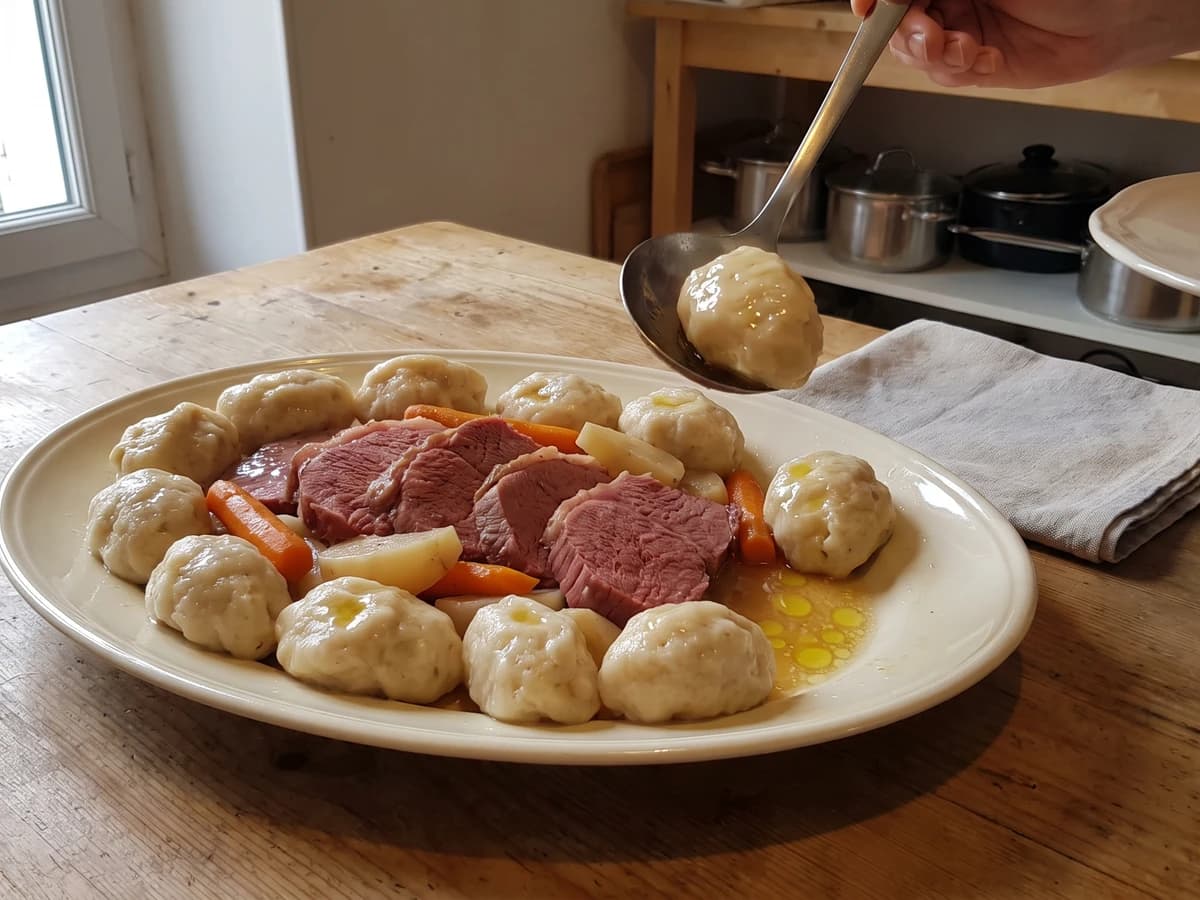
Suet Dumpling
Boulettes au suif, poached beside salt beef, turn equal weights of flour and finely chopped suet into tender, rich dumplings. Keep the beef liquor at a bare tremble and the old garnish works beautifully at home.
A cooking platform built around craft, culture, and the stories behind what we eat.
Created by Chef Juliette
Based on No. 2177, Stuffed Turnips.—A, from Le Guide Culinaire (1907) by Auguste Escoffier
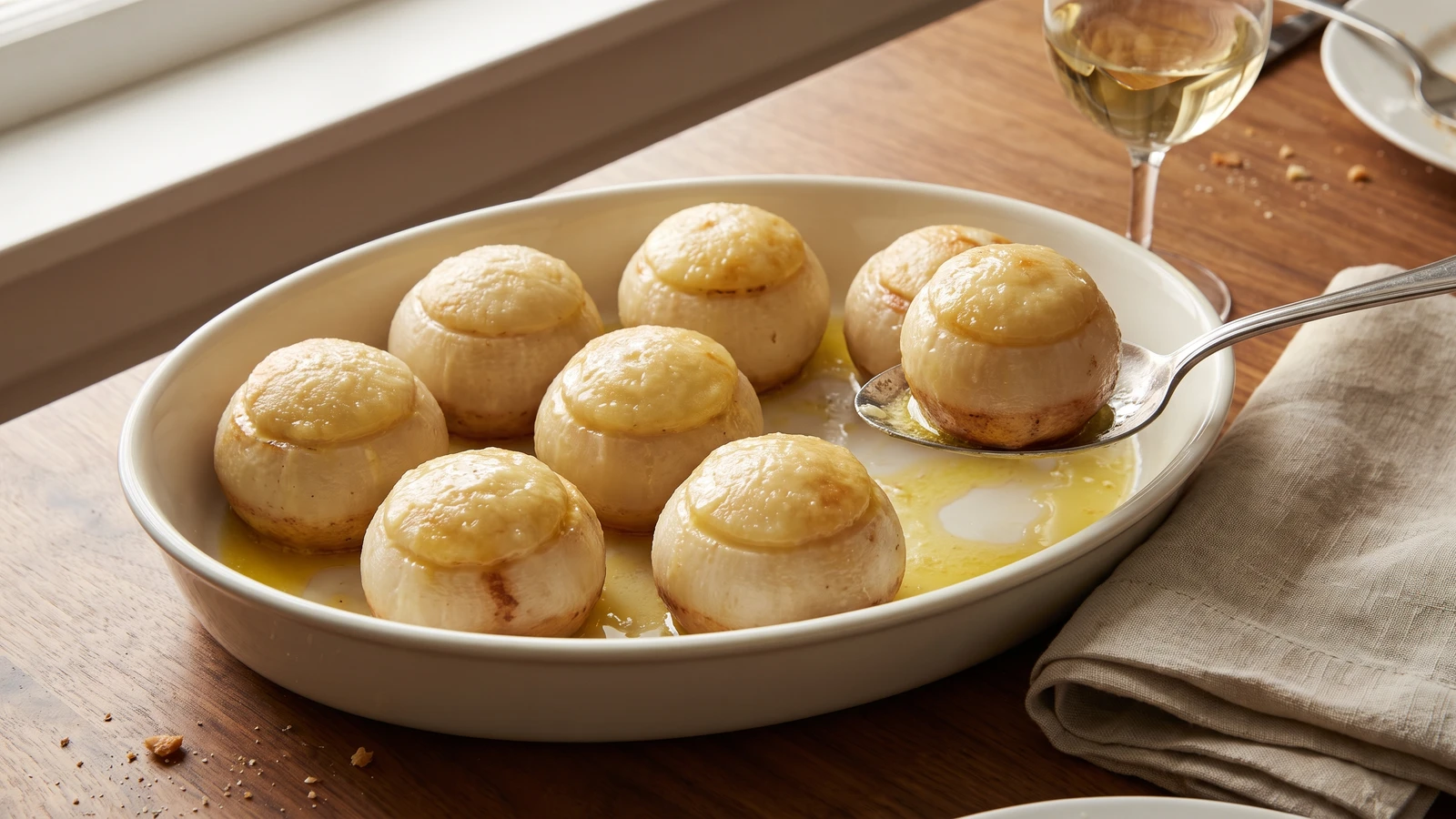
Eight neat turnips, hollowed and filled with equal weights of their own purée and potato, finish under a steady spoonful of butter until the shells are tender and the domes glow pale gold.
Navets farcis A teaches the quiet architecture of a classical vegetable garnish: the shell must become tender enough to cut with a fork, yet remain firm enough to carry its own purée. Done properly, the turnips arrive glossy with butter, each pale dome rising neatly above a tender shell. Cooking well is not cooking fancy, but it does require attention.
The source belonged to a kitchen that kept a saucier on staff, stock never off the fire, a salamander ready, and cooked purées within reach. This entry actually calls on none of the first three; its hidden brigade conveniences are mashed potato already waiting and a round fancy-cutter for making identical cavities. For four people, one potato, a 1-inch cutter or melon baller, a kitchen scale, one saucepan, and one sauté pan are the honest equivalents. I have changed the batch size and the tool, not the sequence or the equal-weight ratio. One cook, one stove, one evening.
The cutter's ornamental precision is scaffolding and can go. Even walls, a clean dome, equal weights of turnip and potato, and frequent butter basting are the dish itself, so those stay. Dry both purées before you weigh and combine them; that is the step to guard, because a wet filling slumps where a proper one stands proudly.
Navets farcis A belongs to the cuisine classique repertory of entremets de légumes, composed vegetable side dishes shaped individually for formal French service rather than tied to one regional larder. The lettered title reflects the canon's cataloguing habit and distinguishes this vegetable-filled preparation from turnips stuffed with meat or forcemeat. Its equal measure of potato steadies the wetter turnip purée, a practical refinement that allowed the dish to travel comfortably from grand kitchens to the cuisine bourgeoise table.
Quantity
8 medium (about 2½ lb / 1.1 kg total)
evenly sized, peeled, and neatly shaped
Quantity
1 large (about 10 oz / 285 g)
peeled, cut into 1-inch pieces, boiled, and riced; weigh an amount equal to the dried turnip pulp
Quantity
6 tablespoons (90 ml / 85 g)
divided
Quantity
1 tablespoon plus ½ teaspoon (17.5 ml / 21 g)
divided
Quantity
¼ teaspoon (1.25 ml / 0.6 g)
| Ingredient | Quantity |
|---|---|
| medium round turnipsevenly sized, peeled, and neatly shaped | 8 medium (about 2½ lb / 1.1 kg total) |
| floury potatopeeled, cut into 1-inch pieces, boiled, and riced; weigh an amount equal to the dried turnip pulp | 1 large (about 10 oz / 285 g) |
| unsalted butterdivided | 6 tablespoons (90 ml / 85 g) |
| fine saltdivided | 1 tablespoon plus ½ teaspoon (17.5 ml / 21 g) |
| ground white pepper | ¼ teaspoon (1.25 ml / 0.6 g) |
Trim the stem end of each turnip just enough to make a stable seat, then peel it in smooth strokes, keeping the vegetables as equal in size as possible. Center a 1-inch (2.5 cm) round vegetable cutter on the root end and press it about 1¼ inches (3 cm) into the flesh without piercing the opposite end. This cut marks the cavity but does not empty it yet, which follows the source method and protects the raw turnip from cracking.
Bring about 3 quarts (3 liters) of water and 1 tablespoon of the salt to a gentle boil in a large saucepan. Add the turnips and parboil for 12 to 16 minutes, keeping the water at a calm simmer, until a fine skewer enters the outer flesh with slight resistance. They must yield without becoming soft. A hard boil knocks them together and encourages splits, so lower the heat if the water grows rough. Lift the turnips onto a tray, then add the potato to the same water and cook for 12 to 15 minutes, until completely tender. Drain it well and return it briefly to the dry, warm saucepan so its surface moisture evaporates.
When the turnips are cool enough to hold, twist the cutter gently and lift out the central plug. Use a small melon baller or teaspoon to remove the surrounding softened pulp, leaving walls and a floor about ⅜ inch (1 cm) thick. Reserve every scrap of pulp. If the flesh resists, stop digging and return that turnip to simmering water for 2 minutes; forcing an undercooked shell is how holes happen. If one cracks, press a little filling into the split from inside and set that side against a neighboring turnip during the final cooking.
Press the turnip pulp through a fine sieve or potato ricer, then spread it in the dry saucepan over low heat and stir for 2 to 4 minutes, until it looks smooth and a spoon drawn through it leaves a clean trail. Weigh this dried purée. Rice the potato separately and weigh out exactly the same amount, reserving any excess potato for another plate. Combine the equal weights gently and season with the remaining salt and the white pepper. The ratio is the structure of the filling. If the mixture slumps from the spoon, don't add more potato and disturb it. Ça se rattrape: spread the mixture in the warm pan and fold it gently over low heat until it holds a ridge.
Blot the insides of the turnip shells dry. Pack the purée into each cavity without forcing the walls outward, then divide the remaining filling among them and shape the visible portions into smooth domes with two teaspoons or a small palette knife. The added potato doubles and steadies the withdrawn pulp, so there should be enough filling to rise generously above each opening.
Melt 4 tablespoons of the butter in a heavy 12-inch (30 cm) sauté pan over low to medium-low heat. When the butter is liquid and softly foaming, arrange the turnips on their flat stem ends with the domes upright. Cook uncovered for 12 to 18 minutes, turning the pan occasionally and spooning butter over the shells and domes every minute or two. Add the remaining butter in small pieces halfway through. The shells are ready when a skewer passes through easily, the bottoms show light bronze, and the domes have taken a pale butter-gold tint. If the butter turns dark before the turnips are tender, lift them out, wipe the pan clean, lower the heat, and continue with the reserved fresh butter. Burnt milk solids taste bitter; they aren't part of the dish.
Take the pan from the heat and let the turnips rest for 2 minutes, then give each one a final spoonful of the clear butter from the pan. Transfer them carefully to a warm serving dish, keeping the domes upright, and serve at once beside roast poultry, veal, or lamb. À table!
1 serving (about 330g)
Culinary guides, cultural storytelling, and the editorial depth that makes cooking meaningful.
Discover Culinary ExplorerChef Juliette
Boulettes au suif, poached beside salt beef, turn equal weights of flour and finely chopped suet into tender, rich dumplings. Keep the beef liquor at a bare tremble and the old garnish works beautifully at home.

Chef Juliette
Bread, flour, frangipane, and rice become four cool, supple panades for binding forcemeats, each changing body and flavor while preserving tenderness. The finest Mousselines need none, and knowing that distinction is the lesson.

Chef Juliette
Panade au pain is bread, milk, salt, heat, and attention: stir until the paste releases cleanly, butter it against a skin, and you have the quiet binder behind tender French farces.

Chef Juliette
Panade de farine teaches the drying stroke behind pâte à choux: flour meets boiling buttered water, then stays over the fire until the paste gathers, smooths, and quits the pan cleanly.