Chef Juliette
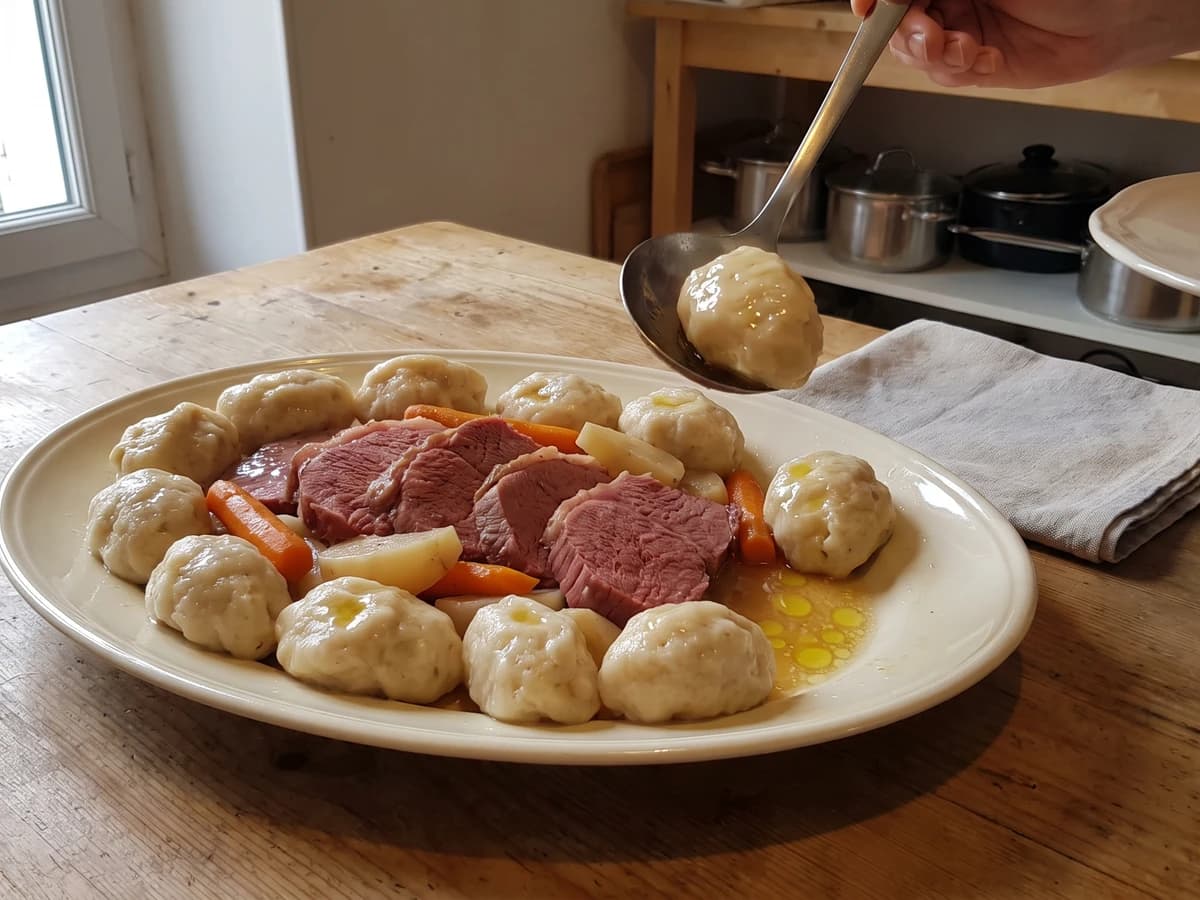
Suet Dumpling
Boulettes au suif, poached beside salt beef, turn equal weights of flour and finely chopped suet into tender, rich dumplings. Keep the beef liquor at a bare tremble and the old garnish works beautifully at home.
A cooking platform built around craft, culture, and the stories behind what we eat.

Created by Chef Juliette
Based on No. 2174, Braised and Glazed Chestnuts, from Le Guide Culinaire (1907) by Auguste Escoffier
Whole chestnuts settle into one layer, drink in strong veal stock, then roll through their own reduction until brilliantly coated. Disturb them little, never heap them, and the garnish keeps its tender shape.
Marrons braisés et glacés teach the discipline of reduction without rough handling. The one true thing is this: chestnuts are not potatoes. Lay them in one snug layer and barely disturb them, because every unnecessary spoon stroke turns a proud whole marron into sweet rubble. The reward is a brilliant, savory glaze clinging to each tender nut, not a pan of broken purée.
The original recipe assumed a cauldron of hot fat for loosening the skins, a saucier beside the pan, brigade quantities, and strong veal stock never off the fire. For one cook, one stove, one evening, scored chestnuts are blanched and peeled while warm, then 500 grams of them are braised in a broad home sauté pan. The hot-fat dip was brigade scaffolding and can go because the fat's job was peeling, not seasoning. The single layer, strong stock, minimal movement, and final reduction are the dish, so every one of those stays.
Once the chestnuts are three-quarters tender, the stock must reduce around them until its gelatin becomes a lacquer. If tenderness outruns reduction, lift the chestnuts, reduce the liquid alone, and return them for one careful roll. Ça se rattrape. Before you touch the pan, choose one broad enough for a single snug layer; that geometry decides the dish.
Marrons braisés et glacés belong to the classical French garniture repertoire, where they accompany roast poultry, feathered game, and generous holiday joints. Chestnut culture runs deep in the Ardèche and the Cévennes, but this veal-stock glazing method is not a rustic regional dish; it traveled through grand service kitchens to bourgeois holiday tables across France. In French culinary usage, marron means a large sweet chestnut suited to peeling and cooking whole, never the inedible horse chestnut.
Quantity
24 (about 4 cups / 700 g in shell; about 3 cups / 500 g peeled)
Quantity
2 quarts (1.9 L / 1.9 kg)
for blanching
Quantity
2½ to 3 cups (600 to 720 ml / 600 to 720 g)
unsalted or very lightly salted and kept hot
| Ingredient | Quantity |
|---|---|
| very large fresh chestnuts | 24 (about 4 cups / 700 g in shell; about 3 cups / 500 g peeled) |
| waterfor blanching | 2 quarts (1.9 L / 1.9 kg) |
| strong veal stockunsalted or very lightly salted and kept hot | 2½ to 3 cups (600 to 720 ml / 600 to 720 g) |
Bring the water to a full boil. Cut a shallow X across the rounded side of each chestnut, passing through the shell and inner skin without digging deeply into the flesh. Blanch six chestnuts at a time for 3 to 4 minutes, then remove them one by one and peel away both coverings while they are still hot. Keep the others submerged until their turn. If the inner skin clings, return that chestnut to the hot water for 30 to 60 seconds; forcing it with the knife is how a whole nut becomes fragments.
Place the peeled chestnuts in an 11 to 12-inch (28 to 30 cm) straight-sided sauté pan, one against another in a single snug layer. None should sit on top of another. Pour in just enough hot veal stock to cover them and reserve any remainder. Bring the stock slowly to a bare simmer, then lower the heat at once. If the measured stock cannot cover the chestnuts, use a slightly narrower pan rather than stacking the nuts or diluting the stock.
Cover the pan and keep the stock at the gentlest tremble for 18 to 22 minutes. Do not stir. Rotate the pan on the burner if one side cooks faster, but leave the chestnuts where they are. Test a single nut with a thin skewer: at three-quarters cooked, the skewer will enter but meet distinct resistance at the center. If the liquid falls below halfway before that point, add a little reserved hot stock down the side of the pan and continue gently.
Remove the lid and raise the heat to maintain a controlled simmer. Let the stock reduce for 8 to 12 minutes, occasionally rocking the pan by its handles instead of putting a spoon among the chestnuts. When only a shallow, syrupy layer remains and its bubbles look slow and glossy, lower the heat and gently roll the chestnuts through it until every surface carries a brilliant coating. If the chestnuts become fully tender before the stock glazes, lift them out one by one, reduce the liquid alone, then return them for the final roll. Ça se rattrape. If the glaze tightens too far, loosen it with a tablespoon of reserved hot stock.
Take the pan off the heat and let the chestnuts settle for 2 minutes. Lift them gently into a warmed shallow serving dish, making a loose, low mound only now that the cooking is finished, and spoon over every drop of remaining glaze. Serve at once beside roast poultry, duck, or game. À table!
1 serving (about 155g)
Culinary guides, cultural storytelling, and the editorial depth that makes cooking meaningful.
Discover Culinary ExplorerChef Juliette
Boulettes au suif, poached beside salt beef, turn equal weights of flour and finely chopped suet into tender, rich dumplings. Keep the beef liquor at a bare tremble and the old garnish works beautifully at home.

Chef Juliette
Bread, flour, frangipane, and rice become four cool, supple panades for binding forcemeats, each changing body and flavor while preserving tenderness. The finest Mousselines need none, and knowing that distinction is the lesson.

Chef Juliette
Panade au pain is bread, milk, salt, heat, and attention: stir until the paste releases cleanly, butter it against a skin, and you have the quiet binder behind tender French farces.

Chef Juliette
Panade de farine teaches the drying stroke behind pâte à choux: flour meets boiling buttered water, then stays over the fire until the paste gathers, smooths, and quits the pan cleanly.