Chef Juliette
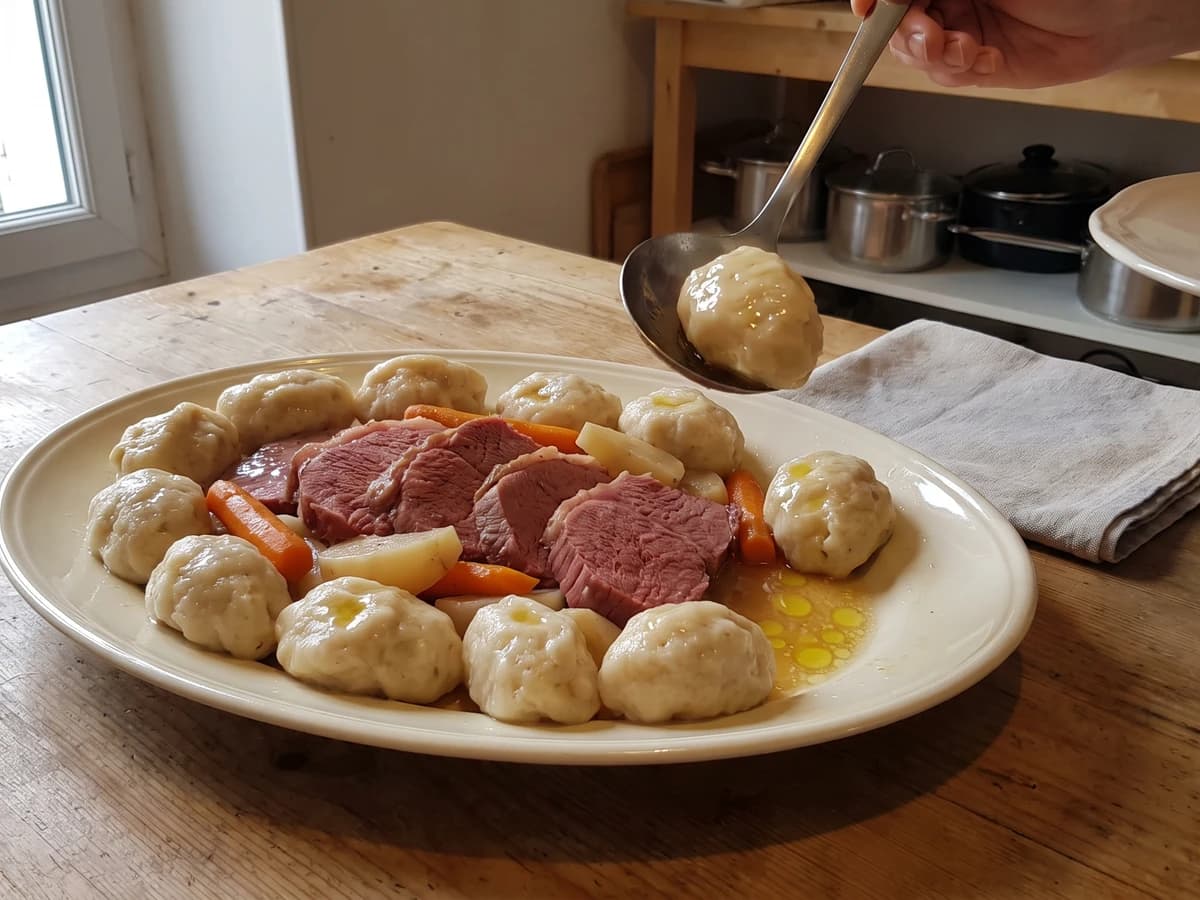
Suet Dumpling
Boulettes au suif, poached beside salt beef, turn equal weights of flour and finely chopped suet into tender, rich dumplings. Keep the beef liquor at a bare tremble and the old garnish works beautifully at home.
A cooking platform built around craft, culture, and the stories behind what we eat.
Created by Chef Juliette
Based on No. 2178, Stuffed Turnips.—B, from Le Guide Culinaire (1907) by Auguste Escoffier
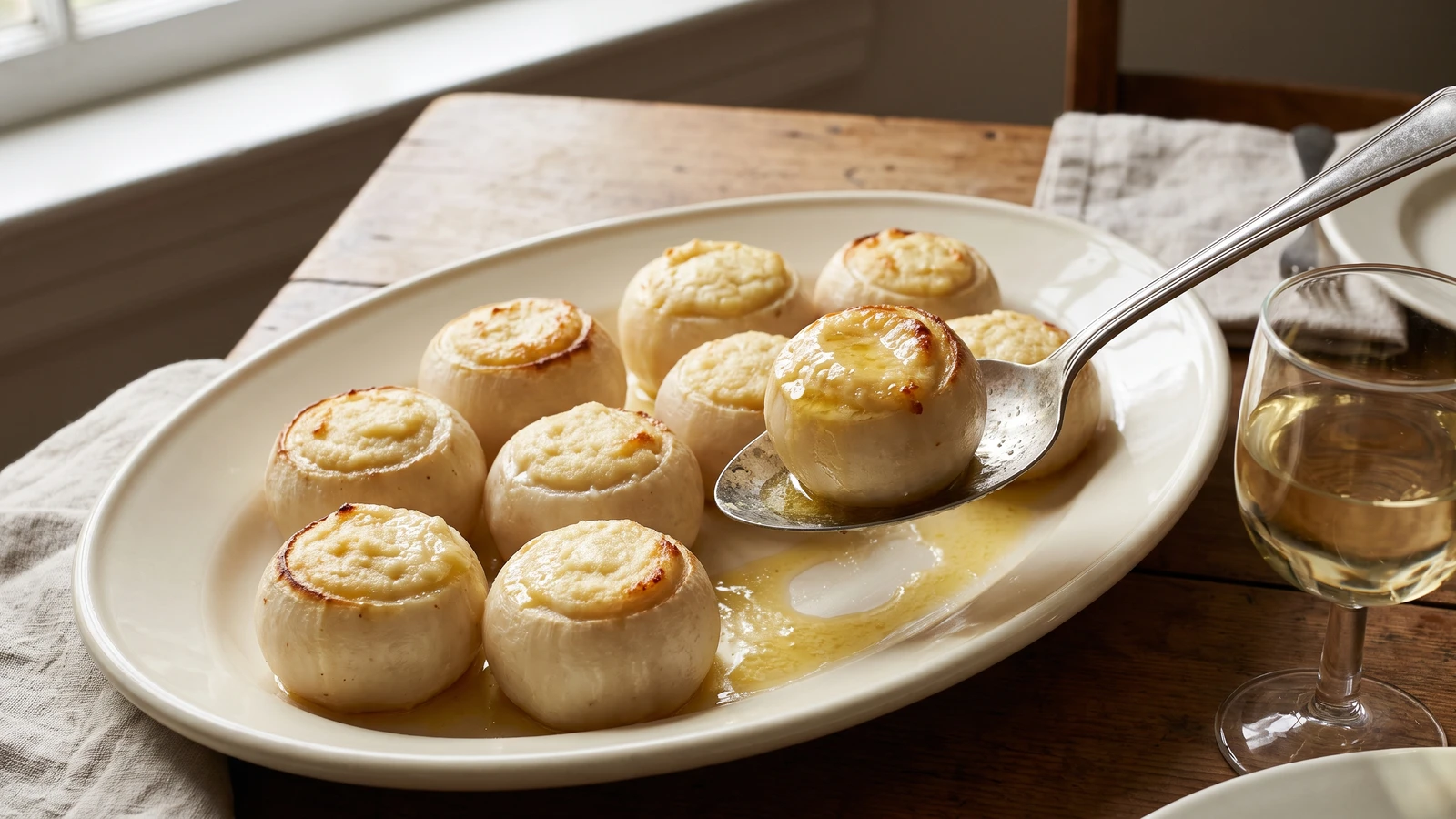
Evenly hollowed turnips cradle semolina simmered in consommé and bound with Parmesan, then braise in butter until the shells yield and the filling stays creamy, a composed side made for generous serving.
Navets farcis B (stuffed turnips with semolina) teach the quiet discipline of matching a vessel to its filling. The turnip must become tender without collapsing while the semolina stays creamy beneath its Parmesan, so the one true thing to know is this: hollow every turnip to the same thickness. Uneven walls give you hard shoulders and broken bottoms in the same pan.
The book assumed a tray of matched turnips trimmed by practiced hands, a consommé pot never off the range, and brigade quantities moving through a broad sauté pan. At home, eight evenly sized turnips, a good prepared consommé, a melon baller, and one snug ovenproof pan do the same work. Decorative turning and service-scale mise en place are scaffolding and can go; the hollowing, consommé-cooked semolina, Parmesan, and butter braise are the dish, and all four stay. One cook, one stove, one evening.
Properly cooked, the turnips are tender enough to cut with a fork, their pale shells gleaming with butter around a savory, softly set center. Don't chase a dark gratin crust. This preparation is finished by gentle braising and glazing. Before you touch the pan, set the turnips side by side and choose ones of nearly equal width; equal walls are the step that decides the whole dish.
Navets farcis belong to the Parisian classical table, where neatly formed vegetables traveled from grand-kitchen garnishes to bourgeois dining rooms as composed side dishes. The letter B is not a regional label; it marks a second filling within a recipe family, with the method held steady while semolina cooked in consommé and Parmesan replace the preceding farce. The source's allowance for spinach, chicory, farinaceous vegetables, or creamy rice shows the working logic of the canon: one prepared turnip, several soft fillings suited to its tender shell.
Quantity
8, about 2¼ pounds (1.02 kg) total
each about 2 to 2½ inches (5 to 6 cm) wide
Quantity
2 quarts (1.9 liters / 1.9 kg)
for blanching
Quantity
1 tablespoon (15 ml / 18 g)
for blanching
Quantity
1¾ cups (420 ml / 420 g)
divided
Quantity
¼ cup (60 ml / 42 g)
Quantity
⅓ cup (80 ml / 30 g)
finely grated
Quantity
3 tablespoons (45 ml / 42 g)
softened and divided
| Ingredient | Quantity |
|---|---|
| small round turnipseach about 2 to 2½ inches (5 to 6 cm) wide | 8, about 2¼ pounds (1.02 kg) total |
| waterfor blanching | 2 quarts (1.9 liters / 1.9 kg) |
| fine sea saltfor blanching | 1 tablespoon (15 ml / 18 g) |
| prepared consommédivided | 1¾ cups (420 ml / 420 g) |
| fine durum wheat semolina | ¼ cup (60 ml / 42 g) |
| Parmesanfinely grated | ⅓ cup (80 ml / 30 g) |
| unsalted buttersoftened and divided | 3 tablespoons (45 ml / 42 g) |
Heat the oven to 375°F (190°C). Peel the turnips, trim the root ends just enough that they stand upright, and slice a thin piece from each stem end to expose the flesh. Hollow them from the top with a small melon baller, leaving an even ⅜-inch (1-cm) wall and base. Evenness matters more than perfect symmetry: a thin bottom breaks while a thick shoulder remains hard.
Bring the water and salt to a boil in a wide pot. Lower in the turnip cups, return the water to a gentle simmer, and blanch for 6 to 8 minutes. They are ready when the outer flesh has lost its raw, chalky firmness but the walls still resist a skewer. Lift them into cold water to stop the cooking, then drain them upside down and pat them dry.
Bring 1 cup (240 ml) of the consommé to a bare simmer in a small saucepan. Rain in the semolina while whisking, then lower the heat and stir for 6 to 8 minutes, until it forms a creamy mass and a spoon drawn across the pan leaves a track that closes slowly. Remove it from the heat and work in the Parmesan. If the semolina knots or tightens abruptly, stop heating and beat in hot reserved consommé 1 tablespoon (15 ml) at a time until smooth. Ça se rattrape. If it remains loose, return it to gentle heat for another minute.
Coat the bottom and sides of a snug ovenproof sauté pan or shallow casserole with 1 tablespoon (15 ml / 14 g) of the butter. Spoon the warm semolina into the turnips, filling each to the rim without packing it down, and smooth the tops into shallow domes. Stand the turnips upright in the pan with a little room between them.
Pour ½ cup (120 ml) of the consommé around the turnips, keeping it off the filling, and dot them with the remaining 2 tablespoons (30 ml / 28 g) butter. Cover the surface with parchment, put on the lid, and braise in the oven for 25 to 30 minutes. The liquid should tremble gently around the turnips, never boil hard; covered, moist heat tenderizes the walls without drying the semolina.
Remove the lid and parchment, baste the turnips with the buttery pan juices, and return them uncovered to the oven for 10 to 15 minutes. They are done when a knife enters the thickest shoulder with little resistance and the remaining liquid has reduced to a glossy coating. If the pan dries before the turnips are tender, add reserved consommé 2 tablespoons (30 ml) at a time and cover again. If the turnips are tender but the juices remain thin, lift them to a warm serving dish and reduce the liquid briefly on the stove before spooning it over. Serve two turnips per person. À table!
1 serving (about 290g)
Culinary guides, cultural storytelling, and the editorial depth that makes cooking meaningful.
Discover Culinary ExplorerChef Juliette
Boulettes au suif, poached beside salt beef, turn equal weights of flour and finely chopped suet into tender, rich dumplings. Keep the beef liquor at a bare tremble and the old garnish works beautifully at home.

Chef Juliette
Bread, flour, frangipane, and rice become four cool, supple panades for binding forcemeats, each changing body and flavor while preserving tenderness. The finest Mousselines need none, and knowing that distinction is the lesson.

Chef Juliette
Panade au pain is bread, milk, salt, heat, and attention: stir until the paste releases cleanly, butter it against a skin, and you have the quiet binder behind tender French farces.

Chef Juliette
Panade de farine teaches the drying stroke behind pâte à choux: flour meets boiling buttered water, then stays over the fire until the paste gathers, smooths, and quits the pan cleanly.