Chef Juliette
Suet Dumpling
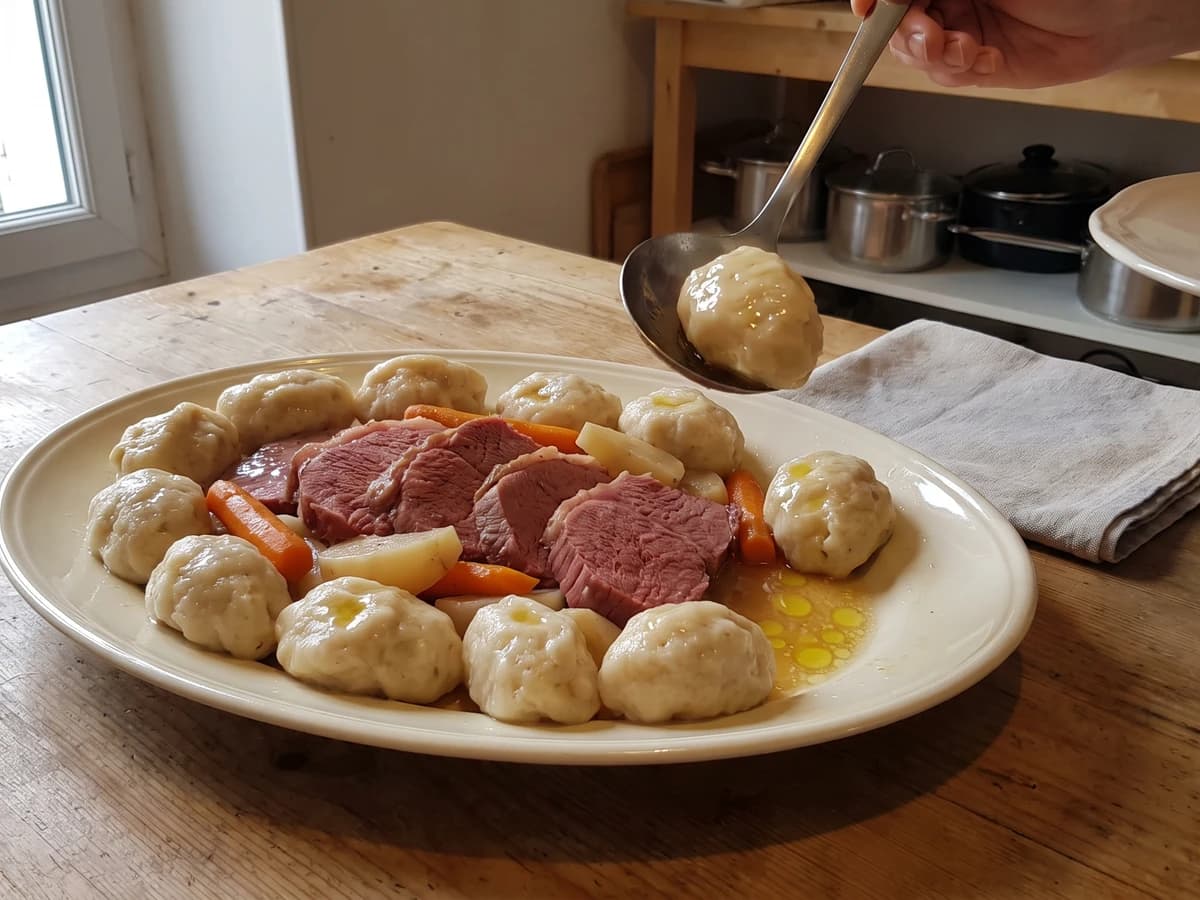
Boulettes au suif, poached beside salt beef, turn equal weights of flour and finely chopped suet into tender, rich dumplings. Keep the beef liquor at a bare tremble and the old garnish works beautifully at home.
A cooking platform built around craft, culture, and the stories behind what we eat.
Created by Chef Juliette
Based on No. 2154, Purée de Haricots Blancs dite Soissonnaise, from Le Guide Culinaire (1907) by Auguste Escoffier
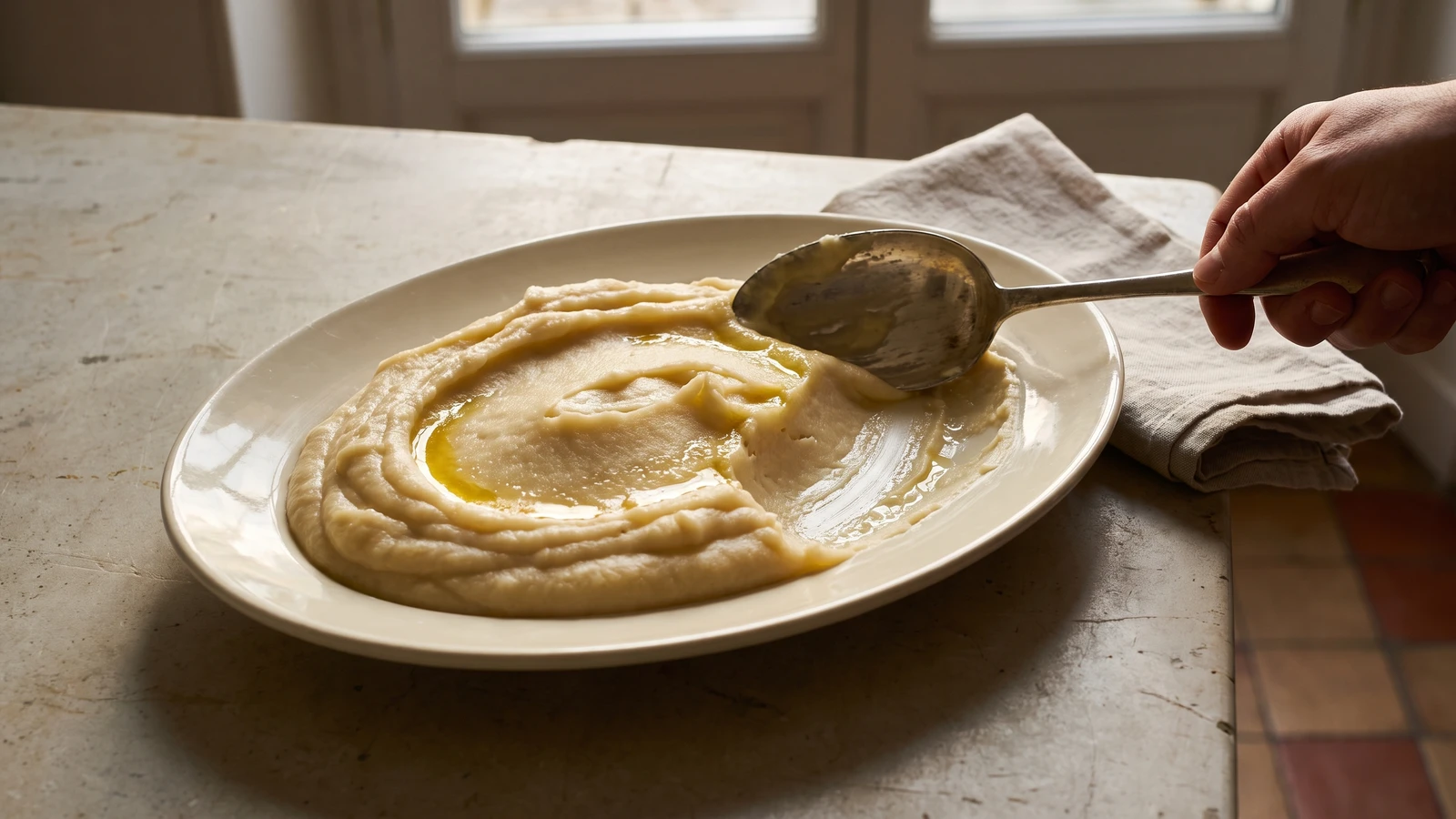
White beans pass from humble pot to satin purée through three exact moves: sieve them hot, beat in butter by weight, then dry them hard before milk ever touches the pan.
Purée de Haricots Blancs dite Soissonnaise (Soissons-style white bean purée) teaches one clean lesson: a purée becomes satin-smooth by losing water before it receives milk. The order is the dish. Sieve the beans hot, work in butter at the source's exact proportion, dessécher (dry the purée hard over heat), then loosen it, and the beans become supple rather than soupy.
The brigade formula assumed a saucier on staff, already cooked beans arriving at the station, a scale beside the stove, and a fierce range ready now. It calls for neither a stockpot kept always on the fire nor a salamander. The home translation adds the bean-cooking step that the entry left upstream, uses a fine-disc food mill or sturdy sieve, and sets a heavy saucepan over medium-high heat. Four servings replace a service pan, but three ounces of butter per pound of purée remains exact. Cooking the beans is scaffolding; hot sieving, the butter ratio, hard drying, and milk last are the dish. One cook, one stove, one evening.
When it is right, the Soissonnaise is warm ivory, buttery without greasiness, and smooth enough to hold the broad curve of a serving spoon before relaxing gently on the plate. The one step that decides everything comes first: pass every bean while it is still thoroughly hot.
Purée Soissonnaise takes its name from Soissons in the Aisne department, north of Paris, a city long associated with an unusually large white haricot prized for its tender flesh and delicate skin. The bean passed from local fields and household pots into the classical repertoire, where sieving refined its texture while butter and milk preserved its plain character. Despite the adjectival title, this is not a garnished or spiced preparation: the Soissons name belongs to the bean, and the formula asks for no onion, garlic, or herbs.
Quantity
1¼ cups (300 ml / 225 g)
Quantity
7 cups (1.65 L / 1.65 kg), plus more as needed for soaking and cooking
Quantity
1½ teaspoons (7.5 ml / 9 g)
divided
Quantity
3 ounces per 1 pound of sieved purée, about 6 tablespoons (90 ml / 85 g per 454 g) for this batch
softened
Quantity
¼ to ½ cup (60 to 120 ml / 62 to 123 g)
warmed
| Ingredient | Quantity |
|---|---|
| dried haricots de Soissons or other large white haricot beans | 1¼ cups (300 ml / 225 g) |
| fresh water | 7 cups (1.65 L / 1.65 kg), plus more as needed for soaking and cooking |
| fine sea saltdivided | 1½ teaspoons (7.5 ml / 9 g) |
| unsalted buttersoftened | 3 ounces per 1 pound of sieved purée, about 6 tablespoons (90 ml / 85 g per 454 g) for this batch |
| whole milkwarmed | ¼ to ½ cup (60 to 120 ml / 62 to 123 g) |
Pick over the beans and rinse them. For the most even cooking, cover them generously with cool water and soak for 8 to 12 hours, then drain. For a one-evening schedule, cover them with fresh water in the cooking saucepan, boil for 2 minutes, cover, remove from the heat, and leave for 1 hour before draining. The change is only in scheduling; the purée's defining sequence remains untouched.
Put the drained beans in a large saucepan with the 7 cups of fresh water and 1 teaspoon of the salt. Bring to a boil, skim any pale froth, then lower the heat until the water barely trembles. Cook until the beans are completely tender, usually 1¼ to 2 hours depending on their size and age. Add hot water if they begin to emerge above the surface. A bean pressed between two fingers must collapse without a chalky centre; undercooked beans will never make a smooth Soissonnaise. Reserve a cup of the cooking liquid and keep the beans hot in the rest.
Set a fine-disc food mill over the heavy finishing saucepan, or place a sturdy fine-mesh sieve over a heatproof bowl. Drain only a ladleful of beans at a time and pass them immediately, using the mill or pressing firmly with a flexible scraper; leave the skins behind. Burning-hot means fully hot and yielding, not handled with bare fingers. If a batch cools and resists, return it to the cooking liquid for 2 minutes, then try again. Ça se rattrape.
Weigh the hot, sieved purée. For every 1 pound (454 g), measure exactly 3 ounces (85 g) of butter; this batch should yield close to that amount, but the scale governs. Put the purée in the heavy saucepan and beat in the softened butter in three additions, making each disappear before adding the next. Keep the pan over low heat if needed, but add no milk yet. The butter must be inside the purée before the hard drying begins.
Set the saucepan over medium-high heat, the honest home equivalent of the fierce range in the source, and beat continuously with a strong wooden spoon while scraping the bottom and corners. Dessécher for 5 to 8 minutes, until the purée gathers into a single mass, pulls cleanly from the pan, and holds a deep track left by the spoon. Keep it ivory, not browned. If it begins to catch, lift the pan at once and transfer the unscorched purée to a clean saucepan without scraping the darkened bottom; continue over slightly lower heat.
Lower the heat and beat in ¼ cup (60 ml) of the warm milk. Add more a tablespoon at a time only until the purée is smooth, glossy, and soft enough to mound from a spoon without running. If too much milk slips in, return the pan to medium-high heat and beat until the excess moisture leaves. Taste and add the remaining salt as needed. Spoon into a warm serving dish and bring it straight to the table. À table!
1 serving (about 160g)
Culinary guides, cultural storytelling, and the editorial depth that makes cooking meaningful.
Discover Culinary ExplorerChef Juliette
Boulettes au suif, poached beside salt beef, turn equal weights of flour and finely chopped suet into tender, rich dumplings. Keep the beef liquor at a bare tremble and the old garnish works beautifully at home.

Chef Juliette
Bread, flour, frangipane, and rice become four cool, supple panades for binding forcemeats, each changing body and flavor while preserving tenderness. The finest Mousselines need none, and knowing that distinction is the lesson.

Chef Juliette
Panade au pain is bread, milk, salt, heat, and attention: stir until the paste releases cleanly, butter it against a skin, and you have the quiet binder behind tender French farces.

Chef Juliette
Panade de farine teaches the drying stroke behind pâte à choux: flour meets boiling buttered water, then stays over the fire until the paste gathers, smooths, and quits the pan cleanly.