Chef Juliette
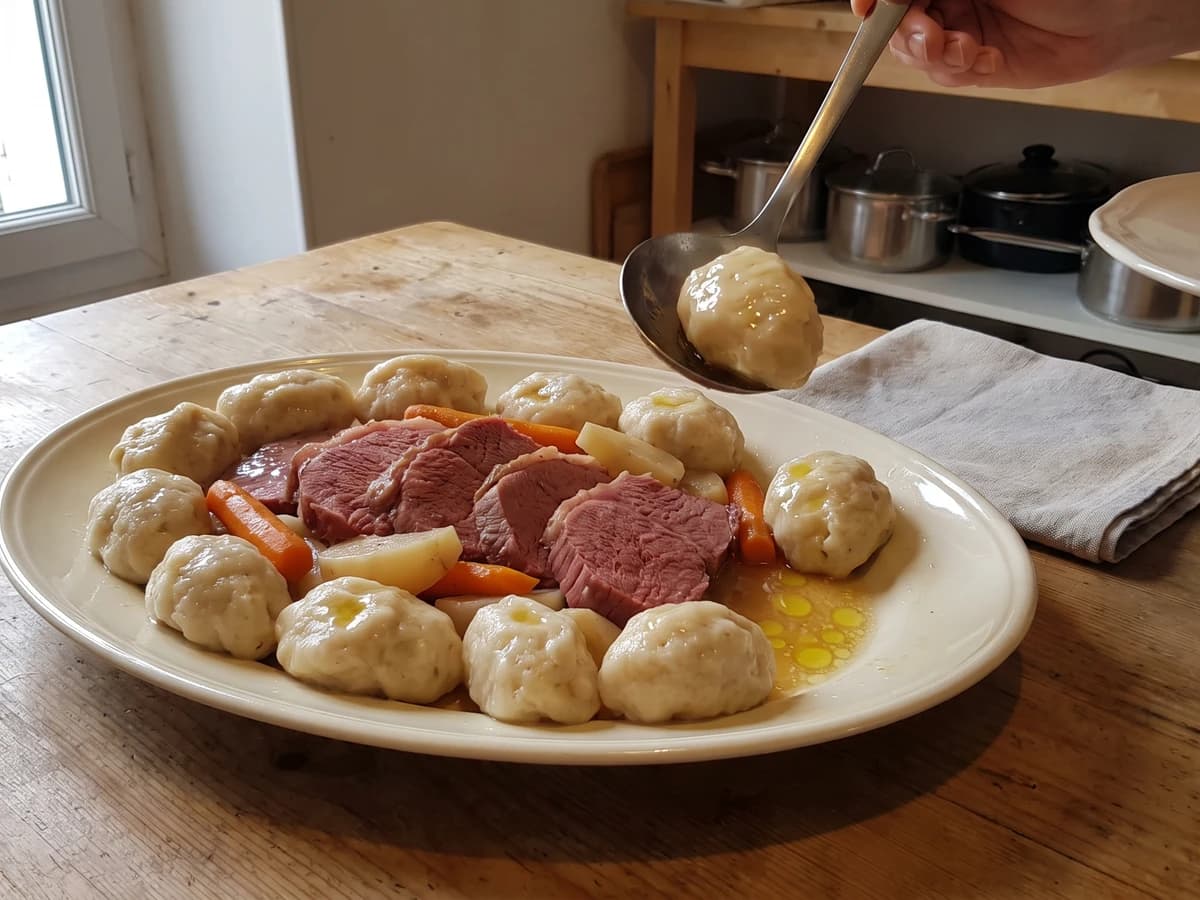
Suet Dumpling
Boulettes au suif, poached beside salt beef, turn equal weights of flour and finely chopped suet into tender, rich dumplings. Keep the beef liquor at a bare tremble and the old garnish works beautifully at home.
A cooking platform built around craft, culture, and the stories behind what we eat.

Created by Chef Juliette
Based on No. 2151, Haricots Blancs à l’Américaine (Lima Beans), from Le Guide Culinaire (1907) by Auguste Escoffier
Lima beans, lean bacon, and tomato sauce show the quiet discipline of binding: cook the beans gently, drain them thoroughly, and coat each one until glossy, never soupy.
Haricots Blancs à l’Américaine (lima beans with bacon and tomato) teaches the difference between coating and drowning. The beans must be tender yet whole, drained until no cooking water follows them, then held together by just enough tomato sauce to gloss every curve. That is the one true thing to know before you touch the pan: wet beans dilute the sauce, and vigorous stirring only makes matters worse.
The original entry assumed a separate pot prepared under The Treatment of Dry Vegetables (No. 274), lean bacon simmered with the beans, and a good tomato sauce waiting from the saucier. At home, you need one heavy saucepan, one cup of dry beans for four side portions, and a measured three-quarters cup of finished tomato sauce. The brigade’s separate station and service quantity are scaffolding, so they go; the bacon ratio, the gentle bean cook, the thorough draining, and the final liaison (binding) are the dish and must stay. One cook, one stove, one evening.
Watch the drainage, not the clock. If the beans reach the sauce carrying water, return them to low heat for a minute before you bind them. Ça se rattrape. Once their surfaces are dry, fold, don’t beat, and the finished beans will be creamy inside, brick-red and glossy outside, with little dice of bacon in every spoonful.
Haricots blancs à l’Américaine sit in the Parisian classical repertory rather than the cooking of a single French region; in this preparation, the label means lima beans joined to lean bacon and tomato. The name reflects the canon’s habit of using concise garnish names, while lima beans and tomatoes pointed French cooks toward the Americas. It should not be confused with sauce américaine for shellfish, which is a different preparation entirely.
Quantity
1 cup (240 ml / 190 g), prepared according to The Treatment of Dry Vegetables (No. 274)
Quantity
about ¾ cup once diced (180 ml / 115 g)
left in one piece for cooking, then diced
Quantity
¾ cup (180 ml / 185 g)
| Ingredient | Quantity |
|---|---|
| dried large lima beans | 1 cup (240 ml / 190 g), prepared according to The Treatment of Dry Vegetables (No. 274) |
| lean slab baconleft in one piece for cooking, then diced | about ¾ cup once diced (180 ml / 115 g) |
| finished plain tomato sauce | ¾ cup (180 ml / 185 g) |
Prepare the lima beans according to The Treatment of Dry Vegetables (No. 274). As the addition belonging to this entry, lower the whole piece of lean bacon into the saucepan when the referenced aromatic garnish enters, then let it cook gently with the beans. The beans are ready when their centres are creamy rather than chalky and most skins remain intact. If they are still firm when you expected them to be done, keep enough hot water over them and continue at the same gentle simmer; boiling harder splits the skins before the centres soften. Ça se rattrape.
Lift out the bacon as soon as the beans are tender. Let it stand only until it is comfortable to handle, then cut it into neat 6 mm dice. It will be pale and supple rather than crisp. That is correct: the source calls for bacon cooked with the beans, not rendered lardons carrying a separate fried flavour.
Reserve about half a cup of the cooking liquor, then tip the beans gently into a colander and leave them to drain for two or three minutes without rinsing. Water clinging to the beans would thin the tomato sauce. If they still look wet, return them to the empty saucepan over low heat and rock the pan for about a minute, without stirring, until their surfaces lose that watery shine.
Pour the finished tomato sauce into the dry saucepan and bring it to a quiet bubble. It should be thick enough that a spoon drawn across the bottom leaves a path for a moment. If it is loose, reduce it gently; if it is already too tight, loosen it with the reserved bean liquor one teaspoon at a time. You want a sauce that clings, not a tomato broth.
Add the drained beans and diced bacon to the tomato sauce. Fold them together with a broad spoon over low heat for two or three minutes, just until every bean is glossed and the sauce coheres the mixture without pooling underneath. If the skins begin to split, stop stirring and rock the saucepan instead. Taste before changing anything, since the bacon and finished sauce should provide the seasoning. Spoon the haricots into a warm serving dish and bring them straight to the table. À table!
1 serving (about 180g)
Culinary guides, cultural storytelling, and the editorial depth that makes cooking meaningful.
Discover Culinary ExplorerChef Juliette
Boulettes au suif, poached beside salt beef, turn equal weights of flour and finely chopped suet into tender, rich dumplings. Keep the beef liquor at a bare tremble and the old garnish works beautifully at home.

Chef Juliette
Bread, flour, frangipane, and rice become four cool, supple panades for binding forcemeats, each changing body and flavor while preserving tenderness. The finest Mousselines need none, and knowing that distinction is the lesson.

Chef Juliette
Panade au pain is bread, milk, salt, heat, and attention: stir until the paste releases cleanly, butter it against a skin, and you have the quiet binder behind tender French farces.

Chef Juliette
Panade de farine teaches the drying stroke behind pâte à choux: flour meets boiling buttered water, then stays over the fire until the paste gathers, smooths, and quits the pan cleanly.