Chef Juliette
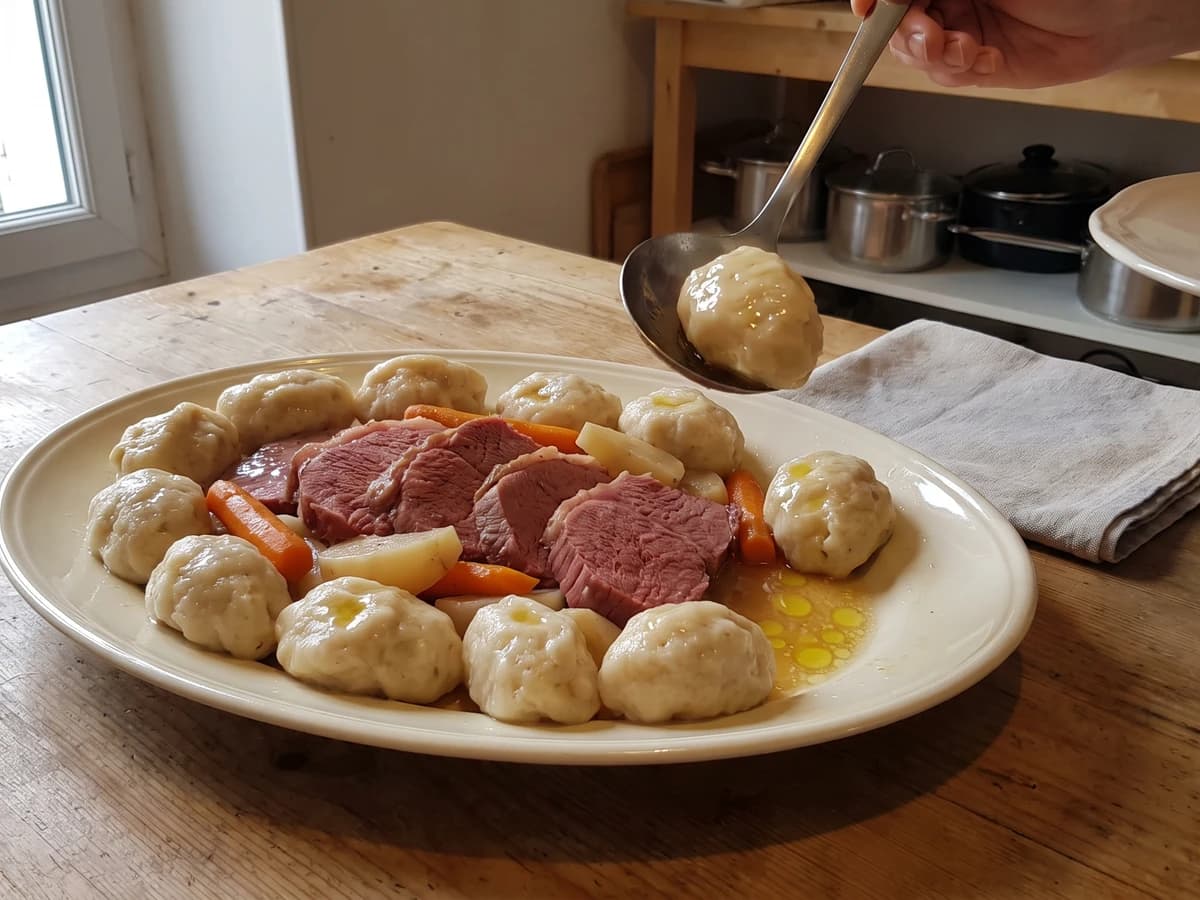
Suet Dumpling
Boulettes au suif, poached beside salt beef, turn equal weights of flour and finely chopped suet into tender, rich dumplings. Keep the beef liquor at a bare tremble and the old garnish works beautifully at home.
A cooking platform built around craft, culture, and the stories behind what we eat.
Created by Chef Juliette
Based on No. 2179, Purée de Navets (Turnip Purée), from Le Guide Culinaire (1907) by Auguste Escoffier
Turnips, butter, salt, sugar, and patience become a pale, silken purée, with just enough excellent mashed potato to hold it. The potato must disappear. That restraint is the whole dish.
Purée de navets (turnip purée) teaches a small discipline with large consequences: a binder should support the principal ingredient without declaring itself. The potato is not a partner here. It is the quiet spoonful that takes the turnip from loose to silken, and the moment you taste potato, you've added too much.
The original entry assumed a tammy and very good mashed potatoes already waiting in the brigade's mise en place. This dish needed neither a saucier nor a stockpot kept on the fire, and it certainly needed no salamander; those are scaffolding for other preparations. For one cook, one stove, one evening, a fine-mesh sieve replaces the tammy, one small potato replaces the brigade pan, and four generous side portions replace service quantities. What stays is the dish itself: turnips gently stewed in butter, salt, sugar, and only the water they need, then sieved.
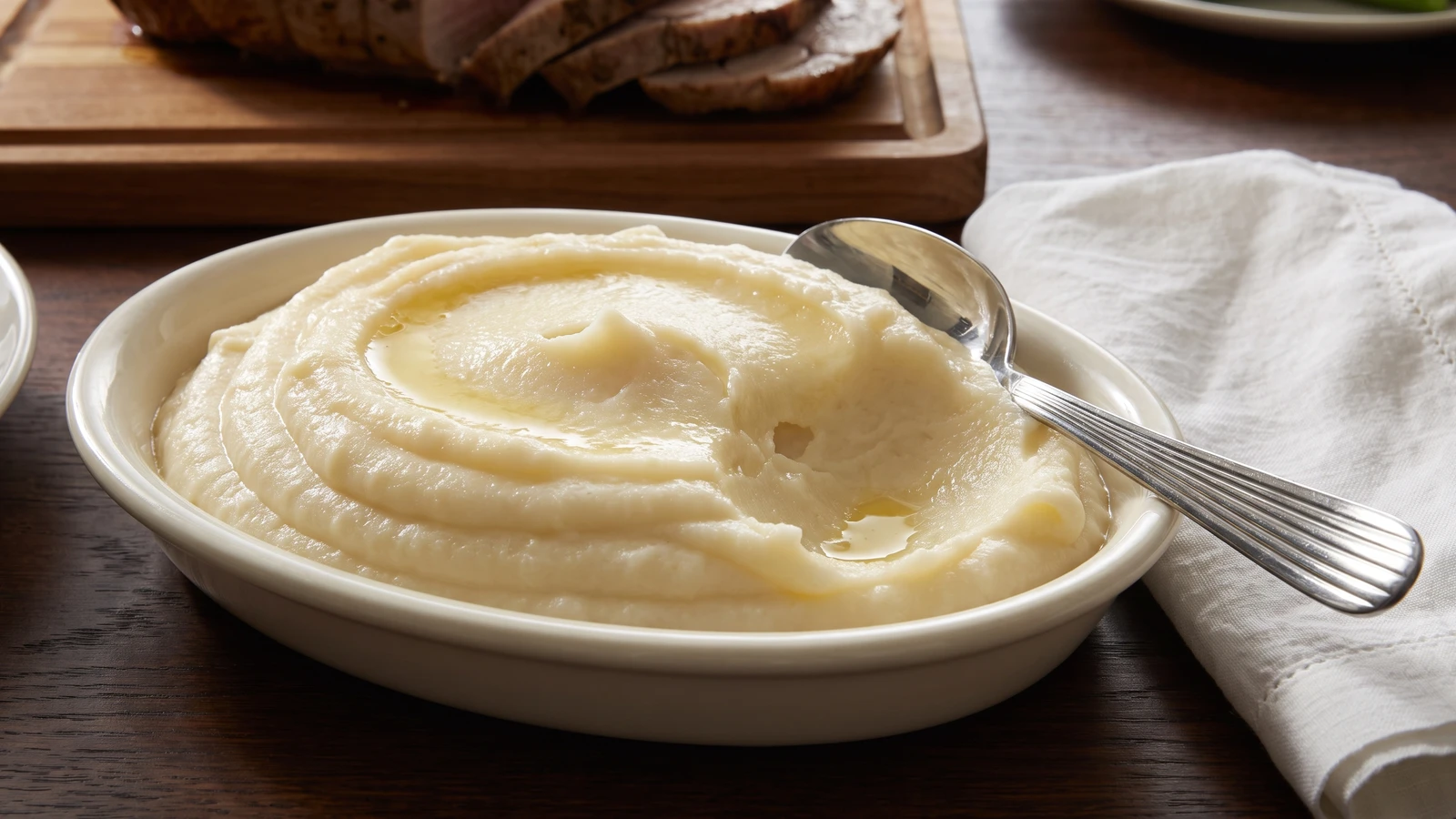
The finished purée should be ivory with a butter-gold sheen, softly mounded rather than stiff, sweet at the edge but unmistakably turnip. Add the potato one spoonful at a time. That is the step that decides the dish, and restraint is your best utensil.
Purée de navets belongs to the cuisine bourgeoise of Paris and northern France, where turnips were a familiar winter companion to roast duck, mutton, and glazed pork. Classical kitchens drew such household purées into the garniture repertoire, passing them through a tamis for silk and using potato only as a discreet binder for the turnip's abundant water. The common modern mistake is to make a half-turnip, half-potato mash; in the classical dish, the potato must never announce itself.
Quantity
about 7 cups (1.65 L / 900 g)
peeled and cut into 5 mm slices
Quantity
1 small, about 1 cup chunks (240 ml / 150 g)
peeled and cut into 2 cm pieces
Quantity
4 tablespoons (60 ml / 56 g)
divided
Quantity
3 cups (720 ml / 720 g)
divided
Quantity
1¼ teaspoons (6 ml / 7 g)
divided
Quantity
1 teaspoon (5 ml / 4 g)
| Ingredient | Quantity |
|---|---|
| young turnipspeeled and cut into 5 mm slices | about 7 cups (1.65 L / 900 g) |
| floury potato, such as Russetpeeled and cut into 2 cm pieces | 1 small, about 1 cup chunks (240 ml / 150 g) |
| unsalted butterdivided | 4 tablespoons (60 ml / 56 g) |
| cold waterdivided | 3 cups (720 ml / 720 g) |
| fine sea saltdivided | 1¼ teaspoons (6 ml / 7 g) |
| granulated sugar | 1 teaspoon (5 ml / 4 g) |
Peel the turnips deeply enough to remove any fibrous skin, then cut them into even 5 mm slices. Cut the potato into 2 cm pieces. Even cutting matters because the turnips must become completely tender at the same moment; a firm slice will fight the sieve and leave fibers in the purée.
Put the potato in a 3-quart saucepan with 2 cups (480 ml / 480 g) of the water and ¼ teaspoon of the salt. Bring to a gentle simmer and cook for 12 to 15 minutes, until every piece yields immediately to the point of a knife. Drain thoroughly, return the potato to the dry pan over low heat for 30 seconds, then pass it through the fine-mesh sieve or mash it perfectly smooth. Beat in 1 tablespoon (15 ml / 14 g) of the butter and cover. You need roughly ½ cup of smooth, dry mash, though the turnips may not require all of it. Don't use a blender or food processor; worked too hard, the potato turns gluey.
Étuver, to cook gently under a lid with butter and little liquid, is the method here. Wipe the saucepan dry and melt the remaining 3 tablespoons (45 ml / 42 g) butter over medium-low heat. Add the turnips, the remaining 1 teaspoon salt, and the sugar. Turn them through the butter for 2 minutes without letting them brown, then add ¾ cup (180 ml / 180 g) water and cover. Cook at a quiet simmer for 20 to 25 minutes, stirring occasionally, until the slices collapse under a spoon. If the pan dries before they are tender, add the reserved water 1 tablespoon (15 ml / 15 g) at a time and lower the heat. Ça se rattrape. Once tender, uncover and cook until the remaining water has evaporated and the turnips wear only a glossy coat of butter.
Set the fine-mesh sieve over a heatproof bowl and press the hot turnips through with a flexible spatula, working firmly until only dry fibers remain. Scrape the smooth purée from the underside of the sieve. If the turnip resists and leaves damp, substantial pieces behind, it is undercooked. Return it to the pan with 2 tablespoons (30 ml / 30 g) of the reserved water, cover for another 5 minutes, then try again. Never apologize at your own table. Finish the cooking and the sieve will do its work.
Return the turnip purée to the clean saucepan over low heat. If it slumps or releases moisture, stir it alone for 1 to 3 minutes before adding any potato; excess water should leave through gentle heat, not be buried under starch. Fold in ¼ cup (60 ml / about 55 g) of the mashed potato, then assess the texture and taste. Add more by the tablespoon only until the purée rests in a soft mound and holds the trail of the spoon, stopping before you reach ½ cup if the potato begins to show itself. If the purée remains loose, keep stirring over low heat and reassess before adding another spoonful. Ça se rattrape. Once you can taste potato, only more turnip can restore the balance, so stop early.
Spoon the purée into a warmed serving dish and draw shallow ridges across the surface so its butter sheen catches the light. Serve immediately with roast duck, beef, lamb, or glazed ham. The flavor should arrive as turnip first, buttery and gently sweet, with no separate taste of potato. À table!
1 serving (about 250g)
Culinary guides, cultural storytelling, and the editorial depth that makes cooking meaningful.
Discover Culinary ExplorerChef Juliette
Boulettes au suif, poached beside salt beef, turn equal weights of flour and finely chopped suet into tender, rich dumplings. Keep the beef liquor at a bare tremble and the old garnish works beautifully at home.

Chef Juliette
Bread, flour, frangipane, and rice become four cool, supple panades for binding forcemeats, each changing body and flavor while preserving tenderness. The finest Mousselines need none, and knowing that distinction is the lesson.

Chef Juliette
Panade au pain is bread, milk, salt, heat, and attention: stir until the paste releases cleanly, butter it against a skin, and you have the quiet binder behind tender French farces.

Chef Juliette
Panade de farine teaches the drying stroke behind pâte à choux: flour meets boiling buttered water, then stays over the fire until the paste gathers, smooths, and quits the pan cleanly.