Chef Juliette
Suet Dumpling
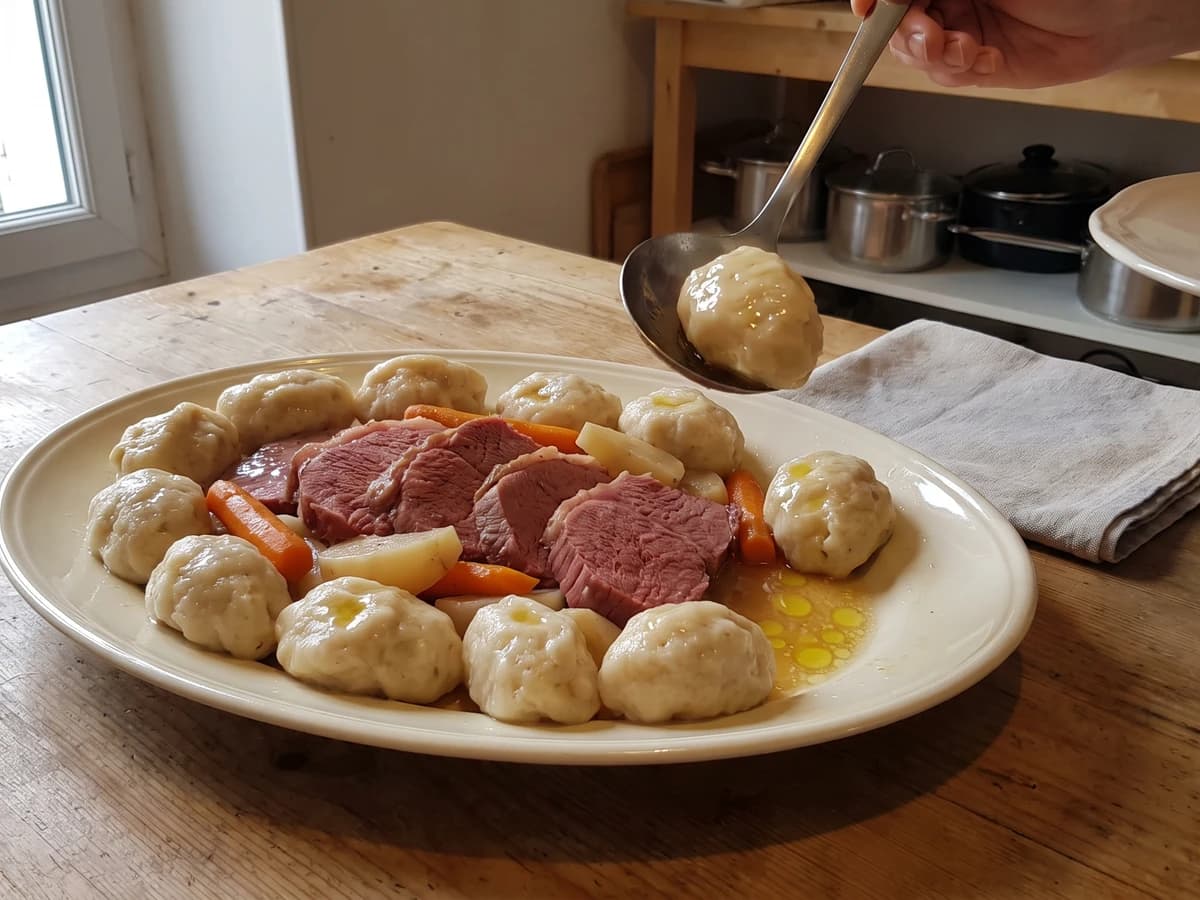
Boulettes au suif, poached beside salt beef, turn equal weights of flour and finely chopped suet into tender, rich dumplings. Keep the beef liquor at a bare tremble and the old garnish works beautifully at home.
A cooking platform built around craft, culture, and the stories behind what we eat.
Created by Chef Juliette
Based on No. 2176, Turnips (Navets), from Le Guide Culinaire (1907) by Auguste Escoffier
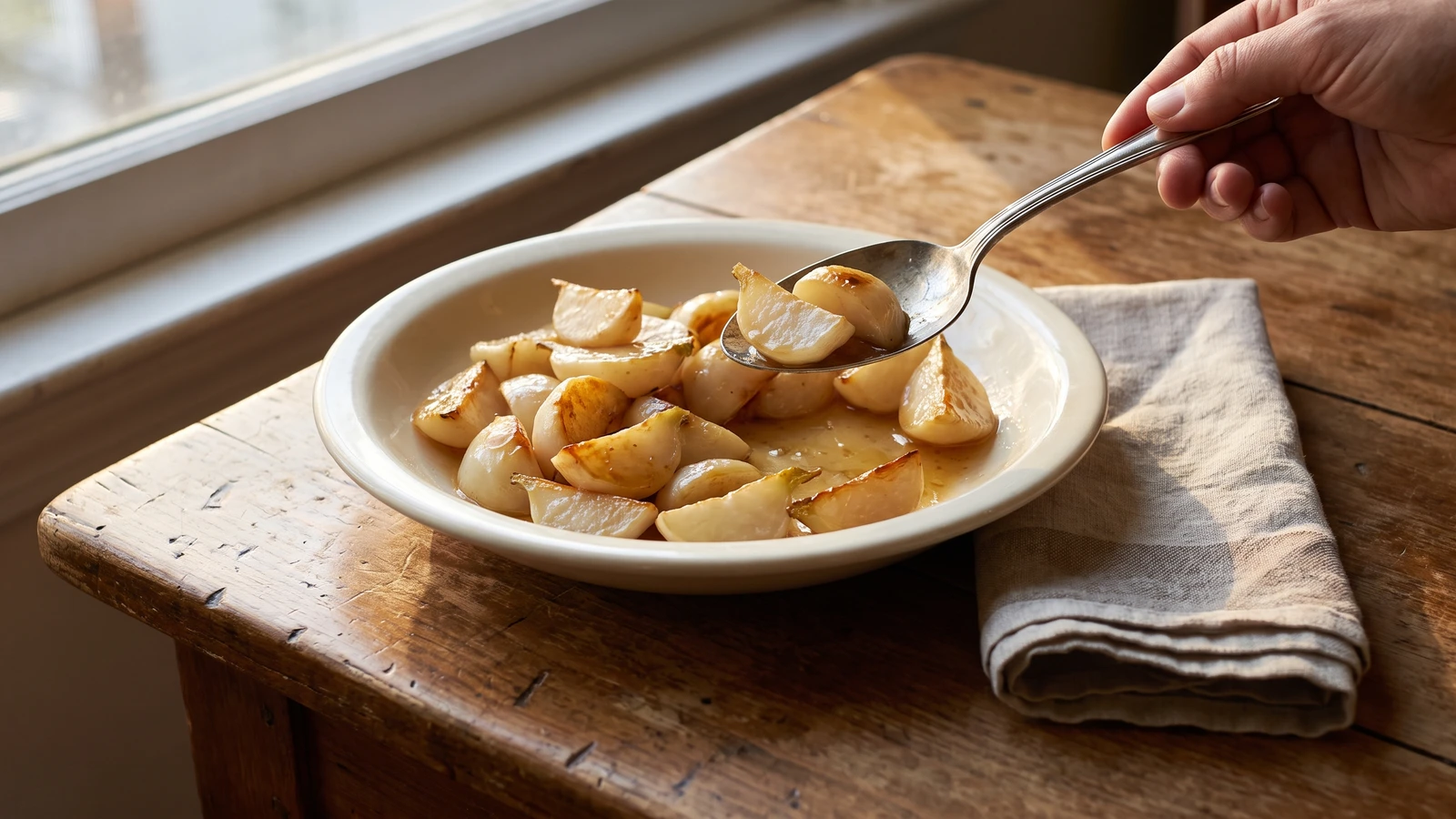
Small turnips cooked like carrots, tender beneath a butter-bright glaze or cloaked in cream, prove that one pan and careful reduction can turn a plain root into a proper French side.
Navets glacés ou à la crème (glazed or creamed turnips) teach reduction in its clearest form. The one true thing to know before touching the pan is this: the roots must become tender just as their cooking liquor finds its final body, syrupy for the glacés, softly coating for the crème.
The source entry assumes an entremetier, the vegetable cook, who already knows the carrot treatment and can tournée dozens of roots into matching shapes. At home, cut even wedges and use a wide sauté pan. The tournée work is brigade scaffolding and can go; the careful reduction is the dish and must stay. No stockpot or salamander is needed. This version scales the preparation to four, changing the shape and quantity rather than the method: one cook, one stove, one evening.
Choose the glassy glaze beside roast poultry or lamb, or the ivory cream finish when supper wants something softer. The turnips should hold their edges but yield completely to a knife. Watch the final five minutes closely: that is when water becomes sauce, and it is the one step that decides the dish.
Navets hold a steady place in French cuisine bourgeoise and the classical garnish repertory, served in their own vegetable dish or arranged beside roast poultry and lamb. Parisian grand kitchens formalized the household practice of shaping small roots evenly and giving them the same glaçage and à la crème treatments used for carrots. The method is sometimes mistaken for caramelization, but its aim is gentler: the turnips cook in their own liquor before butter binds that liquor into a clinging finish.
Quantity
About 5 cups (1½ pounds / 680 g)
tops removed, peeled, and cut into even 1-inch (2.5 cm) wedges
Quantity
1½ cups (360 ml / 360 g), or enough to come halfway up the turnips
Quantity
3 tablespoons (45 ml / 42 g)
divided
Quantity
1 tablespoon (15 ml / 12 g)
for navets glacés
Quantity
¾ teaspoon (3.75 ml / 4.5 g)
Quantity
½ cup (120 ml / 120 g)
for navets à la crème
| Ingredient | Quantity |
|---|---|
| small young turnipstops removed, peeled, and cut into even 1-inch (2.5 cm) wedges | About 5 cups (1½ pounds / 680 g) |
| water | 1½ cups (360 ml / 360 g), or enough to come halfway up the turnips |
| unsalted butterdivided | 3 tablespoons (45 ml / 42 g) |
| granulated sugar (optional)for navets glacés | 1 tablespoon (15 ml / 12 g) |
| fine sea salt | ¾ teaspoon (3.75 ml / 4.5 g) |
| heavy cream (optional)for navets à la crème | ½ cup (120 ml / 120 g) |
Peel the turnips generously, especially around the stem end, where the skin can be fibrous. Cut them into equal wedges about 1 inch (2.5 cm) thick. Evenness matters more than tournée elegance here: mismatched pieces leave the small ones collapsing while the large ones remain hard.
Arrange the navets in a single layer in a wide sauté pan. Add the water, 2 tablespoons (30 ml / 28 g) of the butter, and the salt. For navets glacés, add the sugar now. For navets à la crème, leave the sugar out and keep the cream cold. Bring the liquor to a boil over medium-high heat, then lower it to a gentle simmer and cover with the lid slightly ajar.
Cook for 12 to 18 minutes, turning the pieces once or twice, until a paring knife enters the centers with almost no resistance. The pan should still hold a shallow layer of liquor. If it dries before the navets are tender, add hot water 2 tablespoons (30 ml / 30 g) at a time. If the navets soften while plenty of liquor remains, lift them to a plate, reduce the liquor alone to about 2 tablespoons, then return them. Ça se rattrape.
For navets glacés, uncover the pan and raise the heat to medium-high. Roll and toss the navets as the liquor reduces to large, clear bubbles and begins clinging to every surface. Take the pan from the heat and add the remaining 1 tablespoon (15 ml / 14 g) butter, tossing until the glaze is bright and even. It should be syrupy, not brown caramel; if it tightens before it coats, pull the pan from the heat and loosen it with 1 tablespoon (15 ml / 15 g) water. For navets à la crème, leave about 2 tablespoons of cooking liquor in the pan, add the cream, and simmer gently for 3 to 5 minutes, turning the navets until the sauce coats them softly. Remove the pan from the heat and swirl in the remaining butter. If the sauce grows greasy or too thick, stir in 1 tablespoon (15 ml / 15 g) cold water off the heat until it closes around the turnips again.
Taste one navet and correct the salt only if needed. Spoon the vegetables into a warm serving dish with their finish: a clear butter sheen and barely a spoonful of glaze for the glacés, or enough cream to coat without flooding the plate for the à la crème. Serve as a weeknight vegetable or beside roast poultry, pork, or lamb. À table!
1 serving (about 200g)
Culinary guides, cultural storytelling, and the editorial depth that makes cooking meaningful.
Discover Culinary ExplorerChef Juliette
Boulettes au suif, poached beside salt beef, turn equal weights of flour and finely chopped suet into tender, rich dumplings. Keep the beef liquor at a bare tremble and the old garnish works beautifully at home.

Chef Juliette
Bread, flour, frangipane, and rice become four cool, supple panades for binding forcemeats, each changing body and flavor while preserving tenderness. The finest Mousselines need none, and knowing that distinction is the lesson.

Chef Juliette
Panade au pain is bread, milk, salt, heat, and attention: stir until the paste releases cleanly, butter it against a skin, and you have the quiet binder behind tender French farces.

Chef Juliette
Panade de farine teaches the drying stroke behind pâte à choux: flour meets boiling buttered water, then stays over the fire until the paste gathers, smooths, and quits the pan cleanly.