Chef Juliette
Suet Dumpling
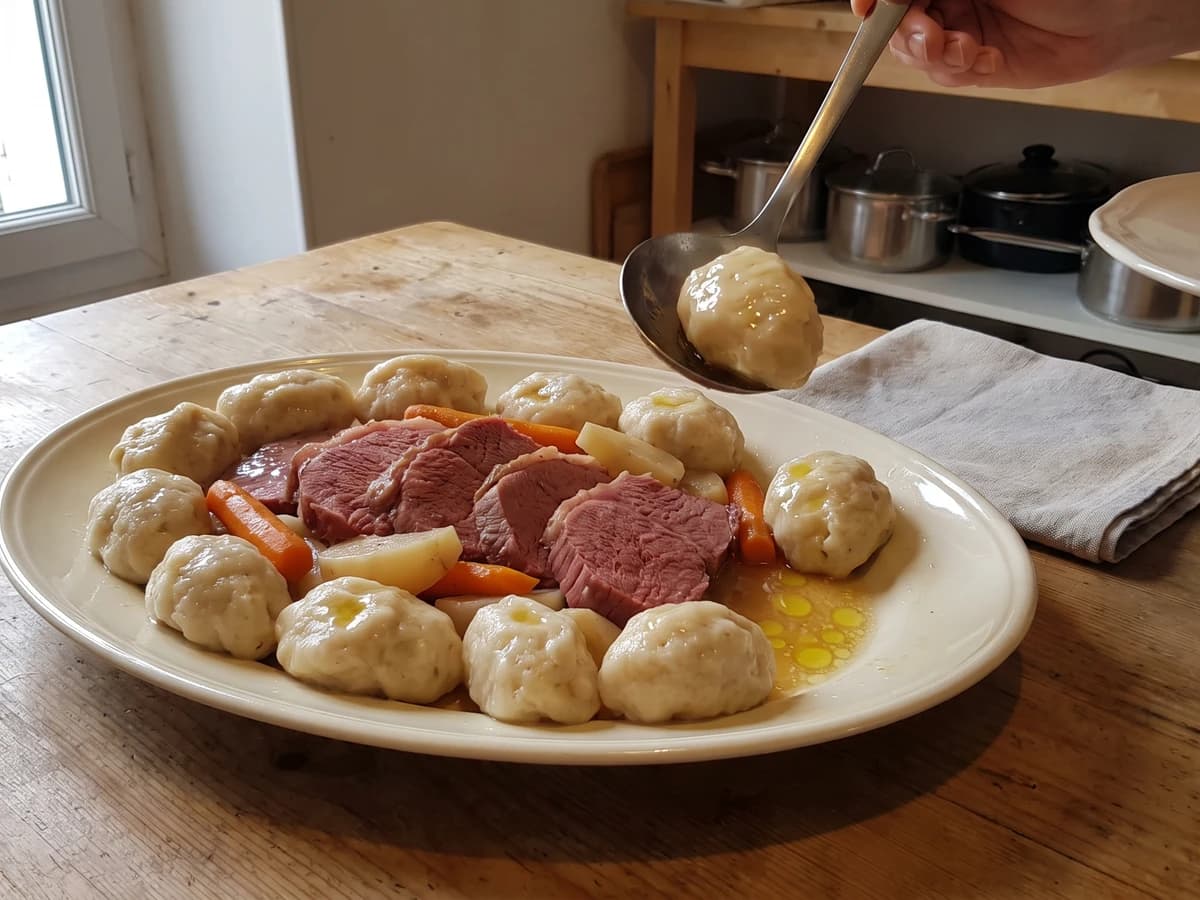
Boulettes au suif, poached beside salt beef, turn equal weights of flour and finely chopped suet into tender, rich dumplings. Keep the beef liquor at a bare tremble and the old garnish works beautifully at home.
A cooking platform built around craft, culture, and the stories behind what we eat.
Created by Chef Juliette
Based on No. 2152, Haricots Blancs au Beurre, from Le Guide Culinaire (1907) by Auguste Escoffier
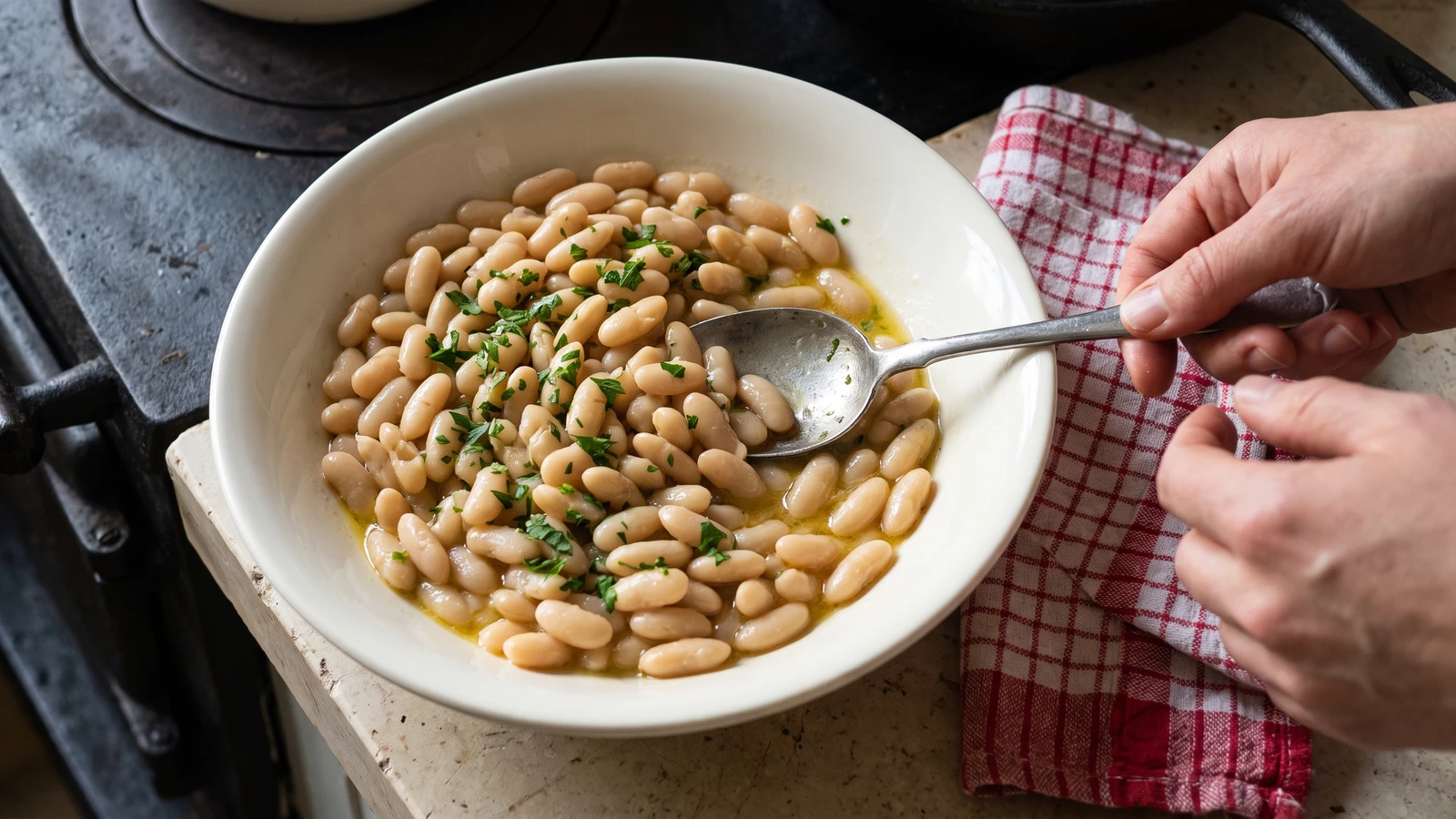
Haricots blancs au beurre proves that restraint has technique behind it: well-drained white beans, precisely seasoned, bound with their proper measure of butter, and brightened with parsley for the weeknight table.
Haricots blancs au beurre teaches the quiet discipline of lier au beurre, to bind with butter: the beans must be well drained before the butter touches them. Water makes a pale puddle, while properly drained beans offer just enough surface moisture and starch to catch the butter in a fine gloss. Cooking well is not cooking fancy.
The old entry assumed cooked haricots waiting hot in a service kitchen and a cook who needed only the instruction to cohere them with butter. No saucier, standing stock, or salamander was doing the work here; the brigade advantage was simply a pot of cooked beans held ready and a warmed timbale at the pass. At home, about two standard cans weighed after draining, or beans you've already cooked, provide the pound we need, and a deep serving bowl replaces the timbale. Cooking and holding a great pot was scaffolding. The careful draining, seasoning, and original ratio of two ounces of butter to one pound of beans are the dish, and they stay untouched. One cook, one stove, one evening.
Done properly, the beans remain whole and distinct, each wearing a butter-gold sheen rather than sitting in grease, with parsley supplying the final fresh edge. The step that decides everything is the draining, so give the colander its full five minutes before you meet the pan.
The preparation belongs to the cuisine bourgeoise table across France and to the classical repertory of vegetables finished au beurre, where a plainly cooked ingredient receives butter rather than being hidden beneath a sauce. It traveled easily from household bean pots into Parisian service kitchens because the method was brief, economical, and exact. The important correction lies in au beurre: the beans are not left swimming in fat; their surface moisture and starch bind with the butter into a thin, glossy coating.
Quantity
2½ cups (1 lb / 454 g)
well drained
Quantity
¼ cup (2 oz / 57 g)
divided into 4 pieces
Quantity
½ teaspoon (3 g), plus more to taste
Quantity
¼ teaspoon (0.6 g), plus more to taste
Quantity
2 tablespoons (8 g)
finely chopped
| Ingredient | Quantity |
|---|---|
| cooked white beanswell drained | 2½ cups (1 lb / 454 g) |
| unsalted butterdivided into 4 pieces | ¼ cup (2 oz / 57 g) |
| fine sea salt | ½ teaspoon (3 g), plus more to taste |
| freshly ground black pepper | ¼ teaspoon (0.6 g), plus more to taste |
| flat-leaf parsleyfinely chopped | 2 tablespoons (8 g) |
If the beans are canned, rinse them briefly under cool water to remove the packing liquid. Tip them into a fine-mesh colander, shake once, and leave them for at least 5 minutes. Do not press or rub them, which tears the skins. A lightly damp surface is useful for binding the butter; dripping beans are not.
Tip the beans into a wide sauté pan and season with the salt and pepper. Warm them over medium-low heat for 3 to 5 minutes, shaking the pan or folding gently with a flexible spatula so the skins remain whole. They should be hot throughout without browning. If liquid gathers on the pan floor, keep warming until it disappears before adding butter. Ça se rattrape now; butter added to a watery pan can only make a watery finish.
Turn the heat to its lowest setting and add half the butter. Shake and fold gently until it melts around the beans, then remove the pan from the heat and work in the remaining butter one piece at a time. Keep the beans moving until the clear butter changes into a thin, even sheen that clings to every surface. Do not let it brown. If the butter remains as a greasy puddle, don't add more heat. Ça se rattrape: crush two beans against the side of the pan, fold their starch back through, and shake firmly off the heat until the coating binds.
Taste and correct the salt and pepper. Spoon the beans immediately into a warmed deep serving bowl, scraping every trace of the butter coating from the pan, and sprinkle the parsley evenly over the top. Serve while the beans are glossy and the butter is fluid. À table!
1 serving (about 130g)
Culinary guides, cultural storytelling, and the editorial depth that makes cooking meaningful.
Discover Culinary ExplorerChef Juliette
Boulettes au suif, poached beside salt beef, turn equal weights of flour and finely chopped suet into tender, rich dumplings. Keep the beef liquor at a bare tremble and the old garnish works beautifully at home.

Chef Juliette
Bread, flour, frangipane, and rice become four cool, supple panades for binding forcemeats, each changing body and flavor while preserving tenderness. The finest Mousselines need none, and knowing that distinction is the lesson.

Chef Juliette
Panade au pain is bread, milk, salt, heat, and attention: stir until the paste releases cleanly, butter it against a skin, and you have the quiet binder behind tender French farces.

Chef Juliette
Panade de farine teaches the drying stroke behind pâte à choux: flour meets boiling buttered water, then stays over the fire until the paste gathers, smooths, and quits the pan cleanly.