Chef Juliette
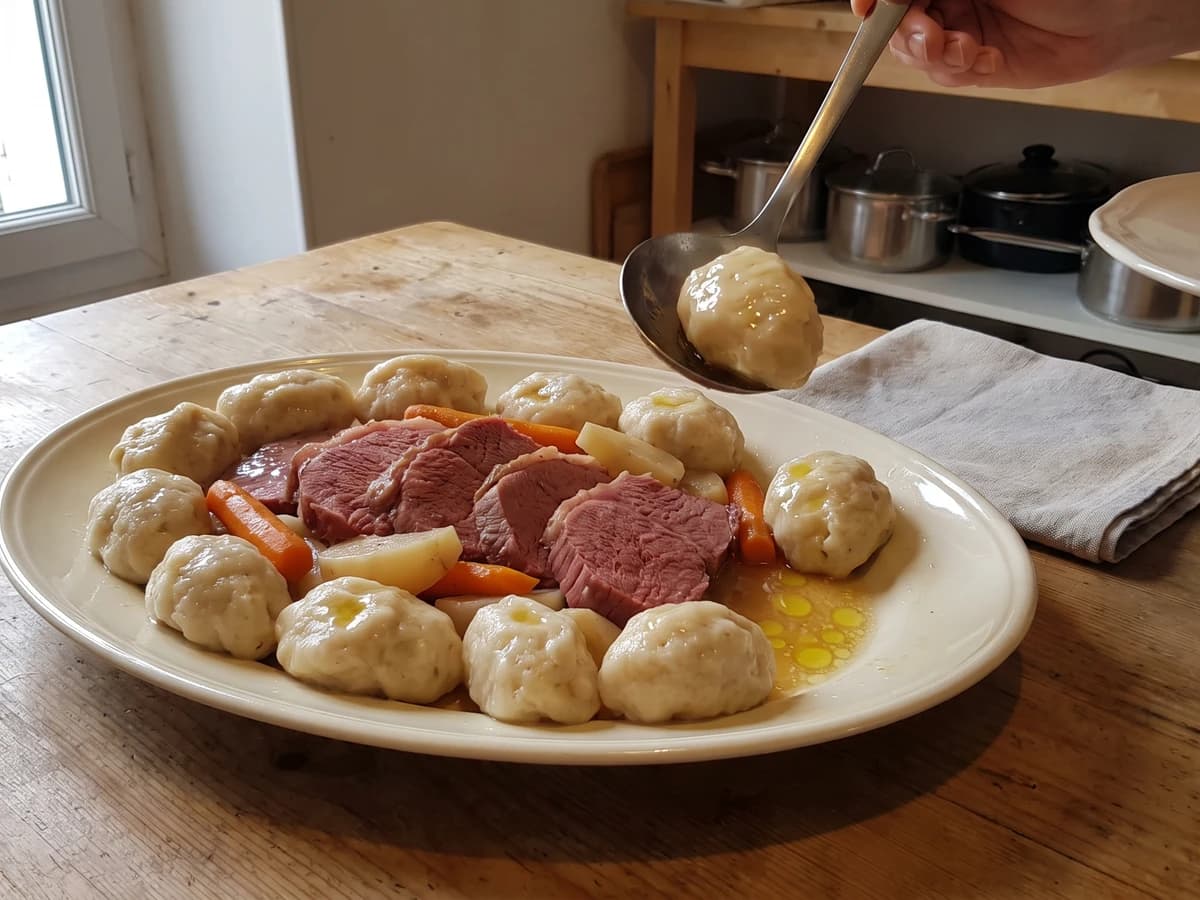
Suet Dumpling
Boulettes au suif, poached beside salt beef, turn equal weights of flour and finely chopped suet into tender, rich dumplings. Keep the beef liquor at a bare tremble and the old garnish works beautifully at home.
A cooking platform built around craft, culture, and the stories behind what we eat.
Created by Chef Juliette
Based on No. 2159, Purée de Haricots Verts, from Le Guide Culinaire (1907) by Auguste Escoffier
Purée de Haricots Verts turns green beans and flageolets into one silken, butter-glossed whole, teaching why a fine sieve and an exact two-to-one ratio matter more than any elaborate garnish.
Purée de Haricots Verts (silken green bean purée) teaches a sly piece of classical grammar: a watery green vegetable can keep its clear flavor when a mild, starchy pulse carries it. The flageolet is not there to announce itself. It goes in at exactly half the volume of the sieved green beans, giving body without turning the dish into bean paste. Measure after sieving, never from the raw weights. That is the one true thing to know before touching a pan.
The classical entry assumed a vegetable station with very creamy flageolet purée already waiting, a fine tamis, and portions prepared for service. At home, cooked flageolets make one small preliminary batch, and the same fine-mesh sieve handles both vegetables. The separate brigade mise en place is scaffolding and goes. The salted boil, eight to ten minutes in butter, fine sieving, and two-to-one ratio are the dish, so every one stays. One cook, one stove, one evening.
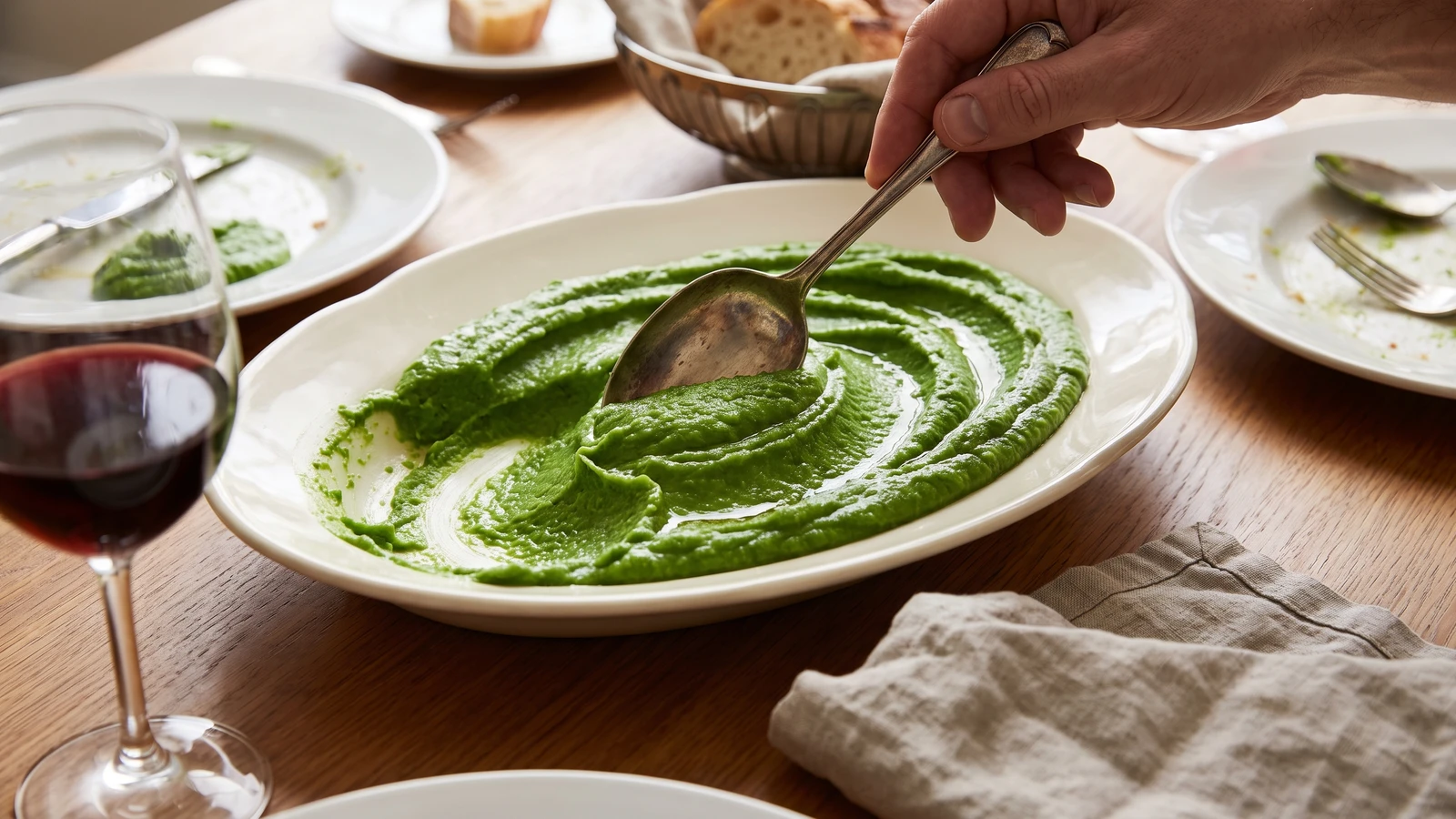
When it is right, the purée sits in soft folds with a buttered gleam, tasting first of green beans and only then revealing the quiet velvet of flageolet. Work both purées through the sieve while they are warm, then measure before combining. That measured half-volume is the architecture of the whole dish.
Purée de Haricots Verts belongs to the national classical garnish repertory refined at the Paris table, where vegetable purées accompanied roasted and braised meats rather than serving as soups. Pairing green beans with flageolets joined the fresh pod to the mature bean: the pale pulse supplied starch and body while allowing the greener flavor to remain in command. The surprising point is that the flageolet was not laid beside the purée as a separate garnish, but worked invisibly into it at half the green beans' volume, a professional method readily adopted by bourgeois home kitchens.
Quantity
5 packed cups (1.2 L / 500 g)
topped, tailed, and cut into 2-inch (5 cm) lengths
Quantity
1½ cups (375 ml / 250 g)
drained and rinsed if canned
Quantity
5 tablespoons (75 ml / 71 g)
divided
Quantity
2½ quarts (2.4 L / 2.4 kg)
Quantity
⅓ cup (80 ml / 80 g)
Quantity
1 tablespoon (15 ml / 18 g)
Quantity
¼ teaspoon (1.25 ml / 1.5 g)
| Ingredient | Quantity |
|---|---|
| fine green beanstopped, tailed, and cut into 2-inch (5 cm) lengths | 5 packed cups (1.2 L / 500 g) |
| cooked flageolet beansdrained and rinsed if canned | 1½ cups (375 ml / 250 g) |
| unsalted butterdivided | 5 tablespoons (75 ml / 71 g) |
| water for boiling | 2½ quarts (2.4 L / 2.4 kg) |
| water for loosening the flageolets (optional) | ⅓ cup (80 ml / 80 g) |
| fine sea salt for the boiling water | 1 tablespoon (15 ml / 18 g) |
| fine sea salt for finishing (optional) | ¼ teaspoon (1.25 ml / 1.5 g) |
Put the cooked flageolets in a small saucepan with 1 tablespoon (15 ml / 14 g) of the butter and ¼ cup (60 ml / 60 g) of the loosening water. Cover and warm over low heat for about 5 minutes, until the beans crush without resistance. Mash them, then press them through a fine-mesh sieve and scrape the creamy purée from its underside. If the beans are too stiff to pass cleanly, return them to the pan with a teaspoon of the remaining water and warm them again. Don't force a dry paste through the mesh. Keep the finished purée warm and covered.
Bring the 2½ quarts (2.4 L / 2.4 kg) water to a full boil and add the 1 tablespoon (15 ml / 18 g) salt. Add the green beans and cook uncovered for 6 to 8 minutes, until fully tender and easily crushed between two fingers. Al dente beans resist the sieve and leave the purée fibrous, so tenderness matters more than a fashionable snap. Drain thoroughly, shake the colander well, and leave the beans for 2 minutes so surface water can escape.
Melt the remaining 4 tablespoons (60 ml / 57 g) butter in a wide sauté pan over medium-low heat. Add the drained green beans and étuver, meaning stew them gently in butter, for 8 to 10 minutes, turning often. Their remaining water should cook away until the sputtering quiets and the butter clings to every piece without browning. If the butter begins coloring before the beans feel dry, lower the heat and add 1 tablespoon (15 ml / 15 g) of the reserved water, then cook it away gently. Ça se rattrape.
Working while the beans are still warm, press them firmly through the cleaned fine-mesh sieve with a flexible spatula or wooden spoon. Scrape every bit of purée from the underside and leave the tough fibers behind. Measure the finished green bean purée by volume. About 1½ cups (375 ml) is expected, but the actual yield decides the formula.
Measure flageolet purée equal to exactly half the volume of the green bean purée. For 1½ cups (375 ml) green bean purée, use ¾ cup (180 ml) flageolet purée. Fold them together in a clean saucepan over low heat for 3 to 5 minutes, stirring until the color is even and the mixture holds soft folds. If it spreads like a loose sauce, keep stirring gently until the extra moisture evaporates. If it stands stiffly, loosen it one teaspoon of hot water at a time. Taste before adding any finishing salt.
Spoon the purée into a warmed shallow serving dish and shape it in broad, generous folds. It needs no herb, pepper, or decorative scattering; green beans, flageolets, salt, and butter are the complete flavor. Serve beside roast lamb, veal, or chicken while the surface still carries its buttered sheen. À table!
1 serving (about 205g)
Culinary guides, cultural storytelling, and the editorial depth that makes cooking meaningful.
Discover Culinary ExplorerChef Juliette
Boulettes au suif, poached beside salt beef, turn equal weights of flour and finely chopped suet into tender, rich dumplings. Keep the beef liquor at a bare tremble and the old garnish works beautifully at home.

Chef Juliette
Bread, flour, frangipane, and rice become four cool, supple panades for binding forcemeats, each changing body and flavor while preserving tenderness. The finest Mousselines need none, and knowing that distinction is the lesson.

Chef Juliette
Panade au pain is bread, milk, salt, heat, and attention: stir until the paste releases cleanly, butter it against a skin, and you have the quiet binder behind tender French farces.

Chef Juliette
Panade de farine teaches the drying stroke behind pâte à choux: flour meets boiling buttered water, then stays over the fire until the paste gathers, smooths, and quits the pan cleanly.