
Chef Takumi
Kake Soba (かけそば)
Kake soba is the plain bowl that shows everything: good dashi, balanced soy, and noodles cooked with care, so the buckwheat aroma arrives first and the broth follows cleanly.

Updated June 2, 2026
The older noodle-in-dashi tradition. Hot udon and soba bowls in clear soy-and-dashi broth, plus the cold mori and zaru soba on a bamboo zaru with tsuyu. Kansai's amber kombu broth and Kanto's jet-black katsuobushi broth as the same dish in two voices.
A cooking platform built around craft, culture, and the stories behind what we eat.
Chef Takumi
Kake soba is the plain bowl that shows everything: good dashi, balanced soy, and noodles cooked with care, so the buckwheat aroma arrives first and the broth follows cleanly.

Chef Takumi
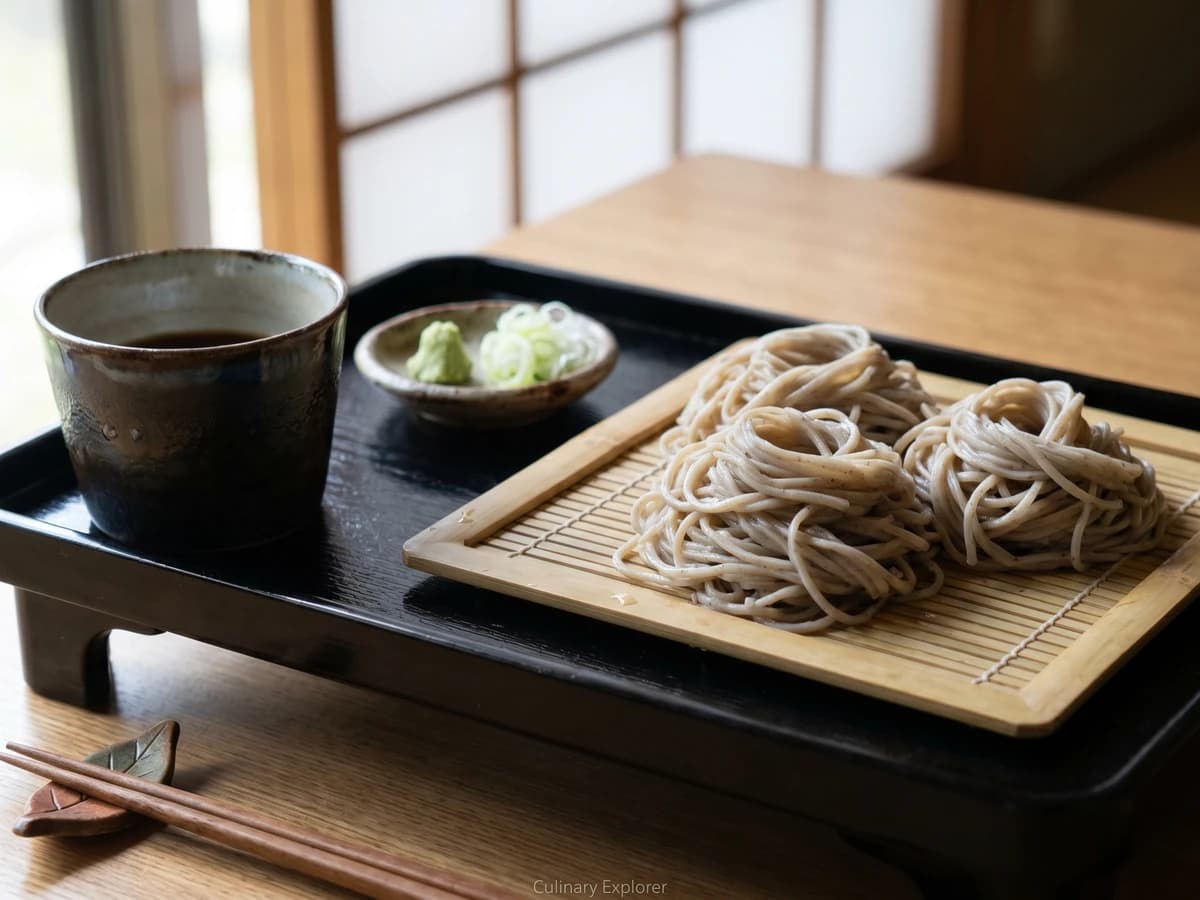
Zaru soba is summer made plain: cold buckwheat noodles, chilled tsuyu, a little nori, and the discipline to rinse the noodles until they feel clean.
Chef Takumi
Mori soba is a plain test: good buckwheat noodles, clear soy-dashi tsuyu, and a careful rinse. Dip only the lower third, and the soba stays clean and fragrant.

Chef Takumi
Curry udon is yesterday's karē made bright again with dashi, soy, and thick wheat noodles. The trick is the gloss: loose enough to drink, thick enough to cling.

Chef Takumi
The moon is only an egg, but the bowl depends on timing: clear dashi, hot noodles, and a yolk set on top so each diner stirs the gold through at the table.
Chef Takumi
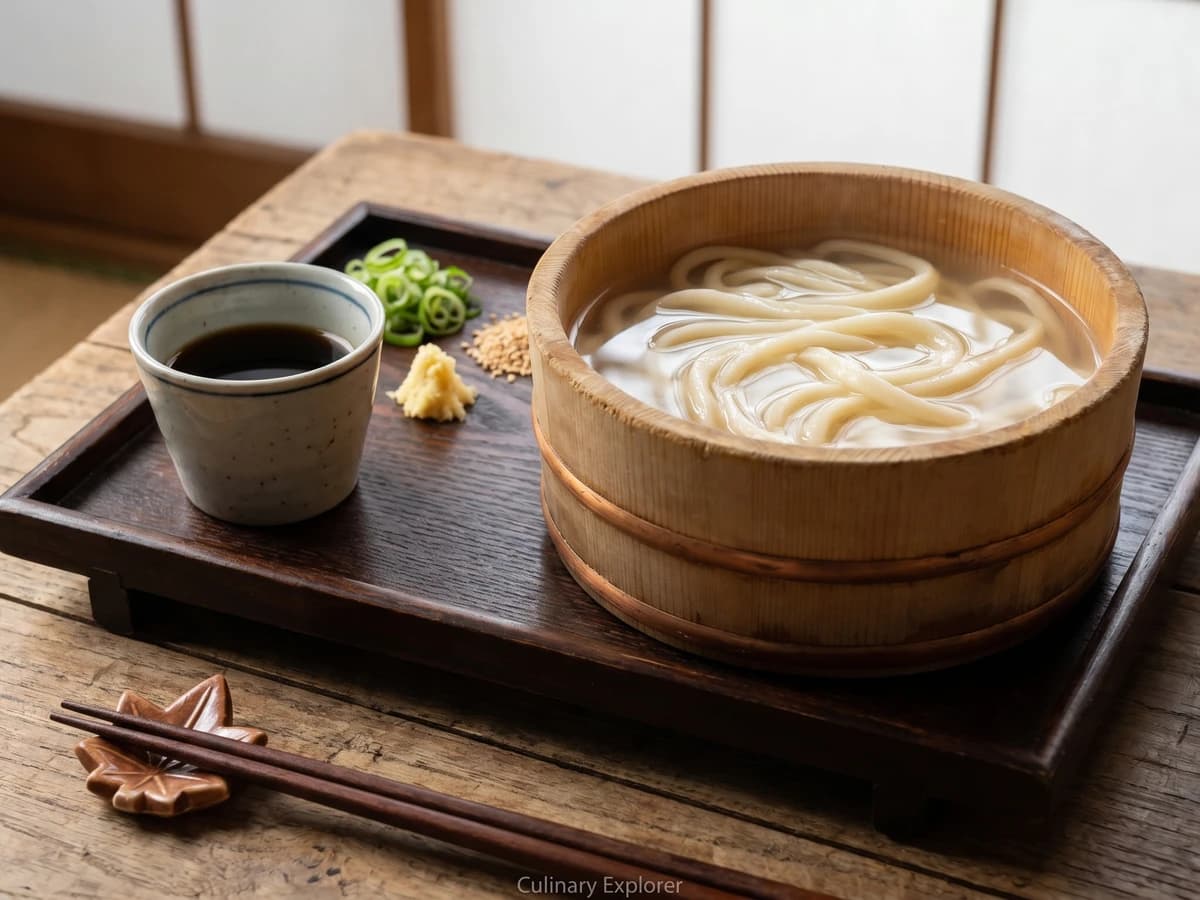
Kamaage udon is comfort by restraint: fresh noodles lifted straight from the pot into hot cooking water, then dipped in strong dashi-soy tsuyu, tender because they are never rinsed.
Chef Takumi
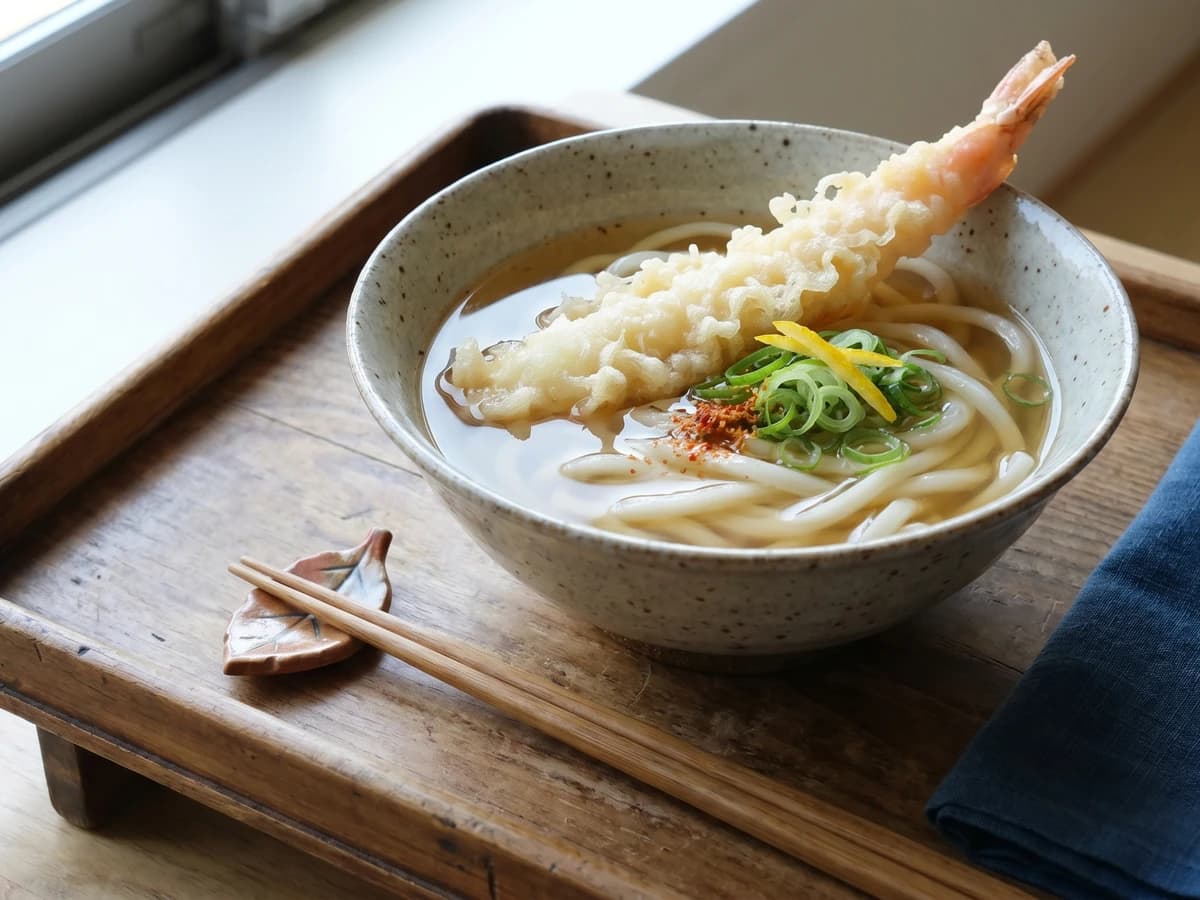
Tempura udon is a small lesson in timing: clear dashi, springy noodles, and one crisp shrimp set down at the last moment, so the first bite still crackles.

Chef Takumi
Kitsune soba is a quiet bowl: clear dashi, lean buckwheat noodles, and one sweet-simmered sheet of aburaage doing more work than its size suggests.

Chef Takumi
Cold Sanuki udon, rinsed clean and drained hard, meets a small pour of concentrated tsuyu, grated daikon, scallion, and lemon. Less broth than kake, more flavor per drop.

Chef Takumi
A moon-viewing bowl asks very little: clear dashi, springy udon, and one fresh egg left whole at the center. The broth does the work. The egg gives the season its face.

Chef Takumi
Tempura soba is not two difficult dishes forced into one bowl. It is clear dashi, clean noodles, and one shrimp fried at the last moment, so the crust seasons the broth.

Chef Takumi
Thin beef, clear dashi, and soft udon make a bowl that looks generous but asks very little: simmer the meat sweet, keep the broth clean, and let the noodles carry it.

Chef Takumi
Kitsune udon is a quiet lesson in letting one topping speak: thick noodles, clear dashi, and a sweet-simmered sheet of aburaage that gives back to the bowl.

Chef Takumi
Kyoto's winter soba looks severe, a dark strip of herring over amber broth, but the work is simple: soften the fish properly, keep the dashi clear, and let the bowl stay quiet.

Chef Takumi
Kamo Nanban is cold-month soba at its most direct: duck breast browned just enough to perfume a soy-dark broth, thick negi softened until sweet, and noodles kept clean and springy.

Chef Takumi
Spring mountain vegetables, softened from their salt-cure, sit over soba in clear dashi. The bowl is plain comfort, but the flavor is deep, green, and unmistakably of the season.

Chef Takumi
Kake udon is the quiet bowl: thick noodles, clear dashi, and only enough soy to give the broth a voice. Make the stock clean and everything else falls into place.

Chef Takumi
A bowl of udon, clear dashi, and crisp tenkasu. Tanuki udon asks for one decision: keep the crumbs dry until the moment they touch the broth.

Chef Takumi
A square of grilled mochi turns a clean bowl of udon into winter food with weight, softening slowly in the dashi while the broth stays clear.

Chef Takumi
Wakame udon is a quiet bowl: clear dashi, springy noodles, and seaweed warmed at the end so it stays green, tender, and clean-tasting.

Chef Takumi
Winter udon with staying power: clear dashi, a little soy and mirin, and just enough starch to make the broth cling without turning heavy.

Chef Takumi
Slippery grated mountain yam looks strange until it meets soba. Then it becomes the sauce, coating each noodle with a faint sweetness while clear dashi keeps the bowl clean.
Chef Takumi
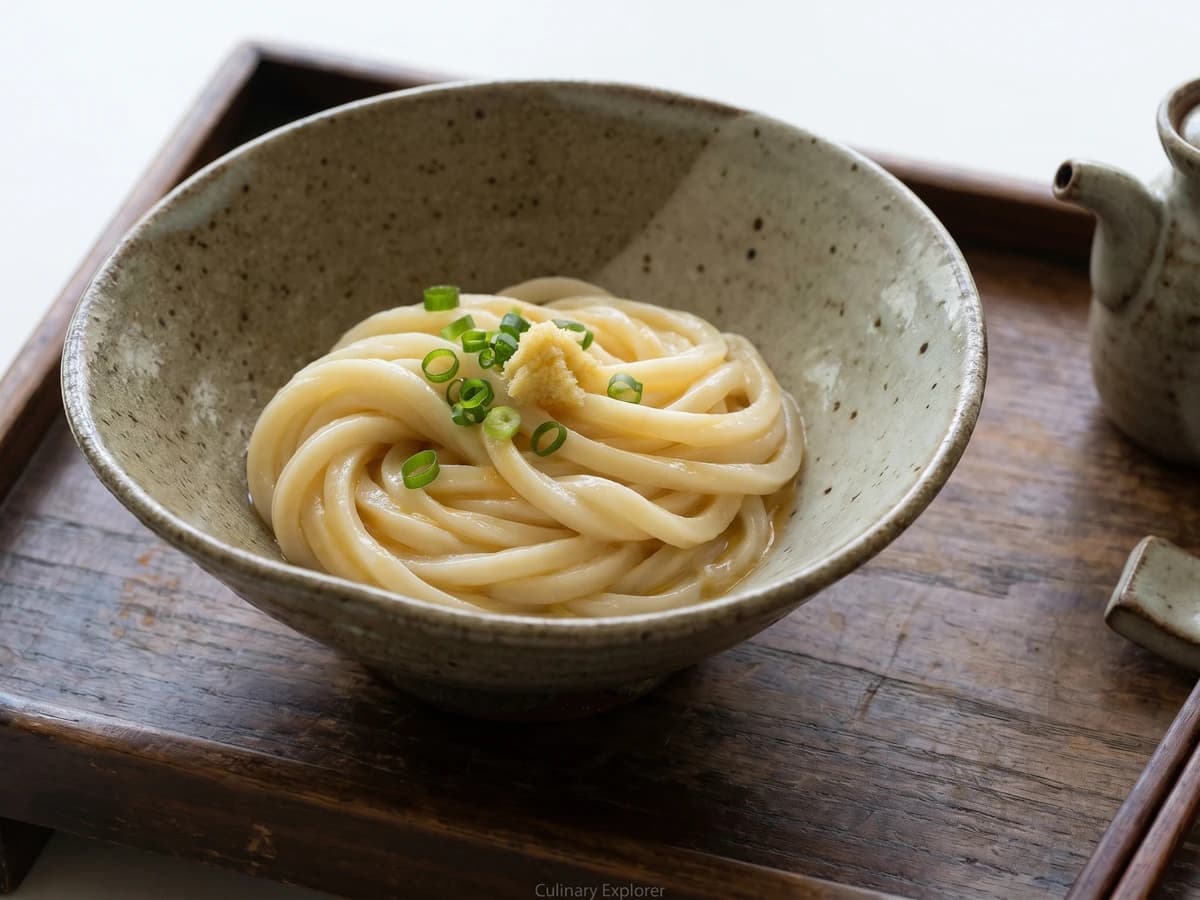
Three ingredients, one bowl, and no ceremony worth fearing. Hot udon half-cooks the egg into a glossy sauce, and the whole dish rests on timing.

Chef Takumi
Hot soba, dark dashi, and crisp tenkasu that soften as you eat. Tanuki soba is weeknight food with one quiet demand: make the broth properly.
Culinary guides, cultural storytelling, and the editorial depth that makes cooking meaningful.
Discover Culinary ExplorerChef Takumi is a fictional culinary guide to Japanese Washoku Cuisine, written with the assistance of AI.