
Chef Takumi
Usucha (薄茶, thin matcha)
Usucha asks for very little: good matcha, water cooled from the boil, and a quick wrist. Get the temperature right and the bitterness stays in its place.

Updated June 3, 2026
The ocha tradition, taught by water temperature. Matcha (usucha and koicha), sencha, gyokuro, hojicha, genmaicha, mugicha, plus the regional cups (kaga bocha, kyo bancha, tamaryokucha), the summer cold-brews, and the celebration teas (sakurayu, kombucha, ume kombucha) that mark a Japanese home occasion.
A cooking platform built around craft, culture, and the stories behind what we eat.
Chef Takumi
Usucha asks for very little: good matcha, water cooled from the boil, and a quick wrist. Get the temperature right and the bitterness stays in its place.

Chef Takumi
Kyushu's curly green asks for one quiet kindness: water cooled below the boil. Do that, then measure the leaves and time them honestly, and the cup turns sweet, grassy, and calm.

Chef Takumi
Sobacha is buckwheat doing one honest thing: roasted until nutty, steeped gently, and served clear. No ceremony stands between you and a warm, fragrant cup.

Chef Takumi
Konacha is the sushi-shop cup: fine green tea dust, boiling water, and a short steep. Brew it quickly and it turns bright, bracing, and clean.

Chef Takumi
Hōjicha is green tea after the fire has done its quiet work: red-brown leaves, a toasted aroma, and a cup gentle enough for the end of the day.

Chef Takumi
Bancha is the honest daily cup: late-season leaves, hot water, a short steep, and a clean amber-green liquor that asks for no ceremony to be good.

Chef Takumi
Kukicha is the cup made from what sencha leaves behind: pale stems and tender stalks, brewed cooler than black tea, clean and lightly sweet without asking much of the cook.

Chef Takumi
Ume kombucha is not the fizzy drink people now mean by kombucha. This is the Japanese cup: kelp's clean savor, umeboshi's sour salt, and hot water handled with care.
Chef Takumi
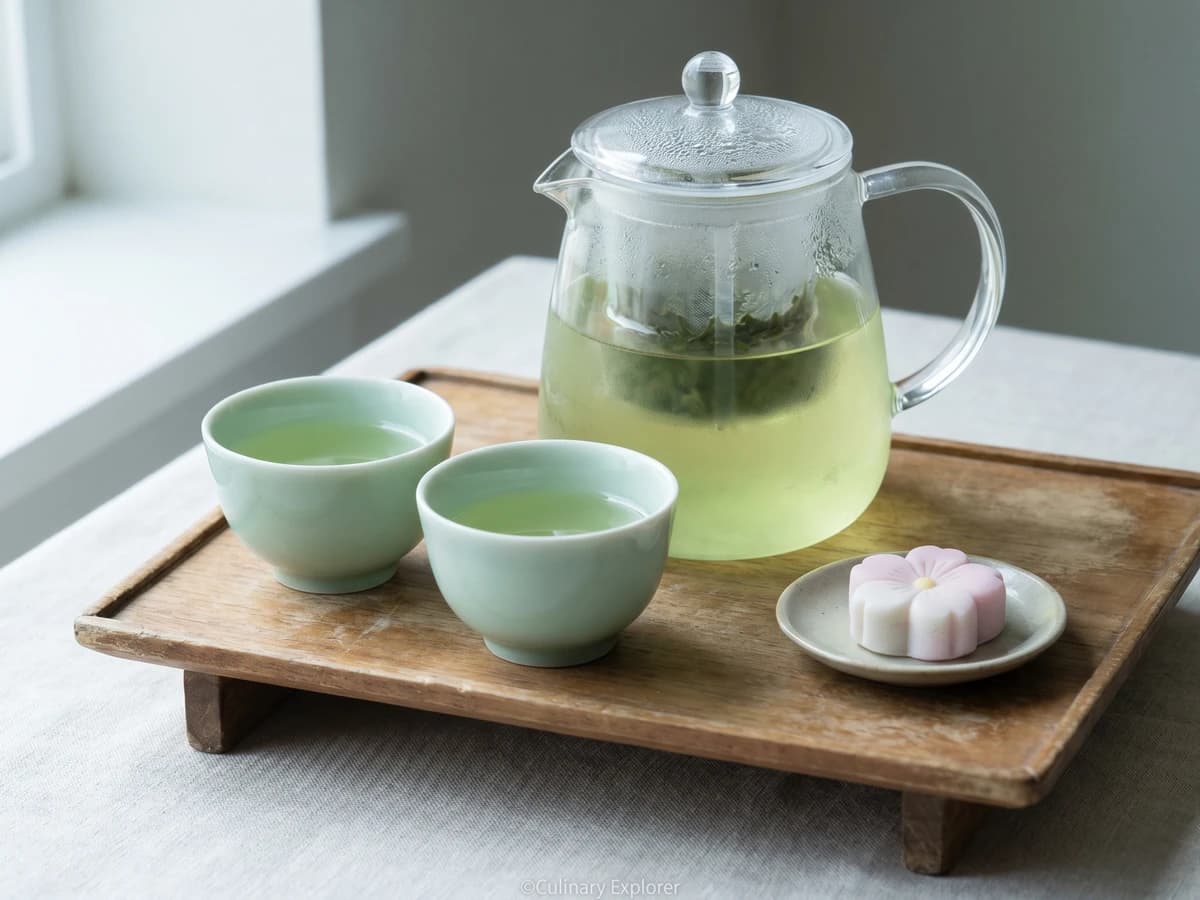
Summer sencha asks for patience, not heat: cold water, good leaves, and enough time for sweetness to come forward while bitterness stays behind.

Chef Takumi
Sakurayu is ceremony in a cup: one salt-pickled cherry blossom, hot water kept gentle, and enough patience for the petals to open cleanly.

Chef Takumi
Genmaicha is daily tea with a brown-rice scent: plain green tea, toasted grain, boiling water, and a short steep. The rice carries warmth, the tea keeps it clean.

Chef Takumi
Sencha is everyday tea, but it punishes boiling water. Give the leaves warm water, one measured minute, and the cup turns clear green, softly grassy, and cleanly sweet.

Chef Takumi
Fukamushi sencha looks bold but drinks gently. Cooler water, a generous dose, and a short steep make a dark green cup with sweetness in front and bitterness held back.

Chef Takumi
Gyokuro asks for less heat, not more skill. Keep the water at fifty to sixty Celsius and the shaded leaves give you a small cup, deep and sweet as broth.

Chef Takumi
Kabusecha sits between daily sencha and gyokuro: shaded just long enough to soften bitterness, then brewed cool so the sweetness comes forward without asking for ceremony or a heavy purse.

Chef Takumi
Kombucha is not the fizzy drink here. It is kelp in a cup, savory and clear, with the water hot enough to draw flavor but not so fierce it roughens the finish.

Chef Takumi
Shincha is spring in a cup: new tea leaves, cool water, a short steep, and the restraint to stop before freshness turns sharp.

Chef Takumi
Kaga Bōcha asks for heat, not fuss: first-flush stems, a generous measure, and a short steep. Brew it boldly and the cup smells of caramel, cedar, and clean roasted grain.

Chef Takumi
Kyō bancha asks for the water that would ruin sencha. Boiling water wakes the large smoke-roasted leaves, giving Kyoto's everyday cup its woody sweetness and steady, comforting edge.

Chef Takumi
Koicha looks severe until you understand it. Use very good matcha, cooler water, and a slow kneading motion, and the bowl turns glossy, thick, and calm.

Chef Takumi
Mugicha is summer kept in a pitcher: roasted barley, water, and patience enough to pull out the toast without dragging the grain into bitterness.
Culinary guides, cultural storytelling, and the editorial depth that makes cooking meaningful.
Discover Culinary ExplorerChef Takumi is a fictional culinary guide to Japanese Washoku Cuisine, written with the assistance of AI.