
Chef Takumi
Awamori Mizuwari (泡盛水割り, awamori with water)
Awamori mizuwari is not a trick of the bar. It is three parts awamori, seven parts cold water, and enough patience to let the black-kōji aroma open.
A cooking platform built around craft, culture, and the stories behind what we eat.
Created by
Kombucha is not the fizzy drink here. It is kelp in a cup, savory and clear, with the water hot enough to draw flavor but not so fierce it roughens the finish.
Kombucha asks you to forget the bottle on the health-food shelf. In Japan, kombucha means kelp tea: dried konbu, finely cut or powdered, steeped in hot water and sipped from a small cup. It tastes of the sea, salt, and quiet depth, not sweetness and bubbles. A name can travel and pick up strange luggage. The cup itself stays plain.
The first secret is the water. Use water just off the boil, about 90 C, and give the konbu a short steep. Too cool and the flavor stays flat. Too violent and the cup grows coarse, with a faint slickness that makes the sea taste tired. We want it savory, clean, and immediate, the way good dashi announces itself before it becomes soup.
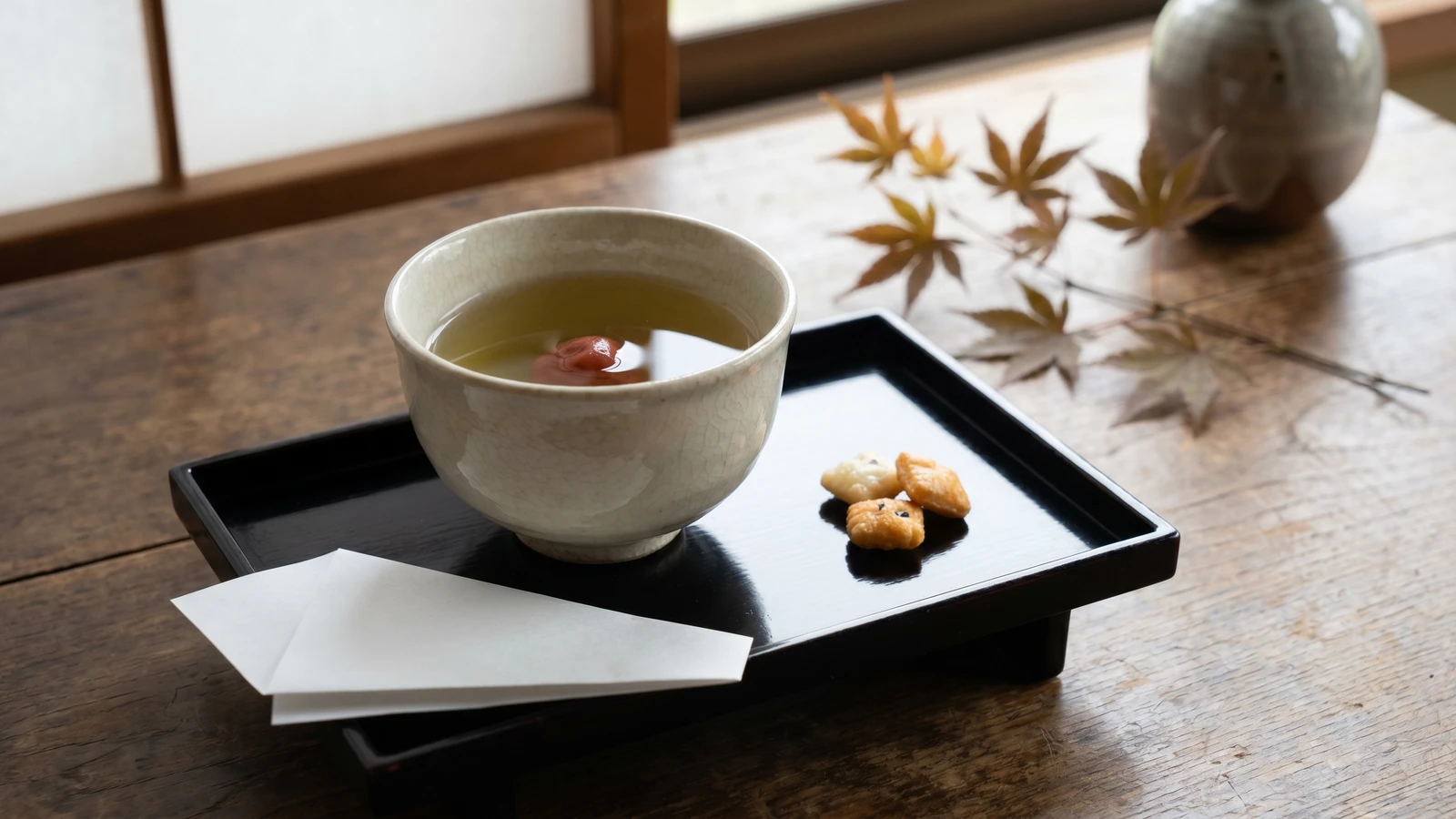
This is celebration tea because the word konbu echoes yorokobu, to rejoice. That little piece of wordplay is very Japanese, affectionate and serious at once. Serve it at New Year, weddings, or a formal first visit, often with a small salted plum or a few tiny rice crackers beside it. Leave the cup half open to the eye. Even a drink needs ma, the empty space that lets it breathe.
Kombucha, written 昆布茶, became common as a powdered kelp drink in the modern period, with commercial versions widely sold in Japan from the early twentieth century. It belongs to the same auspicious language as musubi-kombu, knotted kelp used in celebration foods, because konbu is heard as a link to yorokobu, meaning to rejoice. In Japan it is unrelated to the fermented tea now called kombucha in English, which entered global use through a different naming path.
Quantity
2 teaspoons
preferably made from konbu and salt only
Quantity
1 1/2 cups
Quantity
2 small
Quantity
a few
| Ingredient | Quantity |
|---|---|
| unsweetened kombucha powderpreferably made from konbu and salt only | 2 teaspoons |
| water | 1 1/2 cups |
| umeboshi (optional) | 2 small |
| arare rice crackers (optional) | a few |
Read the label before you heat the water. The best kombucha powder is mostly konbu and salt, with no sugar or sharp flavorings crowding the cup. This tea has nothing hidden, so the powder must taste clean before the kettle ever comes near it.
Bring the water to a boil, then let it stand for about one minute, until it settles near 90 C. Water temperature is the first secret of this cup. Boiling water can make the kelp taste rough and faintly slick, while cooler water leaves the flavor timid.
Put 1 teaspoon kombucha powder in each yunomi, or small teacup. Pour in 3/4 cup hot water and stir gently until the powder dissolves. Let it stand for 30 seconds so the flavor rounds out. The dose and time are the second secret: too much powder gives you salt, not depth.
Taste once. If it is too strong, add a spoonful of hot water. If it is too thin, add a pinch more powder and stir again. Slip one small umeboshi into each cup for a celebratory serving, or set a few arare beside it. Serve while the surface is still bright and clear.
1 serving (about 185g)
Culinary guides, cultural storytelling, and the editorial depth that makes cooking meaningful.
Discover Culinary ExplorerChef Takumi
Awamori mizuwari is not a trick of the bar. It is three parts awamori, seven parts cold water, and enough patience to let the black-kōji aroma open.

Chef Takumi
Hot awamori asks for one small discipline: pour the hot water first, then the spirit. Do that, and the glass turns round, fragrant, and calmer than its strength suggests.

Chef Takumi
Bancha is the honest daily cup: late-season leaves, hot water, a short steep, and a clean amber-green liquor that asks for no ceremony to be good.

Chef Takumi
Whole black soybeans, roasted until their skins split, make a clear amber tea with a roasted sweetness and no caffeine. Drink it plain, then eat the softened beans while they still hold their warmth.