
Chef Takumi
Awamori Mizuwari (泡盛水割り, awamori with water)
Awamori mizuwari is not a trick of the bar. It is three parts awamori, seven parts cold water, and enough patience to let the black-kōji aroma open.
A cooking platform built around craft, culture, and the stories behind what we eat.
Created by
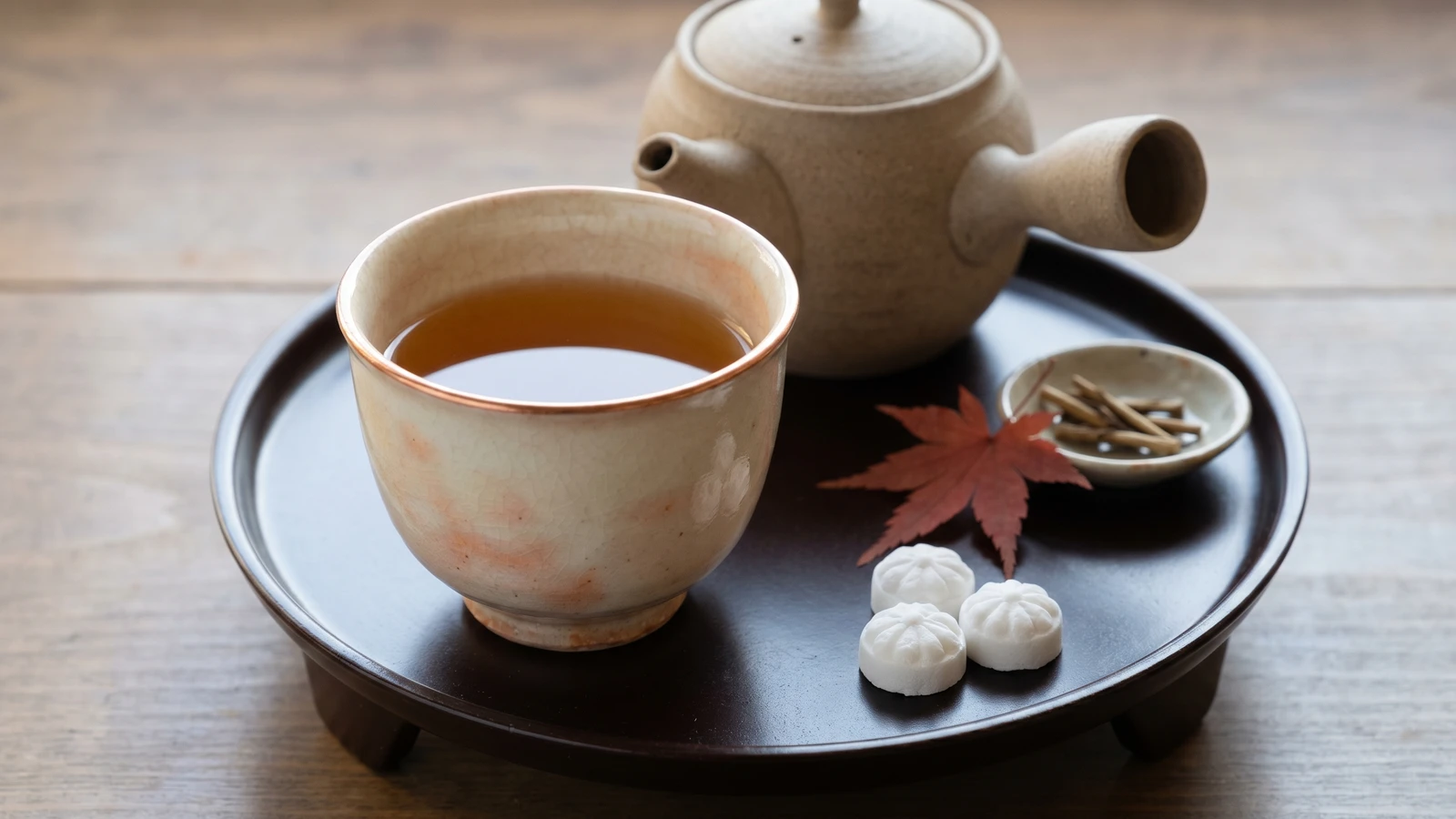
Kaga Bōcha asks for heat, not fuss: first-flush stems, a generous measure, and a short steep. Brew it boldly and the cup smells of caramel, cedar, and clean roasted grain.
The leaves have already had their turn. Kaga Bōcha begins with the stems, the pale stalks separated from first-flush tea and roasted until they smell sweet, toasty, and faintly like caramel. That is why it isn't ordinary hōjicha in a nicer cup. The stem is the point.
The first secret is water temperature. Sencha asks you to cool the water and speak softly. Kaga Bōcha wants the opposite: water just off the boil, because the roast and the stems give fragrance more readily than bitterness. If you brew it timidly, you get brown hot water wearing a good name, and nobody needs that little lecture from a teapot.
The second secret is dose and time. Use more tea than looks reasonable, because stems are bulky, then steep briefly and pour every drop. The last drops carry the richest aroma, and leaving them behind makes the next cup woody. This is honmono made reachable: a kyūsu if you have one, a small French press if you don't, and five calm minutes.
At the table it sits where a daily tea should, after rice, beside a small sweet, or late in the evening when a heavy cup would be unkind. The stems come from spring's shincha, the new tea, but Kanazawa drinks this warmth all year. Leave the cup half full. The fragrance needs room too.
Kaga Bōcha is a roasted-stem tea associated with Kanazawa and the former Kaga domain, made chiefly from kuki, the stems sorted from green tea, rather than from coarse leaf. In 1983, Kanazawa tea merchant Maruhachi Seichajō prepared Kenjō Kaga Bōcha for Emperor Shōwa's visit to Ishikawa, using first-flush stems and a lighter roast, and that presentation helped define the premium modern style. Ordinary hōjicha is often made from bancha or mixed leaves, while Kaga's version is prized for the sweet aroma released from the stem itself.
Quantity
10g
Quantity
800ml
400ml for the first infusion and 400ml for the second
Quantity
as needed
for warming the teapot and cups
Quantity
3 small pieces
| Ingredient | Quantity |
|---|---|
| Kaga Bōcha (Ishikawa roasted-stem tea) | 10g |
| soft water400ml for the first infusion and 400ml for the second | 800ml |
| hot waterfor warming the teapot and cups | as needed |
| higashi or other dry wagashi (optional) | 3 small pieces |
Fill the kyūsu (side-handled teapot) and yunomi cups with hot water for about 30 seconds, then pour it away. Warm clay and porcelain steal less heat from the brew, and Kaga Bōcha needs high heat to lift its roasted fragrance. If you're using a small French press or glass jug, warm that too.
Put 10g of Kaga Bōcha into the warmed kyūsu. It will look like too much because stems take up space; measure by weight if you can, not by shyness. A thin measure makes a thin cup, and extra steeping only draws out dryness.
Bring the water to a full boil, then let the kettle settle for 15 to 30 seconds, about 95 to 98°C. Don't cool it the way you would for sencha. The roasting has softened the green tea's edge, and near-boiling water carries the caramel and toasted-grain aroma out quickly.
Pour 400ml hot water over the stems, cover, and steep 45 seconds. You should smell roasted grain, cedar, and a small sweetness from the pot. Don't stir or press; agitation makes the cup rough without making it deeper.
Pour into cups in small alternating rounds so each cup gets the same strength, then tip the kyūsu and empty the final drops. Those last drops are the most fragrant. Leaving liquid in the pot keeps extracting the stems and makes the second cup taste woody.
For a second infusion, add another 400ml of 95 to 98°C water and steep 10 to 15 seconds. The stems are already awake, so a long wait only flattens the fragrance. Pour again to the last drop and serve with one small sweet if you like.
1 serving (about 400g)
Culinary guides, cultural storytelling, and the editorial depth that makes cooking meaningful.
Discover Culinary ExplorerChef Takumi
Awamori mizuwari is not a trick of the bar. It is three parts awamori, seven parts cold water, and enough patience to let the black-kōji aroma open.

Chef Takumi
Hot awamori asks for one small discipline: pour the hot water first, then the spirit. Do that, and the glass turns round, fragrant, and calmer than its strength suggests.

Chef Takumi
Bancha is the honest daily cup: late-season leaves, hot water, a short steep, and a clean amber-green liquor that asks for no ceremony to be good.

Chef Takumi
Whole black soybeans, roasted until their skins split, make a clear amber tea with a roasted sweetness and no caffeine. Drink it plain, then eat the softened beans while they still hold their warmth.