Culinary Explorer

A cooking platform built around craft, culture, and the stories behind what we eat.
Discover Culinary Explorer
Sencha (煎茶)

Sencha (煎茶)

Created by

Sencha is everyday tea, but it punishes boiling water. Give the leaves warm water, one measured minute, and the cup turns clear green, softly grassy, and cleanly sweet.

Beverages
Japanese
Weeknight
Comfort Food
Make Ahead
2 min
Active Time
4 min cook6 min total
Yield2 small cups, with a second infusion

Sencha is the green tea we reach for on an ordinary day, which is exactly why it deserves care. In spring, shincha, the first new tea, is shun, bright and soft from the new leaf. Through the rest of the year, sencha is the quiet cup after rice, after work, after too much talking.

Temperature is the first secret. The sweetness in sencha comes out before the sharper catechins take over, so cooler water gives the cup time to stay gentle. The second secret is dose and time: enough leaf to give the tea its body, then one quiet minute. More water isn't kindness. It only thins the cup and tempts you to steep longer, which is where the roughness begins.

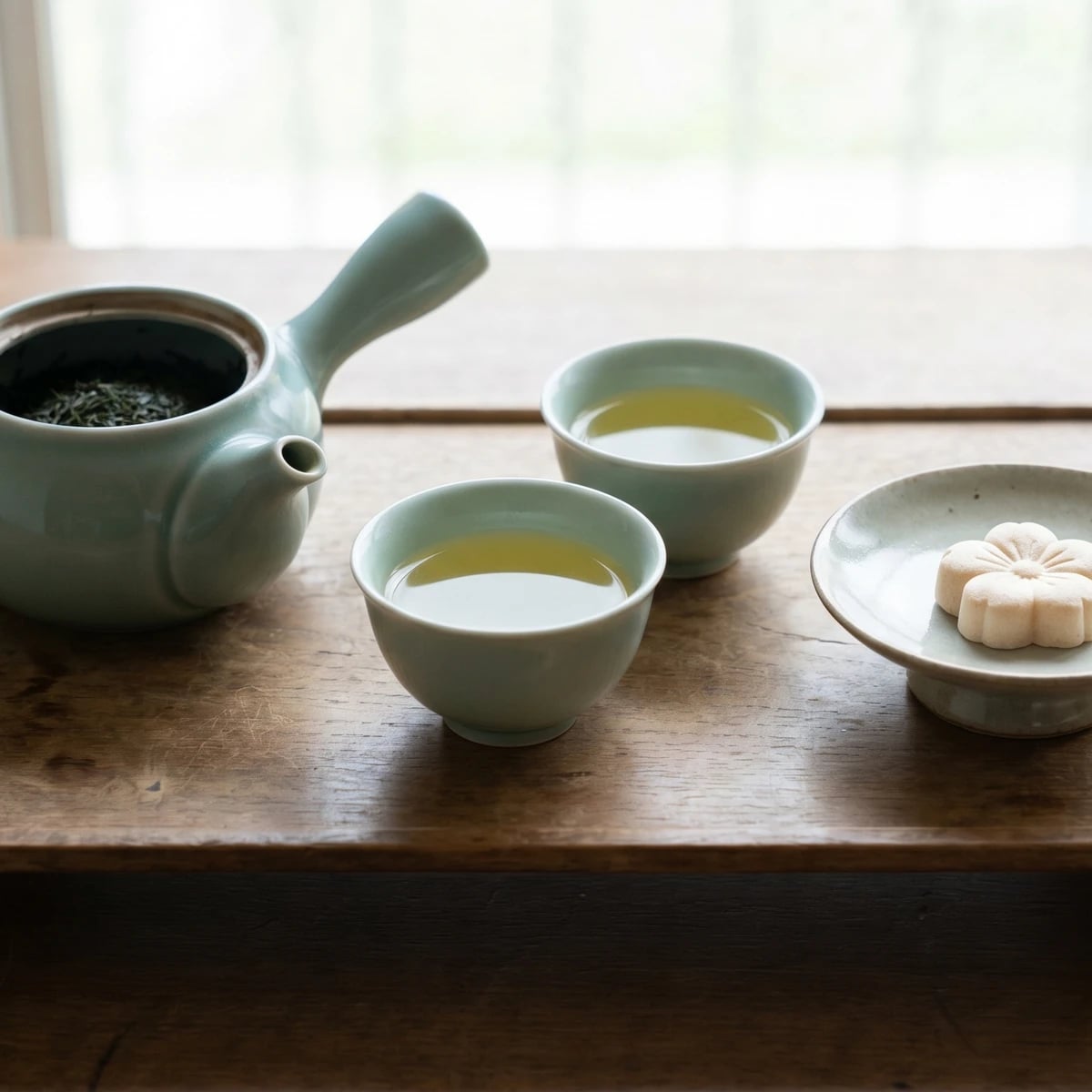
A kyūsu, the small side-handled teapot, makes this easy because it pours fast and holds the leaves back. A small teapot and a fine strainer will do the same work at home. Pour every last drop into the cups, little by little between them, because the last drops are strongest and a wet leaf left drowning keeps brewing. This is honmono made reachable: good leaves, soft water, a cool hand with the kettle, and nothing hidden.

Modern sencha took shape in 1738, when Nagatani Sōen of Ujitawara, near Uji, refined a method of steaming, hand-rolling, and drying fresh leaves into bright green needles. The tea was carried to Edo and sold by the Yamamoto house, and its clear infusion helped make sencha both an everyday drink and the center of senchadō, the literati tea practice that grew in the eighteenth century.

The technique, the tradition, and the story behind every dish.

Discover Culinary Explorer

Ingredients

sencha leaves

Quantity

6g

freshly opened if possible

soft water

Quantity

200ml, plus extra for warming cups

boiled, then cooled to 70 to 80 Celsius

higashi or other wagashi sweet (optional)

Quantity

1 small piece

for serving

Equipment Needed

  • Kyūsu (side-handled Japanese teapot), or a small teapot with a fine-mesh strainer
  • Yuzamashi (cooling pitcher), or a small glass jug
  • Small gram scale
  • Kitchen thermometer, useful until your hand learns the water

Instructions

  1. 1

    Boil the water

    Bring the soft water to a full boil, then take it off the heat. Boiling first gives you a clean, repeatable starting point, and if your water has a faint tap-water smell, it helps drive that off. Sencha is plain enough that poor water has nowhere to hide.

    Soft water makes a clearer, rounder cup. Very hard water flattens the fragrance and makes the bitterness feel rougher.
  2. 2

    Cool the water

    Pour 200ml of the boiled water into a yuzamashi, a cooling pitcher, or into the serving cups, and let it cool to 70 to 80 Celsius. A thermometer is useful until your hand learns the heat. This is the first secret: hotter water pulls bitterness from the leaf before the sweetness has time to speak.

    Each transfer into a room-temperature cup or pitcher drops the water several degrees. That old method is not ceremony for its own sake, it is temperature control without machinery.
  3. 3

    Measure the leaves

    Put 6g of sencha into a kyūsu, the small side-handled teapot. Use a scale the first few times, because needle-shaped leaves lie about volume. The dose is the second secret: too little leaf tempts you to steep longer, and long steeping is how a gentle cup turns sharp.

    Good sencha smells green, fresh, and faintly sweet, sometimes like cut grass or young chestnut. If it smells dusty, stale, or browned, choose another tea.
  4. 4

    Steep quietly

    Pour the cooled water over the leaves, cover, and steep for 60 to 75 seconds. Leave the pot alone. The leaves will relax, the liquor will turn clear yellow-green, and the aroma will rise from the opened leaf. Deep-steamed fukamushi sencha extracts faster, so give it 30 to 45 seconds instead.

    Shaking the pot breaks fine leaves and clouds the cup. Sencha needs time and the right temperature, not persuasion.
  5. 5

    Pour to finish

    Pour between the two cups a little at a time, back and forth, so both cups have the same strength. Tip the kyūsu gently and pour out the last drops. Those final drops are the richest, and leaving tea around the leaves keeps extracting bitterness while everyone is politely finding a seat.

    Empty the pot completely. A sencha leaf left sitting in hot liquor is still brewing, whether you meant it to or not.
  6. 6

    Brew again

    For a second infusion, add water at 80 to 85 Celsius and steep only 15 to 30 seconds. The leaves are already open, so they give flavor quickly. Pour to the last drop again, and expect a brighter, lighter cup.

Chef Tips

  • Buy sencha in small sealed bags, not a grand tin that will sit open for months. Air and light take the fragrance first, then the sweetness. Once opened, use it within a month if you can.
  • Shincha is the spring cup, shun in its clearest form. It is softer, greener, and a little more expensive, as first things often are. Brew it at the lower end of the range, around 70 Celsius.
  • Don't pour boiling water over sencha. That isn't strength, it is impatience in a kettle. Save boiling water for teas that want it, and let this one keep its manners.
  • No kyūsu? Use a small teapot and pour through a fine-mesh strainer. The stand-in works because it does the same essential job: it separates leaf from liquor quickly and completely.

Advance Preparation

  • You can measure the leaves and set out the kyūsu, cups, and pitcher ahead of time. Keep the leaves sealed until brewing, because their fragrance is part of the cup.
  • Brewed hot sencha is best served immediately. Do not make it ahead and hold it, since the color dulls and the bitterness grows as it sits.
  • For a make-ahead summer cup, prepare mizudashi sencha: steep 6g sencha in 300ml cold soft water in the refrigerator for 3 to 6 hours, then strain completely. That is its own honmono method, a summer shun cup, not hot sencha stored cold.

Frequently Asked Questions

Nutrition Information

1 serving (about 100g)

Calories
0 calories
Total Fat
0 g
Saturated Fat
0 g
Trans Fat
0 g
Unsaturated Fat
0 g
Cholesterol
0 mg
Sodium
0 mg
Total Carbohydrates
0 g
Dietary Fiber
0 g
Sugars
0 g
Protein
0 g

Note: Chef personas and recipes are created with AI assistance. Cook with care: follow safe food-handling practices, check doneness with a thermometer when needed, and adapt for allergies and your kitchen.

Where cooking meets culture.

Culinary guides, cultural storytelling, and the editorial depth that makes cooking meaningful.

Discover Culinary Explorer

More from Japanese Teas

Browse the full collection