Culinary Explorer
A cooking platform built around craft, culture, and the stories behind what we eat.
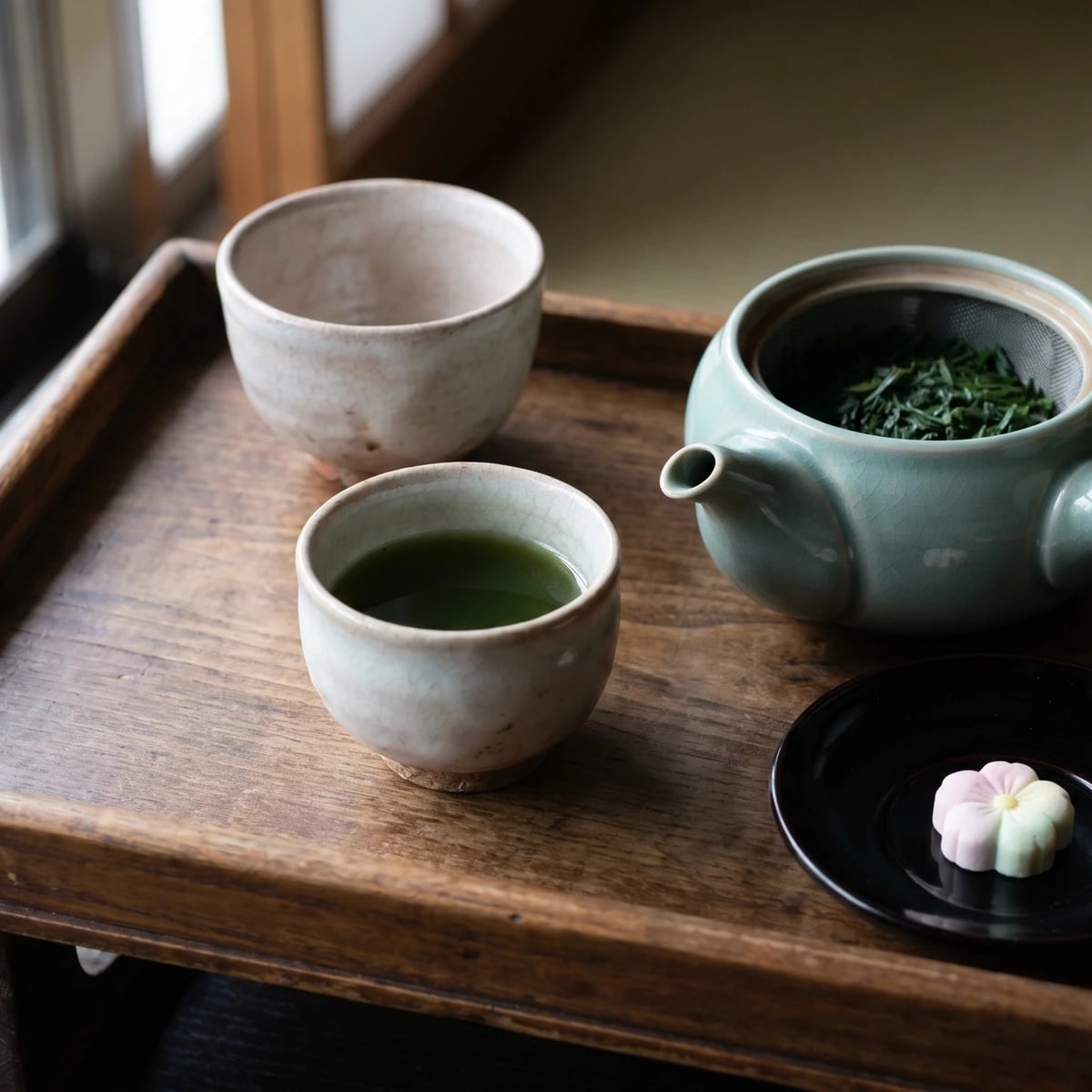
Fukamushi Sencha (深蒸し煎茶, deep-steamed sencha)
Created by Chef Takumi
Fukamushi sencha looks bold but drinks gently. Cooler water, a generous dose, and a short steep make a dark green cup with sweetness in front and bitterness held back.
The color makes people suspicious. Fukamushi sencha pours dense and dark green, sometimes almost cloudy, and a nervous cook thinks they've overdone it. They haven't. Those fine leaf particles are the point: the leaves were steamed longer before rolling, so they give themselves to the water quickly and softly.
The first secret is water temperature. Boiling water bullies sencha, pulling bitterness and a dry edge before sweetness can show. Let the water cool to about 70°C, and the cup turns round, green, and mellow. This is not fussy work. It is one transfer from kettle to cup and a short wait, which is how many serious rules look once you stop bowing to them.
The second secret is the dose and the clock. Use enough leaf, then steep briefly. Weak tea made with too little leaf tastes thin; strong tea made with a generous dose and a short steep tastes deep without roughness. At a Japanese table, a cup like this sits after rice or beside a small sweet, quiet enough to be daily and careful enough to be honmono. There is nothing hidden in it, only leaf, water, and attention.
Ingredients
fukamushi sencha leaves (deep-steamed sencha)
Quantity
6g
soft water
Quantity
480ml
freshly boiled, then cooled as directed
higashi or seasonal wagashi (optional)
Quantity
1 small sweet per person
| Ingredient | Quantity |
|---|---|
| fukamushi sencha leaves (deep-steamed sencha) | 6g |
| soft waterfreshly boiled, then cooled as directed | 480ml |
| higashi or seasonal wagashi (optional) | 1 small sweet per person |
Where cooking meets culture.
Culinary guides, cultural storytelling, and the editorial depth that makes cooking meaningful.
Discover Culinary Explorer