
Chef Takumi
Awamori Mizuwari (泡盛水割り, awamori with water)
Awamori mizuwari is not a trick of the bar. It is three parts awamori, seven parts cold water, and enough patience to let the black-kōji aroma open.
A cooking platform built around craft, culture, and the stories behind what we eat.
Created by
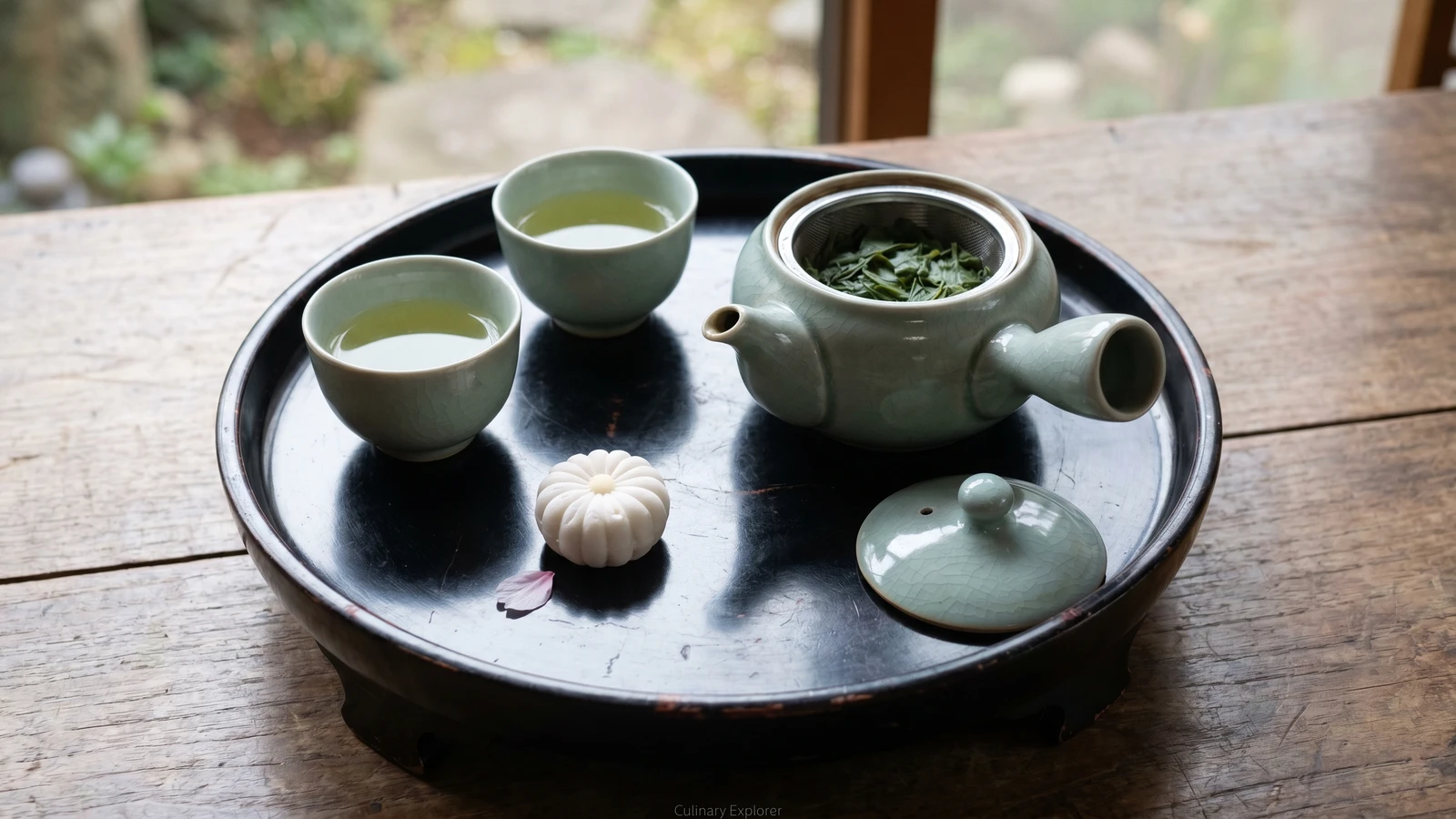
Shincha is spring in a cup: new tea leaves, cool water, a short steep, and the restraint to stop before freshness turns sharp.
Shincha arrives with a small calendar attached to it. This is the first pluck of spring tea, tender and newly processed, and it asks to be drunk while its 旬 (shun), its prime season, is still close enough to smell. Wait too long and you still have green tea, yes, but not quite the spring you paid for.
People often fear Japanese tea because the numbers seem severe: grams, degrees, seconds. They aren't there to frighten you. Water temperature is the first secret of the cup, because hot water pulls bitterness from young tea faster than it pulls sweetness. Dose and steeping time are the second, because shincha is concentrated and fresh, and a little crowding in the pot gives the cup its soft body without making it harsh.
Use a kyūsu, the side-handled Japanese teapot, if you have one. A small glass jug and a fine-mesh strainer will do the same honest work. Brew it cooler than you think, pour every drop, and don't let the leaves sit drowning between infusions. The real thing here is not ceremony for ceremony's sake. It's attention, and attention is within reach.
Shincha means "new tea" and refers to the first harvest of Japanese green tea, usually picked from late March into May depending on region and altitude. Uji in Kyoto, Shizuoka, Kagoshima, and Sayama all produce prized first-flush teas, with southern fields often reaching harvest earlier. In the traditional calendar, the 88th night after the start of spring, hachijūhachiya, became associated with the new tea harvest and with good fortune for the year.
Quantity
6g
Quantity
160ml
heated to 70 C
Quantity
as needed
for warming the pot and cups
| Ingredient | Quantity |
|---|---|
| shincha leaves | 6g |
| soft waterheated to 70 C | 160ml |
| hot water (optional)for warming the pot and cups | as needed |
Pour hot water into the kyūsu and cups, then discard it. This warms the clay and takes the chill off the cups, so the measured brewing water doesn't lose its heat too quickly. A cold pot steals more from a small cup than you'd think.
Heat soft water, then let it cool to about 70 C. If you don't have a thermometer, pour the boiled water into one empty cup, then another, waiting briefly between pours. Each transfer drops the temperature and softens the water's force on the leaves. Shincha is young tea. Treat it like young tea.
Add 6g shincha leaves to the kyūsu. The amount may look generous for only 160ml water, but that is the point: enough leaf gives sweetness, aroma, and body in a short steep. Too little leaf tempts you to steep longer, and longer steeping is where bitterness begins to shout.
Pour in the 70 C water, cover, and steep for 60 seconds. Don't swirl or shake the pot. The leaves are opening and giving up their spring aroma on their own, and agitation pulls roughness along with it.
Pour into two cups a little at a time, moving back and forth between them so both cups taste the same. Tip out the final drops. Those last drops are concentrated and fragrant, and leaving them in the pot keeps cooking the leaves between rounds.
For a second infusion, use slightly hotter water, about 75 C, and steep only 20 to 30 seconds. The leaves are already open, so they give flavor quickly. A third infusion can be hotter and brief again, lighter in aroma but still clean.
1 serving (about 75g)
Culinary guides, cultural storytelling, and the editorial depth that makes cooking meaningful.
Discover Culinary ExplorerChef Takumi
Awamori mizuwari is not a trick of the bar. It is three parts awamori, seven parts cold water, and enough patience to let the black-kōji aroma open.

Chef Takumi
Hot awamori asks for one small discipline: pour the hot water first, then the spirit. Do that, and the glass turns round, fragrant, and calmer than its strength suggests.

Chef Takumi
Bancha is the honest daily cup: late-season leaves, hot water, a short steep, and a clean amber-green liquor that asks for no ceremony to be good.

Chef Takumi
Whole black soybeans, roasted until their skins split, make a clear amber tea with a roasted sweetness and no caffeine. Drink it plain, then eat the softened beans while they still hold their warmth.