
Chef Takumi
Awamori Mizuwari (泡盛水割り, awamori with water)
Awamori mizuwari is not a trick of the bar. It is three parts awamori, seven parts cold water, and enough patience to let the black-kōji aroma open.
A cooking platform built around craft, culture, and the stories behind what we eat.
Created by
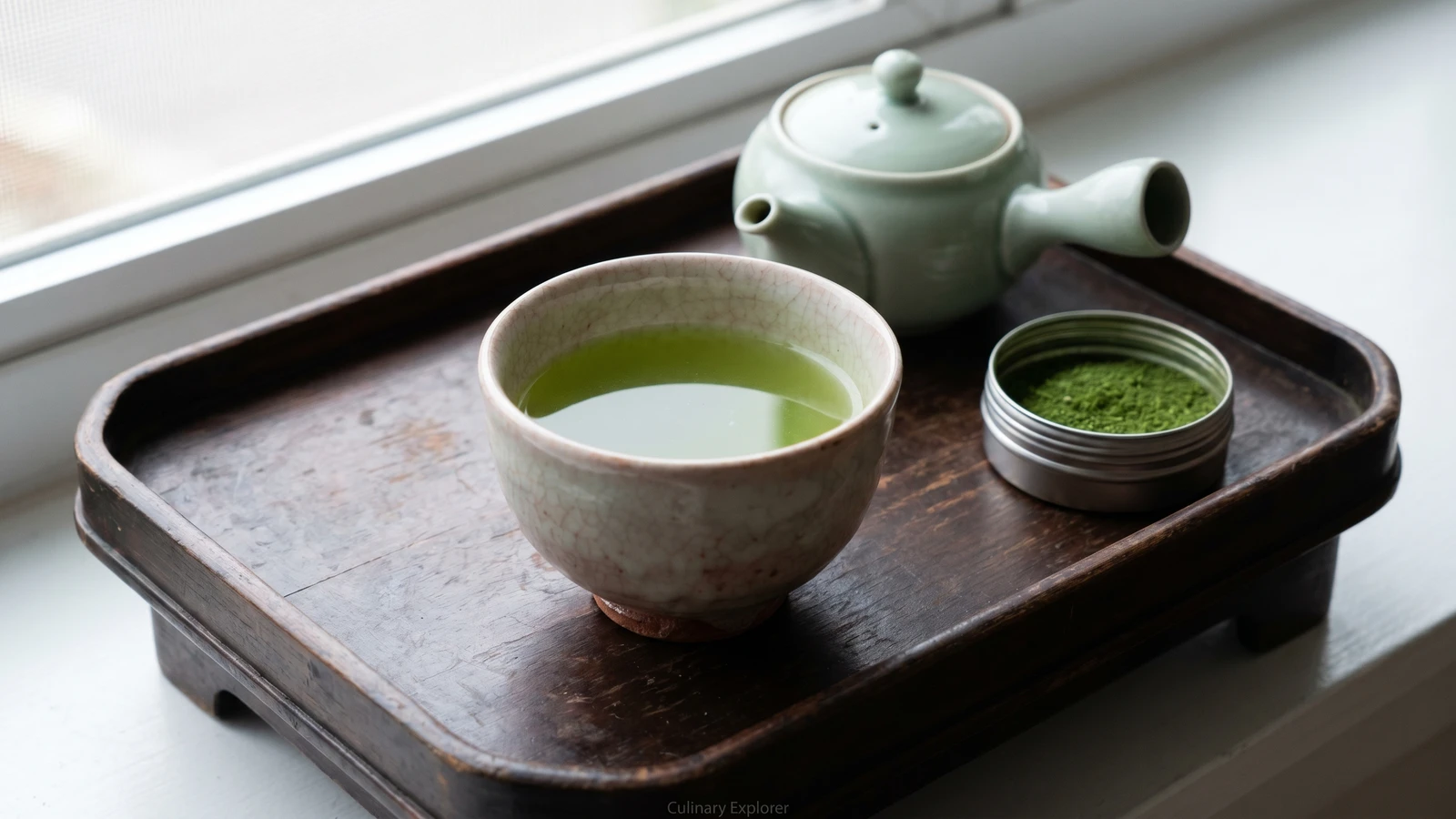
Konacha is the sushi-shop cup: fine green tea dust, boiling water, and a short steep. Brew it quickly and it turns bright, bracing, and clean.
Konacha looks like sweepings until you understand it. These fine particles of green tea leaf are separated during processing, and because they are so small, they give themselves up almost at once. That is why sushi shops love it. The cup is strong, green, inexpensive, and quick enough to keep pace with the counter.
The first secret is water temperature. Sencha often asks for gentler water, but konacha is not asking to be pampered. Use water just off the boil, then keep the steep short. Too cool and the tea tastes flat. Too long and the bitterness walks in with its shoes on.
The second secret is restraint with the dose. A little konacha has the surface area of a great deal of leaf, so measure it as if it has opinions. Thirty seconds is often enough. The result should be vivid green, cloudy, and pleasantly sharp, clearing the mouth between bites of rice, fish, soy, and wasabi. Nothing hidden. Just leaf, water, and timing.
Konacha, literally "powder tea," is not matcha but the fine leaf particles and tea dust sorted out during the processing of sencha and gyokuro. It became closely associated with sushi shops because it brews quickly, stands up to hot water, and clears oil and rice sweetness from the palate between pieces. At many sushi counters the served tea is called agari, a hospitality term for the cup offered at the counter, while konacha names the tea material itself.
Quantity
2 teaspoons
Quantity
300ml
| Ingredient | Quantity |
|---|---|
| konacha | 2 teaspoons |
| freshly boiled water | 300ml |
Pour a little boiling water into a kyusu, a Japanese side-handled teapot, then swirl and discard it. Warming the pot keeps the brewing water from losing its force the moment it touches the clay, and konacha needs that heat to wake quickly.
Add 2 teaspoons konacha to the warm pot. This looks modest, but the fine particles have more exposed surface than whole leaves, so they brew much stronger than the spoon suggests.
Pour in 300ml freshly boiled water, cover, and steep for 30 seconds. Do not wander off. Konacha releases color, flavor, and bitterness fast, and the short steep is what keeps the cup clean instead of harsh.
Pour through the kyusu filter into two yunomi, tipping the pot until the last drops come out. Those last drops are the strongest, so dividing them evenly keeps one cup from tasting thin and the other like punishment.
Serve the tea while the color is bright and the edge is clean. Konacha is not a tea to hold for later. Left sitting, the fine leaf keeps giving and the cup turns muddy and bitter.
1 serving (about 150g)
Culinary guides, cultural storytelling, and the editorial depth that makes cooking meaningful.
Discover Culinary ExplorerChef Takumi
Awamori mizuwari is not a trick of the bar. It is three parts awamori, seven parts cold water, and enough patience to let the black-kōji aroma open.

Chef Takumi
Hot awamori asks for one small discipline: pour the hot water first, then the spirit. Do that, and the glass turns round, fragrant, and calmer than its strength suggests.

Chef Takumi
Bancha is the honest daily cup: late-season leaves, hot water, a short steep, and a clean amber-green liquor that asks for no ceremony to be good.

Chef Takumi
Whole black soybeans, roasted until their skins split, make a clear amber tea with a roasted sweetness and no caffeine. Drink it plain, then eat the softened beans while they still hold their warmth.