
Chef Takumi
Abura Soba (油そば, brothless ramen)
Abura soba is ramen without the hiding place of soup: hot noodles, strong shōyu tare, fragrant oil, and the discipline to mix while every strand is still hot.
A cooking platform built around craft, culture, and the stories behind what we eat.
Created by
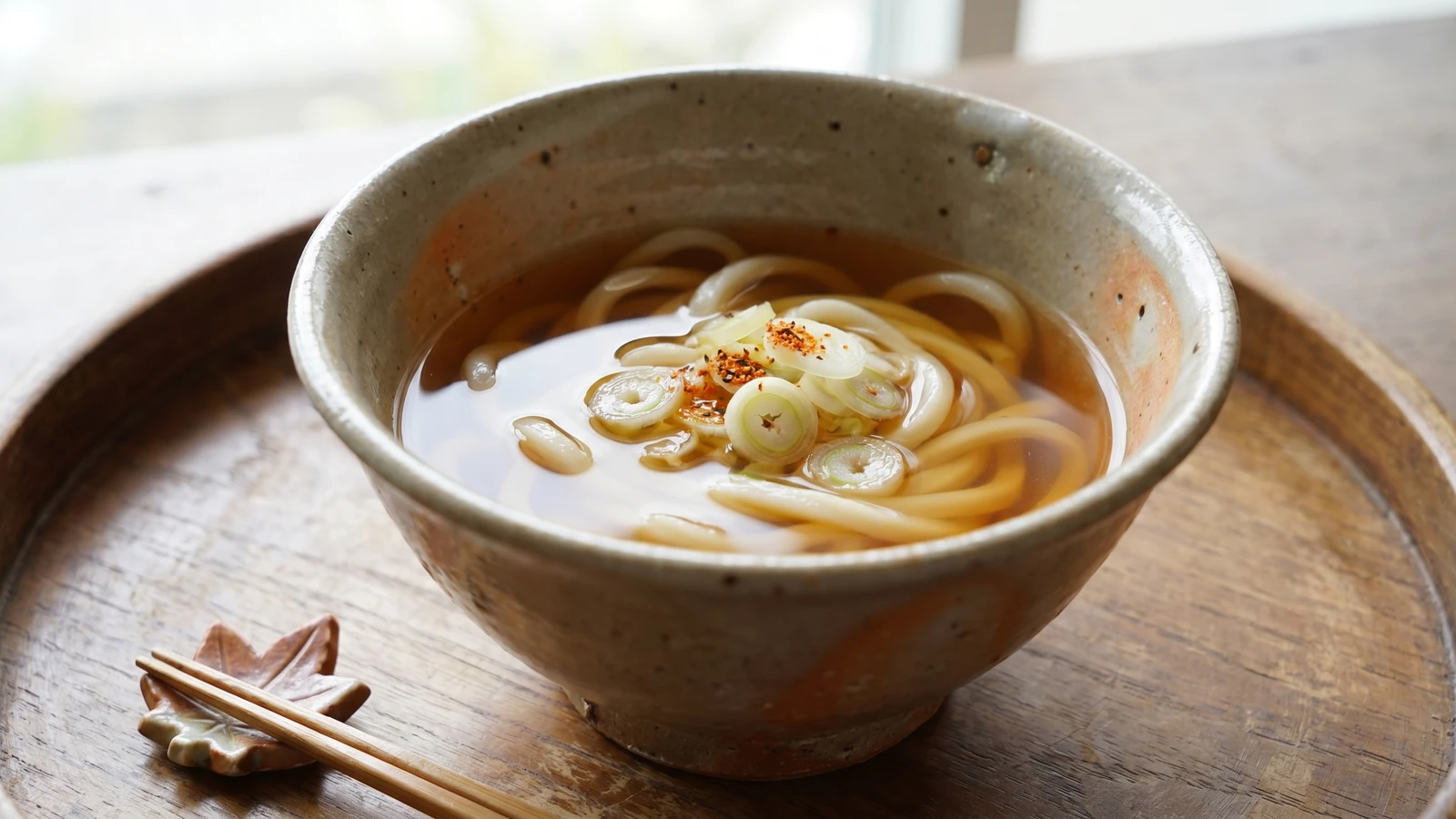
Kake udon is the quiet bowl: thick noodles, clear dashi, and only enough soy to give the broth a voice. Make the stock clean and everything else falls into place.
Kake udon looks almost too plain to explain. Thick white noodles sit in hot broth, with a little scallion, and that is nearly all. No pile of toppings comes to rescue it. This is why it matters. The plain bowl tells you whether the dashi is alive, whether the noodles were warmed properly, whether the seasoning was handled with a light hand.
The one detail that decides it is the broth. Make ichiban dashi from konbu and katsuobushi, then season it as kakejiru, the pouring broth. In Kanto, we make it darker and more soy-forward with koikuchi shōyu, the regular dark soy sauce. In Kansai, it stays pale amber, with more konbu in the stock and usukuchi shōyu, light soy sauce, which is lighter in color but not lighter in salt. Same dish, two voices. Neither one is pretending to be the other.
Do not boil the noodles in the broth. Boil or warm them separately, rinse or loosen them as needed, then heat them in fresh water before they meet the soup. If loose starch goes into the dashi, the broth turns cloudy and tired. Udon is humble, yes, but humble is not careless. Keep the broth clear, the noodles lively, and the bowl becomes honmono without making a ceremony of itself.
Kake udon became common as an everyday noodle bowl in the Edo period, when urban noodle shops served simple hot noodles quickly and cheaply to workers and travelers. The regional divide still taught in Japan is Kanto versus Kansai: eastern bowls tend to use koikuchi soy for a darker, more assertive broth, while western bowls favor a paler broth built on konbu and usukuchi soy. Sanuki udon from Kagawa later became one of the best-known regional styles, prized for its firm, elastic chew.
Quantity
1 piece (about 10g)
Quantity
4 cups
Quantity
20g
Quantity
2 portions (about 400g total)
Quantity
2 tablespoons
Quantity
1 tablespoon
Quantity
1/2 teaspoon, or to taste
Quantity
1 1/2 tablespoons
Quantity
1 tablespoon
Quantity
1/4 teaspoon, or to taste
Quantity
2
thinly sliced
Quantity
to serve
| Ingredient | Quantity |
|---|---|
| konbu (dried kelp) | 1 piece (about 10g) |
| cold water | 4 cups |
| katsuobushi (bonito flakes) | 20g |
| fresh or frozen udon noodles | 2 portions (about 400g total) |
| koikuchi shōyu (regular dark soy sauce), for Kanto-style broth | 2 tablespoons |
| mirin, for Kanto-style broth | 1 tablespoon |
| sea salt, for Kanto-style broth | 1/2 teaspoon, or to taste |
| usukuchi shōyu (light soy sauce), for Kansai-style broth | 1 1/2 tablespoons |
| mirin, for Kansai-style broth | 1 tablespoon |
| sea salt, for Kansai-style broth | 1/4 teaspoon, or to taste |
| scallionsthinly sliced | 2 |
| shichimi tōgarashi (optional) | to serve |
Wipe the konbu with a damp cloth, but don't wash it. The pale powder on the surface is not dirt, it's flavor. Put the konbu in 4 cups cold water and bring it up slowly over low heat, about ten minutes. Pull it out just before the water boils, when small bubbles climb the sides of the pot. If the konbu boils, the dashi can turn bitter and slick, and the clear edge of the broth is gone before the noodles arrive.
Bring the water to a gentle boil, add the katsuobushi all at once, and immediately turn off the heat. Leave the flakes alone for two to three minutes, until they sink. Do not stir. The flakes give their aroma quickly, and rough handling pulls out stronger, heavier flavors that do not belong in this plain bowl.
Strain the dashi through a cloth-lined sieve or a very fine strainer. Let it drip naturally and don't squeeze the flakes. Squeezing presses out oily, stale-tasting notes and turns the stock cloudy. For kake udon, the broth is the face of the dish, so keep it clean.
Return the dashi to the pot and choose your direction. For Kanto-style kakejiru, add koikuchi shōyu, mirin, and salt. For Kansai-style kakejiru, add usukuchi shōyu, mirin, and salt. Warm gently and taste. It should be slightly more seasoned than a soup you would sip by itself, because the udon will soften it. Do not let the broth boil hard after seasoning, or the fragrance flattens.
Cook the udon in a separate pot of boiling water according to the package or maker's instructions. Fresh udon may need only a short warming; frozen udon often needs two to three minutes. Stir gently with chopsticks so the strands loosen without tearing. The noodles should be hot through and springy, not swollen and soft.
Drain the udon well. If the noodles are fresh and starchy, rinse them briefly under hot running water or dip them once into a bowl of hot water, then drain again. This keeps loose starch out of the dashi. A cloudy broth in kake udon is not a tragedy, but it is evidence, and the bowl is too plain to hide evidence.
Warm two deep bowls with hot water, then empty them. Divide the udon between the bowls and ladle the hot kakejiru over the noodles until they are just covered. Scatter sliced scallion on top and serve shichimi tōgarashi alongside. The bowl should look restrained: noodles resting in clear broth, a little green at the surface, nothing crowded.
1 serving (about 650g)
Culinary guides, cultural storytelling, and the editorial depth that makes cooking meaningful.
Discover Culinary ExplorerChef Takumi
Abura soba is ramen without the hiding place of soup: hot noodles, strong shōyu tare, fragrant oil, and the discipline to mix while every strand is still hot.
Chef Takumi
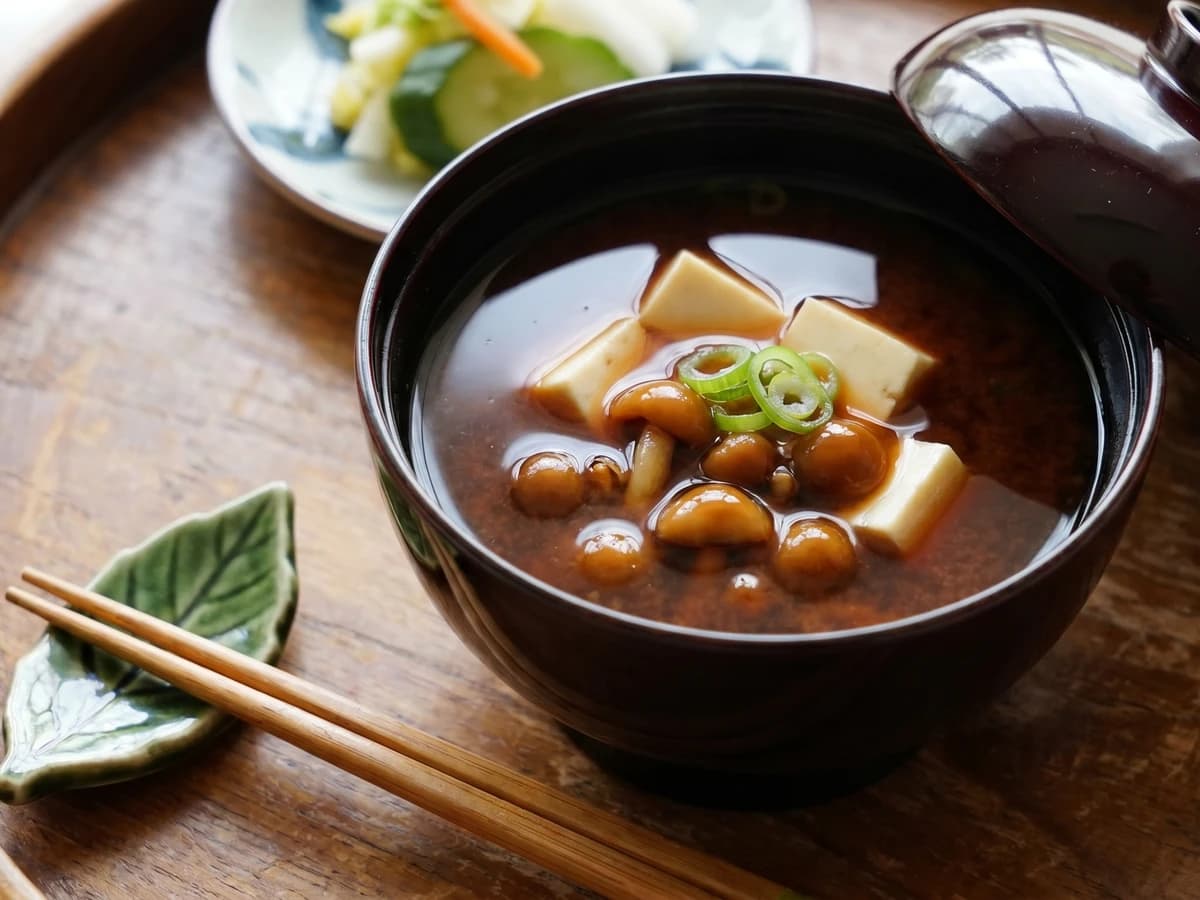
Akadashi asks you to trust the dark miso. Build a clear dashi, loosen the Hatchō mame-miso gently, and the soup turns coffee-dark, savory, and clean.

Chef Takumi
Toast the rice until its skin is firm, then let it meet chicken broth, burdock, maitake, and seri. The pot looks grand, but the work is rice, broth, and patience.
Chef Takumi
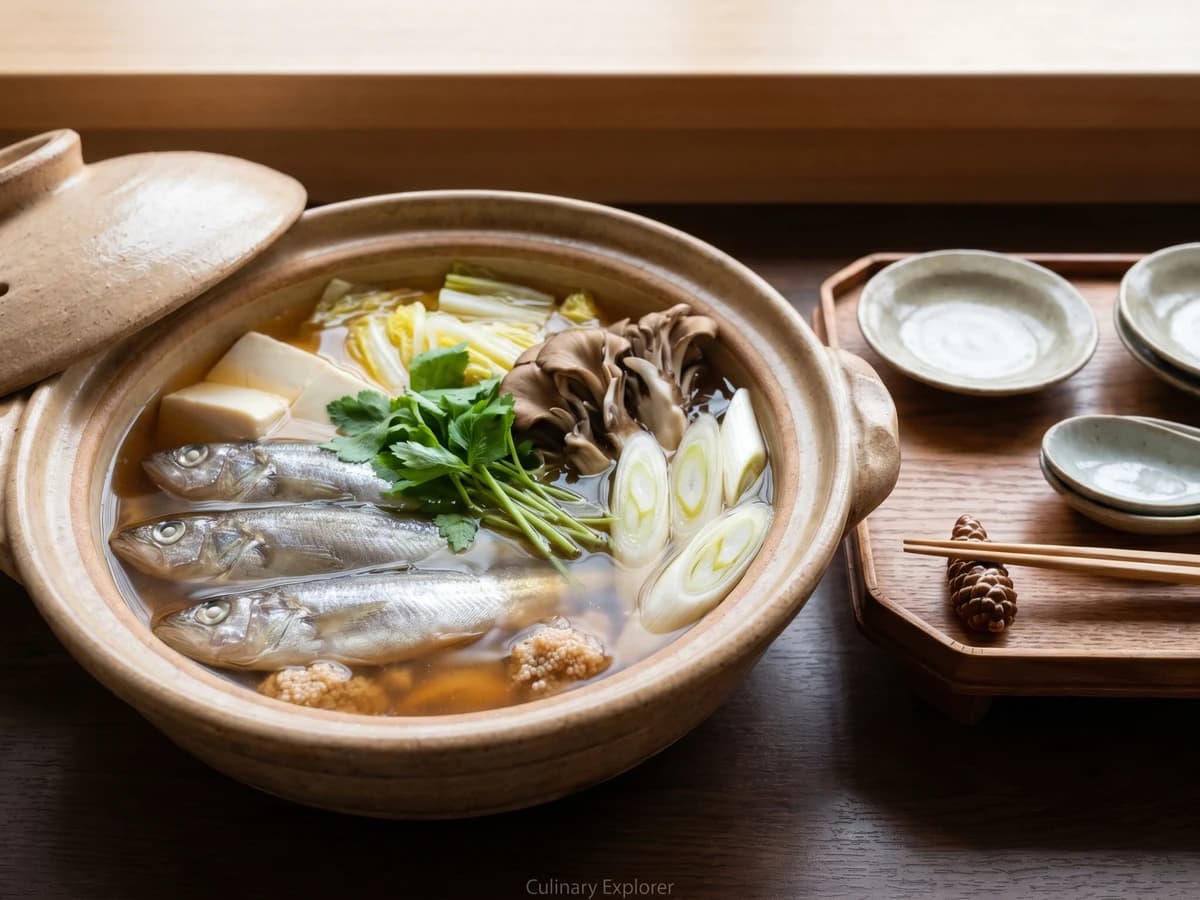
Shottsuru nabe is Akita winter in one pot: clean dashi, hatahata at shun, tofu and napa cabbage carrying a salt-deep broth without anything heavy enough to hide the fish.