
Chef Takumi
Ankake Udon (あんかけうどん)
Winter udon with staying power: clear dashi, a little soy and mirin, and just enough starch to make the broth cling without turning heavy.
A cooking platform built around craft, culture, and the stories behind what we eat.
Created by
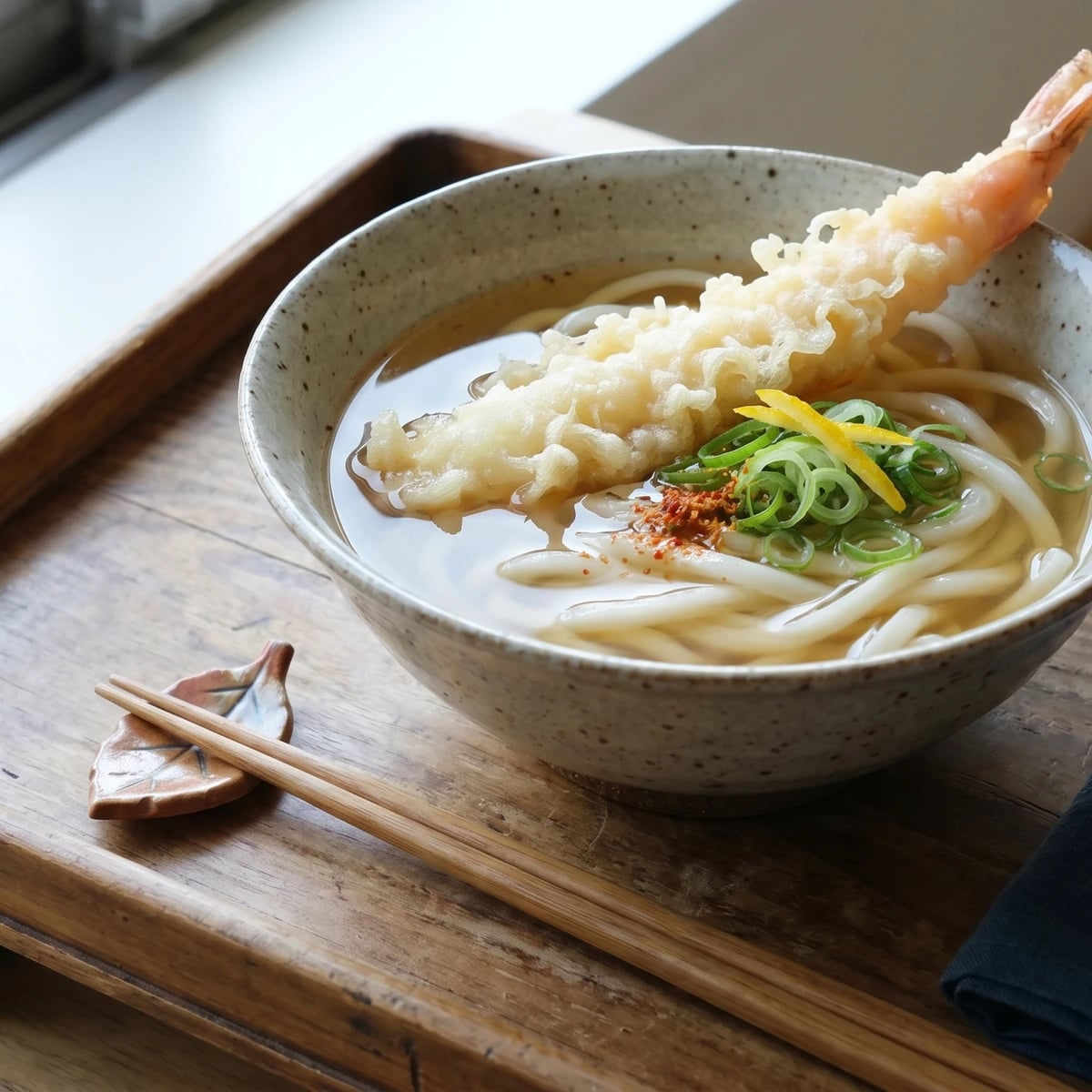
Tempura udon is a small lesson in timing: clear dashi, springy noodles, and one crisp shrimp set down at the last moment, so the first bite still crackles.
Tempura udon looks like the cook has taken on two dinners at once: a clear noodle soup and a piece of frying. It hasn't. The bowl is built in the order that keeps each part honest. Dashi first, noodles second, tempura last, then everyone sits down before the prawn forgets it was crisp.
The detail that decides it is timing. The broth waits for the tempura, not the other way around. A clear kakejiru, the seasoned pouring broth for udon, can sit quietly on the stove while you fry one good shrimp for each bowl. If the shrimp goes in early, the crust drinks the soup and becomes part of the broth. That isn't failure, it is part of the pleasure, but the first bite belongs to the cook who serves promptly.
The stock should taste clean and deep before soy touches it. We steep konbu below the boil because hard boiling pulls bitterness and cloudiness from the kelp. We add katsuobushi off the heat and never squeeze the flakes because the clear gold flavor is what we came for, not a rough oily finish. The batter is just as plain: cold water, egg yolk, flour barely stirred. Mix it smooth and you build gluten; leave it a little lumpy and the crust fries light.
This is comfort food, yes, but not heavy food. In a Japanese meal a bowl like this can stand alone on a weeknight, the method, not the menu, doing the work: soup, noodle, fried piece, a little green. Use udon with spring in it, shrimp that smells clean and sweet, and a bowl with room around the surface. Honmono does not need to shout.
Tempura entered Japan through Portuguese traders and missionaries in the sixteenth century, then became a popular Edo street food in the eighteenth century, fried quickly and eaten while hot. Udon shops grew alongside the urban food culture of the Edo period, and bowls topped with tempura became a natural pairing: hot kake udon, a seasoned dashi broth, with the fried piece added at service. Regional style still shows in the broth, darker and soy-forward in Kantō, paler and more dashi-forward in Kansai.
Quantity
5 cups
Quantity
1 piece (about 10g)
Quantity
20g
Quantity
4 cups
Quantity
2 tablespoons
Quantity
1 tablespoon
Quantity
1/4 teaspoon
plus more to taste
Quantity
2 portions (about 400g total)
Quantity
2
peeled with tails left on and deveined
Quantity
1/2 cup plus 2 tablespoons
chilled, divided
Quantity
1
cold
Quantity
1/2 cup
Quantity
3 cups
for frying
Quantity
1 teaspoon
Quantity
1
thinly sliced
Quantity
1 thin strip
Quantity
to taste
| Ingredient | Quantity |
|---|---|
| cold water | 5 cups |
| konbu (dried kelp) | 1 piece (about 10g) |
| katsuobushi (bonito flakes) | 20g |
| prepared dashi | 4 cups |
| usukuchi shōyu (light soy sauce) | 2 tablespoons |
| mirin | 1 tablespoon |
| sea saltplus more to taste | 1/4 teaspoon |
| frozen or fresh udon noodles | 2 portions (about 400g total) |
| large shrimp or prawnspeeled with tails left on and deveined | 2 |
| cake flourchilled, divided | 1/2 cup plus 2 tablespoons |
| egg yolkcold | 1 |
| ice-cold water | 1/2 cup |
| neutral oilfor frying | 3 cups |
| toasted sesame oil (optional) | 1 teaspoon |
| scallion or Japanese negithinly sliced | 1 |
| yuzu peel (optional) | 1 thin strip |
| shichimi tōgarashi (optional) | to taste |
Wipe the konbu with a damp cloth, but don't wash it. Put it in 5 cups cold water and bring it up slowly over low heat, about 10 to 12 minutes. Pull the konbu when the water trembles and small bubbles climb the sides of the pot, just before a full boil.
Bring the water to a gentle boil, add the katsuobushi all at once, and take the pot off the heat. Let the flakes sink on their own for 2 to 3 minutes. Strain through a cloth-lined sieve and let it drip without pressing.
Measure 4 cups dashi into a saucepan. Add the usukuchi shōyu, mirin, and salt, then bring it just to a quiet simmer for 2 minutes. Taste it. It should be a little more seasoned than soup you would sip alone, because the udon will soften it in the bowl.
Pat the shrimp dry. Scrape the water from the tails with the back of a knife, trim the sharp tail tips if needed, then make 3 or 4 shallow cuts across the underside of each shrimp. Press them gently straight on the board.
Pour the frying oil into a deep, heavy pot, filling it no more than halfway. Add the sesame oil if using. Heat to 170 to 175 C / 340 to 350 F. A drop of batter should sink slightly, then rise with small lively bubbles.
Beat the cold egg yolk lightly with the ice-cold water. Add 1/2 cup chilled cake flour and stir only a few times with chopsticks, leaving lumps. Dust the shrimp lightly with the remaining flour, shaking off the excess.
Dip each shrimp in the batter and lay it into the oil away from you. Fry 2 to 3 minutes, turning once, until the crust is pale gold and crisp and the shrimp is opaque through the center. Lift to a wire rack, not a flat paper towel, so the underside stays dry.
Bring a separate pot of water to a boil. Warm frozen or fresh udon just until the strands loosen and turn supple, usually 1 to 2 minutes for frozen noodles. Drain well.
Warm two donburi bowls with hot water, then empty and dry them. Divide the udon between the bowls, ladle the hot broth over the noodles, and set one shrimp tempura across the top or slightly on the rim. Scatter scallion, add the yuzu peel if using, and finish with a small pinch of shichimi tōgarashi if you like. Serve at once, and eat the prawn first while the crust still speaks.
1 serving (about 740g)
Culinary guides, cultural storytelling, and the editorial depth that makes cooking meaningful.
Discover Culinary Explorer
Chef Takumi
Winter udon with staying power: clear dashi, a little soy and mirin, and just enough starch to make the broth cling without turning heavy.

Chef Takumi
Cold Sanuki udon, rinsed clean and drained hard, meets a small pour of concentrated tsuyu, grated daikon, scallion, and lemon. Less broth than kake, more flavor per drop.

Chef Takumi
A square of grilled mochi turns a clean bowl of udon into winter food with weight, softening slowly in the dashi while the broth stays clear.

Chef Takumi
Curry udon is yesterday's karē made bright again with dashi, soy, and thick wheat noodles. The trick is the gloss: loose enough to drink, thick enough to cling.