
Chef Takumi
Abura Soba (油そば, brothless ramen)
Abura soba is ramen without the hiding place of soup: hot noodles, strong shōyu tare, fragrant oil, and the discipline to mix while every strand is still hot.
A cooking platform built around craft, culture, and the stories behind what we eat.
Created by
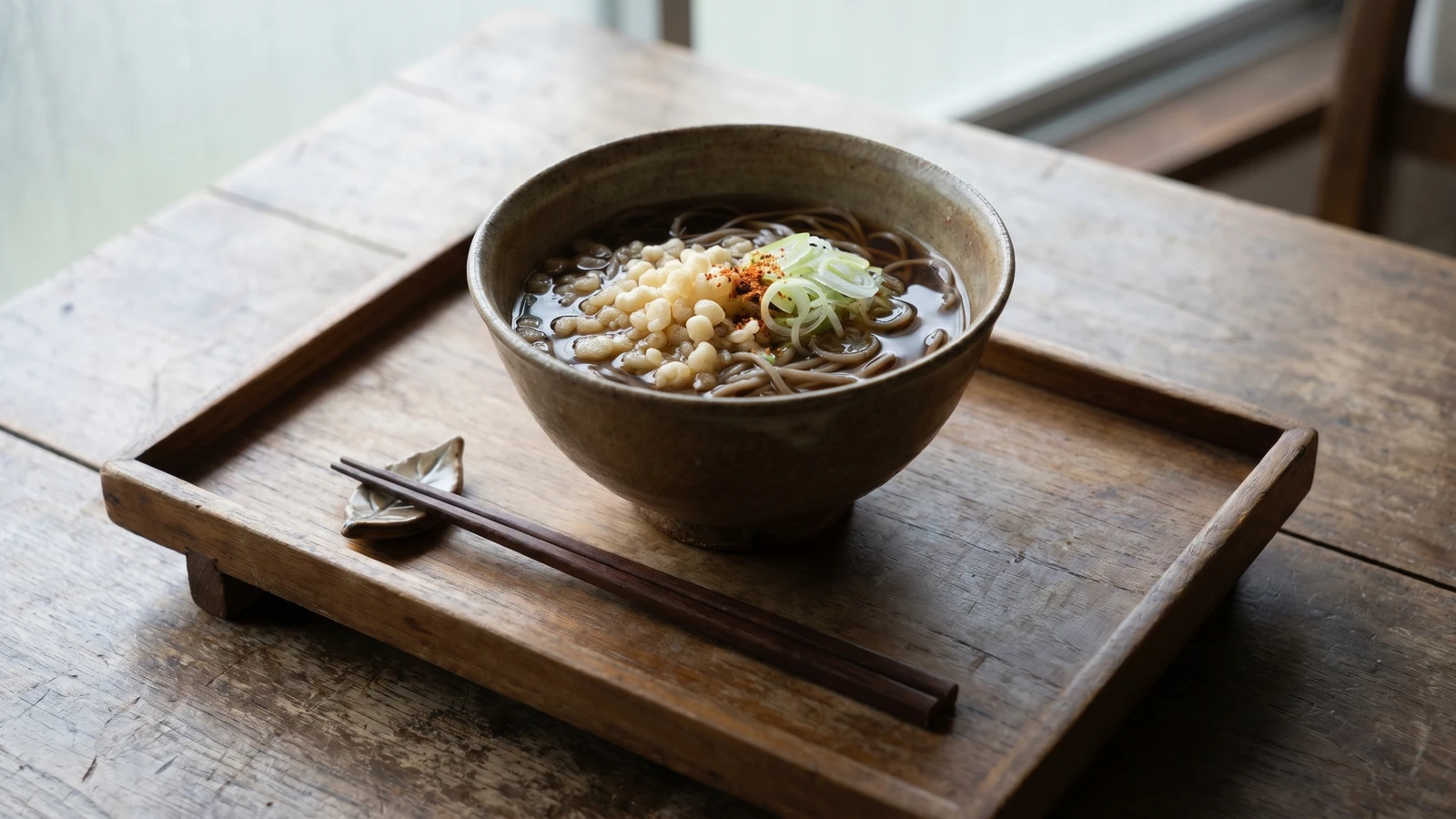
Hot soba, dark dashi, and crisp tenkasu that soften as you eat. Tanuki soba is weeknight food with one quiet demand: make the broth properly.
Tanuki soba looks almost too plain to explain: noodles, broth, scallion, and a scatter of tenkasu, the crisp crumbs left from frying tempura. Then you eat it. The crumbs drink the dark dashi little by little, and the bowl changes under your chopsticks, richer at the end than it was at the first sip.
The one detail that decides it is the tsuyu, the seasoned broth. In Kanto, we make it darker and bolder than the pale broths of the west, with dashi, soy sauce, and mirin carrying the whole bowl. Don't make it salty to prove a point. Make it deep enough that the soba tastes of buckwheat, the broth tastes clean, and the tenkasu can soften without turning the whole thing dull.
Use fresh tenkasu if you can get it from a tempura shop, or fry a quick spoonful of batter yourself. Bagged agedama works on a tired Tuesday, yes, but taste it first. If it smells stale or oily, leave it out. Nothing hidden. This is a small bowl with no camouflage, and that is why it's such good comfort food.
Tanuki soba is strongly associated with Kanto, where the name refers to hot soba topped with tenkasu, the small fried crumbs from tempura batter. In Kansai, the same name can mean a different dish, often soba with fried tofu, while tempura crumbs on noodles may be called haikara. The regional confusion is old enough that ordering tanuki without context is still a small geography lesson.
Quantity
4 cups
Quantity
1 piece (about 10g)
Quantity
20g
Quantity
1/3 cup
Quantity
1/4 cup
Quantity
1 teaspoon
Quantity
200g
Quantity
1/2 cup
Quantity
2
thinly sliced
Quantity
for serving
| Ingredient | Quantity |
|---|---|
| water | 4 cups |
| konbu (dried kelp) | 1 piece (about 10g) |
| katsuobushi (bonito flakes) | 20g |
| soy sauce | 1/3 cup |
| mirin | 1/4 cup |
| sugar (optional) | 1 teaspoon |
| dried soba noodles | 200g |
| tenkasu or agedama (tempura crumbs) | 1/2 cup |
| scallionsthinly sliced | 2 |
| shichimi tōgarashi (optional) | for serving |
Wipe the konbu with a damp cloth, but don't wash it. Put it in 4 cups cold water and bring it up slowly over low heat, about ten minutes. Pull the konbu when the water trembles and small bubbles climb the sides of the pot. Boil it and the stock turns bitter and a little slick, which is a poor trade for impatience.
Bring the water just to a gentle boil, add the katsuobushi all at once, and take the pot off the heat. Let the flakes sink for two or three minutes without stirring. They're giving their aroma to the water, and rough handling only clouds the taste.
Strain the dashi through a cloth-lined sieve and let it drip naturally. Don't squeeze the flakes. Squeezing presses out harsh, oily flavors, and tanuki soba needs a clean broth because the tenkasu will enrich it later.
Return the dashi to the pot and add the soy sauce, mirin, and sugar if using. Simmer for three minutes so the raw edge of the mirin cooks off and the soy settles into the stock. Taste it. It should be darker and firmer than a clear soup, but still dashi first.
Boil the soba in plenty of unsalted water according to the package timing, usually four to six minutes. Stir once when the noodles go in so they don't cling. Taste early. Soba should be tender but still carry its buckwheat bite, not collapse into softness.
Drain the soba and rinse it under cold running water, rubbing gently to remove surface starch. This feels odd for a hot noodle dish, but it keeps the broth clear and the noodles clean. Dip the rinsed soba briefly in hot water to warm it again, then drain well.
Divide the hot soba between two warmed bowls and ladle the dark broth over it. Scatter tenkasu over the surface, then add the sliced scallion. Serve at once with shichimi tōgarashi on the side. The first spoonful should be crisp at the edges; the last should be richer from the crumbs that have softened.
1 serving (about 780g)
Culinary guides, cultural storytelling, and the editorial depth that makes cooking meaningful.
Discover Culinary ExplorerChef Takumi
Abura soba is ramen without the hiding place of soup: hot noodles, strong shōyu tare, fragrant oil, and the discipline to mix while every strand is still hot.
Chef Takumi
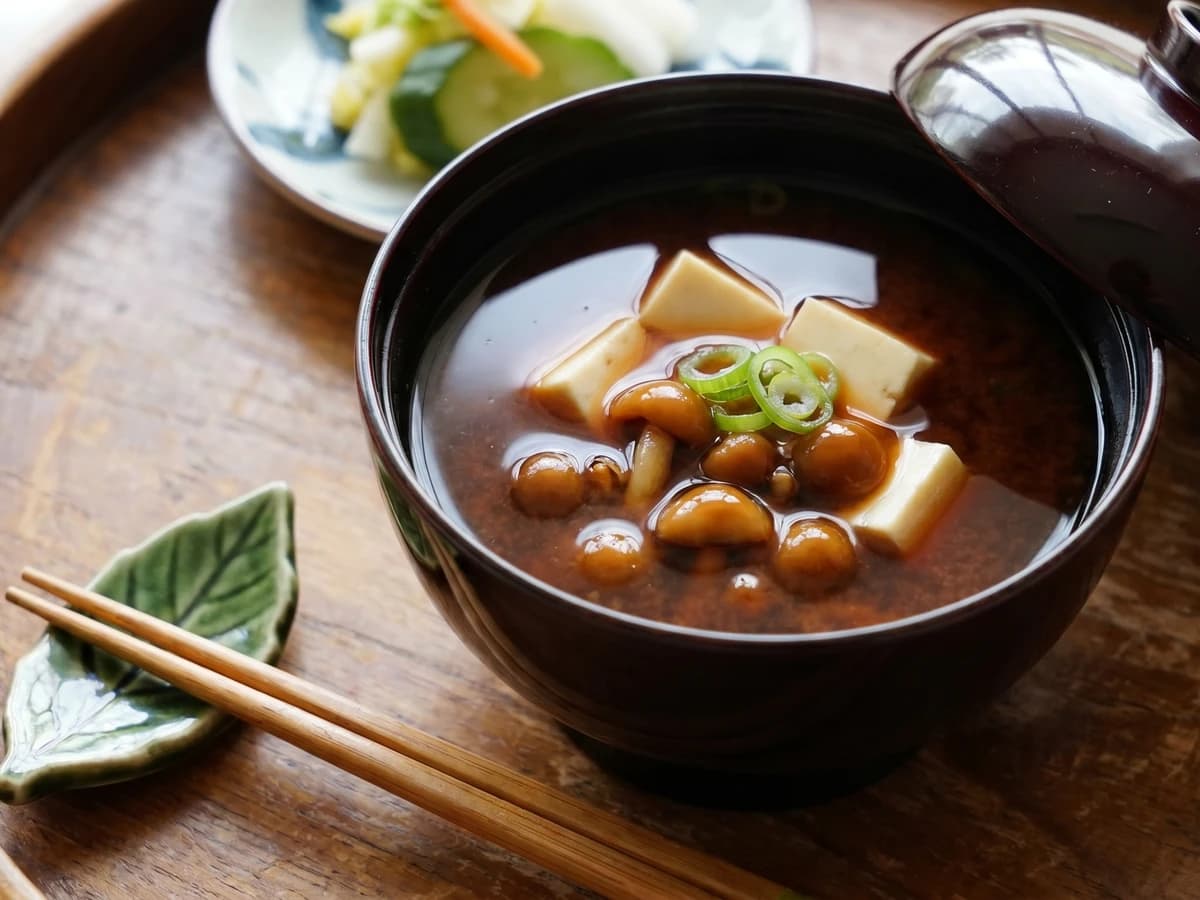
Akadashi asks you to trust the dark miso. Build a clear dashi, loosen the Hatchō mame-miso gently, and the soup turns coffee-dark, savory, and clean.

Chef Takumi
Toast the rice until its skin is firm, then let it meet chicken broth, burdock, maitake, and seri. The pot looks grand, but the work is rice, broth, and patience.
Chef Takumi
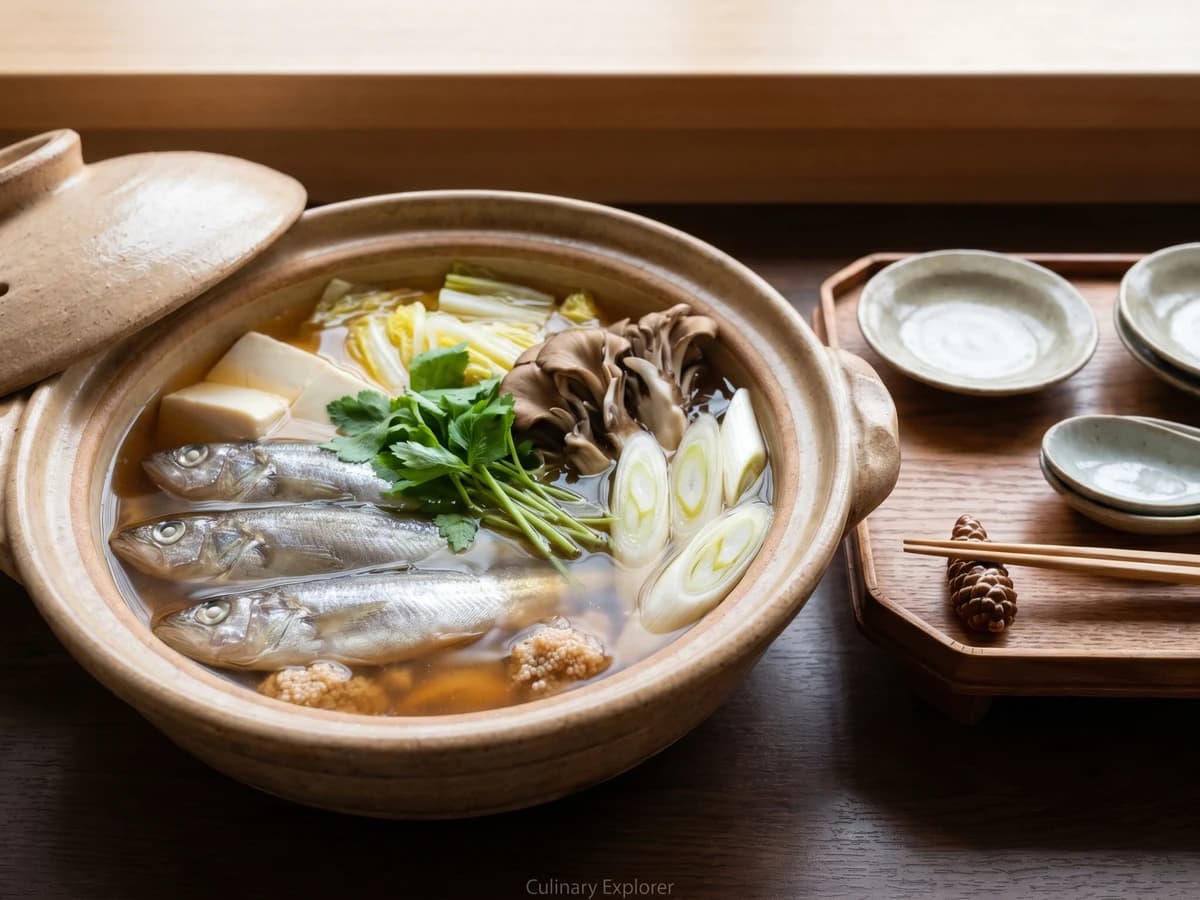
Shottsuru nabe is Akita winter in one pot: clean dashi, hatahata at shun, tofu and napa cabbage carrying a salt-deep broth without anything heavy enough to hide the fish.