
Chef Takumi
Mizutaki (水炊き, Hakata chicken hot pot)
Chicken, water, and patience do the work here. Simmer the bones low until the broth turns ivory, then let ponzu, greens, and rice carry the pot to its quiet finish.

Updated June 2, 2026
The winter tabletop pot tradition, one technique across many faces of washoku. The universal canon (sukiyaki, shabu-shabu, yose-nabe, chanko), the regional kyodo-ryori (Ishikari salmon-miso, Akita kiritanpo, Hakata chicken mizutaki and offal motsunabe, Ibaraki monkfish, Kyoto yudofu, Shimonoseki and Osaka pufferfish), and the seasonal pots that mark the calendar. Honmono only: regional pots come back to their fish and their fish sauce, never a generic substitute. Modern marketing variants (tonyu-nabe, kimchi-nabe, tomato-nabe) excluded by design.
A cooking platform built around craft, culture, and the stories behind what we eat.
Chef Takumi
Chicken, water, and patience do the work here. Simmer the bones low until the broth turns ivory, then let ponzu, greens, and rice carry the pot to its quiet finish.

Chef Takumi
Tara-chiri is winter made plain: fresh cod, tofu, greens, and konbu water barely moving in the pot. Lift the fish when it turns opaque, dip it in ponzu, and stop fussing.
Chef Takumi
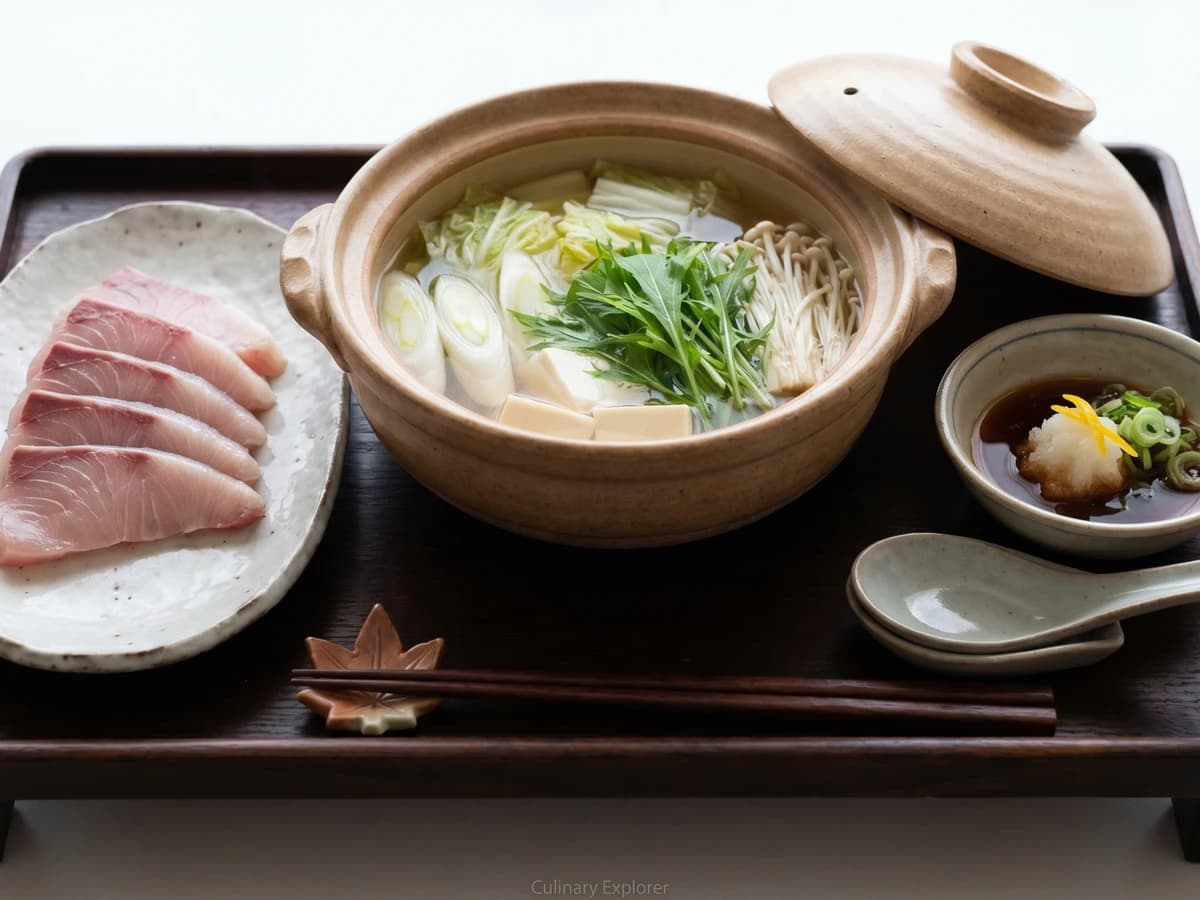
Toyama winter buri needs little bravery, only good fish and a steady hand. Swish each slice through clear konbu dashi for three seconds, just enough to warm the fat and leave the center glossy.

Chef Takumi
This is snow-country nabe: salmon on the bone, sweet cabbage, potatoes, and miso loosened into dashi. The pot looks generous, but the work is simply keeping the broth clean.

Chef Takumi
Thin winter boar blooms in the pot like peony petals, then settles into miso dashi with burdock and mushrooms. Keep the slices fatty and the simmer steady, and the meat stays tender.

Chef Takumi
Yudofu is quiet winter cooking: good tofu, cold water, konbu, and the discipline to stop before the pot boils. The tofu should tremble, not toughen.

Chef Takumi
Hamo nabe is summer nabe, not winter comfort in disguise. Bone-cut pike conger opens in the broth like pale petals, while onion and mizuna keep the pot clear.

Chef Takumi
This is the household meatball pot: clear dashi, tender chicken dumplings, winter vegetables, and a broth that grows better as everything gives itself to the pot.

Chef Takumi
Yanagawa nabe looks like a difficult old Edo specialty. It is one shallow pot: fresh split dojō, clean burdock, sweet soy dashi, and egg pulled from the heat while still tender.

Chef Takumi
Kamo nabe is winter food from Lake Biwa: duck sliced thin, leek charred at the edge, and a clear soy dashi that grows richer with every piece.

Chef Takumi
Osaka's leanest hot pot is a lesson in restraint: clear dashi, a little soy, sliced duck or pork, and mizuna added late so it keeps its bright snap.
Chef Takumi
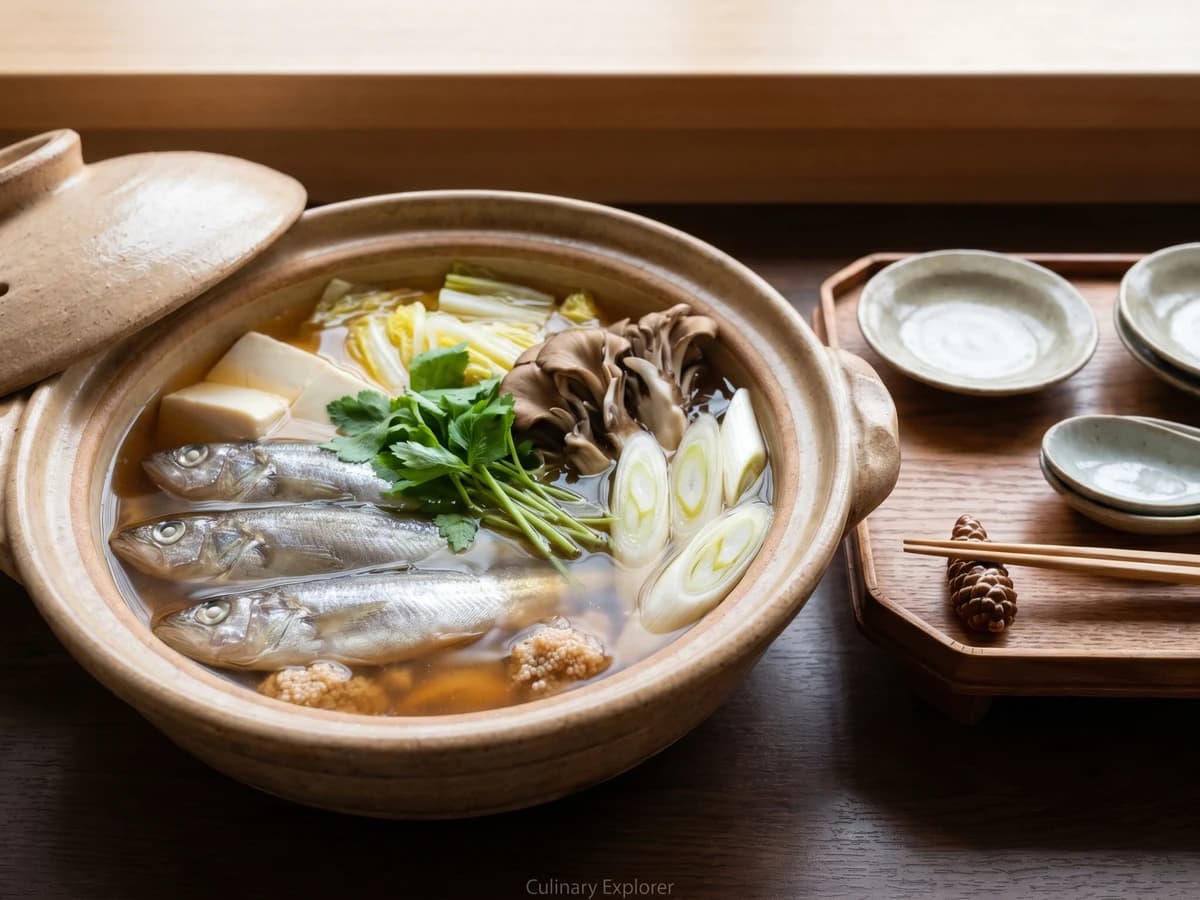
Shottsuru nabe is Akita winter in one pot: clean dashi, hatahata at shun, tofu and napa cabbage carrying a salt-deep broth without anything heavy enough to hide the fish.
Chef Takumi
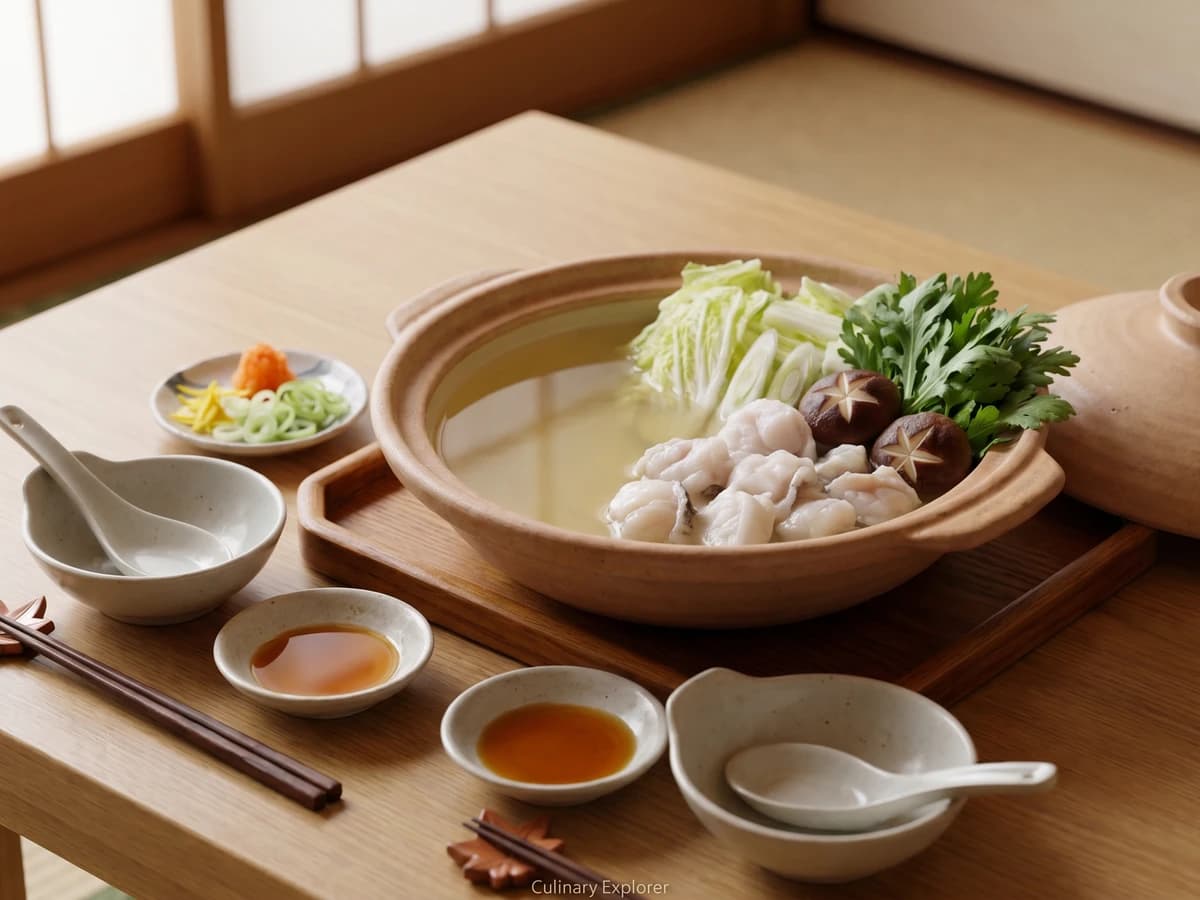
Tecchiri is Osaka at its most direct: licensed pufferfish, quiet konbu broth, ponzu at the table, and the final zōsui that proves the pot was never plain.

Chef Takumi
Negima nabe is old Edo thrift turned winter comfort: fatty tuna, grilled leek, and soy-seasoned dashi sharing one pot, with the fish fat doing its quiet work.

Chef Takumi
Winter ankō looks fearsome until the pot teaches you otherwise: clean the fish well, let the liver enrich the miso dashi, and simmer everything gently.

Chef Takumi
Toast the rice until its skin is firm, then let it meet chicken broth, burdock, maitake, and seri. The pot looks grand, but the work is rice, broth, and patience.

Chef Takumi
Sukiyaki looks grand because it arrives in one pot. The work is plain: good thin beef, a balanced sweet soy warishita, and the patience to keep the simmer gentle.

Chef Takumi
Yose-nabe is the everything pot with discipline: clear dashi, seasonal vegetables, tofu, chicken, and seafood added in the right order so each piece cooks cleanly and the broth stays bright.

Chef Takumi
This is sumo stable food made reachable: a clear soy-seasoned dashi, chicken and fish added in order, and greens left bright so the pot stays generous without becoming heavy.
Chef Takumi
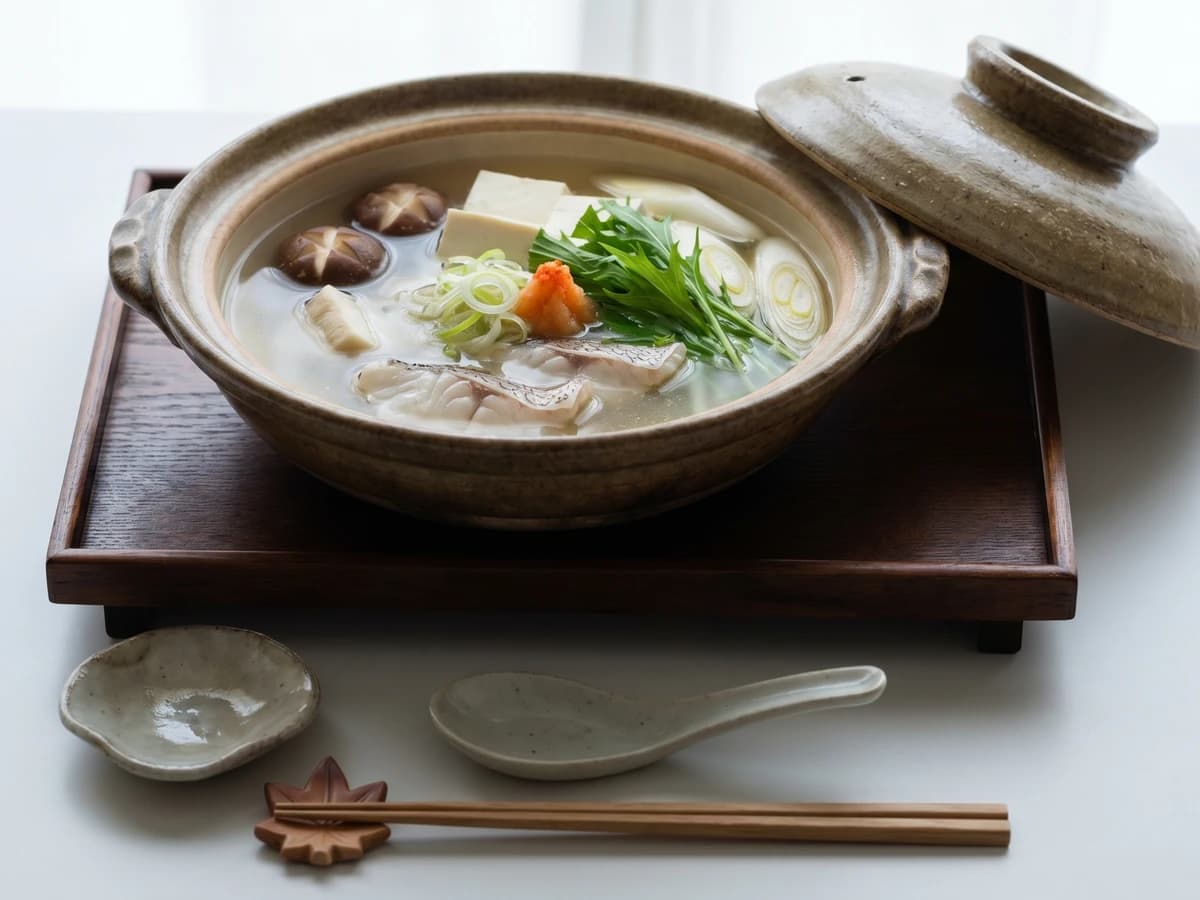
Tai-chiri is celebration without ornament: glistening fresh sea bream, konbu water, tofu, and greens, cooked gently so the broth takes the fish's sweetness and nothing rough.

Chef Takumi
Motsunabe asks one plain thing of you: buy clean, sweet-smelling offal and simmer it gently. The cabbage softens, the nira stays green, and the broth turns rich without hiding anything.

Chef Takumi
Shabu-shabu is not a performance. It is good beef, clean konbu dashi, and the discipline to swish each slice only until it blushes pink.

Chef Takumi
Ishiru nabe is winter at the Noto shore: clear dashi, glistening seafood, sturdy vegetables, and a spoonful of fermented squid sauce doing quiet, serious work.

Chef Takumi
Autumn imoni is not a complicated hot pot. It is taro at its prime, beef for depth, konjac for chew, and a soy-dark broth kept clear enough to taste each piece.
Culinary guides, cultural storytelling, and the editorial depth that makes cooking meaningful.
Discover Culinary ExplorerChef Takumi is a fictional culinary guide to Japanese Washoku Cuisine, written with the assistance of AI.