
Chef Takumi
Akita Mashed-Rice Hot Pot (きりたんぽ鍋, Kiritanpo Nabe)
Toast the rice until its skin is firm, then let it meet chicken broth, burdock, maitake, and seri. The pot looks grand, but the work is rice, broth, and patience.
A cooking platform built around craft, culture, and the stories behind what we eat.
Created by
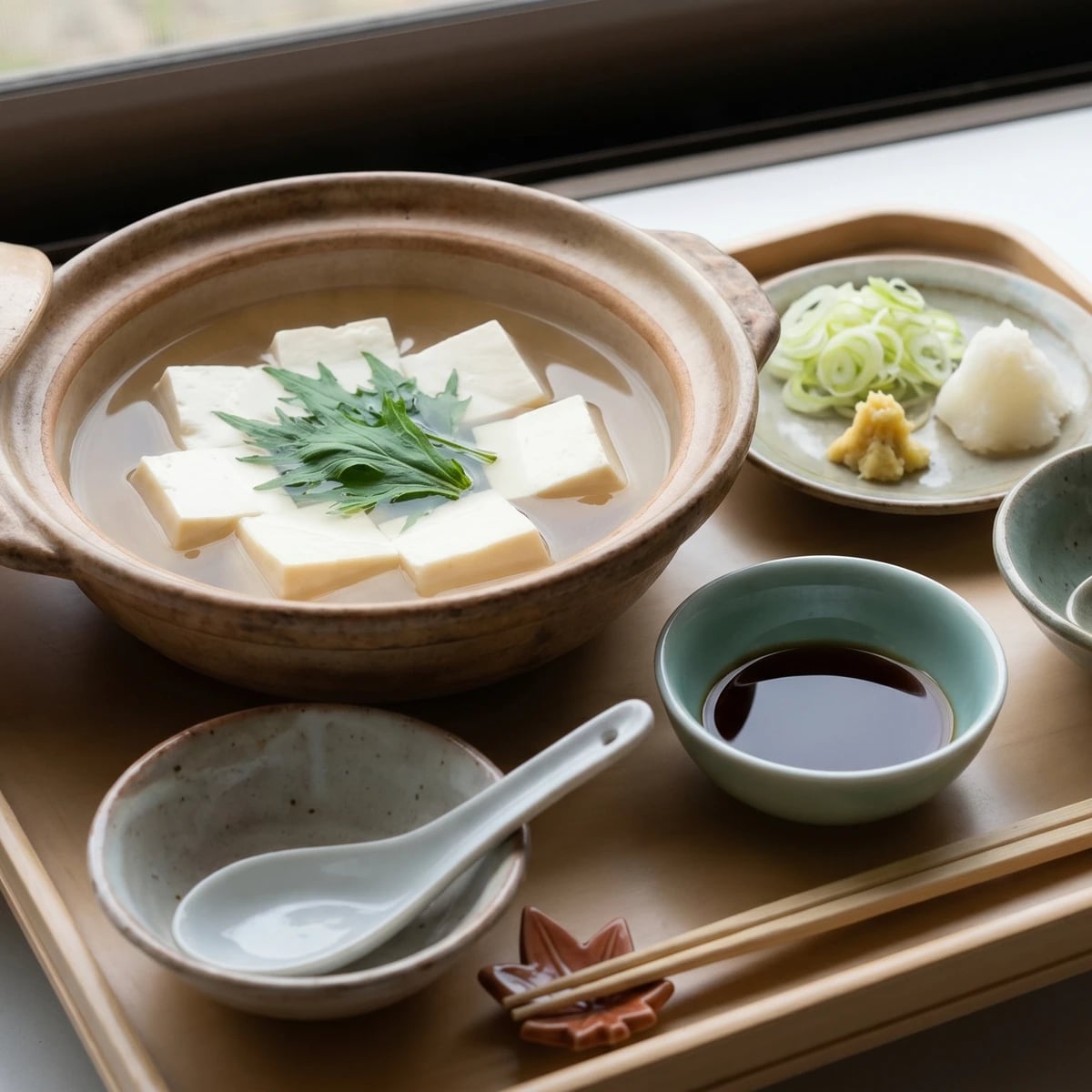
Yudofu is quiet winter cooking: good tofu, cold water, konbu, and the discipline to stop before the pot boils. The tofu should tremble, not toughen.
Tofu is the dish here. That sounds too plain until you taste good tofu warmed carefully in konbu water, lifted while it still trembles, and dipped in sharp ponzu. There is no sauce to hide behind. Buy tofu worth serving nearly bare, and most of the cooking has already been done for you.
Yudofu belongs to cold weather, when a small pot in the middle of the table feels like a kindness. It is nabemono, pot cooking, but in its Kyoto form it refuses noise. We are not building a stew with many ingredients. We are warming tofu without bullying it, letting konbu give the water a soft sea depth, then letting the dipping sauce finish each bite.
The one detail that decides it is heat. Start the tofu in cold water with konbu so the warmth moves gently through the curd. Pull the konbu before the water boils, because boiling kelp turns the broth bitter and a little slick. Then keep the pot below a hard boil. If the water rolls, the tofu tightens and loses the custard-like softness you came for. Simple, yes. Careless, no. The two are often confused by people who haven't washed enough pots.
Yudofu is closely tied to Kyoto's temple districts, especially Nanzen-ji, where restaurants serving tofu hot pot became part of the city's winter eating culture by the Edo period. Kyoto's soft water has long been prized for tofu making, since it lets the soybean flavor read clearly and gives the curd a gentle texture. The dish also sits comfortably beside shōjin ryōri, Buddhist temple cooking, because its deepest form can be made with only tofu, water, konbu, and plant-based condiments.
Quantity
2 blocks (about 600g total)
cut into large cubes
Quantity
1 piece (about 10cm square)
Quantity
5 cups
Quantity
1/2 cup
Quantity
2
thinly sliced
Quantity
1 tablespoon
grated
Quantity
1 tablespoon
grated and lightly squeezed
Quantity
1 tablespoon
Quantity
2 cups loosely packed
trimmed
| Ingredient | Quantity |
|---|---|
| good silken or medium-firm tofucut into large cubes | 2 blocks (about 600g total) |
| konbu (dried kelp) | 1 piece (about 10cm square) |
| cold water | 5 cups |
| ponzu | 1/2 cup |
| scallionsthinly sliced | 2 |
| fresh gingergrated | 1 tablespoon |
| daikongrated and lightly squeezed | 1 tablespoon |
| katsuobushi (optional) | 1 tablespoon |
| mizuna or spinach (optional)trimmed | 2 cups loosely packed |
Choose the freshest tofu you can find, soft enough to tremble but firm enough to lift in large pieces. Smell it before you cook. It should smell clean and faintly sweet, never sour or stale. Yudofu hides nothing, so poor tofu will announce itself with great confidence.
Wipe the konbu gently with a damp cloth, but don't wash it. That pale powder on the surface is flavor, not dirt. Lay the konbu in the bottom of a donabe or wide pot, add the cold water, and let it stand for 10 minutes if you have the time. A short soak gives the kelp a head start without roughness.
Cut the tofu into large cubes, about 5cm across, and slide them into the cold water. Large pieces warm evenly and are easier to lift whole. Small pieces break, and then the pot turns cloudy before dinner has even begun.
Set the pot over medium-low heat and warm it slowly. Watch the edges of the pot, not the clock. When tiny bubbles begin to climb and the tofu looks faintly swollen and trembling, lift out the konbu. If the konbu boils, it gives bitterness to the water, and bitterness has no business in this quiet pot.
Keep the pot just below a simmer, with only a few small bubbles at the side. Do not let it roll. A rolling boil tightens the tofu and roughens the surface, while gentle heat keeps the curd smooth and custard-like. Add mizuna or spinach for the last minute if using, just until glossy and bright.
Pour the ponzu into small dipping bowls. Set scallion, grated ginger, grated daikon, and katsuobushi, if using, in little dishes beside the pot. Keep each condiment separate so every person can season their own bowl. This is the method, not the menu: the pot stays plain, and each bite is finished at the table.
Lift each piece of tofu with a slotted spoon or small ladle and let the water drain for a breath before setting it into the dipping bowl. Eat it while it is soft and hot, with a little ponzu and one or two condiments. Don't drown it. The tofu should still be the thing you taste.
1 serving (about 285g)
Culinary guides, cultural storytelling, and the editorial depth that makes cooking meaningful.
Discover Culinary Explorer
Chef Takumi
Toast the rice until its skin is firm, then let it meet chicken broth, burdock, maitake, and seri. The pot looks grand, but the work is rice, broth, and patience.

Chef Takumi
Shottsuru nabe is Akita winter in one pot: clean dashi, hatahata at shun, tofu and napa cabbage carrying a salt-deep broth without anything heavy enough to hide the fish.

Chef Takumi
Toyama winter buri needs little bravery, only good fish and a steady hand. Swish each slice through clear konbu dashi for three seconds, just enough to warm the fat and leave the center glossy.

Chef Takumi
This is sumo stable food made reachable: a clear soy-seasoned dashi, chicken and fish added in order, and greens left bright so the pot stays generous without becoming heavy.