
Chef Takumi
Abura Soba (油そば, brothless ramen)
Abura soba is ramen without the hiding place of soup: hot noodles, strong shōyu tare, fragrant oil, and the discipline to mix while every strand is still hot.
A cooking platform built around craft, culture, and the stories behind what we eat.
Created by
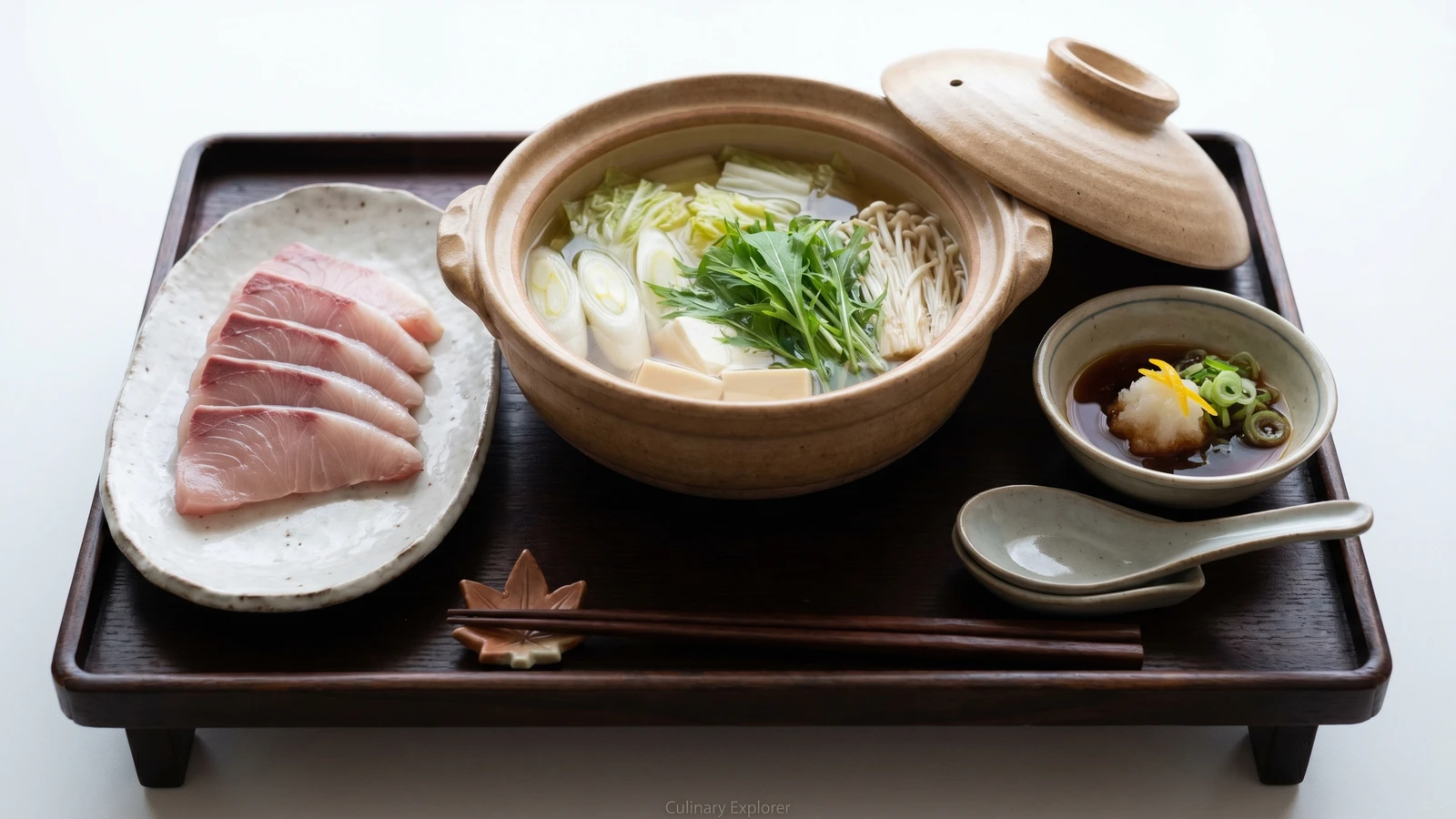
Toyama winter buri needs little bravery, only good fish and a steady hand. Swish each slice through clear konbu dashi for three seconds, just enough to warm the fat and leave the center glossy.
Winter buri is the fish that announces Toyama's cold. When it comes fat from Himi, the flesh is firm, pink, and glistening fresh, with enough richness that a long simmer would be punishment. Buri-shabu asks for the opposite: a clear konbu broth, a slice of fish, and three seconds in the pot.
People hear hot pot and imagine a large performance. This one is calmer. The broth is there to wake the fat, not to cook the fish through. Swish the slice until the edges turn pearl-white and the center stays raw and glossy, then dip it in ponzu shōyu with grated daikon. The fat loosens, the surface warms, and the fish tastes cleaner than if you had hidden it under sauce.
The cut decides the dish. Aim for slices about 3 mm thick, drawn cleanly across the grain. Too thin and they cook through before the fat has any grace; too thick and the center stays cold and stubborn. If your fishmonger will slice it, let them. If you cut it yourself, chill the fish until firm and let the knife do the seasoning.
We eat this at the winter table as nabemono, the shared pot that keeps a meal unhurried. The vegetables are not filler; they sweeten the broth and give the fish a place to rest between bites. Honmono here isn't difficult. It's the courage to buy the right fish in its shun, heat it almost not at all, and leave it alone.
Buri has long mattered in Toyama and the wider Hokuriku winter table, where mature yellowtail is a shusse-uo, a fish whose name changes as it grows, and thus an auspicious New Year fish. Himi, on Toyama Bay's western edge, built its reputation on winter fixed-net catches; qualifying fish are sold under the Himi Kanburi name, with local landing and size rules rather than a loose nickname. The word shabu-shabu was coined in Osaka in 1952 for beef at Suehiro, and buri-shabu is a later Hokuriku expression of the same swishing method, made for the fat of cold-season yellowtail.
Quantity
600g
ideally Himi kan-buri, skin removed, bloodline trimmed, sliced 3 mm thick
Quantity
6 cups
Quantity
1 piece (12 to 15g)
Quantity
1/4 cup
Quantity
1/2 teaspoon, plus more to taste
Quantity
1/4 small
cut into bite-size pieces
Quantity
1 bunch
cut into 2-inch lengths
Quantity
1 long negi or 4 scallions
sliced on the diagonal
Quantity
150g
trimmed
Quantity
300g
cut into 8 pieces
Quantity
2 portions
for the finishing course
Quantity
1/2 cup
for ponzu shōyu
Quantity
1/4 cup
Quantity
2 tablespoons
Quantity
2 tablespoons
boiled for 30 seconds and cooled
Quantity
1 small piece (about 3g)
for ponzu shōyu
Quantity
5g
for ponzu shōyu
Quantity
1/2 cup
Quantity
2
thinly sliced
Quantity
a few thin strips
| Ingredient | Quantity |
|---|---|
| raw-suitable winter buri (mature Japanese amberjack, often sold as yellowtail)ideally Himi kan-buri, skin removed, bloodline trimmed, sliced 3 mm thick | 600g |
| cold water | 6 cups |
| konbu | 1 piece (12 to 15g) |
| sake | 1/4 cup |
| sea salt | 1/2 teaspoon, plus more to taste |
| napa cabbagecut into bite-size pieces | 1/4 small |
| mizunacut into 2-inch lengths | 1 bunch |
| negi or scallionssliced on the diagonal | 1 long negi or 4 scallions |
| shimeji or enoki mushroomstrimmed | 150g |
| firm tofucut into 8 pieces | 300g |
| cooked udon (optional)for the finishing course | 2 portions |
| soy saucefor ponzu shōyu | 1/2 cup |
| fresh yuzu, sudachi, or kabosu juice | 1/4 cup |
| rice vinegar | 2 tablespoons |
| mirinboiled for 30 seconds and cooled | 2 tablespoons |
| konbufor ponzu shōyu | 1 small piece (about 3g) |
| katsuobushi (bonito flakes)for ponzu shōyu | 5g |
| grated daikon | 1/2 cup |
| scallionsthinly sliced | 2 |
| yuzu peel (optional) | a few thin strips |
Combine the soy sauce, citrus juice, rice vinegar, and the mirin that you've boiled for thirty seconds and cooled. Add the small piece of konbu and the katsuobushi, rest fifteen minutes, then strain without pressing. The bonito gives the sauce depth quickly; squeeze it and you force out harsh, oily flavors that make the dipping sauce louder than the fish. Stir grated daikon and sliced scallion into each small dipping dish just before serving.
Wipe the 12 to 15g konbu with a damp cloth, but don't wash it. Put it in the cold water in a donabe or wide pot and let it stand twenty minutes if you have the time. Bring it up slowly over medium-low heat, then pull the konbu when the water trembles and small bubbles climb the sides, before it boils. That pale bloom on the kelp is not dirt. Slow heat draws out sweetness and clarity; boiling leaves bitterness and a slippery texture in the broth.
If the fish is not already sliced, chill it until firm, about ten minutes in the freezer, then cut across the grain into slices about 3 mm thick. Use a yanagiba if you own one, or the longest sharp knife you have, and draw the blade through in one clean pull. Keep the slices covered on a chilled white or green plate until the pot is ready. This fish will stay partly raw at the center, so use only fish sold for raw eating; if the fish isn't good enough for that, grill it or simmer it instead.
Cut the napa cabbage ribs a little thinner than the leafy tops, trim the mushrooms, slice the negi or scallions on the diagonal, and cut the tofu into neat blocks. Keep the mizuna separate for later. The sturdy pieces go in first because they sweeten the broth and need time; the greens go in late because they should stay bright, not collapse into apology.
Add the sake and salt to the konbu dashi and bring it to a quiet simmer on the table burner. Add the napa ribs, mushrooms, tofu, and negi, then cook five to seven minutes, until the cabbage ribs turn slightly translucent. Keep the surface moving gently, not rolling. A hard boil clouds the broth, toughens the fish when it arrives, and makes the whole pot feel rushed.
Each diner takes one slice of buri with chopsticks and swishes it through the broth for about three seconds: one, two, three. The edges should turn pearl-white while the center remains pink and glossy. Lift it out at once and dip it in ponzu shōyu with grated daikon and scallion. Don't drop all the fish into the pot. That makes a stew, and this dish is not trying to be one.
Add the mizuna and napa leaves in small handfuls as you eat. Skim off any gray scum, but leave the clear golden fat that gathers on the surface; that fat is the buri giving back to the pot. If the broth reduces too far, add a little hot water and taste before adding salt. The dipping sauce carries most of the seasoning.
When the fish and vegetables are gone, add the cooked udon to the enriched broth and simmer just until hot. Taste the broth and season lightly with salt or a spoonful of ponzu shōyu. This closing course is shime, the finish of the pot, and it should taste of everything that came before it without being heavy.
1 serving (about 880g)
Culinary guides, cultural storytelling, and the editorial depth that makes cooking meaningful.
Discover Culinary ExplorerChef Takumi
Abura soba is ramen without the hiding place of soup: hot noodles, strong shōyu tare, fragrant oil, and the discipline to mix while every strand is still hot.
Chef Takumi
Akadashi asks you to trust the dark miso. Build a clear dashi, loosen the Hatchō mame-miso gently, and the soup turns coffee-dark, savory, and clean.

Chef Takumi
Toast the rice until its skin is firm, then let it meet chicken broth, burdock, maitake, and seri. The pot looks grand, but the work is rice, broth, and patience.
Chef Takumi
Shottsuru nabe is Akita winter in one pot: clean dashi, hatahata at shun, tofu and napa cabbage carrying a salt-deep broth without anything heavy enough to hide the fish.