
Chef Takumi
Abura Soba (油そば, brothless ramen)
Abura soba is ramen without the hiding place of soup: hot noodles, strong shōyu tare, fragrant oil, and the discipline to mix while every strand is still hot.
A cooking platform built around craft, culture, and the stories behind what we eat.
Created by
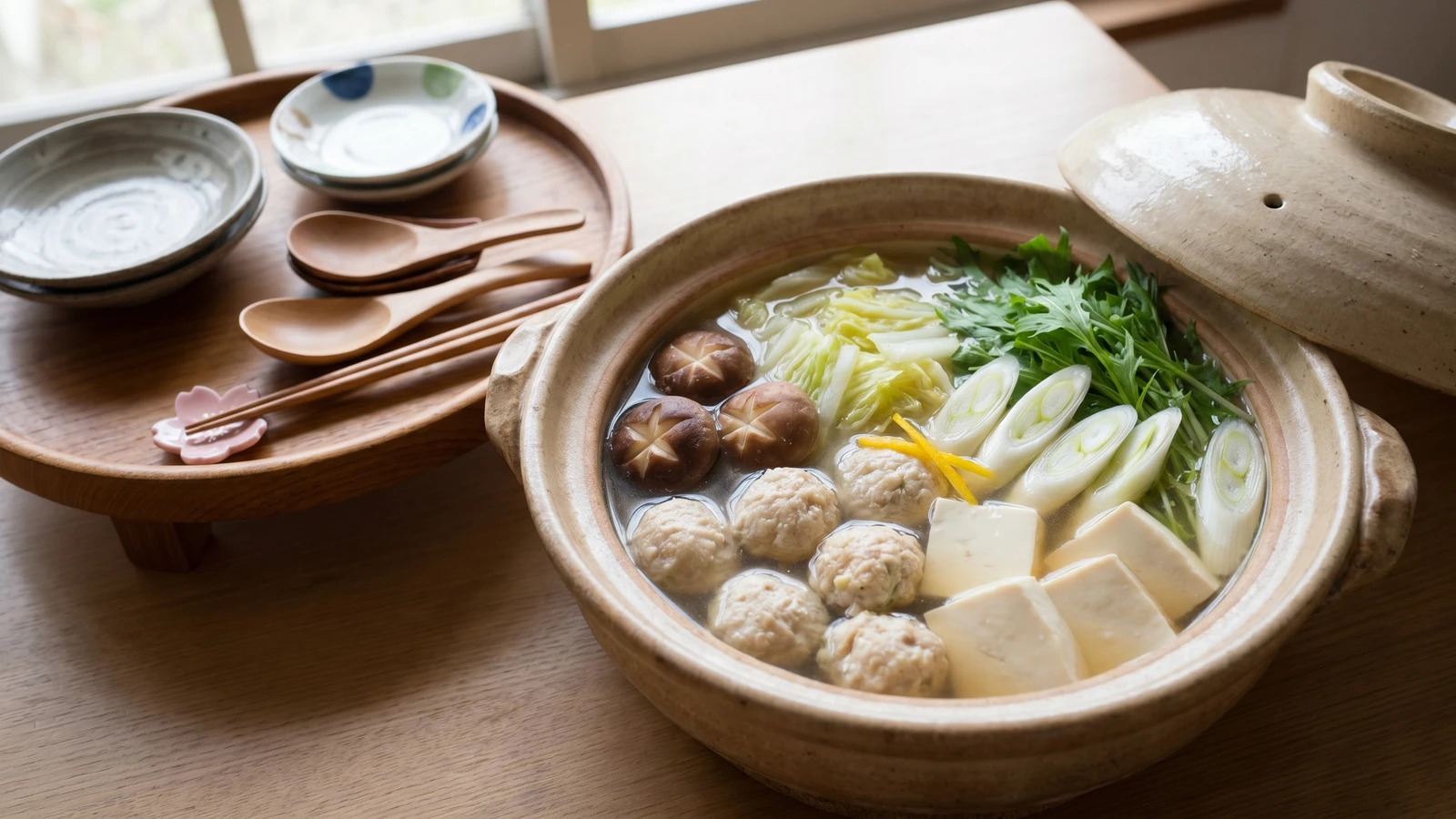
This is the household meatball pot: clear dashi, tender chicken dumplings, winter vegetables, and a broth that grows better as everything gives itself to the pot.
Ahot pot looks like abundance, but it works by restraint. Tori dango nabe is not a stew you thicken or a broth you crowd until it can hardly move. It is clear dashi, soft chicken meatballs, napa cabbage, tofu, mushrooms, and greens, each one allowed to stay itself.
The one detail that decides it is the kneading. Ground chicken is loose and polite, which is a nice quality in a guest and a poor one in a meatball. Work it with salt until it turns sticky and tacky, then add ginger, scallion, egg, and potato starch. That stickiness is the binding. Skip it and the dango break apart in the broth, not tragically, but enough to make the pot look as if it has lost confidence.
We make the broth first because dashi is the quiet foundation. Konbu comes out before the water boils so it doesn't turn bitter and slick. Katsuobushi steeps off the heat and is never squeezed, because squeezing pushes harsh, oily flavors into the clear stock. Season that stock with soy, mirin, and sake, then let the meatballs and vegetables finish the work.
This is winter food, the sort of nabemono that sits at the center of the table and asks everyone to slow down a little. It is honmono, the real thing, and still well within a weeknight. Keep the broth clear, keep the simmer gentle, and leave the pot room.
Nabemono, one-pot dishes cooked and served from the same vessel, became especially common in Japanese households after portable charcoal braziers and later gas burners made table cooking practical. Tori dango nabe belongs to the broad family of winter hot pots rather than to a single fixed regional canon, and its meatballs are a domestic cousin of tsukune, the seasoned ground-chicken mixture long used in skewered and simmered dishes. The clay donabe itself has old roots, with Iga ware from present-day Mie Prefecture prized for heat retention and resilience over an open flame.
Quantity
1 piece (about 10g)
Quantity
20g
Quantity
6 cups
Quantity
500g
preferably a mix of thigh and breast
Quantity
1 teaspoon
for the meatballs
Quantity
1
Quantity
2 tablespoons
Quantity
2 tablespoons
finely minced, for the meatballs
Quantity
1 tablespoon
grated
Quantity
1 teaspoon
for the meatballs
Quantity
3 tablespoons
for the broth
Quantity
2 tablespoons
Quantity
2 tablespoons
Quantity
1/2 teaspoon, plus more to taste
for the broth
Quantity
1/2 head
cut into 2-inch pieces
Quantity
1 block
drained and cut into 8 pieces
Quantity
6
stems trimmed
Quantity
1 naganegi or 4 scallions
sliced diagonally
Quantity
1 small bunch
trimmed
Quantity
1 strip
| Ingredient | Quantity |
|---|---|
| konbu (dried kelp) | 1 piece (about 10g) |
| katsuobushi (bonito flakes) | 20g |
| cold water | 6 cups |
| ground chickenpreferably a mix of thigh and breast | 500g |
| sea saltfor the meatballs | 1 teaspoon |
| large egg | 1 |
| katakuriko (potato starch) | 2 tablespoons |
| naganegi or scallionfinely minced, for the meatballs | 2 tablespoons |
| fresh gingergrated | 1 tablespoon |
| soy saucefor the meatballs | 1 teaspoon |
| soy saucefor the broth | 3 tablespoons |
| mirin | 2 tablespoons |
| sake | 2 tablespoons |
| sea saltfor the broth | 1/2 teaspoon, plus more to taste |
| napa cabbagecut into 2-inch pieces | 1/2 head |
| firm tofudrained and cut into 8 pieces | 1 block |
| fresh shiitake mushroomsstems trimmed | 6 |
| naganegi or scallionssliced diagonally | 1 naganegi or 4 scallions |
| mizuna or shungikutrimmed | 1 small bunch |
| yuzu peel (optional) | 1 strip |
Wipe the konbu with a damp cloth, but don't wash it. The pale powder on the surface is flavor, not dirt. Put it in the cold water and bring it up slowly over low heat, about ten minutes, until the water trembles and small bubbles climb the sides. Lift the konbu out before the water boils. Boil it and the stock turns faintly bitter and slick, which is a poor trade for impatience.
Bring the water to a gentle boil, add the katsuobushi all at once, and take the pot off the heat. Let the flakes settle for two or three minutes without stirring. They give their fragrance quickly, and stirring only clouds the stock.
Strain the dashi through a cloth-lined sieve and let it drip on its own. Don't squeeze the bonito flakes. Squeezing presses out strong, oily flavors, and the clear gold stock you worked for becomes heavy at the edges.
Put the ground chicken and 1 teaspoon salt in a bowl. Stir and fold firmly with chopsticks or a spoon until the mixture turns sticky and clings to the bowl, two to three minutes. This is the binding step. Salt draws out the proteins that hold the dango together, so the meatballs set tender instead of scattering through the broth.
Add the egg, katakuriko, minced naganegi or scallion, grated ginger, and 1 teaspoon soy sauce. Mix until smooth and slightly glossy. If it feels very soft, let it rest in the refrigerator for ten minutes. The potato starch helps catch moisture, but the tacky chicken itself is still doing the real holding.
Pour 5 cups of the dashi into a donabe or wide heavy pot. Add the soy sauce, mirin, sake, and 1/2 teaspoon salt, then bring it to a quiet simmer. Taste before anything goes in. It should be a little lighter than soup you would drink alone, because the chicken, tofu, and vegetables will deepen it as they cook.
Wet two spoons with water. Scoop rounded spoonfuls of the chicken mixture and slide them into the barely simmering broth. Keep the surface moving gently, not rolling. A hard boil knocks the dango around before they set, while a quiet simmer lets them firm cleanly. Cook until they float and feel springy, about six minutes.
Add the napa cabbage stems first, then the shiitake, tofu, and sliced naganegi. Simmer gently for eight to ten minutes, until the cabbage turns tender and the tofu is heated through. Add the leafy napa tops and mizuna or shungiku at the end so they stay green and fresh-tasting.
Set the donabe at the center of the table with individual tori-zara, small serving plates, and chirirenge spoons. Each person takes broth, dango, tofu, and vegetables into a small bowl. Finish with a thin strip of yuzu peel if you have it. The scent should be clear and quiet, ginger, soy, chicken, and the season in the greens.
If broth remains, skim any foam, add a bowl of cooked rice, and simmer gently until it loosens into zosui, a soft rice finish. Stir in a beaten egg off to the side if you like, then stop while it is barely set. The last bowl is often the best one, because every ingredient has paid rent into the broth.
1 serving (about 750g)
Culinary guides, cultural storytelling, and the editorial depth that makes cooking meaningful.
Discover Culinary ExplorerChef Takumi
Abura soba is ramen without the hiding place of soup: hot noodles, strong shōyu tare, fragrant oil, and the discipline to mix while every strand is still hot.
Chef Takumi
Akadashi asks you to trust the dark miso. Build a clear dashi, loosen the Hatchō mame-miso gently, and the soup turns coffee-dark, savory, and clean.

Chef Takumi
Toast the rice until its skin is firm, then let it meet chicken broth, burdock, maitake, and seri. The pot looks grand, but the work is rice, broth, and patience.
Chef Takumi
Shottsuru nabe is Akita winter in one pot: clean dashi, hatahata at shun, tofu and napa cabbage carrying a salt-deep broth without anything heavy enough to hide the fish.