
Chef Takumi
Abura Soba (油そば, brothless ramen)
Abura soba is ramen without the hiding place of soup: hot noodles, strong shōyu tare, fragrant oil, and the discipline to mix while every strand is still hot.
A cooking platform built around craft, culture, and the stories behind what we eat.
Created by
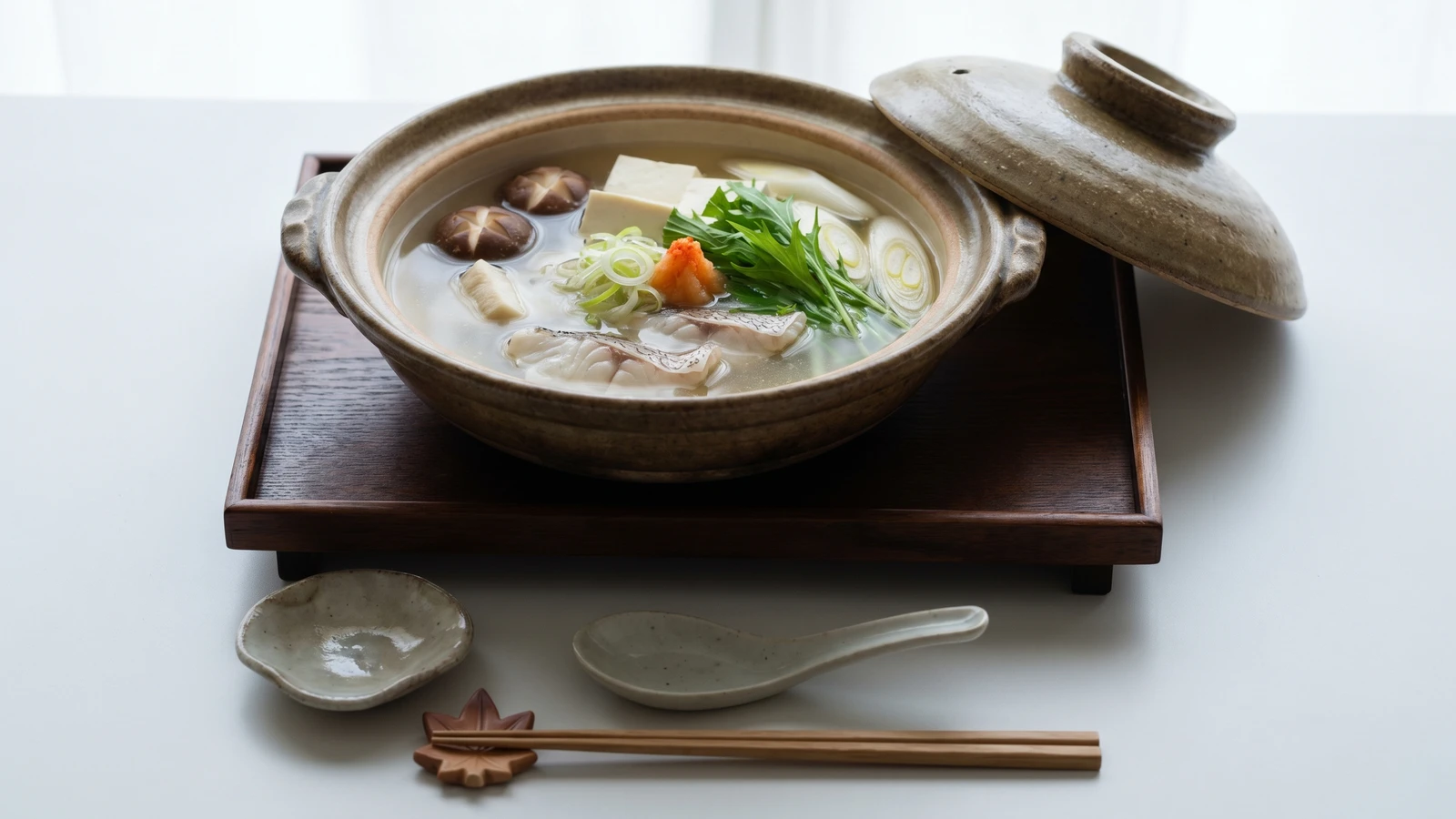
Tai-chiri is celebration without ornament: glistening fresh sea bream, konbu water, tofu, and greens, cooked gently so the broth takes the fish's sweetness and nothing rough.
Sea bream carries its own congratulations. In Japan, tai belongs to the table when the table needs to say something happy, partly for its red-and-white beauty and partly because tai leans toward medetai, auspicious. That pun is older than most arguments about dinner, and more useful.
Tai-chiri looks ceremonial because the fish is ceremonial. The cooking itself is plain: konbu water, tofu, mushrooms, greens, and ponzu at the side. Do not season the pot heavily. The sea bream gives its sweetness to the broth as it cooks, and the ponzu brightens each bite after it leaves the pot. Nothing hidden, which means the fish must be glistening fresh.
The detail that decides it is the cleaning before the simmer. We do shimofuri, a quick scald, then rinse away blood, loose scales, and any cloudy bits clinging near the bones. That small fuss keeps the broth clear and the flavor clean. Skip it and the pot tells on you, politely but immediately.
A hot pot is the method, not the menu: cook what takes time first, add tender pieces last, and keep the broth at a quiet simmer. A rolling boil toughens the fish and muddles the clear stock. Bring the donabe to the table, let everyone take a piece into ponzu, and leave it room. Celebration does not need to shout.
Tai has served as Japan's congratulatory fish for centuries, helped by its red-and-white coloring and the wordplay between tai and medetai, meaning auspicious or joyful. Ponzu takes its name from Dutch pons, a citrus drink that entered Japan through Nagasaki in the Edo period; joined with shōyu, it became the sharp dipping sauce that suits chiri-nabe. Chiri is commonly explained from chiri-chiri, the way fish flesh tightens when it meets hot liquid, a small sound turned into a pot method.
Quantity
900g to 1kg
scaled, gutted, and cut into bone-in pieces, head split if included
Quantity
2 teaspoons
for cleaning the fish
Quantity
8 cups
Quantity
2 pieces (about 10cm square each, 20g total)
Quantity
1 block (about 350g)
drained and cut into 8 pieces
Quantity
8
stems trimmed
Quantity
2
cut diagonally into 2-inch pieces
Quantity
1 bunch
cut into 3-inch lengths
Quantity
1/2 cup
for ponzu
Quantity
1/3 cup
or lemon juice sharpened with rice vinegar
Quantity
2 tablespoons
briefly boiled and cooled
Quantity
5g
for steeping in the ponzu
Quantity
1 piece (about 5cm square)
for steeping in the ponzu
Quantity
1/2 cup
Quantity
2
thinly sliced
Quantity
2 cups
rinsed briefly to remove surface starch
Quantity
1
beaten
| Ingredient | Quantity |
|---|---|
| sea bream (madai)scaled, gutted, and cut into bone-in pieces, head split if included | 900g to 1kg |
| fine sea saltfor cleaning the fish | 2 teaspoons |
| cold water | 8 cups |
| konbu (dried kelp) | 2 pieces (about 10cm square each, 20g total) |
| firm tofudrained and cut into 8 pieces | 1 block (about 350g) |
| fresh shiitake mushroomsstems trimmed | 8 |
| long negi or small leekscut diagonally into 2-inch pieces | 2 |
| mizunacut into 3-inch lengths | 1 bunch |
| Japanese soy saucefor ponzu | 1/2 cup |
| fresh yuzu or sudachi juiceor lemon juice sharpened with rice vinegar | 1/3 cup |
| mirinbriefly boiled and cooled | 2 tablespoons |
| katsuobushi (bonito flakes) (optional)for steeping in the ponzu | 5g |
| small piece konbu (optional)for steeping in the ponzu | 1 piece (about 5cm square) |
| grated daikon with red chile (momiji-oroshi) (optional) | 1/2 cup |
| scallionsthinly sliced | 2 |
| cooked short-grain rice (optional)rinsed briefly to remove surface starch | 2 cups |
| large egg (optional)beaten | 1 |
Bring the mirin to a brief boil, about 30 seconds, then let it cool. Stir it with the soy sauce and citrus juice. If you have the small konbu and katsuobushi, add them and let the ponzu rest while you prepare the pot, then strain without pressing. The mirin loses its raw edge, the citrus sharpens the soy, and the konbu and flakes round the sauce without making it heavy.
Wipe the larger konbu pieces with a damp cloth, but don't wash them. Put them in the 8 cups cold water in a donabe or wide pot and let them soak 30 minutes if you have the time. Bring the water up slowly over medium-low heat, then lift out the konbu just before the boil, when small bubbles climb the sides. This pot stops at konbu because the sea bream will give the broth its sweetness.
Lay the sea bream pieces on a tray and sprinkle them lightly with the salt. Leave them 10 minutes, just until moisture beads on the surface. This is cleaning, not curing. The salt draws out surface moisture and a little blood near the bones, which helps the finished broth stay clear.
Set the fish in a colander and pour boiling water over the pieces just until the surface turns white. Immediately rinse in cold water, using your fingers to remove loose scales, blood, and dark bits near the bones. Pat dry. This is shimofuri, the quick scald that keeps a fish hot pot honest: clean fish, clean broth, nothing hidden.
Arrange the tofu, shiitake, negi, and mizuna on a platter with a little space between them. Set out small tori-zara plates, ponzu, momiji-oroshi, and sliced scallions. Once the pot is moving, you should not be hunting for a spoon. Nabemono is calm because everything has its place.
Bring the konbu broth to a quiet simmer. Add the tofu, shiitake, and negi first and cook 3 to 4 minutes, until the negi begins to soften. Add the bony fish pieces next, then the more delicate fillet pieces a minute or two later. Keep the broth trembling, never rolling. A hard boil roughens the fish and clouds the broth.
Add the mizuna at the end, just long enough for the stems to bend and the leaves to turn glossy. The greens are there for freshness and color, not for surrender. Lift each piece of fish as soon as it turns opaque and begins to pull cleanly from the bone.
Each person lifts fish, tofu, and vegetables into a small plate and dips them in ponzu, adding scallion and momiji-oroshi as they like. The pot itself stays lightly seasoned so the broth can take on the sea bream's sweetness. The salt and acid arrive in the dipping sauce, bite by bite, where you can judge them.
If you want the proper ending, skim the broth after the fish and vegetables are eaten. Add the rinsed cooked rice and simmer 2 to 3 minutes, until loose and porridge-like. Drizzle in the beaten egg, cover for 30 seconds off the heat, and scatter a little scallion. Rinsing the rice keeps the finish clear and light, and the egg catches the last sweetness of the bream.
1 serving (about 750g)
Culinary guides, cultural storytelling, and the editorial depth that makes cooking meaningful.
Discover Culinary ExplorerChef Takumi
Abura soba is ramen without the hiding place of soup: hot noodles, strong shōyu tare, fragrant oil, and the discipline to mix while every strand is still hot.
Chef Takumi
Akadashi asks you to trust the dark miso. Build a clear dashi, loosen the Hatchō mame-miso gently, and the soup turns coffee-dark, savory, and clean.

Chef Takumi
Toast the rice until its skin is firm, then let it meet chicken broth, burdock, maitake, and seri. The pot looks grand, but the work is rice, broth, and patience.
Chef Takumi
Shottsuru nabe is Akita winter in one pot: clean dashi, hatahata at shun, tofu and napa cabbage carrying a salt-deep broth without anything heavy enough to hide the fish.