
Chef Takumi
Abura Soba (油そば, brothless ramen)
Abura soba is ramen without the hiding place of soup: hot noodles, strong shōyu tare, fragrant oil, and the discipline to mix while every strand is still hot.
A cooking platform built around craft, culture, and the stories behind what we eat.
Created by
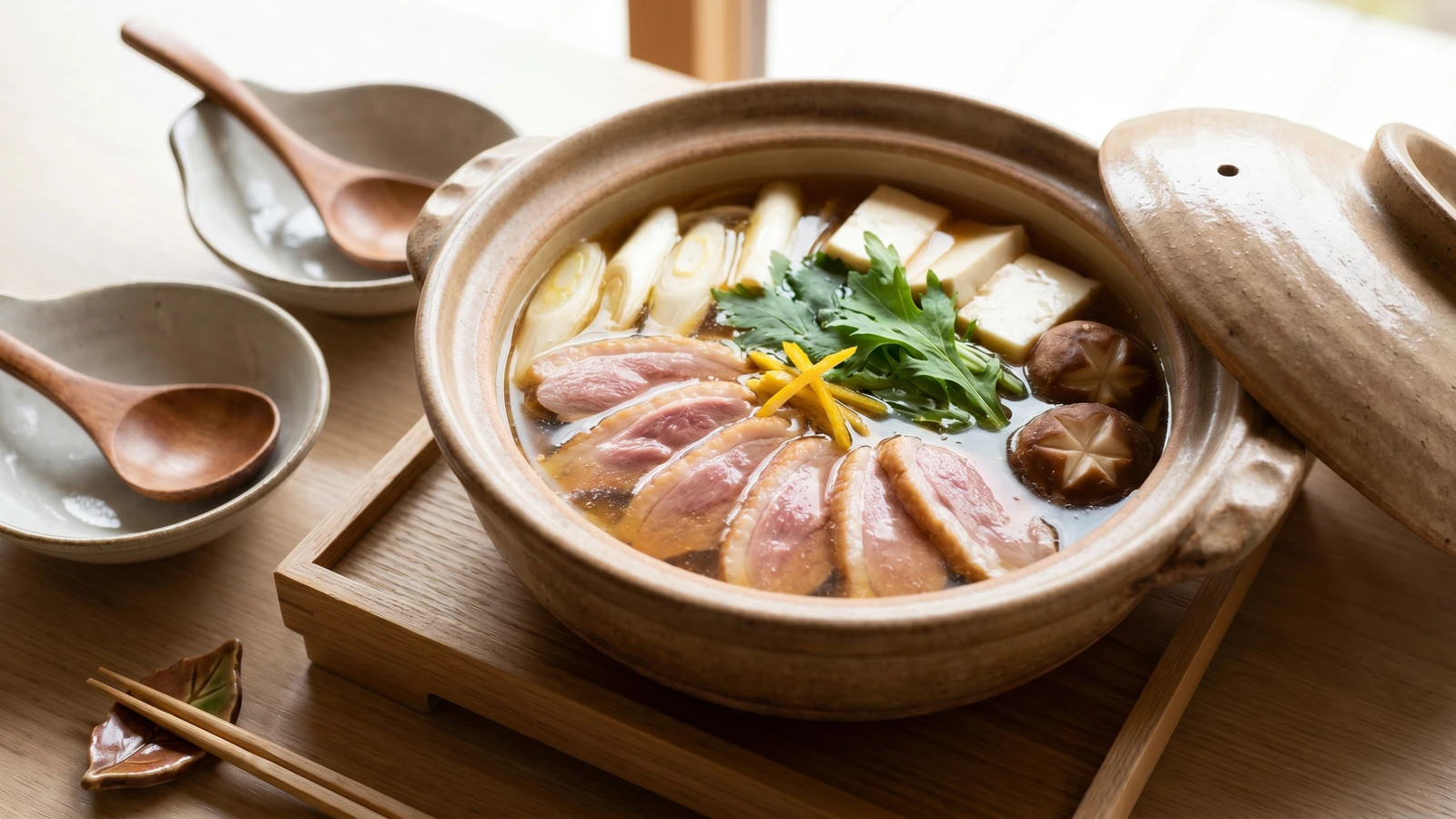
Kamo nabe is winter food from Lake Biwa: duck sliced thin, leek charred at the edge, and a clear soy dashi that grows richer with every piece.
Duck is the winter bird. Around Lake Biwa, that matters. The cold brings wild duck to the water, the fat firms under the skin, and the meat carries a clean mineral sweetness that needs little help. Kamo nabe looks like a grand dish, but the work is plain: make good dashi, slice the duck thin, and let leek meet the fat.
The one detail that decides it is timing. Duck breast wants only a brief swim in the broth, just until the surface changes color and the center stays tender. Boil it hard and it tightens. Let it linger and the fat turns heavy instead of fragrant. We cook the bones and tougher pieces first to season the pot, then swish the fine slices at the table. That way the broth gains depth without asking the breast to suffer for it.
This is nabemono, food gathered around the pot. The method, not the menu, is the heart of it: a clear stock, a few seasonal vegetables, and each ingredient added when it is ready to be eaten. If you can find wild duck in winter, use it. If not, a good farmed duck breast makes a sensible stand-in, but say what it is. Honmono asks for honesty before it asks for ceremony.
Kamo nabe is closely tied to the Kohoku area of Shiga Prefecture, where migratory ducks have long wintered around Lake Biwa. Local duck dishes were traditionally prized in the cold months, when wild birds carried enough fat to season the pot naturally. In Nagahama and the lakeside towns, kamo ryōri developed as a seasonal specialty served in inns and restaurants, with duck and negi forming the essential pairing.
Quantity
1 piece (about 10g)
Quantity
5 cups
Quantity
25g
Quantity
600g
breast separated and thinly sliced, bones and trimmings reserved
Quantity
3 tablespoons
Quantity
3 tablespoons
Quantity
2 tablespoons
Quantity
1 teaspoon
Quantity
2 negi or 3 leeks
cut into 2-inch pieces
Quantity
200g
cut into large cubes
Quantity
8
stems trimmed
Quantity
1 bunch
cut into 3-inch lengths
Quantity
200g
cut into bite-size pieces
Quantity
1 small piece
cut into thin strips
Quantity
for finishing
| Ingredient | Quantity |
|---|---|
| konbu (dried kelp) | 1 piece (about 10g) |
| cold water | 5 cups |
| katsuobushi (bonito flakes) | 25g |
| wild duck or good farmed duckbreast separated and thinly sliced, bones and trimmings reserved | 600g |
| soy sauce | 3 tablespoons |
| sake | 3 tablespoons |
| mirin | 2 tablespoons |
| sugar (optional) | 1 teaspoon |
| Japanese long onions (negi) or slender leekscut into 2-inch pieces | 2 negi or 3 leeks |
| firm tofucut into large cubes | 200g |
| fresh shiitake mushroomsstems trimmed | 8 |
| seri, mizuna, or shungikucut into 3-inch lengths | 1 bunch |
| hakusai (napa cabbage)cut into bite-size pieces | 200g |
| yuzu peel (optional)cut into thin strips | 1 small piece |
| cooked short-grain rice or udon (optional) | for finishing |
Wipe the konbu with a damp cloth, but don't wash it. Put it in the cold water and bring it slowly toward a simmer over low heat, about ten minutes. Pull the konbu when the water trembles and small bubbles climb the pot. Add the katsuobushi, take the pot off the heat, and leave it alone for three minutes. Strain through a cloth without squeezing, because squeezing presses out the strong oily flavors you don't want in a clear hot pot broth.
If using a whole duck or duck parts, cut away the breast meat and reserve the bones, neck, and lean trimmings. Chill the breast until firm, then slice it across the grain into pieces about 3mm thick, keeping a narrow band of skin and fat on each slice. Thin slices cook before the meat tightens, and the fat melts just enough to perfume the broth.
Return the dashi to the pot and add the soy sauce, sake, mirin, and sugar if using. Bring it to a quiet simmer and taste. It should be savory and a little lean at this point, because the duck fat and leek sweetness will finish the seasoning in the pot.
Add the duck bones and trimmings to the simmering broth and cook gently for twenty minutes, skimming once or twice if foam gathers. This gives the broth the duck's depth before the tender breast slices go in. Keep the simmer low, since a hard boil clouds the stock and makes the fat taste coarse.
Remove the bones and trimmings. Arrange the negi or leek, tofu, shiitake, and hakusai in a donabe or wide pot, leaving open space in the center for the duck. Pour in enough broth to come halfway up the ingredients. The vegetables should simmer, not drown. A crowded pot cooks unevenly and looks anxious, which is no help to anyone.
Bring the pot to a gentle simmer at the table or stove. Cook the leek, mushrooms, tofu, and cabbage until the leek softens and smells sweet, about five minutes. Add a few slices of duck at a time and cook only until the surface changes color, thirty to sixty seconds. Eat them as they are ready, then add more. This is the kindness the duck needs.
Add the seri, mizuna, or shungiku near the end, pressing it just into the hot broth until it wilts but keeps its green edge. Add yuzu peel if using. Greens go last because their fragrance is quick and clean, and long cooking turns it dull.
When the duck and vegetables are gone, taste the broth. It should be gold with duck fat and sweet from the leek. Add cooked rice for zosui, a loose rice finish, or add udon and simmer until hot. This last bowl is not an afterthought. It is where the whole pot gathers itself.
1 serving (about 520g)
Culinary guides, cultural storytelling, and the editorial depth that makes cooking meaningful.
Discover Culinary ExplorerChef Takumi
Abura soba is ramen without the hiding place of soup: hot noodles, strong shōyu tare, fragrant oil, and the discipline to mix while every strand is still hot.
Chef Takumi
Akadashi asks you to trust the dark miso. Build a clear dashi, loosen the Hatchō mame-miso gently, and the soup turns coffee-dark, savory, and clean.

Chef Takumi
Toast the rice until its skin is firm, then let it meet chicken broth, burdock, maitake, and seri. The pot looks grand, but the work is rice, broth, and patience.
Chef Takumi
Shottsuru nabe is Akita winter in one pot: clean dashi, hatahata at shun, tofu and napa cabbage carrying a salt-deep broth without anything heavy enough to hide the fish.