
Chef Takumi
Abura Soba (油そば, brothless ramen)
Abura soba is ramen without the hiding place of soup: hot noodles, strong shōyu tare, fragrant oil, and the discipline to mix while every strand is still hot.
A cooking platform built around craft, culture, and the stories behind what we eat.
Created by
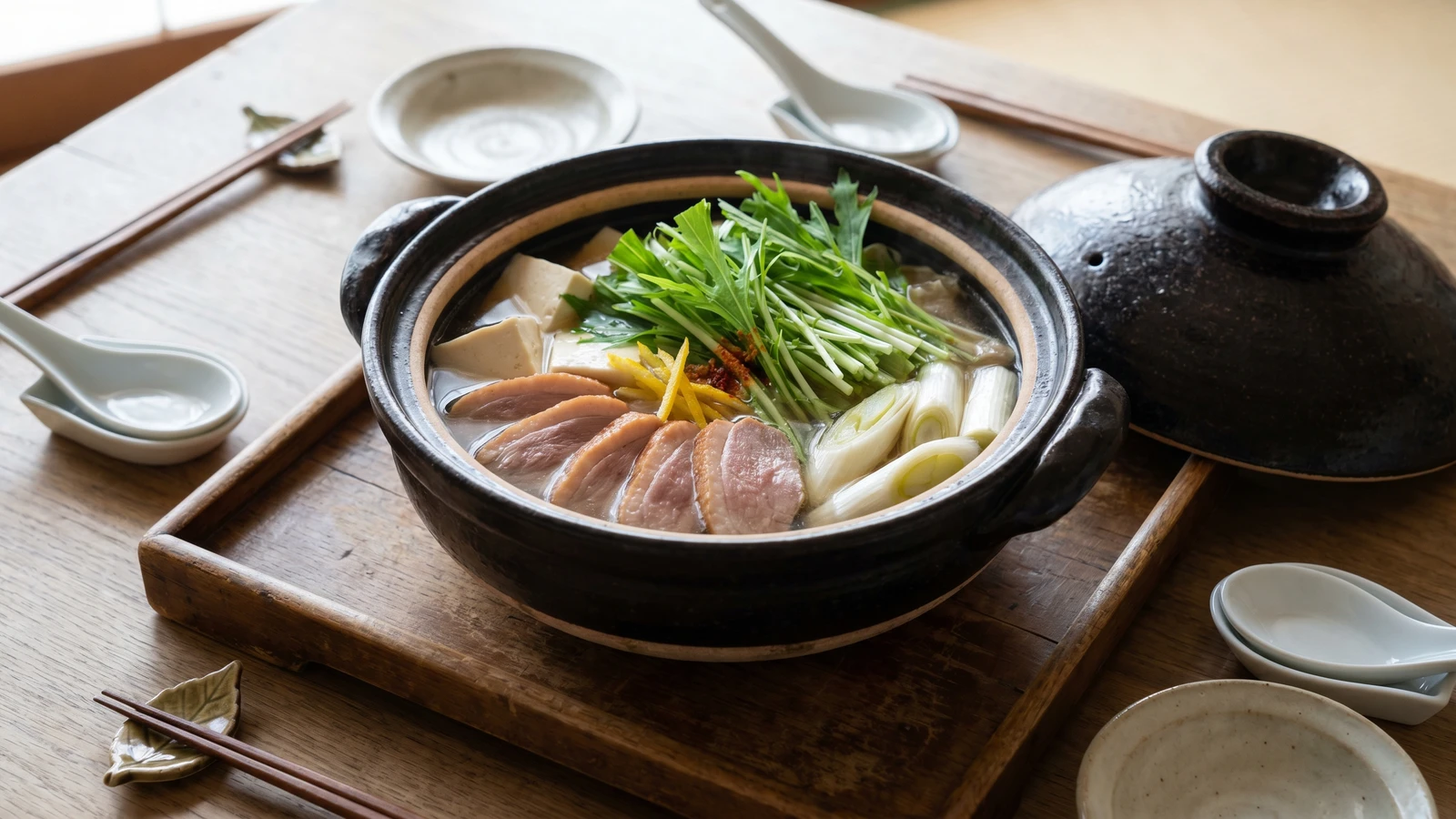
Osaka's leanest hot pot is a lesson in restraint: clear dashi, a little soy, sliced duck or pork, and mizuna added late so it keeps its bright snap.
Mizuna makes a sound when you bite it. That crisp little hari-hari is not a decoration here, it's the reason the pot exists. The greens go in near the end, just long enough to darken and bend, never long enough to surrender their crunch. Miss that timing and you've made a pleasant soup, but not this one.
Hari-hari nabe looks too plain to trust, which is how many good Japanese dishes begin. A clear dashi, soy sauce, sake, mirin, and thin slices of duck or pork do the quiet work. The meat gives the broth body, the mizuna cuts it with green bitterness and snap, and nothing heavy comes in to cover a tired ingredient. Choose mizuna at its shun, with firm stems and lively leaves, and most of the pot is already honest.
The old form used whale, and I won't pretend duck or pork is the same thing. They are the sensible modern table, and both sit well in the method. Slice the meat thinly so it cooks before it toughens, keep the broth clear, and add the greens in handfuls as you eat. Nabemono is food for the table, not the stage. The pot waits in the center, and each person meets the mizuna while it still has its voice.
Hari-hari nabe is strongly associated with Osaka, where mizuna was long grown around the city and valued for its sharp stems and winter resilience. The name comes from the crisp sound of the greens under the teeth, written in kana rather than as a formal botanical name. In the twentieth century the dish was commonly made with whale meat in Kansai, but after commercial whaling declined, duck and pork became the usual home-kitchen replacements.
Quantity
1 piece (about 10g)
Quantity
20g
Quantity
5 cups
Quantity
3 tablespoons
Quantity
2 tablespoons
Quantity
2 tablespoons
Quantity
1 teaspoon
Quantity
1/2 teaspoon
plus more to taste
Quantity
450g
washed well and cut into 3-inch lengths
Quantity
300g
sliced very thin
Quantity
1 small negi or 3 scallions
cut on the diagonal
Quantity
200g
cut into large cubes
Quantity
1 tablespoon
Quantity
for serving
| Ingredient | Quantity |
|---|---|
| konbu (dried kelp) | 1 piece (about 10g) |
| katsuobushi (bonito flakes) | 20g |
| cold water | 5 cups |
| soy sauce | 3 tablespoons |
| sake | 2 tablespoons |
| mirin | 2 tablespoons |
| sugar | 1 teaspoon |
| sea saltplus more to taste | 1/2 teaspoon |
| mizunawashed well and cut into 3-inch lengths | 450g |
| duck breast or thinly sliced pork shouldersliced very thin | 300g |
| negi or scallionscut on the diagonal | 1 small negi or 3 scallions |
| firm tofucut into large cubes | 200g |
| grated daikon (optional) | 1 tablespoon |
| yuzu peel or shichimi tōgarashi (optional) | for serving |
Wipe the konbu with a damp cloth, but don't wash it. Put it in the cold water and bring it up slowly over low heat, about ten minutes. Pull the konbu when the water trembles and small bubbles climb the sides. Bring the water to a gentle boil, add the katsuobushi all at once, take the pot off the heat, and let the flakes sink for two or three minutes. Strain through a cloth and let it drip. Don't squeeze, because squeezing presses the strong, oily flavors into the clear stock you need for this pot.
Wash the mizuna in two changes of cold water, paying attention to the base of the stems where grit hides. Cut it into 3-inch lengths and keep the stems and leafy tops in separate piles. The stems need a little more time, and the leaves need almost none. That separation is the small piece of order that keeps the hari-hari crunch alive.
If using duck breast, chill it until firm, remove any tough silver skin, and slice it thinly across the grain. If using pork, buy it already thin-sliced if you can. Thin slices cook before they toughen, and the fat seasons the broth without turning it cloudy. Let the knife do the seasoning here: clean slices give you tender meat and a cleaner pot.
Pour 4 cups of the dashi into a donabe or wide pot and add the soy sauce, sake, mirin, sugar, and salt. Bring it just to a quiet simmer and taste. It should be savory and lightly sweet, a little stronger than a soup you'd sip alone, because the tofu, mizuna, and meat will soften it as they cook.
Add the tofu and negi to the simmering broth and cook for three or four minutes, until the tofu is warmed through and the negi softens at the edges. Keep the surface moving gently, not rolling. A hard boil breaks the tofu, tightens the meat later, and muddies the clean dashi.
Lay in a few slices of duck or pork at a time, swishing them through the broth until just cooked. Duck should still be tender at the center, and pork should lose its raw pink without curling into dry strips. Skim any foam that rises. Skimming isn't fussiness, it's how the broth stays clear enough to show what you've put into it.
Add the mizuna stems first and cook for about one minute, then add the leafy tops and turn them through the broth for another thirty seconds. Stop while the greens are bright, glossy, and still crisp under the chopsticks. This is the dish's deciding moment. Cook mizuna until limp and the name has lost its meaning.
Set the donabe at the table with small tori-zara plates and chirirenge spoons. Serve a little broth, meat, tofu, and mizuna to each person, then add more mizuna and meat in fresh rounds as the pot empties. Finish with a small shaving of yuzu peel or a pinch of shichimi tōgarashi if you like, but keep the hand light. The greens are the whole point.
1 serving (about 550g)
Culinary guides, cultural storytelling, and the editorial depth that makes cooking meaningful.
Discover Culinary ExplorerChef Takumi
Abura soba is ramen without the hiding place of soup: hot noodles, strong shōyu tare, fragrant oil, and the discipline to mix while every strand is still hot.
Chef Takumi
Akadashi asks you to trust the dark miso. Build a clear dashi, loosen the Hatchō mame-miso gently, and the soup turns coffee-dark, savory, and clean.

Chef Takumi
Toast the rice until its skin is firm, then let it meet chicken broth, burdock, maitake, and seri. The pot looks grand, but the work is rice, broth, and patience.
Chef Takumi
Shottsuru nabe is Akita winter in one pot: clean dashi, hatahata at shun, tofu and napa cabbage carrying a salt-deep broth without anything heavy enough to hide the fish.