
Chef Takumi
Abura Soba (油そば, brothless ramen)
Abura soba is ramen without the hiding place of soup: hot noodles, strong shōyu tare, fragrant oil, and the discipline to mix while every strand is still hot.
A cooking platform built around craft, culture, and the stories behind what we eat.
Created by
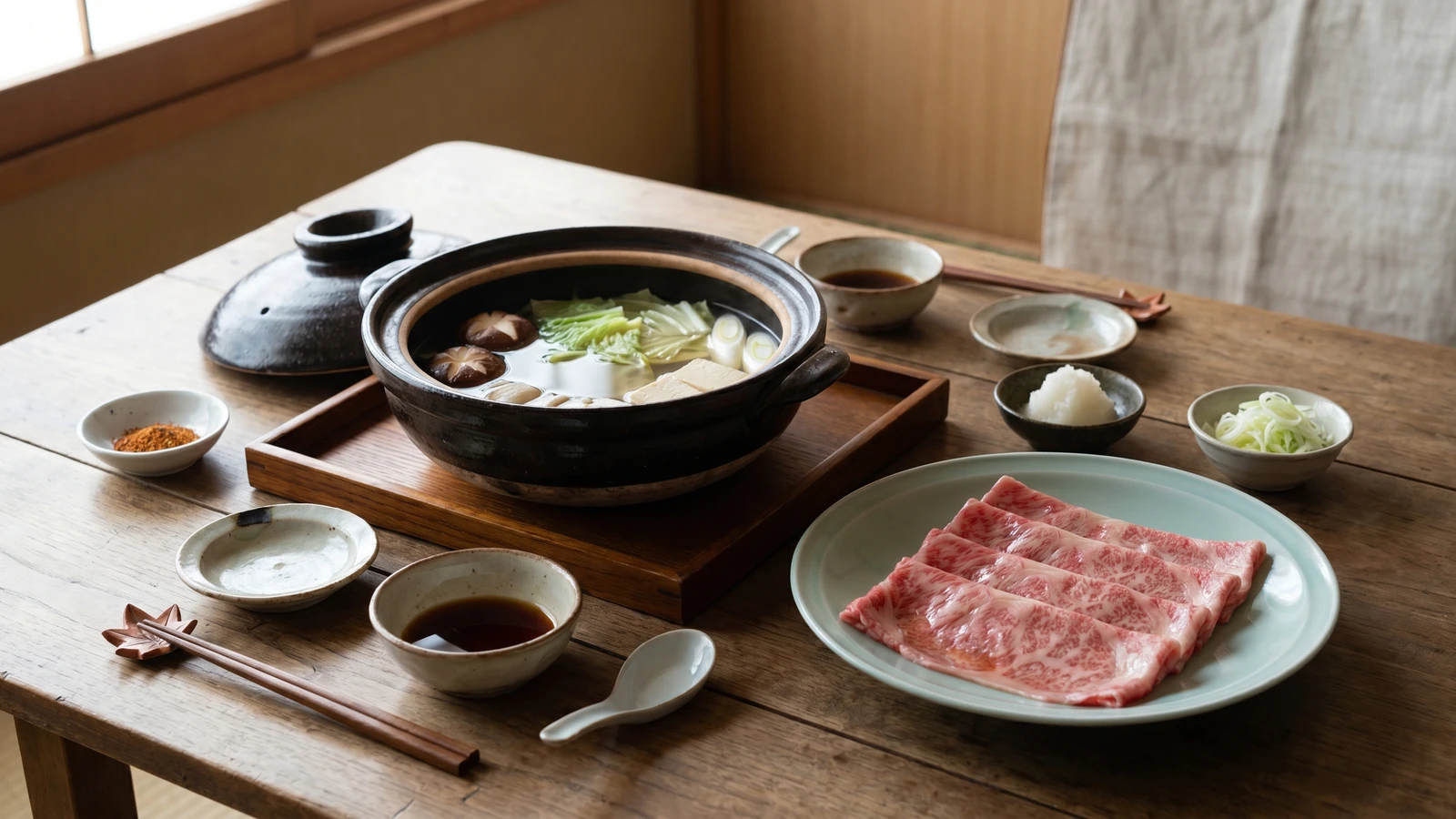
Shabu-shabu is not a performance. It is good beef, clean konbu dashi, and the discipline to swish each slice only until it blushes pink.
The beef decides shabu-shabu before the pot is even lit. It must be paper-thin, well marbled, and fresh enough that the fat looks creamy, not yellow. This is not a dish where sauce comes to rescue the ingredient. Nothing hidden. Buy well, slice thin, and most of the work has already been done.
People make shabu-shabu sound like a ceremony, which is a fine way to frighten a hungry cook. The method is simple: a slice of beef is swished through hot konbu dashi for a few seconds, just until it turns pink, then dipped in ponzu or goma-dare, sesame sauce. The name is the sound of that motion in the pot. Very scholarly, you see: swish, swish.
The one detail is heat. Keep the broth lively but not violent, because a hard boil tightens the meat before the fat can soften. The vegetables go in first to sweeten the broth and give the table something steady, but the beef is cooked one slice at a time. Treat it like a fresh cut, not a stew. Let the knife, and then the timing, do the seasoning.
This is nabemono, a pot dish for the table, best when cold weather makes everyone glad to lean in. The donabe sits at the center, the dipping bowls wait beside it, and each person cooks only what they are about to eat. The meal moves at the pace of the hand. That is its charm.
Shabu-shabu took its modern name in Osaka in 1952, when the restaurant Suehiro served thin beef swished in hot broth and named the dish after the sound of washing cloth in water. Its roots are often linked to Chinese hot pot, but the Japanese version became distinct through konbu dashi, individual dipping sauces, and the postwar spread of beef cookery. Unlike sukiyaki, which cooks beef in a sweet soy broth, shabu-shabu keeps the broth clean and lets the slice meet its seasoning only after it leaves the pot.
Quantity
1 piece (about 10g)
Quantity
6 cups
Quantity
600g
paper-thin, cut for shabu-shabu
Quantity
1/2 head
cut into 2-inch pieces
Quantity
2 long
sliced on a diagonal
Quantity
8
stems trimmed
Quantity
1 package
root end trimmed
Quantity
1 block
drained and cut into 8 pieces
Quantity
1 packet
rinsed and parboiled
Quantity
4 cups
for dipping
Quantity
1 cup
for dipping
Quantity
4 tablespoons
Quantity
4 tablespoons
Quantity
to taste
| Ingredient | Quantity |
|---|---|
| konbu (dried kelp) | 1 piece (about 10g) |
| cold water | 6 cups |
| thinly sliced beef ribeye or sirloinpaper-thin, cut for shabu-shabu | 600g |
| napa cabbagecut into 2-inch pieces | 1/2 head |
| negi or leekssliced on a diagonal | 2 long |
| fresh shiitake mushroomsstems trimmed | 8 |
| enoki mushroomsroot end trimmed | 1 package |
| firm tofudrained and cut into 8 pieces | 1 block |
| shirataki noodlesrinsed and parboiled | 1 packet |
| ponzu saucefor dipping | 4 cups |
| goma-dare sesame saucefor dipping | 1 cup |
| grated daikon (optional) | 4 tablespoons |
| thinly sliced scallion (optional) | 4 tablespoons |
| shichimi tōgarashi (optional) | to taste |
Wipe the konbu with a damp cloth, but don't wash it. Put it in the cold water in a donabe or wide pot and let it soak for at least twenty minutes, or longer if you have time. The slow soak draws out a clean, rounded flavor without making the broth heavy.
Set the pot over medium-low heat and bring the water up slowly. Pull the konbu out when the water trembles and small bubbles climb the sides, before it boils. Boiled konbu can turn the broth bitter and a little slick, and shabu-shabu wants a clear bath, not a strong soup.
Arrange the beef slices on a chilled plate in loose folds, not a tight stack. Set the vegetables, tofu, and shirataki on a platter in small groups so each ingredient is easy to lift. Pour ponzu and goma-dare into individual bowls, with grated daikon, scallion, and shichimi tōgarashi nearby if using.
Bring the broth to a gentle simmer and add a handful of cabbage, negi, mushrooms, tofu, and shirataki. Let them cook until the cabbage softens and the mushrooms look glossy. They give sweetness to the broth and keep the pot steady between slices of beef.
Pick up one slice of beef with chopsticks and swish it through the hot broth for five to ten seconds, just until the red turns pink and the fat softens. Don't leave it in the pot. Thin beef goes from tender to tight quickly, and the whole pleasure is in catching it before that happens.
Dip the cooked beef in ponzu for brightness or goma-dare for richness, then eat it at once. Taste the vegetables as they finish and move them to your dipping bowl. Keep adding fresh vegetables and beef as the table needs them, skimming the surface if foam gathers so the broth stays clean.
When the beef and vegetables are gone, taste the broth. It should now be deeper from the meat, mushrooms, and greens. If you like, add cooked udon or rice and warm it gently for a final bowl. This ending is quiet, but it tells you what the whole meal has given back to the pot.
1 serving (about 770g)
Culinary guides, cultural storytelling, and the editorial depth that makes cooking meaningful.
Discover Culinary ExplorerChef Takumi
Abura soba is ramen without the hiding place of soup: hot noodles, strong shōyu tare, fragrant oil, and the discipline to mix while every strand is still hot.
Chef Takumi
Akadashi asks you to trust the dark miso. Build a clear dashi, loosen the Hatchō mame-miso gently, and the soup turns coffee-dark, savory, and clean.

Chef Takumi
Toast the rice until its skin is firm, then let it meet chicken broth, burdock, maitake, and seri. The pot looks grand, but the work is rice, broth, and patience.
Chef Takumi
Shottsuru nabe is Akita winter in one pot: clean dashi, hatahata at shun, tofu and napa cabbage carrying a salt-deep broth without anything heavy enough to hide the fish.