
Chef Takumi
Abura Soba (油そば, brothless ramen)
Abura soba is ramen without the hiding place of soup: hot noodles, strong shōyu tare, fragrant oil, and the discipline to mix while every strand is still hot.
A cooking platform built around craft, culture, and the stories behind what we eat.
Created by
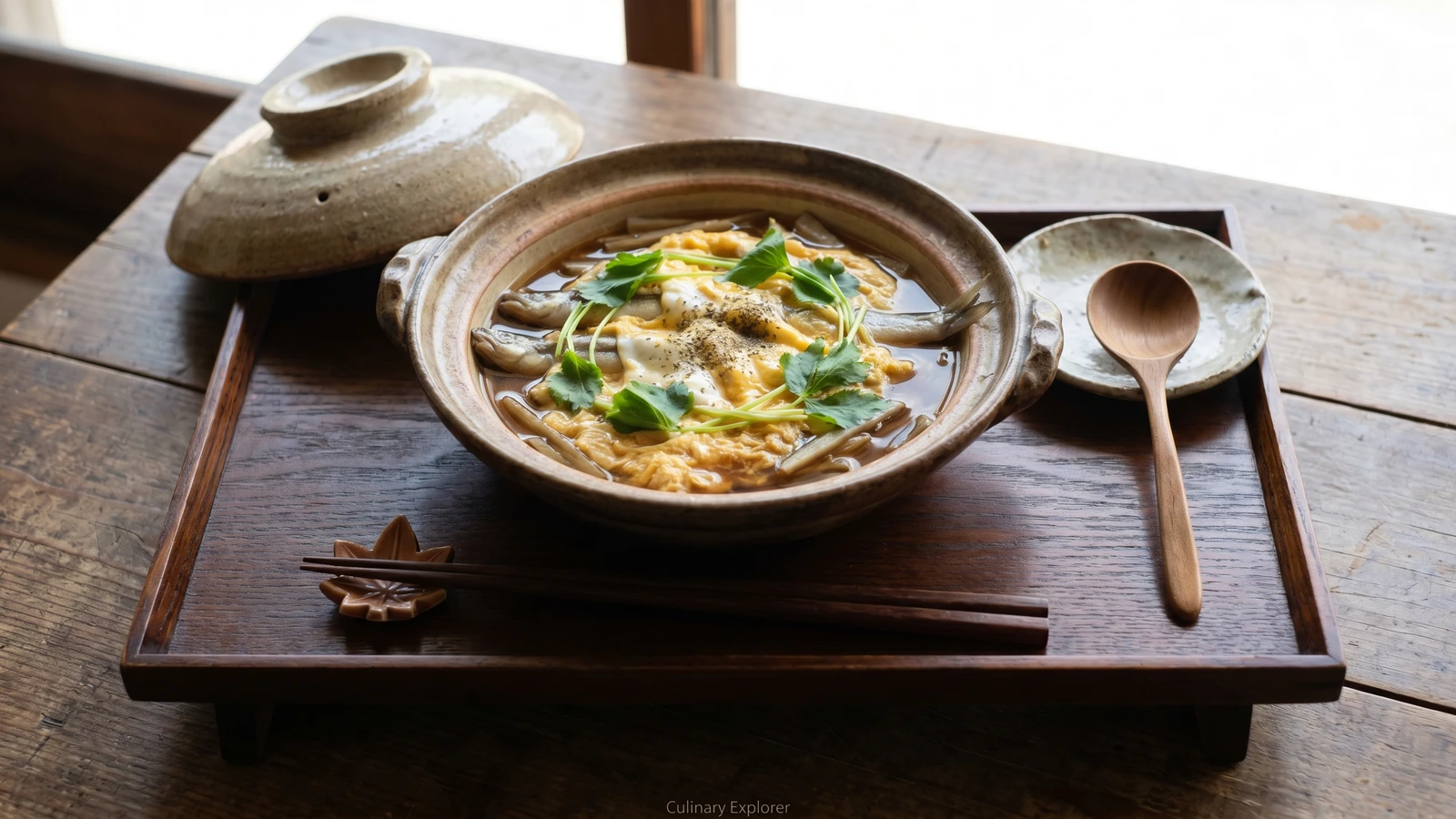
Yanagawa nabe looks like a difficult old Edo specialty. It is one shallow pot: fresh split dojō, clean burdock, sweet soy dashi, and egg pulled from the heat while still tender.
Loach makes many cooks pause. Fair enough. Dojō is a small river fish, not a polite fillet wrapped in paper, and Yanagawa nabe carries the smell of old Edo with it. But the pot itself is plain work: split fish, slivered gobō, burdock, a sweet soy dashi, and egg. The real thing isn't difficult. It's only unfamiliar, with no heavy sauce to hide behind.
Season matters here. Dojō was loved as summer stamina food, when heat drains the appetite and a small, rich fish does more than it seems it should. Buy it glistening fresh and already cleaned and split, if you can. If it smells muddy or tired, don't make Yanagawa nabe that day. Nothing hidden means exactly that.
The detail that decides the dish is gentleness after the pot is built. The burdock gives its earthiness to the broth first, then the loach cooks over it without stirring, and the egg goes in at the end just until tender. Boil hard and you roughen the fish and scramble the egg; simmer quietly and the broth stays clean, the gobō keeps its bite, and the egg binds everything like a soft lid. This is the method, not the menu: one pot, one order, one restraint.
Yanagawa nabe is an Edo-period dish of dojō, linked most often to late-Edo loach shops in the city and commonly to a shop name, Yanagawaya, though the exact naming is debated. Edo also had dojō nabe, in which whole loach was simmered more directly; Yanagawa nabe split the fish, set it with sasagaki gobō, pencil-shaved burdock, and finished the pot with beaten egg. Loach was valued in summer as inexpensive stamina food, especially in the same seasonal imagination that made eel a midsummer dish.
Quantity
4 cups
Quantity
1 piece (about 10g)
Quantity
20g
Quantity
1 medium (about 150g)
scrubbed and shaved into sasagaki
Quantity
500g
cleaned, gutted, and split lengthwise
Quantity
2 cups
from above
Quantity
3 tablespoons
Quantity
3 tablespoons
Quantity
2 tablespoons
Quantity
1 tablespoon
Quantity
4
lightly beaten
Quantity
1 small bunch
cut into 2-inch lengths
Quantity
to serve
| Ingredient | Quantity |
|---|---|
| cold water | 4 cups |
| konbu (dried kelp) | 1 piece (about 10g) |
| katsuobushi (bonito flakes) | 20g |
| gobō (burdock root)scrubbed and shaved into sasagaki | 1 medium (about 150g) |
| fresh dojō (loach)cleaned, gutted, and split lengthwise | 500g |
| dashifrom above | 2 cups |
| shōyu (Japanese soy sauce) | 3 tablespoons |
| mirin | 3 tablespoons |
| sake | 2 tablespoons |
| sugar | 1 tablespoon |
| large eggslightly beaten | 4 |
| mitsubacut into 2-inch lengths | 1 small bunch |
| sanshō pepper (optional) | to serve |
Wipe the konbu with a damp cloth, but don't wash it. Put it in 4 cups cold water and bring it slowly to just under a boil over low heat, about 10 minutes. When the water trembles and small bubbles climb the sides, lift out the konbu. Add the katsuobushi all at once, take the pot off the heat, and leave it alone for 2 minutes while the flakes sink. Strain through a cloth and let it drip on its own.
Scrub the gobō well, leaving the fragrant outer skin in place. Shave it into sasagaki by cutting thin diagonal shavings while turning the root a little after each cut, like sharpening a pencil. Drop the shavings into water for 5 minutes, swish once, then drain well. The brief soak lifts grit and harshness; a long soak washes away the earthiness that belongs in this pot.
Keep the cleaned, split dojō cold until the pot is ready. Rinse only if needed, then pat dry and lay the pieces flat. If you are starting with whole loach, ask the fishmonger to purge, gut, and split it for you. This is sourcing work, not a test of courage. The fish should smell clean, more fresh water than mud.
Measure 2 cups of the fresh dashi into a shallow donabe or wide pan. Add the shōyu, mirin, sake, and sugar, then bring it to a quiet simmer. Taste it before anything goes in. It should be a little stronger than soup, because the burdock, fish, and egg will soften the seasoning. This sweet soy simmering broth is warishita.
Spread the drained gobō in a loose, even bed across the simmering broth. Set a wooden drop-lid, otoshibuta, directly on the surface, or use a circle of parchment with a small hole in the center. Simmer for 3 to 4 minutes, just until the shavings bend. The lid keeps the burdock down in the broth, so it seasons evenly without stirring.
Remove the drop-lid and lay the split dojō over the burdock in one layer, flesh side up. Spoon a little broth over the fish, cover the pot, and simmer gently for 5 to 7 minutes, until the flesh turns opaque and the pieces relax. Don't stir. The burdock is the bed, not something to toss, and stirring breaks the fish and clouds the broth.
Beat the eggs lightly with chopsticks, just until the whites and yolks are loosened but not foamy. Pour two-thirds of the egg around the pot and over the fish. Cover for about 40 seconds, until the edges are barely set, then scatter the mitsuba and pour in the remaining egg. Turn off the heat, cover, and let the pot stand for 1 minute. Residual heat finishes the egg softly; hard boiling makes it grainy and hides the fish you worked to keep clean.
Dust lightly with sanshō and bring the donabe to the table with small tori-zara plates. Serve with hot rice and spoon a little broth into each portion. Eat while the egg is still tender and glossy, because the pot keeps cooking in its own warmth even after the fire is gone.
1 serving (about 360g)
Culinary guides, cultural storytelling, and the editorial depth that makes cooking meaningful.
Discover Culinary ExplorerChef Takumi
Abura soba is ramen without the hiding place of soup: hot noodles, strong shōyu tare, fragrant oil, and the discipline to mix while every strand is still hot.
Chef Takumi
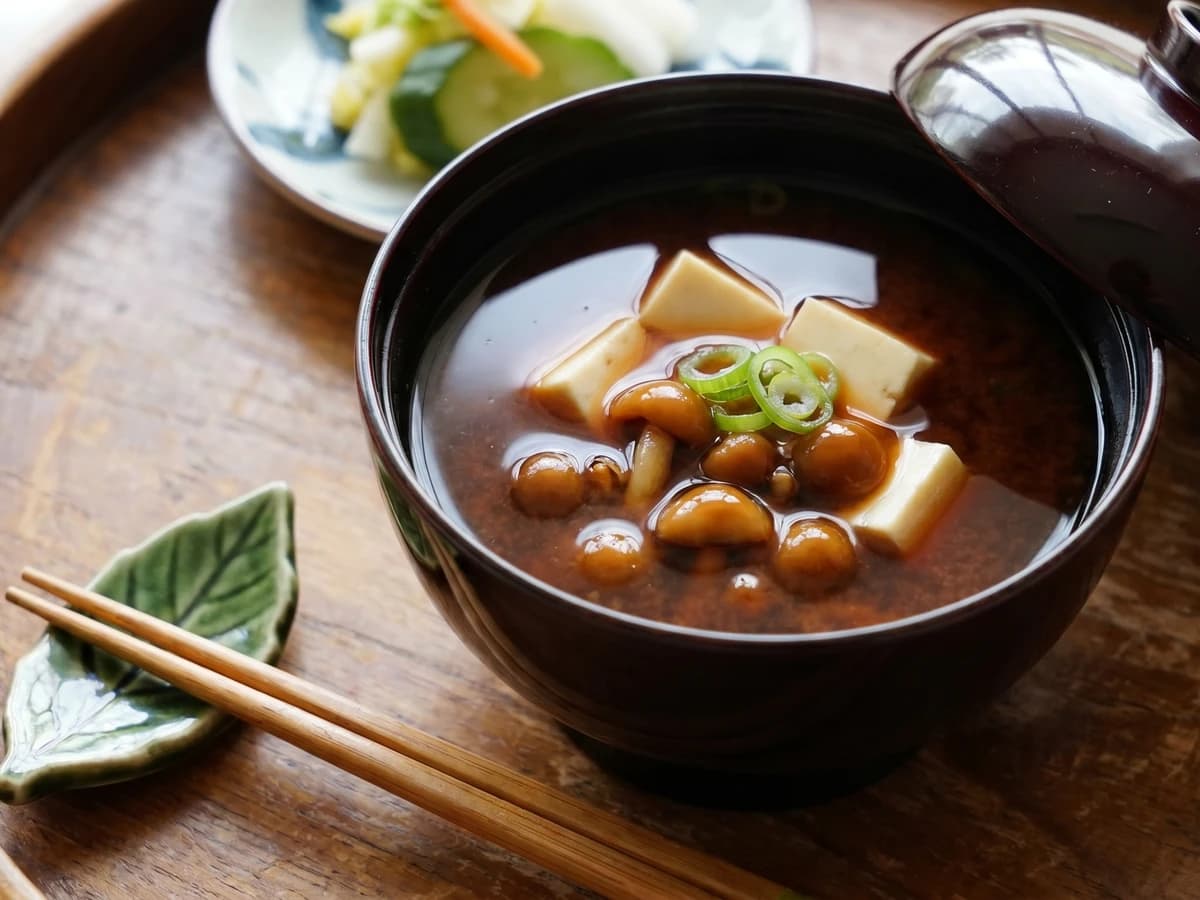
Akadashi asks you to trust the dark miso. Build a clear dashi, loosen the Hatchō mame-miso gently, and the soup turns coffee-dark, savory, and clean.

Chef Takumi
Toast the rice until its skin is firm, then let it meet chicken broth, burdock, maitake, and seri. The pot looks grand, but the work is rice, broth, and patience.
Chef Takumi
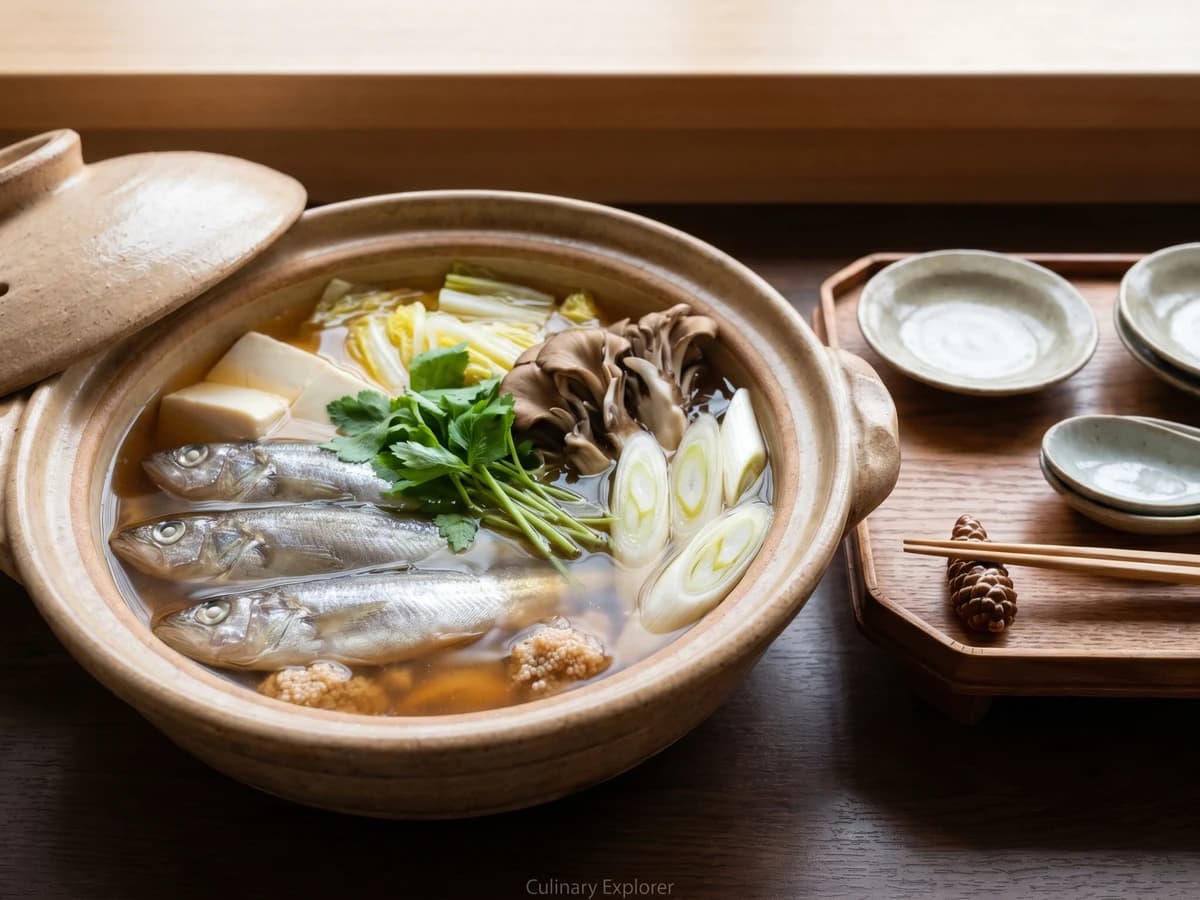
Shottsuru nabe is Akita winter in one pot: clean dashi, hatahata at shun, tofu and napa cabbage carrying a salt-deep broth without anything heavy enough to hide the fish.