
Chef Takumi
Abura Soba (油そば, brothless ramen)
Abura soba is ramen without the hiding place of soup: hot noodles, strong shōyu tare, fragrant oil, and the discipline to mix while every strand is still hot.
A cooking platform built around craft, culture, and the stories behind what we eat.
Created by
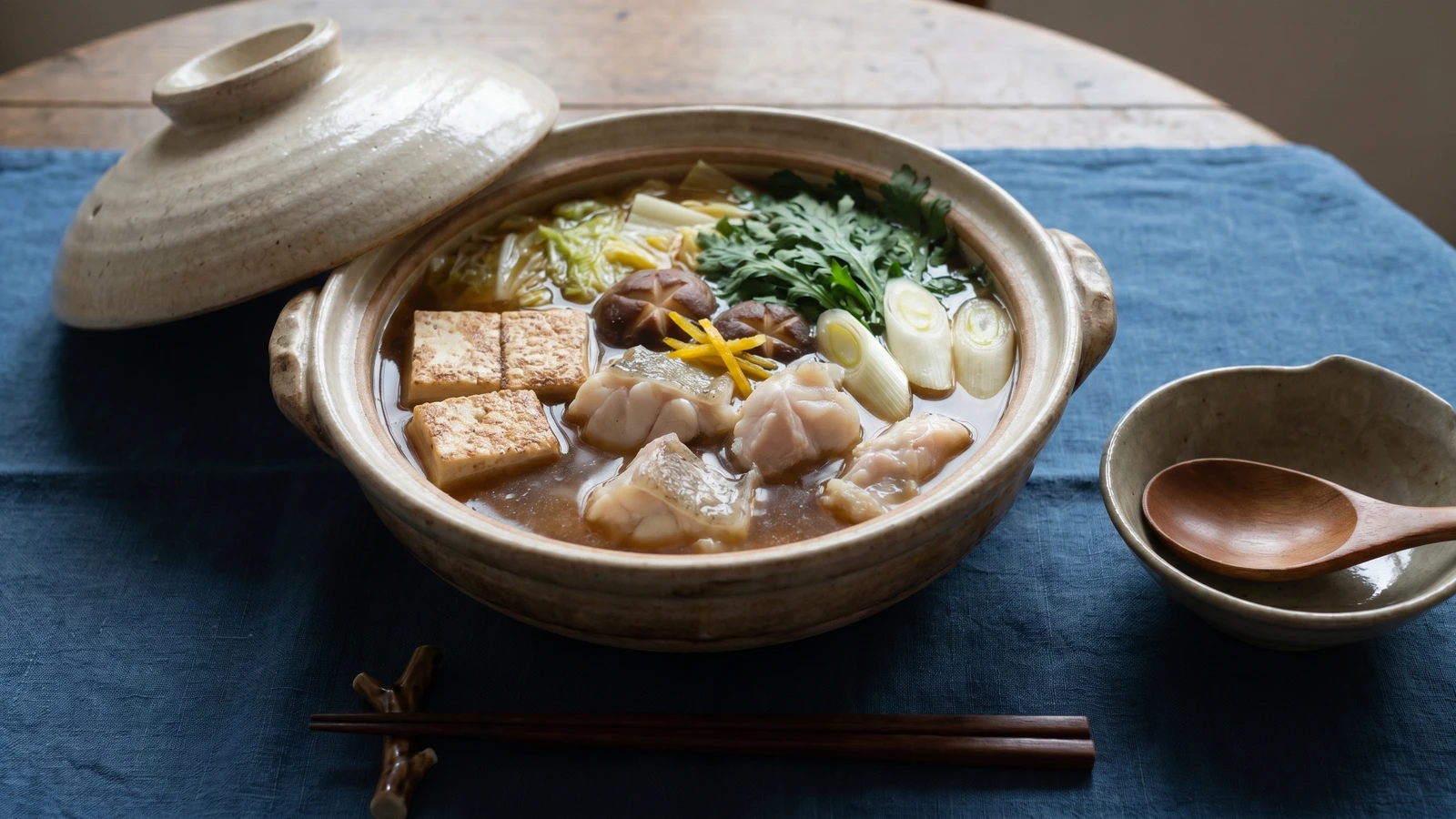
Winter ankō looks fearsome until the pot teaches you otherwise: clean the fish well, let the liver enrich the miso dashi, and simmer everything gently.
Ankō arrives in winter looking as if it were built by committee: loose skin, soft flesh, and a liver with more authority than its appearance deserves. This is why people file it under difficult. It isn't. For the home cook, the hard work is sourcing a cleaned monkfish set while the fish is at its cold-weather 旬 (shun), when the liver is full and sweet and the flesh stays firm in the pot.
Ankō nabe is a dish of nothing wasted. Flesh, skin, fins, stomach, and liver each bring a different texture, and the broth makes sense only when the liver is treated with respect. Toast the ankimo gently, mash it into miso, then loosen it with dashi. The fat gives the soup its depth, the miso gives it backbone, and the clean stock keeps it from becoming heavy. Burn the liver and it tastes coarse. Boil the pot wildly and the flesh tightens. Keep the simmer quiet and the dish becomes simple.
On an Ibaraki winter table, this is special occasion food that still eats like comfort. A donabe in the center, cabbage and tofu taking up the broth, each person lifting what is ready into a small tori-zara. The one detail to watch is cleanliness before richness: blanch the fish, rinse away slime and blood, then let the good parts speak. Nothing hidden. That is 本物 (honmono) here.
Ankō nabe is closely associated with Ibaraki Prefecture, especially the ports around Ōarai and Kitaibaraki, where winter monkfish from the Pacific coast became a marker of cold-weather hospitality. A related Ibaraki preparation, dobu-jiru, thickens the pot with monkfish liver and relies heavily on moisture released by the fish and vegetables, giving the broth its famously cloudy appearance. The phrase ankō no nanatsu dōgu, 'the seven tools of monkfish,' refers to the prized edible parts, usually counted as liver, skin, stomach, ovaries, gills, fins, and flesh.
Quantity
1.2kg
including flesh, skin, fins, bones, and liver if possible
Quantity
2 teaspoons
divided
Quantity
3 tablespoons
for cleaning the liver
Quantity
1 piece (about 10g)
Quantity
5 1/2 cups
Quantity
25g
Quantity
4 tablespoons
Quantity
1 tablespoon
Quantity
2 tablespoons
Quantity
1 tablespoon
Quantity
1 teaspoon, plus more as needed
Quantity
1/4 small head
cut into 2-inch pieces, stems and leaves separated
Quantity
1 small
cut diagonally into 1-inch pieces
Quantity
1/2 root
scrubbed, shaved into thin strips, and soaked briefly
Quantity
200g
peeled and cut into thin half-moons
Quantity
1 block
drained and cut into 8 pieces
Quantity
6
stems trimmed
Quantity
1 small bunch
cut into 3-inch lengths
Quantity
a few thin strips
Quantity
as needed
for finishing the broth
Quantity
1
beaten, for zōsui
| Ingredient | Quantity |
|---|---|
| cleaned monkfish hot pot setincluding flesh, skin, fins, bones, and liver if possible | 1.2kg |
| sea saltdivided | 2 teaspoons |
| sakefor cleaning the liver | 3 tablespoons |
| konbu (dried kelp) | 1 piece (about 10g) |
| cold water | 5 1/2 cups |
| katsuobushi (bonito flakes) | 25g |
| red miso or blended miso | 4 tablespoons |
| white miso (optional) | 1 tablespoon |
| sake | 2 tablespoons |
| mirin | 1 tablespoon |
| soy sauce | 1 teaspoon, plus more as needed |
| napa cabbagecut into 2-inch pieces, stems and leaves separated | 1/4 small head |
| negi or leekcut diagonally into 1-inch pieces | 1 small |
| burdock root (gobō)scrubbed, shaved into thin strips, and soaked briefly | 1/2 root |
| daikonpeeled and cut into thin half-moons | 200g |
| firm tofudrained and cut into 8 pieces | 1 block |
| fresh shiitake mushroomsstems trimmed | 6 |
| shungiku or mizunacut into 3-inch lengths | 1 small bunch |
| yuzu peel (optional) | a few thin strips |
| cooked rice or udon (optional)for finishing the broth | as needed |
| egg (optional)beaten, for zōsui | 1 |
Wipe the konbu with a damp cloth, but don't wash it. Put it in the cold water and bring it up slowly over low heat. Pull the konbu out when the water trembles and small bubbles climb the sides of the pot, before a full boil. Boiled konbu gives the stock a bitter, slick edge, and this pot needs clean depth under the liver.
Bring the konbu water just to a gentle boil, add the katsuobushi all at once, then take the pot off the heat. Let the flakes sink for 2 to 3 minutes without stirring. Strain through a cloth-lined sieve and let it drip on its own. Don't squeeze, because squeezing presses strong, oily flavors into the dashi and muddies the clean base you just made.
Keep the monkfish cold while you work. Separate the liver from the other pieces, then sprinkle the flesh, skin, fins, and bones with 1 teaspoon salt and leave them for 10 minutes. Set the pieces in a colander and pour boiling water over them until the surface turns opaque and tightens. Rinse under cold running water, rubbing away slime, blood, and dark clots. This is yubiki, a quick blanch that cleans the fish without cooking it through.
Pull away any visible blood lines from the monkfish liver. Sprinkle it with the remaining 1 teaspoon salt and the 3 tablespoons sake, then leave it for 10 minutes. Pat it dry and chop it roughly. The salt draws out harshness, and the sake rinses away the metallic edge that would otherwise follow you into the broth.
Set a small skillet over low heat and add the chopped liver. Mash it with a wooden spoon as it warms, cooking until its fat begins to glisten and the smell turns sweet and nutty, 3 to 4 minutes. Stir in the red or blended miso and the optional white miso, then loosen with the 2 tablespoons sake, mirin, soy sauce, and 1/2 cup of the dashi. Keep the heat low. Burned liver tastes coarse, and there is no sauce heavy enough to hide it honestly.
Put the burdock, daikon, napa cabbage stems, negi, tofu, and shiitake into a donabe or wide heavy pot. Add the kimo miso and enough dashi to come about two-thirds of the way up the ingredients, usually 4 to 4 1/2 cups. Bring it to a quiet simmer. The firm vegetables go in first because they need time to soften and give sweetness back to the broth.
Add the blanched monkfish pieces, putting skin, fin, and bony pieces in first, then the flesh. Simmer gently for 8 to 10 minutes, skimming any foam that rises. The flesh should turn opaque and firm but still moist, while the skin and fins become glossy and tender. A hard boil tightens the fish and breaks the broth, so keep the surface moving softly.
Add the napa cabbage leaves and shungiku or mizuna for the final 1 to 2 minutes. Taste the broth. If it needs more strength, dissolve a little miso in a ladleful of broth before adding it back to the pot. Dropping miso straight in leaves lumps and dulls the aroma. Finish with a few strips of yuzu peel if you have them.
Set the donabe at the center of the table with small tori-zara plates and chirirenge spoons. Let each person take what is ready instead of waiting for the whole pot to submit at once. When the solids are gone, add cooked rice for zōsui or udon to the remaining broth. For zōsui, simmer the rice until loose, drizzle in the beaten egg, cover briefly, and serve while the surface is still glossy.
1 serving (about 590g)
Culinary guides, cultural storytelling, and the editorial depth that makes cooking meaningful.
Discover Culinary ExplorerChef Takumi
Abura soba is ramen without the hiding place of soup: hot noodles, strong shōyu tare, fragrant oil, and the discipline to mix while every strand is still hot.
Chef Takumi
Akadashi asks you to trust the dark miso. Build a clear dashi, loosen the Hatchō mame-miso gently, and the soup turns coffee-dark, savory, and clean.

Chef Takumi
Toast the rice until its skin is firm, then let it meet chicken broth, burdock, maitake, and seri. The pot looks grand, but the work is rice, broth, and patience.
Chef Takumi
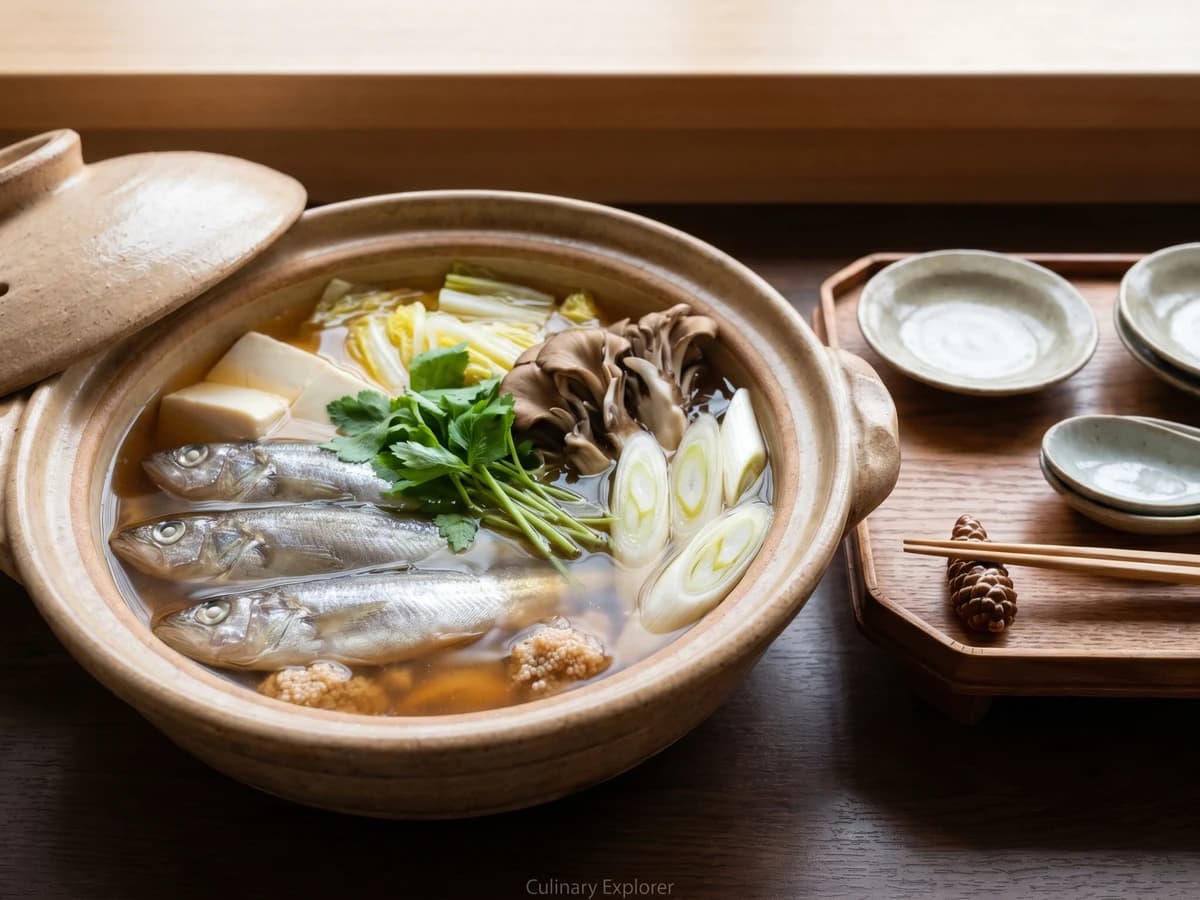
Shottsuru nabe is Akita winter in one pot: clean dashi, hatahata at shun, tofu and napa cabbage carrying a salt-deep broth without anything heavy enough to hide the fish.